

Logo Drinkware Bulk Buying That Saves More

A missed event deadline usually does not happen because someone forgot the logo. It happens because pricing changed, stock disappeared, or shipping got complicated across multiple locations. That is why logo drinkware bulk buying is not just a branding decision. It is a procurement decision, a timing decision, and often a budget protection decision.
For business buyers, drinkware keeps earning its place because people actually use it. A branded tumbler on a desk, a bottle in a gym bag, or a travel mug in a car gives your logo repeat visibility without feeling disposable. But the real value depends on choosing the right item, the right decoration method, and the right order strategy before costs start creeping up.
Why logo drinkware bulk orders keep performing
Drinkware works across more use cases than most promo categories. Trade shows, onboarding kits, sales incentives, customer gifts, recruiting events, wellness campaigns, and internal recognition programs can all use the same category without looking repetitive. A good piece of branded drinkware feels practical, and that matters when buyers are trying to justify spend.
Bulk ordering also changes the economics. Unit pricing improves, decoration setup costs spread across more pieces, and fulfillment becomes easier to plan when everything is sourced through one order. For procurement teams and marketing managers, that combination matters more than a trendy product description. You need an item that looks good, lands on time, and does not break the budget when quantities climb.
That said, not every bulk drinkware order creates the same result. A low-cost stadium cup can make perfect sense for a high-volume giveaway. The same item would feel underpowered for executive gifting or a new-hire welcome box. The best order is the one that fits the audience, the campaign goal, and the expected lifespan of the product.
How to choose the right logo drinkware bulk option
The first decision is use case. If you are handing out thousands of pieces at a public event, cost per unit will likely lead the conversation. Plastic cups, basic water bottles, and simple travel mugs often make sense there because reach matters more than premium perception. If the drinkware is tied to employee retention, client appreciation, or a higher-value sales touch, insulation, brand recognition, and packaging start to matter more.
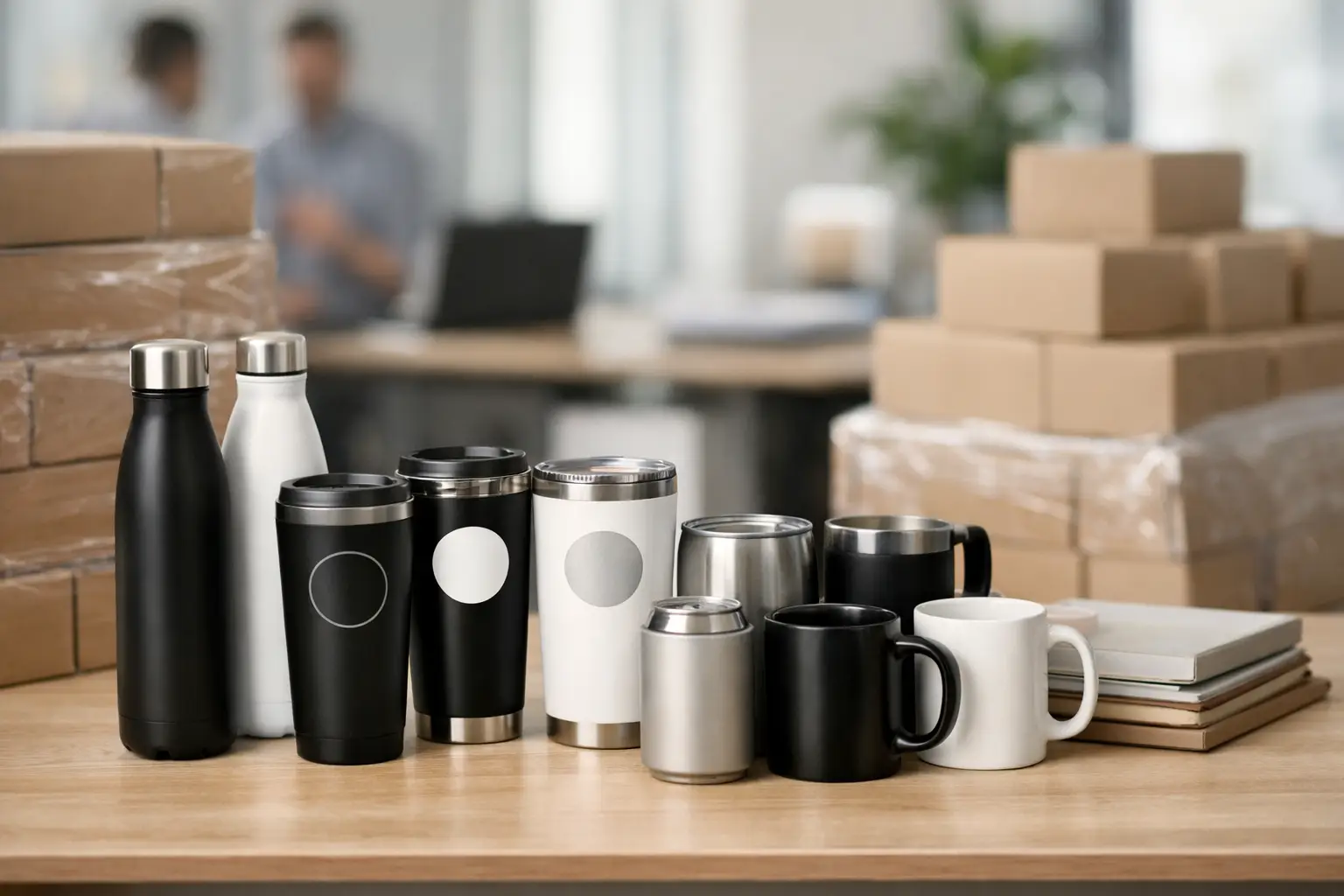
Material matters because it affects both price and perceived value. Stainless steel usually wins for durability and premium feel. It is a strong fit for employee gifts, customer thank-yous, and higher-end event kits. Plastic can be a smart volume play for schools, community events, and campaigns where broad distribution is the priority. Ceramic mugs still perform well for office use, especially for desk-based teams and internal programs.
Capacity and shape should not be an afterthought. A 20 oz tumbler, a 24 oz sport bottle, and a 12 oz camp mug each say something different about your brand. The wrong format can make a useful item feel awkward. The right one feels easy to keep and easy to use, which is exactly what you want from branded merchandise.
Match the product to the audience
HR teams often do best with drinkware that feels giftable and practical, especially for onboarding and employee recognition. Event planners may prioritize stackable, shippable, lower-cost options that can move fast and stay within budget. Sales teams usually need something that looks polished enough to support relationship-building. Procurement professionals often need all three, plus predictable pricing and fewer ordering headaches.
That is where brand-name drinkware can earn its premium. Recognizable names can increase perceived value immediately, which can be worth it for executive gifts, retention campaigns, or key account programs. But premium is not always the smart move. If your campaign lives or dies on quantity, a strong mid-range option can outperform an expensive item that forces you to cut distribution.
What affects price in bulk drinkware orders
Most buyers start with product cost, but total cost depends on more than the base item. Decoration method, print location, number of imprint colors, rush production, packaging, and shipping all shape the final number. A low item price can stop looking attractive if the decoration setup is high or if freight balloons because of weight and carton count.
Bulk buying usually lowers the unit cost, but the price breaks are not always linear. Sometimes moving from 96 pieces to 144 creates a noticeable savings. Other times the better move is selecting a slightly different style with stronger inventory and lower decoration costs. This is why comparing only product thumbnails is rarely enough for serious buyers.
Shipping can become the hidden issue, especially for large campaigns or multiple delivery points. Drinkware is heavier than many promo products, and insulated pieces can drive freight higher than expected. If you are shipping to one office, one set of economics applies. If you are shipping to field reps, remote hires, event sites, and regional branches, fulfillment planning matters just as much as product selection.
Where buyers overspend
The most common mistake is choosing a product before confirming inventory depth. If stock is limited, you may end up substituting late, paying rush fees, or splitting orders across styles. Another costly mistake is over-specifying decoration when a simpler imprint would still look clean and professional.
It also pays to be realistic about audience expectations. Not every campaign needs laser engraving on premium insulated drinkware. Not every gifting program should be built around the cheapest bottle available. The best value comes from buying to purpose, not buying to extremes.
Decoration, branding, and quality trade-offs
Your logo has to look right on the item. That sounds obvious, but it is where many bulk orders go sideways. A wide wrap design may look great on one tumbler and cramped on another. Small logos can disappear on textured finishes. Bright brand colors may shift depending on material and print method.
Screen printing often works well for high-volume, budget-conscious orders. Laser engraving can create a more elevated look on stainless steel and tends to hold up well over time. Full-color methods can be a strong fit when brand guidelines are strict or when artwork includes gradients and multiple colors. The right choice depends on budget, artwork, and the level of finish your audience expects.
Quality should be judged by daily use, not just the product photo. Lid fit, insulation performance, handle comfort, leak resistance, and surface durability all affect whether the item stays in circulation. A cheaper bottle that gets left in a drawer is not a savings. A well-chosen tumbler that gets used for a year gives your brand far more value.
Planning for events, employee kits, and multi-location delivery
Logo drinkware bulk orders often fail at the logistics stage, not the buying stage. Event planners need arrival dates that hold. HR teams need kits packed consistently. Marketing teams need branding that matches the campaign. Procurement needs one order process that does not turn into ten follow-up problems.
For single-location drops, the main goal is timing and carton accuracy. For distributed teams, the conversation changes. Address collection, split shipments, packaging consistency, and recipient experience all become part of the order. If drinkware is going into branded boxes with apparel, tech, or office items, product dimensions and packing efficiency matter more than buyers expect.
This is where working with a supplier that understands volume really pays off. You need clear pricing, dependable production, and the ability to support either a centralized delivery or a more complex distribution plan. Discount Swag is built for exactly that kind of order pressure, especially when buyers need strong pricing without giving up product quality or fulfillment reliability.
How smart buyers make the final decision
The best buyers do not ask only, “What is the cheapest option?” They ask what item will achieve the goal at the best total value. Sometimes that means buying a better bottle because the audience is high value and the product will represent your brand for months. Sometimes it means choosing a simpler cup because reach is the real KPI.
A strong order usually comes down to five checks: the item fits the campaign, the logo application fits the product, the quantity hits the right price break, the inventory can support the timeline, and the shipping plan is realistic. When those five things line up, the order tends to go smoothly.
If you are sourcing drinkware in volume, speed matters, but clarity matters more. The right bulk order should save money, reduce friction, and leave you with a product people will actually keep using. That is the kind of swag purchase that keeps paying off after the event table is cleared, the onboarding box is opened, or the campaign wraps.
 Bottle Carriers
 Mugs
Mugs