

Types of Branded Tote Bags: 2026 Marketer’s Guide


Branded tote bags are defined by two core variables: material and structural style. Together, these factors determine cost, durability, print compatibility, and the brand message your bag communicates before anyone reads the logo. Material is the single most important decision for any branded tote because it shapes every downstream choice, from decoration method to recipient perception. Whether you’re sourcing for a trade show, a retail launch, or a corporate gifting program, understanding the full range of promotional tote designs available will help you match the right bag to the right moment.
1. types of branded tote bags: canvas and cotton
Canvas and cotton are the two most recognized materials in branded tote bag production. They share a natural fiber origin but serve different positioning needs.
Canvas totes use a dense, plain-woven fabric that holds its shape under load. Canvas is the most popular material worldwide for branded totes because it accepts every major print method, including screen printing, heat transfer, and direct-to-garment. The firm structure also means your logo stays flat and readable rather than distorting when the bag is carried.
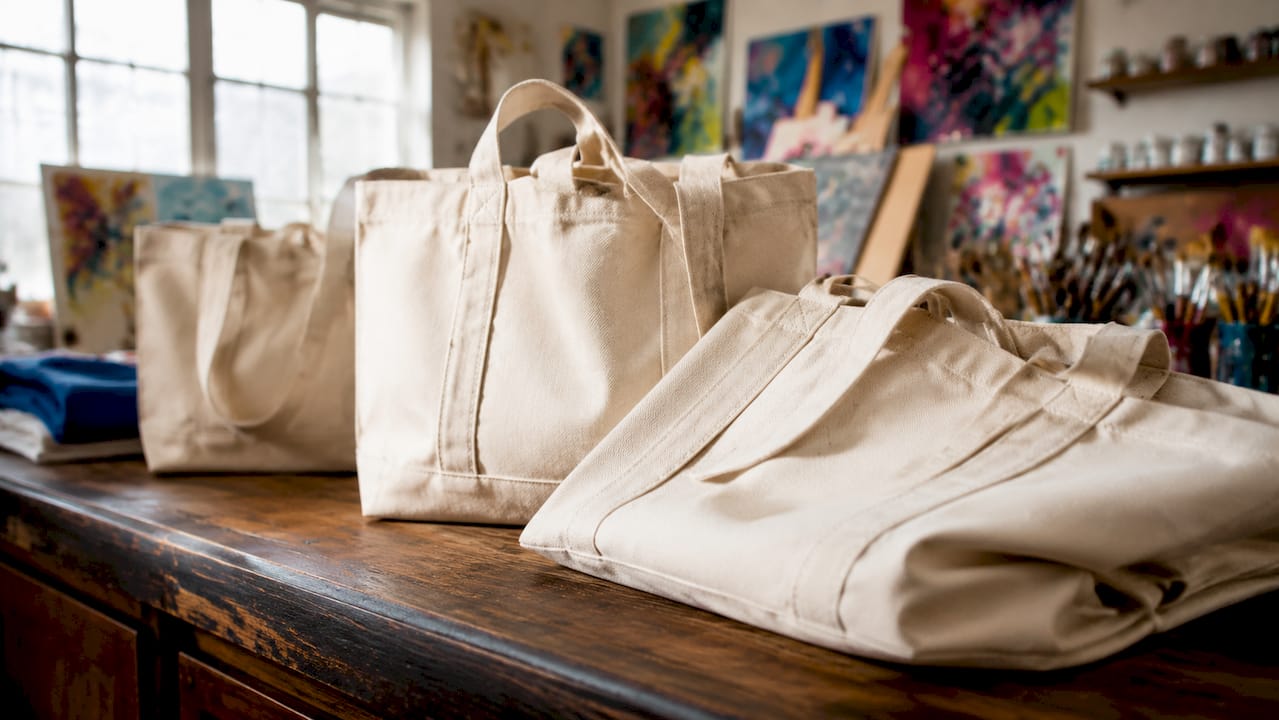
Cotton totes use a lighter weave. They feel softer, are machine washable, and cost less per unit than heavy canvas. Lifestyle brands and wellness companies favor cotton for giveaways because the material reads as approachable and everyday.
Key differences at a glance:
- Canvas (10–12 oz): Maximum durability, structured shape, premium print results, higher unit cost
- Cotton (5–6 oz): Lighter weight, softer hand feel, machine washable, budget-friendly for large runs
- Gusseted canvas: Adds side panels for volume, popular for retail and grocery use
- Flat cotton: Simplest construction, lowest cost, ideal for high-volume conference giveaways
Pro Tip: If your brand runs eco-positioned campaigns, specify 100% organic cotton and request a GOTS (Global Organic Textile Standard) certificate from your supplier. That document protects your marketing claims.
2. non-woven and woven polypropylene totes
Polypropylene (PP) totes are the workhorses of high-volume promotional campaigns. They come in two distinct constructions, and the difference matters for brand perception.
-
Non-woven PP: Synthetic fibers are pressed and heat-fused rather than woven. Non-woven PP bags are the most cost-efficient material and the default choice for mass giveaways. They are lightweight, water-resistant, and available in virtually any color. The tradeoff is a slightly plasticky texture that reads as budget to most recipients.
-
Woven PP: Fibers are interlaced in a traditional weave pattern, producing a stronger, stiffer bag with a fabric-like surface. Woven PP handles heavier loads and holds up better over repeated use. Grocery retailers and food brands frequently use woven PP for branded shopping totes because the material mimics the look of fabric without the cost of cotton.
-
Recycled non-woven PP: A growing subcategory, this uses post-consumer plastic to produce the same heat-fused construction. The Radius Recycled Non-Woven Tote from Discountswag is a strong example of this format for eco-conscious campaigns on a tight budget.
-
Print compatibility: Both PP types accept screen printing and flexographic printing well. Full-color photographic prints perform better on woven PP due to its smoother surface.
The core rule: use non-woven PP when volume and cost per unit are the primary constraints. Move to woven PP when the bag needs to survive repeated use or carry heavier items.
3. specialty and eco-friendly tote materials
rPET, recycled cotton, and cotton canvas are the three most requested eco-friendly materials in branded tote production today. Each carries a distinct budget profile and brand story.
| Material | Eco Story | Print Quality | Relative Cost | Best Use |
|---|---|---|---|---|
| rPET | Made from recycled plastic bottles | High, smooth surface | Mid-range | Corporate gifts, sustainability campaigns |
| Recycled Cotton | Post-industrial fiber blend | Good, slight texture | Low-mid | Budget eco giveaways, lifestyle brands |
| Jute | Natural plant fiber, biodegradable | Moderate, rough surface | Low-mid | Farmers markets, rustic brand positioning |
| Leather | Long-lasting, premium material | Debossed or embossed only | High | Executive gifts, luxury brand extensions |
| Organic Cotton Canvas | GOTS-certified natural fiber | Excellent | Mid-high | Retail, premium giveaways |
Jute carries a distinctly rustic, natural aesthetic. It works well for food brands, farmers market activations, and any campaign where an unrefined, earthy look reinforces the brand message. The rough texture limits fine-detail printing, so keep logos bold and simple.
Leather totes sit at the premium end of the spectrum. They are not practical for mass distribution but work well as executive gifts or limited-edition brand merchandise. Decoration is typically debossed or embossed rather than printed.
rPET (recycled polyethylene terephthalate) is made from post-consumer plastic bottles. It offers a strong sustainability narrative and accepts high-quality printing. The Eco-Friendly 5oz Recycled Cotton Twill Tote Bag at Discountswag shows how recycled cotton delivers a natural hand feel at an accessible price point.
Pro Tip: Any recycled material claim used in marketing must be backed by a valid certification like GRS (Global Recycled Standard) and transaction certificates. Without documentation, those claims may conflict with FTC Green Guides.
4. tote bag structural styles: which shape fits your campaign?
Material tells half the story. Structure tells the other half. The construction of a tote determines how much it holds, how it looks in use, and whether it fits the context of your event or gifting program.
Flat totes are the simplest and least expensive construction. Two panels of fabric are sewn together with no side gussets. They lie flat when empty and carry light loads well. These are the standard format for conference giveaways and trade show handouts where volume and cost matter most.
Gusseted totes add a panel on the sides and sometimes the base, creating a three-dimensional bag that expands to hold more. This construction is the most practical for grocery shopping, retail, and any scenario where recipients will carry bulky items. Gusseted canvas totes are the format most often associated with branded shopping totes at retail chains.
Zippered totes include a secure top closure and typically feature interior pockets. Zippered designs with defined handle drop and compartments add perceived premium value and necessary security for commuter and conference giveaways. They are the right choice when recipients will carry valuables like laptops, tablets, or documents.
Foldable totes compress into a small pouch or pocket when empty. They are ideal for travel-focused campaigns, airline partnerships, and commuter gift programs where recipients value portability. The tradeoff is reduced structural rigidity and a thinner fabric weight.
Box totes (structured totes) use internal stiffeners or a rigid base to hold a defined rectangular shape. They look polished on a shelf or desk and are frequently used for retail packaging, product launches, and upscale gifting. The structured silhouette photographs well, which matters for social media campaigns.
| Structure | Capacity | Cost Level | Best Scenario |
|---|---|---|---|
| Flat | Low | Lowest | Trade shows, mass giveaways |
| Gusseted | High | Low-mid | Retail, grocery, lifestyle events |
| Zippered | Medium-high | Mid-high | Commuter gifts, conferences |
| Foldable | Medium | Mid | Travel gifts, commuter programs |
| Box/Structured | Medium-high | High | Product launches, executive gifts |
Matching tote structure to event use cases is critical. Zippered totes outperform open-top variants in transit-heavy or crowded environments where security matters.
5. how to choose the right branded tote for your campaign
Selecting the right custom tote bag comes down to four variables: budget, brand positioning, event logistics, and recipient behavior. Work through them in order.
-
Set your per-unit budget first. Non-woven PP and flat cotton totes are the entry-level options. Canvas gusseted totes and rPET bags sit in the mid-range. Leather and structured box totes are premium. Knowing your ceiling before you browse prevents scope creep.
-
Align material with brand positioning. Material choice signals brand positioning as much as the logo itself. A jute bag says “natural and local.” An rPET bag says “we take sustainability seriously.” A leather tote says “premium.” Choose the material that reinforces what your brand already communicates.
-
Consider event logistics. A crowded trade show floor calls for a zippered tote so attendees feel secure carrying their items. An outdoor festival calls for a water-resistant woven PP bag. A corporate retreat calls for a structured canvas tote that looks good in photos. Think about where the bag will actually be used.
-
Match structure to recipient expectations. Marketing professionals sourcing for corporate gifting programs know that a flat giveaway bag at a premium client event reads as an afterthought. A gusseted canvas tote with a clean logo print reads as intentional.
-
Factor in decoration method. Screen printing works on almost every material. Embroidery adds texture and longevity on canvas and cotton. Heat transfer handles full-color photographic designs on smooth surfaces. Confirm your supplier’s decoration capabilities before finalizing the material choice.
Pro Tip: Request physical samples in your chosen material and decoration method before placing a bulk order. Color on screen and color on fabric are rarely identical, and a sample review prevents expensive surprises.
Key takeaways
The best branded tote bag for any campaign is the one where material, structure, and brand message all point in the same direction.
| Point | Details |
|---|---|
| Material drives every decision | Material determines cost, print method, durability, and the brand story your tote communicates. |
| Canvas leads on print quality | Canvas totes accept all major print methods and hold shape better than any other material at a mid-range price. |
| PP totes win on volume | Non-woven and woven polypropylene are the right choice when unit count and cost per piece are the primary constraints. |
| Eco claims require certification | rPET and recycled cotton claims must be backed by GRS or equivalent documentation to comply with FTC Green Guides. |
| Structure must match the use case | Zippered totes work for commuter and conference contexts; flat totes work for mass giveaways; structured totes work for premium gifting. |
What i’ve learned about tote bags after years in promotional products
The most common mistake I see marketing teams make is choosing a tote bag based on price alone, then wondering why it ends up in the trash by the end of the event day. A $0.79 non-woven PP bag handed out at a premium brand activation sends a message. It just isn’t the message anyone intended.
The shift I’ve watched accelerate in 2026 is the demand for certified eco-friendly materials with actual documentation behind them. Marketers are no longer satisfied with a supplier saying “this is recycled.” They want the GRS certificate. They want the transaction records. That scrutiny is healthy, and it separates serious sourcing from greenwashing.
The other trend worth watching is the rise of zippered and structured totes in corporate gifting. When a brand manager at a financial services firm or a tech company sends a gift, a flat open-top tote no longer clears the bar. Recipients expect something that functions as a real bag, not a branded afterthought.
My practical advice: brief your supplier with three things before you request a quote. State the material you want, the decoration method you expect, and the use case the bag needs to serve. That three-point brief eliminates 80% of the back-and-forth and gets you to a sample faster.
— Jerry
Find the right branded tote at Discountswag
Discountswag carries a full range of branded promotional products including canvas totes, recycled non-woven bags, and specialty eco-friendly options ready for custom decoration.
Whether you’re sourcing flat cotton bags for a high-volume trade show or structured canvas totes for a corporate gifting program, Discountswag offers professional sourcing with verified product options across every major material and style category covered in this guide. Browse the full catalog to compare materials, request samples, and get accurate per-unit pricing for your next campaign.
FAQ
What are the main types of branded tote bags?
The main types are defined by material (canvas, cotton, non-woven PP, woven PP, jute, rPET, leather) and structural style (flat, gusseted, zippered, foldable, box). Material determines cost and print quality; structure determines capacity and use case.
Which tote bag material is best for eco-friendly campaigns?
rPET and recycled cotton are the top choices for eco-positioned campaigns. Both require valid certification such as the Global Recycled Standard to support marketing claims under FTC Green Guides.
What is the most cost-effective tote bag for large events?
Non-woven polypropylene is the most cost-efficient material for high-volume promotional campaigns. It is lightweight, available in many colors, and accepts screen printing well.
When should i choose a zippered tote over an open-top tote?
Choose a zippered tote when recipients will carry valuables in crowded or transit-heavy environments such as conferences or commuter gift programs. Open-top totes are better suited for quick giveaway distributions where security is not a concern.
How do i match a tote bag style to my brand positioning?
Align material with your brand message: jute and recycled cotton signal natural or budget-eco positioning, canvas signals quality and durability, and leather signals premium. Structure should match the event context and recipient expectations.
 Bottle Carriers
 Mugs
Mugs