

How to Budget Event Giveaways Smartly


If your giveaway budget disappears before the event even starts, the problem usually is not the product. It is the math behind the order. Knowing how to budget event giveaways means balancing quantity, perceived value, branding costs, and shipping before you approve a single item. Get that right, and your spend works harder without putting your team back into rush-order mode.
Start with the outcome, not the item
A lot of event buyers begin with the product search. That feels efficient, but it often leads to overspending on the wrong mix. The better move is to define what the giveaway needs to do.
A trade show handout has a different job than a VIP client gift. A recruiting event giveaway needs broad appeal and easy portability. An internal employee event may justify a higher per-person spend because the audience is smaller and the brand relationship is stronger. When you start with the outcome, your budget gets more precise fast.
Ask a few practical questions first. Are you trying to maximize booth traffic, extend brand visibility after the event, reward top prospects, or support employee engagement? Are you expecting 200 attendees or 2,000? Will recipients carry the item home, use it on-site, or toss it after five minutes? Those answers shape your budget more than the catalog category does.
How to budget event giveaways by audience tier
Most event giveaway budgets go off track because every attendee gets treated the same. In reality, not every contact has the same value, and your spend should reflect that.
A tiered approach gives you control. You might have a low-cost, high-quantity item for general traffic, a mid-range item for qualified leads, and a premium giveaway for key prospects, speakers, clients, or internal stakeholders. This prevents the common mistake of handing a $12 item to someone who stopped by for a freebie and left no meaningful engagement.
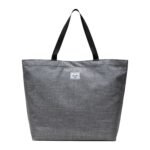
For example, your top tier could include premium drinkware, branded gift sets, or recognized retail-inspired items for a smaller group. Your middle tier might be practical pieces like notebooks, tech accessories, or tote bags. Your high-volume tier usually works best with budget-conscious products that still have daily use, such as pens, lip balm, can coolers, or simple office accessories.
This is where procurement discipline matters. If your total event budget is fixed, tiering lets you protect impact without raising spend. It also helps sales and event staff distribute items with intention instead of guessing on the floor.
Build the budget from total landed cost
The fastest way to underbudget is to focus only on unit price. The real number is total landed cost – the complete amount required to get usable, branded product to the event on time.
That includes the item itself, decoration charges, setup fees, proofing, shipping, handling, and any rush production costs. Depending on the product, packaging can matter too. If you are shipping to multiple offices, event sites, or remote recipients, freight can change the budget significantly.
A product that looks cheaper on paper may cost more once imprint charges and shipping are added. On the other hand, a slightly higher-value item can become the better buy if it offers fewer extra fees, stronger durability, or better perceived value. Business buyers who budget accurately compare the full delivered cost, not just the base item price.
If your event has multiple locations, build that in from the start. Split shipments, kitting, and staggered delivery windows affect cost and planning. Waiting until the order is approved to think about distribution usually creates avoidable fees.
Set your per-person spend with clear ranges
A practical giveaway budget usually starts with a per-person target. That keeps the conversation grounded when product choices start multiplying.
For broad-reach events, many buyers aim for a lower cost per attendee and reserve more budget for quantity. For targeted events, a higher per-person spend often makes sense because each interaction has greater value. If the event is focused on lead generation, think about the cost relative to the worth of a qualified opportunity, not just the product invoice.
There is no single perfect number. It depends on audience quality, event scale, and your brand position. A startup at a regional expo may need efficient volume. A larger company hosting executive meetings may prioritize premium presentation. The key is setting your range early and sticking to it unless the business case changes.
One useful checkpoint is to divide your total giveaway budget by three buckets: must-have quantity, strategic mid-tier items, and premium reserve. That structure protects you from spending everything on one category too early.
Choose products with staying power
Cheap is not always cost-effective. If the item gets thrown away right after the event, the true return is low even if the unit price looked attractive.
The better question is whether the giveaway earns repeated use. Drinkware, bags, desk accessories, phone-related products, and practical daily items often deliver more impressions over time. That can justify a slightly higher cost if the product quality supports real use.
There is a trade-off here. If your event requires maximum volume, ultra-practical mid-range items may not fit the numbers. In that case, focus on the best perceived value within your budget, not the absolute lowest cost. A simple product with clean branding and dependable quality usually performs better than a gimmick that feels disposable.
Recognizable categories also help. Buyers respond well to products they already understand and know how to use. That makes the giveaway easier to distribute and easier to justify internally.
Don’t let decoration choices quietly inflate the budget
Branding decisions have budget consequences. A one-color imprint may be the most cost-efficient option for large runs, while full-color decoration or premium embellishments can drive up spend fast.
That does not mean you should always choose the cheapest decoration. It means the branding method should match the event objective. If the item is meant for wide distribution, simple branding often delivers the best value. If it is a premium gift for a high-value audience, upgraded decoration may support the overall impression.
Keep logo complexity in mind as well. Large imprint areas, multiple imprint locations, and special packaging all add cost. Sometimes a cleaner design on a better product creates more impact than heavier customization on a lower-quality one.
For event teams under deadline, simpler decoration choices also reduce risk. Fewer variables usually mean faster approvals and fewer production surprises.
Quantities matter more than most teams expect
Ordering too few giveaways creates obvious problems, but ordering too many can tie up budget in leftover inventory that is not reusable. Accurate forecasting matters.
Look at past attendance, actual booth traffic, lead volume, and event type. If this is a first-time event, build a conservative base order and then decide whether a second tier of product is needed. Some categories are easy to repurpose for future events or employee programs. Others are highly event-specific and harder to absorb later.
Minimum order quantities can also distort your plan. You may find that moving from 225 units to 250 improves pricing enough to make sense. In other cases, stepping up the quantity only creates excess. The right answer depends on whether the item has life beyond the event.
This is where a value-focused supplier can make a real difference. Better pricing flexibility and broad category options make it easier to fit the product to the budget instead of forcing the budget to fit a narrow product set.
Leave room for timing and freight
Rush fees are budget killers. So is last-minute expedited shipping. If you want better control over giveaway costs, start earlier than you think you need to.
Even strong event plans can shift. Attendee counts change. Delivery windows move. Brand teams request art updates. Procurement asks for another quote round. Building time into the budget protects you from paying premium freight just to recover from normal internal delays.
If your event includes remote staff, satellite offices, or multiple venues, distribution planning is part of budgeting, not an afterthought. A lower-priced item can become expensive if fulfillment is complicated. By contrast, an item that ships efficiently and arrives ready to distribute may save money overall.
Make ROI part of the budget conversation
The best giveaway budget is not the one with the lowest total. It is the one that supports the event goal at the best possible cost.
That means tying spend to outcomes. If your team is measuring scans, appointments, demos, post-event meetings, or employee participation, your giveaway choices should support those results. A premium item that helps your sales team open qualified conversations may outperform a cheaper item that draws a crowd with no follow-up value.
For HR and internal teams, the return may show up differently. Better attendance, stronger engagement, and a more polished employee experience can justify a different product mix than a public-facing trade show would.
When buyers know the purpose, audience tier, total landed cost, and expected use case, the budget gets easier to defend. It also gets easier to optimize. That is why experienced teams do not ask only, “What is the cheapest item?” They ask, “What is the smartest spend for this event?”
A strong event giveaway budget should feel controlled, not cramped. When the numbers are built around audience value, full delivery cost, and practical product choices, you spend less time fixing surprises and more time putting the right branded item in the right hands. If you want the budget to go further, start with strategy, price with discipline, and leave yourself enough runway to buy well.
 Bottle Carriers
 Mugs
Mugs