


Avoid Swag Kit Rejections with U.S. Lithium Battery Shipping Rules

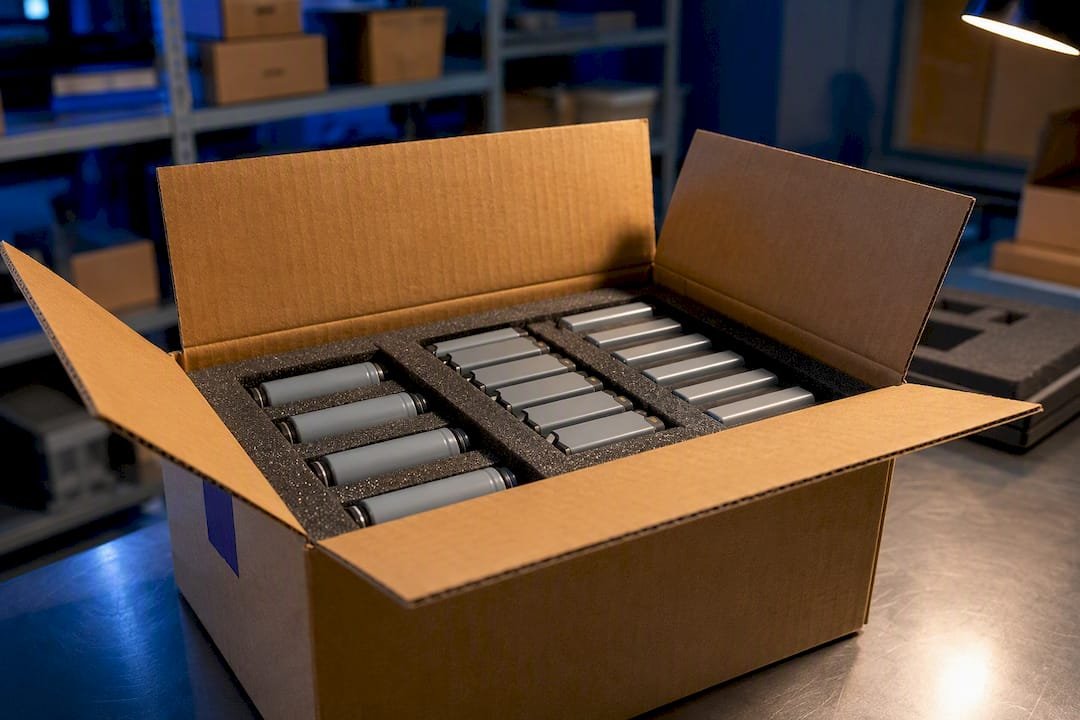
Yes, you can ship lithium batteries in the United States, but only if you classify them correctly and follow 49 CFR 173.185 under the Hazardous Materials Regulations, plus IATA/ICAO rules for anything moving by air. The shipper, not the carrier, is legally responsible for getting this right. Before you tape a single box, find the battery’s watt hour (Wh) rating or lithium content in grams, and count how many go in each package.
TL;DR:
- Shipping lithium batteries in the U.S. requires correct classification based on chemistry and energy content, with recent markings simplifying verification.
- Proper terminal protection, inner cushioning, and UN performance-tested outer packaging are critical to prevent rejection or safety hazards during transport.
- Fully regulated shipments exceeding about 12 kg or crossing energy and quantity thresholds demand comprehensive labeling, documentation, and UN packaging standards.
- Mode-specific rules mean stricter regulations apply to air shipments, including a 30% state of charge limit, while ground and sea transport allow higher thresholds.
- Bundling multiple batteries in kits or swag can push total energy over limits, requiring careful calculation and possible shipment reclassification or splitting.
Table of Contents
- What Are the Lithium Battery Shipping Rules Based On?
- Packaging Requirements Every U.S. Shipper Must Follow
- What Labels and Paperwork Do You Need?
- Which Rules Apply by Mode: Air, Ground, Vessel, or Mail?
- How Do Spare Batteries and Swag Kits Change the Rules?
- Quick Compliance Checklist Before You Tender a Package
- How These Rules Play Out for Promotional Product Shippers
- A Practical Take on Staying Compliant
- Sourcing Compliant Tech Swag Without the Compliance Headache
- Where to Verify These Rules Yourself
- Sources
- FAQ
What Are the Lithium Battery Shipping Rules Based On?
Every lithium battery shipping rule in the U.S. traces back to one distinction: is it lithium ion or lithium metal, and how much energy or lithium does it actually contain? Get that wrong and every downstream decision, packaging, labeling, carrier acceptance, falls apart with it.
Lithium ion batteries (the rechargeable kind in power banks, laptops, and most promotional tech) are rated in watt hours. Lithium metal batteries (non rechargeable, common in small electronics and some medical devices) are rated by grams of lithium content. You’ll find the Wh rating printed on the battery or device itself in most cases. Since May 10, 2024, PHMSA has required the Wh rating to appear on the outside case of the battery, regardless of size, which makes verification far easier than it used to be, per the Lithium Battery Guide for Shippers. If it’s not marked or you’re working from a spec sheet, go to the manufacturer’s documentation rather than estimating.
The UN numbers you’ll see on shipping papers and labels map directly to battery chemistry and configuration:
- UN 3480: lithium ion batteries shipped alone (not packed with or contained in equipment)
- UN 3481: lithium ion batteries packed with or contained in equipment
- UN 3090: lithium metal batteries shipped alone
- UN 3091: lithium metal batteries packed with or contained in equipment
That “packed with” versus “contained in” distinction matters more than most shippers realize. “Contained in” means the battery is installed inside the device, like a power bank built into a phone case. “Packed with” means the battery ships in the same outer box as the equipment but separately, such as a spare battery boxed alongside a camera. Different packing instructions apply to each, and mixing them up is one of the most common reasons carriers reject shipments at the counter.
Then there’s the line between “excepted” and “fully regulated” shipments, which is really the whole game. Small cells and batteries under specific Wh or gram thresholds, and shipped in limited quantities per package, qualify for excepted quantity provisions under Section II of the relevant IATA packing instructions or the equivalent 49 CFR exceptions. That means lighter documentation, no shipper’s declaration, but still mandatory markings. Cross those thresholds, in energy rating, gram content, or unit count, and the shipment becomes fully regulated as a Class 9 hazardous material, triggering UN specification packaging, full labeling, and formal shipping papers. Highway and rail transport get more generous exception thresholds than air, which is exactly why a shipment that moves fine by truck can get flagged the moment it’s tendered to an air carrier.
Packaging Requirements Every U.S. Shipper Must Follow
Packaging is where most compliance failures actually happen, not classification. You can identify the battery correctly and still get a shipment rejected because the box doesn’t meet the physical requirements 49 CFR 173.185 and the PHMSA shipper’s guide spell out.
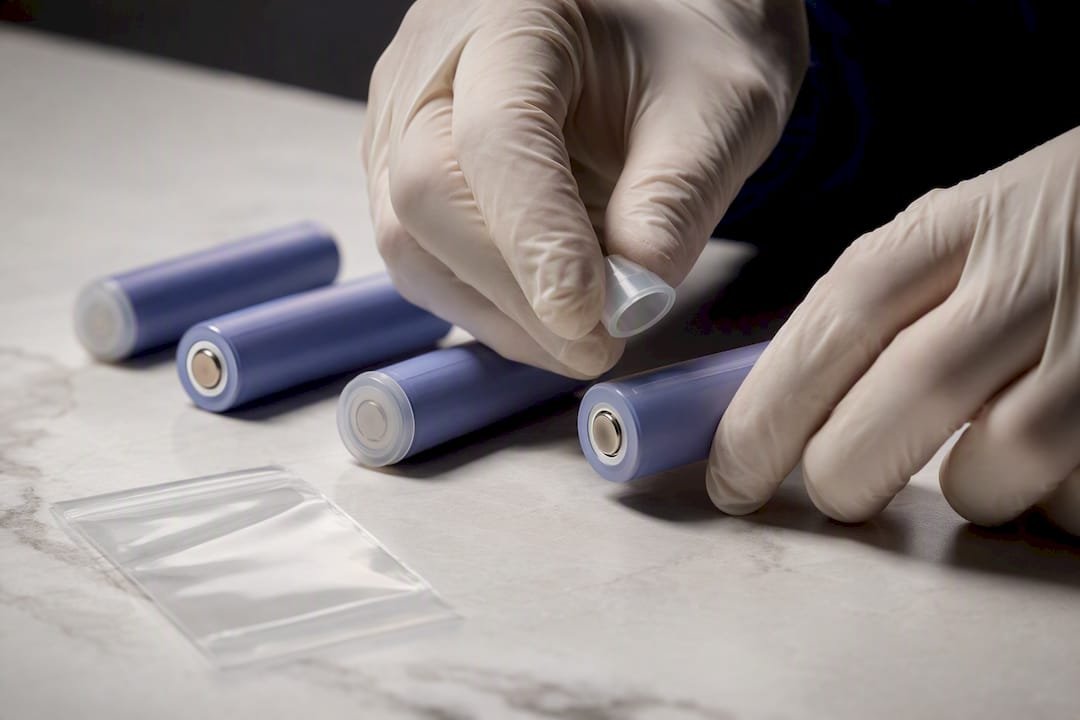
Start with terminal protection, because short circuits are the actual hazard these rules exist to prevent. Every battery’s terminals need to be isolated so they can’t contact metal, other batteries, or anything conductive during transport. In practice this means:
- Tape over exposed terminals, or use the manufacturer’s original retail packaging if it isolates the terminals on its own.
- Fit terminal caps or install the battery inside the device so terminals are recessed and inaccessible.
- Place each battery in its own individual plastic bag or pocket if multiple batteries ship in one outer box.
- Never let loose batteries rattle around touching each other, coins, keys, or metal fasteners inside the same container.
Inner packaging has its own rulebook. Cells and batteries must sit inside non-metallic inner packaging that fully encloses them, rigid plastic trays, blister packs, or padded pouches all qualify, provided they prevent movement. Cushioning material like foam inserts or corrugated dividers keeps batteries from shifting during transit, which matters because shifting is what causes terminal contact and, eventually, thermal events. If you’re shipping several batteries in one box, separators between each unit aren’t optional dressing, they’re the actual compliance mechanism.
Outer packaging performance requirements kick in once you’re outside excepted quantity limits. Fully regulated Class 9 shipments need packaging that has passed UN performance testing to at least Packing Group II standards, drop tests, stacking tests, and vibration resistance included. That packaging carries a UN specification marking on the box itself (something like “UN 4G/Y145/S”), and you cannot substitute a plain cardboard box no matter how well you’ve cushioned the inside.
Weight is its own trigger point. Once a single package of lithium batteries exceeds roughly 12 kg gross weight (the exact figure depends on the specific packing instruction in play), additional requirements apply, sometimes including prior approval from the competent authority for certain configurations, and often mandatory strength and stacking tests for the outer packaging. Palletized or crated shipments of batteries in bulk almost always fall into this heavier category, and that’s precisely where shippers who’ve only ever moved single units get caught off guard.
Pro Tip: Keep a laminated terminal-protection reference sheet at every packing station. The single most common rejection reason PHMSA and carriers cite isn’t classification error, it’s a loose battery with exposed terminals sitting next to a metal staple or paperclip.
What Labels and Paperwork Do You Need?
Labeling and documentation requirements shift depending on whether your shipment qualifies as excepted or fully regulated, and getting this wrong is the fastest way to get a package bounced back at a carrier’s hazmat desk.
The lithium battery mark, a black and white (or black and red bordered) diamond showing a battery symbol, is required on nearly every package containing lithium cells or batteries, including most excepted shipments. It has to include the applicable UN number(s) and, where relevant, a telephone number for additional information. This mark is distinct from the diamond-shaped Class 9 hazard label, which only applies to fully regulated shipments.
Beyond the battery mark, watch for these situational requirements:
- Cargo Aircraft Only (CAO) label: required when a battery or configuration is forbidden on passenger aircraft but permitted on cargo-only aircraft; this applies to much standalone lithium metal batteries and some lithium ion shipments depending on quantity and rating.
- “Forbidden aboard passenger aircraft” text: certain lithium metal batteries and damaged/defective batteries can’t go on passenger planes under any circumstances, and packages must reflect that restriction.
- Highway/rail-only text marking: some exceptions available for surface transport require explicit wording on the package stating the batteries are not for air transport.
- Overpack markings: if you consolidate multiple compliant packages into one overpack, the outer container needs its own duplicate markings.
Shipping papers for fully regulated shipments must include the UN number, proper shipping name (e.g., “Lithium ion batteries”), the hazard class (9), packing group where applicable, shipper and consignee information, and 24-hour emergency response contact information. A shipper’s declaration for dangerous goods is required for most fully regulated air shipments but is not required for excepted quantity shipments, which is one reason marketing teams shipping small kits often assume, incorrectly, that no paperwork is needed at all.
The gap between excepted and fully regulated documentation is enormous in practice. An excepted shipment might need nothing more than the correct battery mark on the box and a note in your shipping system. A fully regulated Class 9 shipment needs a complete dangerous goods declaration, trained personnel signing off, and retained records. One extra battery in a kit, or one battery that pushes cumulative Wh over a threshold, is enough to flip a shipment from the first category into the second.
Which Rules Apply by Mode: Air, Ground, Vessel, or Mail?
The mode you choose determines which rulebook governs your shipment, and the thresholds are not remotely uniform across air, ground, vessel, and mail.
Air transport is the strictest by a wide margin. IATA’s packing instructions 965, 966, and 968 govern lithium ion and lithium metal batteries shipped alone, packed with equipment, or contained in equipment, respectively. Under 2025-2026 IATA and ICAO Technical Instructions, most lithium ion cells and batteries offered for air transport must be shipped at a state of charge not exceeding 30% of rated capacity, a mitigation measure adopted specifically to reduce thermal runaway risk during air carriage, according to the IATA lithium battery guidance document. Much standalone lithium metal batteries are forbidden on passenger aircraft entirely and must move as Cargo Aircraft Only. Special Provisions A331 and A201 carve out specific exceptions and conditions worth checking against your exact battery configuration. Airlines also apply their own State Variations on top of the baseline ICAO rules, so international air shipments need a carrier-specific check every time.
Highway and rail transport under 49 CFR get more breathing room. Cells up to 20 Wh and batteries up to 100 Wh generally qualify for the most lenient excepted provisions, but ground and rail carry expanded thresholds allowing cells up to 60 Wh, batteries up to 300 Wh, and lithium metal content up to 5 grams (cells) or 25 grams (batteries) under certain excepted conditions, provided the required text marking and battery mark appear on the package.
Vessel transport falls under the International Maritime Dangerous Goods (IMDG) Code when shipments move by ocean freight, which largely mirrors the UN Model Regulations but has its own stowage and segregation requirements shippers need to cross-reference separately from air or ground rules.
USPS mail runs on its own rulebook entirely. Publication 52 permits limited lithium battery mailings domestically, generally small quantities of properly packaged cells or batteries installed in equipment, but restricts or forbids many standalone battery shipments for international mail, according to guidance summarized in the 2026 HAZMATEAM lithium battery guide. If you’re mailing spare power banks or battery-equipped gadgets to remote employees or clients, USPS limits are often more restrictive than what a ground carrier would accept for the identical item.
| Mode | Governing framework | Key constraint |
|---|---|---|
| Air (passenger/cargo) | IATA DGR / ICAO Technical Instructions | 30% SoC limit; many standalone batteries CAO-only |
| Highway/rail | 49 CFR 173.185 | Higher Wh/gram exception thresholds; text marking required |
| Vessel | IMDG Code | Separate stowage/segregation rules |
| USPS mail | Publication 52 | Domestic mailing allowed in limited quantities; international often restricted |
Carriers layer their own supplemental restrictions on top of all of this. UPS, for example, publishes detailed battery shipping guidance that in some cases limits certain battery shipments to ground service only, regardless of what federal rules technically allow by air. Checking the carrier’s own policy before you book the shipment, rather than after a rejection notice, saves real time.
How Do Spare Batteries and Swag Kits Change the Rules?
Most compliance headaches for promotional shippers don’t come from a single battery. They come from combinations: spares, kits, and equipment bundled with power sources that quietly cross a regulatory line.
Spare batteries ship under stricter rules than batteries installed in equipment, because a spare has no device around it to absorb an accidental short circuit. Each spare must have its terminals individually protected, usually via a plastic bag or terminal cap, and there’s typically a limit on how many spares can travel in a single package under excepted provisions. Exceed that count or the per-unit Wh rating, and the whole package needs to be treated as fully regulated UN 3480 or UN 3090, with full Class 9 documentation and packaging.
Equipment packed with batteries follows a different logic. If a tumbler with built-in electronics or a branded speaker ships with its battery installed, it typically falls under UN 3481 or UN 3091, and the state of charge guidance still applies, along with terminal protection if the battery is removable. The device casing itself often provides some short-circuit protection, but that doesn’t exempt it from marking and, past certain thresholds, full regulation.
Swag kits are where cumulative math bites hardest. A single branded power bank at 20 Wh might sail through under excepted limits. Put five of them in one fulfillment box for a client event, and you’re no longer shipping 20 Wh, you’re shipping 100 Wh in aggregate, which can push the entire package past the threshold that keeps it excepted. This is the single most common mistake among promotional product shippers: calculating compliance per item instead of per package.
- Total the Wh rating of every lithium ion item going into one outer package, not just the highest single unit.
- Compare that total against the applicable mode’s threshold before you finalize kit contents.
- If the total exceeds the excepted limit, either split the kit across multiple packages or prepare full Class 9 documentation and UN spec packaging.
- Flag any kit design that includes more than one battery-containing item for a compliance review before it becomes a standard SKU bundle.
Damaged, defective, or recalled batteries are forbidden from normal transport entirely. Swollen, leaking, or recalled batteries need to be identified and routed through a specialized hazardous waste handler or returned under the manufacturer’s own reverse logistics process, never tendered as a standard shipment regardless of how well you pad the box.
Pro Tip: Before finalizing any multi-item kit design, run the aggregate Wh math first, then design the kit around what stays excepted. Redesigning a kit after it’s already printed and packed costs far more than catching it at the concept stage.
Quick Compliance Checklist Before You Tender a Package
Turn this into a standing SOP your fulfillment team runs every time a battery-containing item ships, not just when someone remembers to ask.
- Identify the exact battery chemistry (lithium ion or lithium metal) and pull the Wh or gram rating from the case marking or manufacturer spec sheet.
- Count total battery-containing units per outer package and calculate cumulative Wh, not just the rating of a single item.
- Select the correct packing instruction based on chemistry, configuration (alone, packed with, or contained in), and transport mode.
- Protect every terminal individually and confirm inner packaging fully encloses each cell or battery with no shifting.
- Apply the lithium battery mark, plus CAO labeling or forbidden-on-passenger-aircraft text where the configuration requires it.
- Prepare shipping papers or a formal shipper’s declaration if the package is fully regulated; confirm no paperwork is skipped for excepted shipments either.
- Confirm the specific carrier’s acceptance policy, including any USPS restrictions, before booking, since carrier rules often exceed federal minimums.
- Retain training records and shipment documentation for the retention period your hazmat program requires.
| SOP step | What it prevents |
|---|---|
| Verify Wh/gram rating | Misclassification under wrong UN number |
| Calculate per-package totals | Kits accidentally becoming fully regulated |
| Protect terminals individually | Short circuits, carrier rejection |
| Confirm carrier-specific policy | Refused shipments, shipping delays |
| Retain training and shipment records | Regulatory penalties during audits |
How These Rules Play Out for Promotional Product Shippers
Battery-powered swag, power banks, wireless chargers, branded speakers, portable fans create a compliance blind spot that apparel and drinkware simply don’t have. A marketing team ordering 500 branded power banks for a conference giveaway is, legally, a hazmat shipper the moment those units leave the warehouse.
The most common trigger point is aggregation. A single 10,000 mAh power bank typically rates around 37 Wh, comfortably under most excepted thresholds on its own. Bundle four of them into one fulfillment carton bound for a regional office, and the cumulative energy in that one box can cross the line into fully regulated territory even though each individual unit looked fine in isolation. This is exactly the scenario that catches procurement and event teams off guard, because nobody flagged the box until it got refused at the carrier’s dock.
A few practical checks reduce that risk before it becomes a shipping delay:
- Store the manufacturer’s Wh rating in SKU-level product data so it travels with every order, not just the product page.
- Run a per-package Wh calculation at the pick-and-pack stage, not just at the initial order quote.
- Set batching rules that cap how many battery-containing SKUs can combine in a single outer carton without triggering a compliance review.
- Keep pre-approved label templates on hand for both excepted and fully regulated configurations so fulfillment staff aren’t designing markings on the fly.
- Escalate to a hazmat specialist whenever an order combines multiple battery types, larger Wh ratings, or unusually large unit counts.
Segregating battery-containing SKUs from the rest of a swag order at the warehouse level, rather than mixing them into a single generic bin, keeps the aggregation math visible instead of buried inside a larger shipment. Reviewing how swag kits ship without delays is worth doing before finalizing a kit design that includes any tech component with a battery.
A Practical Take on Staying Compliant
Compliance here isn’t optional paperwork you can skip when a deadline is tight. PHMSA guidance is explicit that the shipper, the party offering the package for transport, carries legal responsibility, and that gross negligence in classification or packaging can lead to civil fines or, in serious cases, criminal exposure. That liability sits with the offeror regardless of whether a third party designed the kit or picked the SKUs.
What actually reduces risk isn’t memorizing every threshold number. It’s building a habit of checking Wh ratings and package totals before a shipment goes out, the same way you’d check an address. Periodic training refreshers and spot audits catch drift before it becomes a pattern, and PHMSA, IATA, and carrier resources are free and specific enough to answer most edge cases without hiring outside counsel. For genuinely ambiguous configurations, mixed chemistries, large aggregate counts, international air routing, looping in a hazmat consultant costs far less than a refused shipment or a regulatory inquiry. Discountswag coordinates with carriers on exactly these questions for clients moving battery-powered promotional items, which is worth knowing if your team would rather not build that expertise in house.
— Jerry
Sourcing Compliant Tech Swag Without the Compliance Headache
We provide a practical alternative to guessing your way through battery compliance on your own by collecting and tracking vendor Wh data on battery-powered SKUs, helping ensure the rating needed for classification is documented before you place an order.
While not a regulatory authority, we follow PHMSA and IATA guidance on packaging and labeling, and coordinate with carriers when orders with certain battery counts or configurations require additional review before shipping. That matters most on kit orders, where a handful of power banks or branded speakers can quietly push a shipment from excepted to fully regulated if nobody runs the math first.
If you’re planning a giveaway or onboarding kit that includes a power bank, wireless charger, or any other battery-powered item, browse our tech promotional items for marketers or check the 10,000 mAh power bank product page for a documented Wh rating before you finalize kit contents. Get a quote and we’ll flag any compliance considerations before your order ships.
Where to Verify These Rules Yourself
Regulations change, and carrier policies shift more often than the federal rules underneath them. Bookmark the primary sources instead of relying on secondhand summaries, including this one, for anything mission-critical:
- PHMSA’s Lithium Battery Guide for Shippers for packaging, marking, and mode-specific flowcharts
- 49 CFR 173.185 for the legal text governing U.S. thresholds and exceptions
- IATA’s lithium battery guidance document for air-specific packing instructions and SoC rules
- FAA lithium battery resources for air safety context and incident history
- UPS battery shipping guidance for carrier-specific acceptance policies
- USPS Publication 52 for domestic and international mailing limits
Check each carrier’s own restrictions and any State Variations that apply to international air shipments before finalizing your routing, since these details change more frequently than the underlying federal rules. For end-of-life battery disposal questions that come up alongside shipping compliance, guidance on battery disposal covers the recycling side of the equation.
Sources
- Lithium Battery Guide for Shippers (PHMSA)
- Lithium battery guidance document (IATA)
- 49 CFR 173.185 – Lithium cells and batteries
- FAA lithium battery resources
FAQ
What happens if I ship something with a lithium battery without following the rules?
You risk carrier rejection at minimum, and PHMSA can pursue civil fines or, in cases of gross negligence, criminal charges against the shipper for improper classification or packaging.
What are the shipping requirements for lithium batteries?
Requirements depend on battery type and rating: you need correct UN classification (3480/3481 for lithium ion, 3090/3091 for lithium metal), terminal protection, compliant inner and outer packaging, proper marks or labels, and shipping papers when the shipment is fully regulated.
Are lithium batteries allowed to be mailed through USPS?
Yes, in limited quantities and configurations under USPS Publication 52, but many standalone lithium battery shipments are restricted or forbidden for international mail even when domestic mailing is permitted.
Do lithium batteries have to be shipped in a box?
Batteries need packaging that isolates terminals and prevents shifting, and once a shipment is fully regulated, that packaging must meet UN performance standards, not just any cardboard box.
How much lithium battery content triggers fully regulated shipping?
Thresholds vary by mode. Air transport has the tightest limits under IATA packing instructions, while highway and rail allow higher Wh and gram thresholds under 49 CFR 173.185 before a shipment becomes fully regulated Class 9.
 Bottle Carriers
 Mugs
Mugs