

Direct Embroidery vs. Appliqué: 4 Bulk Apparel Logo Matchups

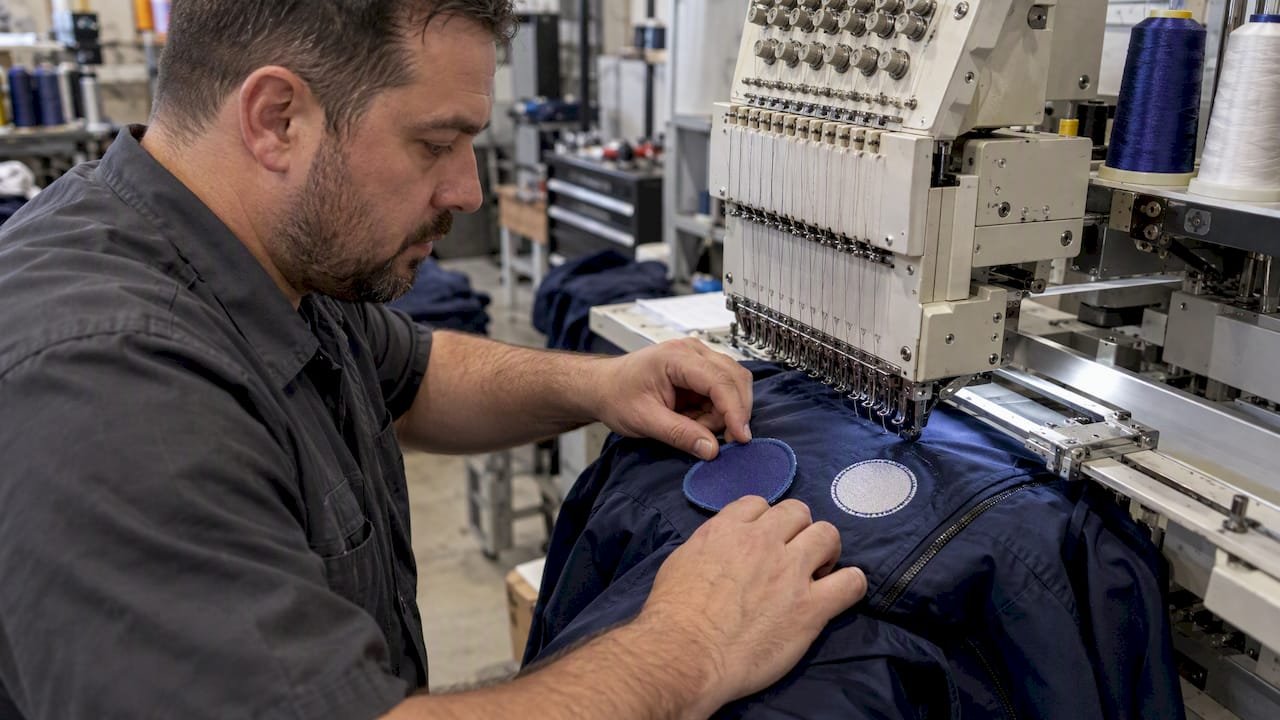
Direct embroidery wins for small, detailed logos that need a clean, professional finish and long-term durability, while appliqué works better for large fills, bold patch-style graphics, or designs where cutting stitch count matters. Many brand managers combine both: appliqué for the big color block, embroidery for the fine outline or text. The right call depends on artwork size, garment type, and how many washes the piece needs to survive.
TL;DR:
- For quotes, request stitch count, machine stops, per piece lead time, and whether digitizing is charged once or per order; small runs absorb setup costs.
- Appliqué requires heat seal backing before stitching, and secure satin or zigzag border stitching prevents its edge from lifting or fraying after repeated washing.
- Small logos usually cost less with direct embroidery, while appliqué can reduce costs on large fills by replacing dense stitches, despite added trimming and handling.
- For designs combining broad color blocks with fine text, suppliers can layer appliqué beneath embroidery, reducing stitch counts while preserving sharp detail.
- Request a digitized proof, not only a mockup, before production to check stitch density and appliqué placement; artwork size and garment type also shape the result.
Table of Contents
- Comparing the look, texture, and durability of each technique
- What goes into materials, backing, and machine setup
- How setup and stitch count shape pricing and lead times
- What to expect on cost and timing for branded apparel
- Washing and long-term wear for both techniques
- Combining appliqué and embroidery in one design
- A quick checklist for choosing your decoration technique
- Why this choice matters more than most buyers assume
- How we help you get the right finish on your branded apparel
- FAQ
- Sources
- Manufacturer guidance and related reading
Comparing the look, texture, and durability of each technique
Direct embroidery builds the design entirely from stitched thread, so the surface reads as a single, uniform texture with crisp edges. It holds detail well even at small sizes, which is why it dominates polo chests, cap fronts, and cuffs where logos rarely exceed a few inches.
Appliqué layers cut fabric onto the garment before stitching it down, so the design has visible depth: you can feel the fabric edge and see a slight ridge where it meets the base material. That texture reads well at larger sizes, like jacket backs, team-wear panels, or patch-style emblems, where a flat embroidered fill would require many stitches.
Durability splits along the same line. Thread that is sewn directly into the fabric becomes structurally part of the garment, so direct embroidery tends to hold up through heavy wear and repeated laundering without separating from the base. Appliqué is just as washable when the tack-down and border stitching are done correctly, but a loose edge is the one failure point to watch for over time.
Common branded-apparel matchups:
- Polo or shirt chest logos: direct embroidery, for clean detail at small scale.
- Caps and cuffs: direct embroidery, since fine text and small icons hold up better in thread.
- Jacket backs or oversized team graphics: appliqué, for bold color blocks without excess stitching.
- Patch-style emblems: appliqué, for the raised, textured look buyers expect from a patch.
What goes into materials, backing, and machine setup
Appliqué and embroidery rely on different production steps, and knowing them helps you brief a supplier accurately. Appliqué starts with a placement stop so the fabric piece can be positioned over the outline, followed by a tack-down stitch that holds it in place for trimming, then a final satin or outline stitch that seals the edge. Manufacturer guidance on appliqué specifies that the fabric piece must be backed with a heat seal before it’s applied, which bonds it to the base and prevents shrinkage or puckering during stitching.
Direct embroidery setup centers on digitizing. Thread weight determines the stitch density and needle size needed, and getting that combination wrong shows up immediately as puckering, thread breaks, or gaps in coverage. Proper tensioning matters too: a well-balanced stitch shows roughly a third of the underthread visible on the reverse side, which tells a digitizer the top and bobbin tension are matched correctly.
- Appliqué needs a heat-seal backing step before stitching begins.
- Embroidery needs stitch density and needle size matched to thread weight.
- Both require accurate digitizing files before production starts.
Pro Tip: Ask your supplier for a digitized proof before full production, not just a mockup image. It’s the only way to confirm stitch density and appliqué placement will produce a clean result.
How setup and stitch count shape pricing and lead times
Stitch count drives most of the time and cost in embroidery, since the machine runs longer on dense fills. Appliqué can actually lower the stitch count on large graphics, because a fabric piece covers area that would otherwise need many fill stitches. That tradeoff is worth understanding before comparing quotes.
- Stitch count sets base run time. More stitches mean more machine minutes per piece.
- Appliqué trades stitches for labor. Placement, tack-down, and trimming add hands-on steps even as they cut stitch count on dense designs.
- Batch size changes the math. Setup and digitizing costs spread across a large run, so per-piece costs drop as quantity rises.
- Small runs carry more setup weight. A smaller order absorbs the same digitizing cost across fewer units than a larger order.
When requesting a quote, ask for stitch count, the number of separate machine stops required, and an expected per-piece lead time. That gives you a true apples-to-apples comparison instead of a single bundled number. Our guide to estimating stitch count and pricing breaks this down further for anyone building a budget before placing an order.
What to expect on cost and timing for branded apparel
Cost differences usually come down to four factors: total stitch count, the extra fabric needed for appliqué pieces, the labor for trimming and tacking, and the time a digitizer spends preparing the file. As a rule of thumb, embroidery tends to be the cheaper route for small logos, since there’s no extra material or trimming step involved.
Appliqué can become the more cost-effective option once artwork gets large enough that a flat fill would require heavy stitch counts. The handling stops it adds take a few extra minutes per piece, but that time is often offset by shorter embroidery runtime on the parts that remain thread-based.
- Ask suppliers to break out stitch count separately from material and labor costs.
- Request lead time estimates per technique, not just a combined total.
- Confirm whether digitizing is a one-time fee or billed per order.
Washing and long-term wear for both techniques
Direct embroidery is integrated into the fabric structure, so it generally holds up through repeated washing without separating. Appliqué is also machine-washable when the tack-down and border stitching are done to spec, but a poorly secured edge is the point most likely to lift or fray over time.
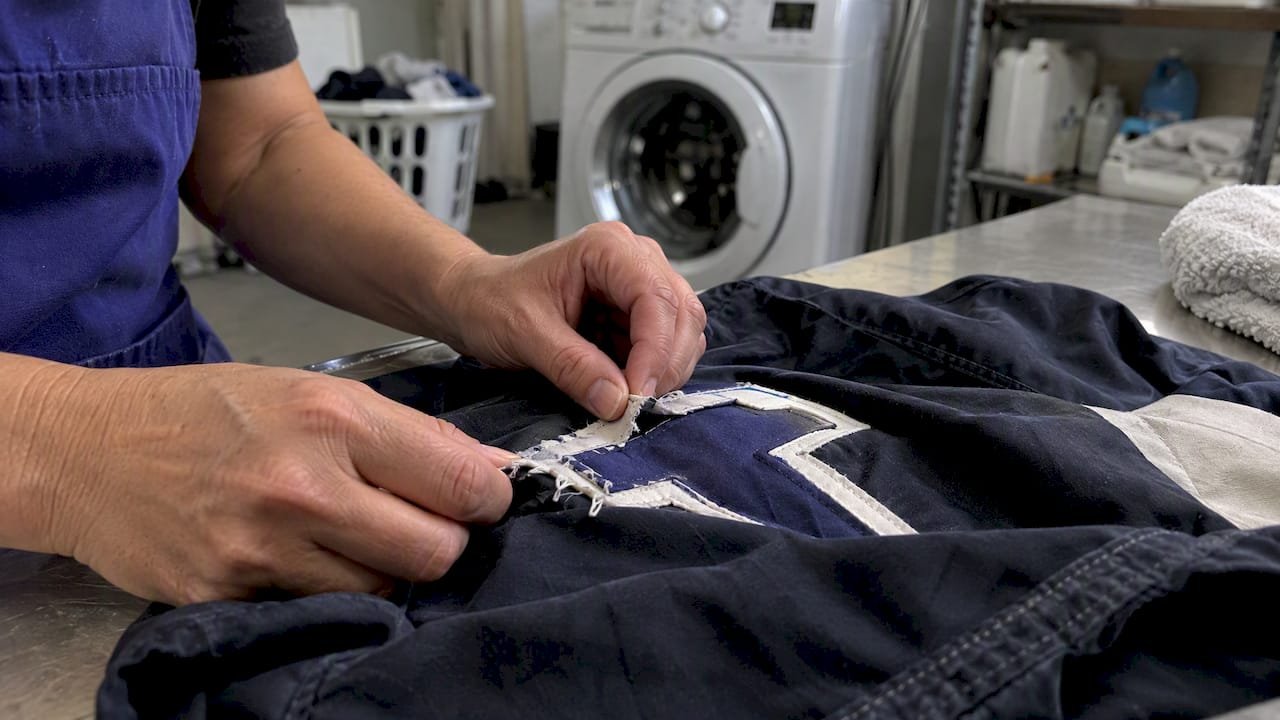
For both, a gentle cycle and air-dry or low-heat tumble setting protects the stitching longest. When specifying appliqué work, ask your supplier to confirm a secure satin or zigzag border stitch around every edge, since that border is what keeps the fabric piece bonded through repeated wear.
Combining appliqué and embroidery in one design
Many suppliers run both techniques on a single piece when a design calls for a large color block plus fine detail. The sequence typically goes: lay the appliqué fabric, tack it down, trim the excess, then embroider the detail and outline stitch on top.
This hybrid approach keeps stitch counts manageable on dense fills while still delivering sharp text or fine linework where embroidery does it best. It also creates a layered, dimensional look that reads well on jackets, team uniforms, and patch-style branding.
- Appliqué handles the large fill; embroidery handles the fine detail.
- The combination keeps stitch counts lower than an all-thread design of the same size.
- A tack-down stop and final satin border are standard steps your supplier should confirm.
A quick checklist for choosing your decoration technique
Start with artwork size and garment type, then work through the rest of the checklist before requesting quotes.
- Check the final artwork size. Small logos favor embroidery; large fills favor appliqué.
- Consider the garment. Polos and caps usually call for embroidery; jackets and team wear often suit appliqué.
- Decide on texture. A flat, thread-based look points to embroidery; a raised, patch-like look points to appliqué.
- Estimate wash frequency. Uniforms worn daily need durable edge stitching either way.
- Confirm run size and deadline. Larger runs amortize setup costs better for either technique.
When you request quotes, ask suppliers for estimated stitch count, whether appliqué backing will be used, how many machine stops the job requires, and their recommended needle and thread combination.
Pro Tip: Request a stitch-count and setup breakdown from every supplier you compare. It’s the only way to tell whether a lower quote reflects less work or just thinner margins.
For patch-style projects specifically, our comparison of woven versus embroidered patches walks through additional considerations for brand managers choosing between the two formats.
Why this choice matters more than most buyers assume
Most procurement decisions treat embroidery and appliqué as interchangeable options you pick based on budget alone. That undersells the decision. The real variable is campaign intent: a small logo on a uniform polo that needs to survive two years of weekly washing is a different problem than an event jacket meant to look bold in photos.
Buyers who treat this as a pure cost comparison often end up with mismatched results, embroidery that looks thin and busy at large scale, or appliqué that looks disproportionately heavy on a small chest logo. Matching technique to campaign goal, audience, and timeline consistently outperforms matching technique to price alone.
— Jerry
How we help you get the right finish on your branded apparel
We handle bulk custom apparel orders and rush ordering, whether your project calls for direct embroidery, appliqué, or a hybrid of both. Our distribution and fulfillment services support single-location and multi-location delivery, so a national rollout and a single office order get the same attention to detail.
When you request a quote, have your logo file, preferred technique, placement, quantity, and deadline ready. That lets us match the right setup, from needle and thread to appliqué backing, to your artwork the first time. Strong production quality also depends on consistent brand application across every piece, a point well worth understanding before you finalize any order. Visit our ordering hub to start a quote or talk through which technique fits your campaign.
FAQ
Is “embroidered” spelled correctly?
Yes, “embroidered” is the correct spelling, describing fabric decorated with stitched thread designs. It’s the past-tense form of “embroider,” used for both direct embroidery and appliqué work that includes embroidered detailing.
Is embroidery better than DTF?
Neither is universally better since they suit different jobs. Embroidery gives a textured, long-wearing finish ideal for logos on structured garments, while DTF (direct-to-film) printing suits detailed, full-color graphics on softer fabrics where a flat, printed look is preferred.
What are the three types of patches?
Patches are commonly grouped as embroidered, woven, and printed or PVC. Embroidered patches use raised thread detail, woven patches offer a flatter finish for fine text, and printed or PVC patches handle photo-realistic or highly detailed designs that stitching can’t replicate as cleanly.
Is a Cricut an embroidery machine?
No, a Cricut is a cutting machine designed for vinyl, paper, and fabric cutting, not stitching. Embroidery requires a dedicated embroidery machine that reads digitized stitch files and sews thread directly into fabric.
Manufacturer guidance and related reading
For technical detail on appliqué backing and digitizing density, Madeira’s guidance on appliqué construction and its digitizing density guide cover the production specifics referenced above. For related buying decisions, see our guides on screen printing versus embroidery and the logo apparel buying guide for bulk orders.
 Bottle Carriers
 Mugs