

What Is a Promotional Product Distributor?


Most marketing and procurement professionals assume a promotional product distributor is simply a middleman who takes your order and ships you branded pens. That framing undersells the role by a wide margin. A promotional product distributor is actually a strategic partner who manages product sourcing, brand compliance, decoration, and fulfillment so your campaigns land with consistency and impact. This article breaks down exactly what distributors do, how they add value beyond order processing, and how to find the right one for your brand.
Table of Contents
- Key takeaways
- What is a promotional product distributor?
- How distributors add value beyond order fulfillment
- Distributor types, pricing, and how the workflow runs
- How to find and select the right distributor
- Real-world examples of distributor impact
- My take on the role most clients underestimate
- Explore Discountswag’s promotional product catalog
- FAQ
Key takeaways
| Point | Details |
|---|---|
| Distributors are strategic intermediaries | They sit between manufacturers and buyers, managing sourcing, customization, and campaign logistics. |
| More than resellers | Top distributors provide consultative expertise, brand alignment support, and creative campaign development. |
| Supplier vetting matters | Distributors screen suppliers for quality and compliance, protecting you from production delays and safety issues. |
| Early involvement pays off | Bringing a distributor in during campaign planning prevents mismatched products and missed deadlines. |
| Technology drives service quality | Leading distributors use platforms like ASI ESP+ to manage orders, CRM, and client portals at scale. |
What is a promotional product distributor?
A promotional product distributor is an independent reseller who acts as the critical link between product suppliers and the organizations that use branded merchandise to market themselves. The promotional products definition covers a broad range of physical items, from branded apparel and drinkware to tech accessories and trade show giveaways, all customized with a company’s logo or messaging. Distributors do not manufacture these items. They source them, customize them, and deliver them to clients as part of a coordinated marketing effort.
The promotional products industry is valued at over $25 billion annually, with online company store sales alone reaching $2.35 billion in 2024. That scale reflects just how central distributors are to how brands communicate through physical touchpoints.
Here is what a distributor actually does on any given project:
- Needs analysis: They consult with you to understand your campaign goals, audience, budget, and timeline before recommending a single product.
- Product curation: They pull from a network of promotional item suppliers to build a shortlist tailored to your objectives.
- Customization management: They handle artwork, decoration methods (embroidery, screen printing, laser engraving), and logo compliance.
- Fulfillment coordination: They manage production timelines, quality checks, and delivery logistics.
- Campaign development: For larger programs, they help design the full promotional product marketing strategy, not just the items.
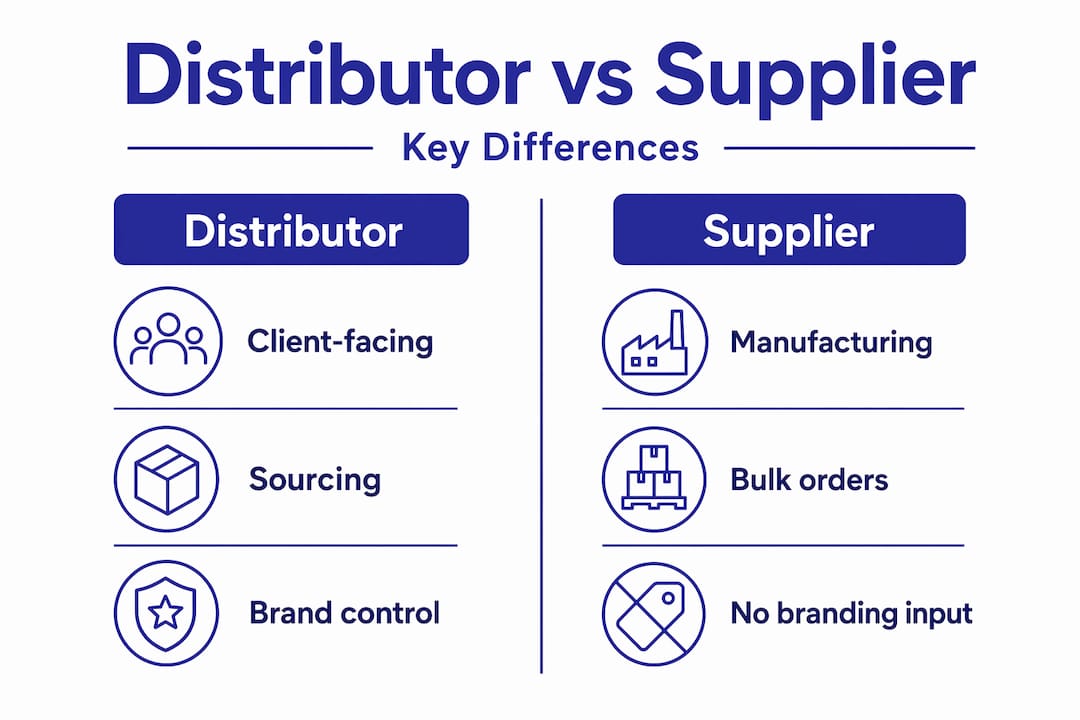
The key distinction between a supplier and a distributor is function. Suppliers manufacture or import the products. Distributors function as the knowledgeable salesforce, solving client-specific marketing needs that go well beyond product selling.
How distributors add value beyond order fulfillment
This is where most clients leave money on the table. They treat their distributor like a print shop and miss the strategic layer entirely.
Top distributors act as long-term partners who align with both marketing and procurement teams to manage brand standards and consolidate projects across multiple campaigns. Instead of your marketing team managing five different promotional item suppliers for one event, a single distributor handles all of it under one brand umbrella.
The value shows up in several concrete ways:
- Brand consistency: A distributor tracks your Pantone colors, approved logo versions, and decoration specifications across every item. Without that oversight, inconsistent branding and degraded logo quality become real problems, especially when you are ordering from multiple product categories.
- Creative input: Strong distributors bring product ideas you would not have found on your own, whether that is a trending tech accessory or an outdoor item that fits your event context perfectly.
- Operational consolidation: One point of contact for sourcing, artwork, proofing, and delivery reduces the coordination burden on your team significantly.
- Technology platforms: Leading distributors use platforms like ASI ESP+ to manage orders, CRM data, and client portals, which means better visibility and fewer surprises for you.
Pro Tip: When briefing a distributor, include your brand style guide, not just a logo file. The more context they have about your visual identity and campaign tone, the sharper their product recommendations will be.
Marketing with promotional products works best when the distributor understands your broader campaign goals. A distributor who knows you are targeting enterprise IT buyers at a conference will recommend something very different from one who just knows you need 500 branded items by October.

Distributor types, pricing, and how the workflow runs
Not all distributors operate the same way, and understanding the differences helps you choose the right fit.
Direct vs. exclusive distributors
Direct distributors work across a wide range of suppliers and product categories, giving you access to thousands of items. Exclusive distributors partner with specific manufacturers or product lines, which can mean deeper expertise in a niche but less flexibility overall. For most marketing and procurement teams, a direct distributor with a broad, vetted supplier network is the stronger choice.
How pricing works
Distributors typically apply a markup to the supplier’s net price. A standard markup of around 20% is common in the industry, though this varies based on order complexity, customization requirements, and service level. That markup covers the distributor’s consultative work, artwork services, quality control, and account management. When you compare that to the internal labor cost of managing multiple suppliers yourself, the math usually favors the distributor.
The typical workflow, step by step:
- Needs analysis: The distributor meets with you to define campaign goals, audience, budget, and deadline.
- Product curation: They source options from verified promotional item suppliers and present a curated shortlist.
- Artwork and proofing: Decoration files are prepared, and you approve a digital or physical proof.
- Production and decoration: The supplier produces and decorates the items to spec.
- Quality control: The distributor reviews production output before items ship.
- Fulfillment: Items are delivered to one location or drop-shipped to multiple recipients.
Effective sourcing directly impacts lead time reliability and prevents problems like split deliveries and inconsistent branding across a single campaign.
On the risk side, distributors also vet suppliers for compliance and reliability, which shields you from regulatory issues, substandard goods, and production delays. If you are ordering promotional products for a children’s event or a healthcare audience, for example, product safety standards matter. A good distributor handles that screening before a product ever reaches your desk.
| Distributor type | Best for | Trade-off |
|---|---|---|
| Direct distributor | Broad product needs, multiple campaigns | Requires clear briefs to narrow options |
| Niche/specialty distributor | Industry-specific items (tech, apparel, outdoor) | Less flexibility across categories |
| Exclusive distributor | Deep expertise in specific product lines | Limited supplier network |
How to find and select the right distributor
Knowing what a promotional product distributor does is half the battle. Choosing the right one for your brand takes a bit more scrutiny.
Start with industry expertise. A distributor who works primarily with healthcare brands will have a different supplier network and product instinct than one focused on tech companies or consumer events. Ask directly about their client roster and the types of campaigns they manage most often.
Evaluate their technology capabilities. Sophisticated platforms enable complex order management and elevate distributor service levels. If a distributor still manages everything through email threads and spreadsheets, that is a signal about their operational maturity.
Check their supplier vetting process. Ask how they qualify new suppliers, what quality checks they run on production, and whether they carry product liability coverage. These questions separate distributors who are serious about quality from those who are just passing orders through.
Here is what else to assess before committing:
- Aftersales support: Do they follow up after delivery to confirm satisfaction and address issues? Distributors who disappear after the invoice is paid are not long-term partners.
- Campaign support depth: Can they help you build a trade show giveaway strategy from scratch, or do they only execute what you hand them?
- Turnaround transparency: Do they give you realistic timelines upfront, including production and decoration lead times, or do they overpromise and scramble later?
Pro Tip: Write a one-page campaign brief before your first distributor conversation. Include your audience profile, event date, budget range, and brand guidelines. Distributors who receive structured briefs return sharper recommendations faster.
Real-world examples of distributor impact
Consider a mid-sized software company preparing for a major industry conference. They need 1,200 branded items across three product categories: tech accessories, apparel, and drinkware. Without a distributor, that means three separate supplier relationships, three sets of artwork approvals, three production timelines to track, and three delivery windows to coordinate.
With a distributor, all of that runs through one account manager. The distributor curates logo tech accessories that fit the audience, sources apparel in the right size mix, and confirms that all three items use the exact same Pantone color for the logo. Everything arrives at the venue on the same day.
The table below shows how distributor involvement changes campaign outcomes:
| Scenario | Without distributor | With distributor |
|---|---|---|
| Brand consistency | Logo color varies across items | Consistent Pantone match across all products |
| Supplier management | 3 to 5 separate vendor contacts | Single point of contact |
| Production risk | No vetting, higher defect risk | Supplier-vetted, quality-checked output |
| Timeline reliability | Dependent on individual vendor response | Managed lead times with buffer planning |
| Cost efficiency | No volume leverage | Consolidated orders may reduce per-unit cost |
A second scenario: a procurement team at a financial services firm needs client appreciation gifts for 400 accounts. They have a strict brand standard and a compliance requirement around gift value limits. A distributor who works with financial clients regularly already understands those constraints. They recommend products within the allowable value range, confirm that decoration meets brand standards, and manage swag box fulfillment so each client receives a consistent, professionally packaged gift.
My take on the role most clients underestimate
I have watched companies spend serious budget on promotional campaigns and walk away disappointed, not because the products were bad, but because they treated their distributor like a vending machine. They came with a product already chosen, a logo file, and a ship date. The distributor fulfilled the order. And the campaign landed flat.
The consultative expertise distributors offer is only activated when you let them into the strategy conversation early. In my experience, the clients who get the best results bring their distributor in during campaign planning, not after the creative brief is locked. That is when the distributor can flag that the item you chose has a six-week lead time you cannot afford, or that a different product would resonate better with your audience at the same price point.
Decoration complexity is another thing clients consistently underestimate. Pad printing, embroidery, and laser engraving each have specific constraints around logo size, color count, and placement. A distributor who manages decoration methods with real expertise will catch problems before production. One who just passes your file to a supplier will let those problems become your problem after the fact.
My honest advice: treat your distributor relationship the way you treat your agency relationship. Brief them well, involve them early, and give them enough context to do their best work. The ROI difference is real.
— Jerry
Explore Discountswag’s promotional product catalog
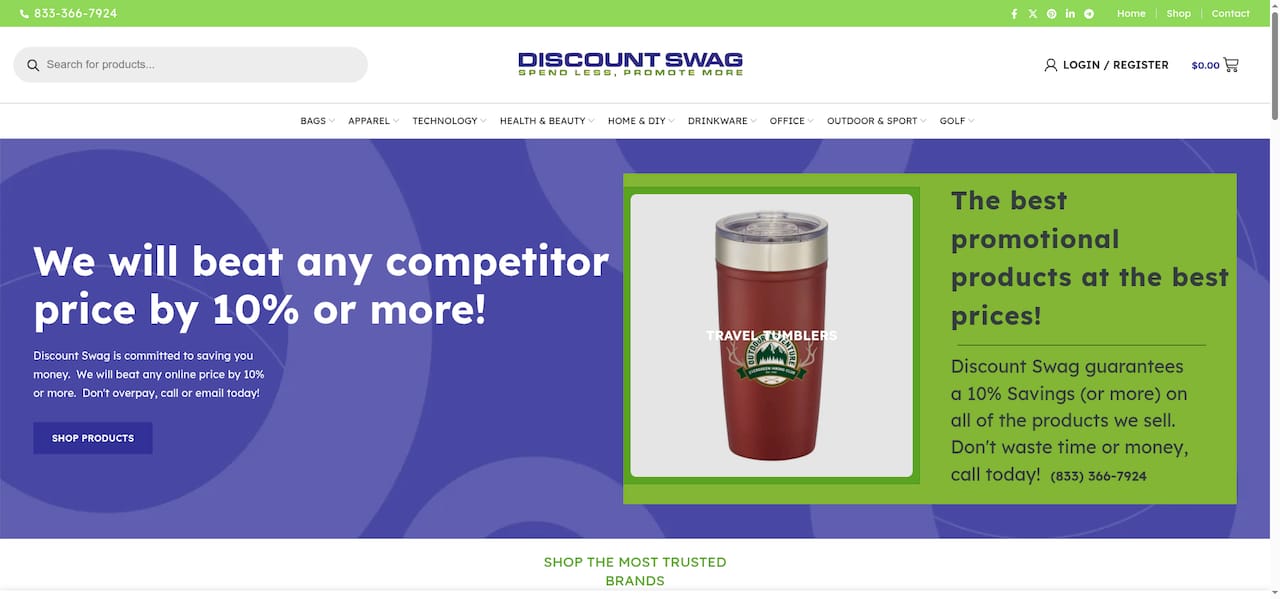
Discountswag specializes in corporate promotional products sourced and fulfilled with the kind of quality control and brand attention this article describes. Whether you are building a trade show kit, a client gift program, or a bulk giveaway campaign, the catalog is built to give marketing and procurement teams real options at competitive price points. Browse bulk promotional products for budget-conscious campaigns, or explore the outdoor promotional products guide for event-specific sourcing. Every product category is curated with brand customization in mind, so you spend less time coordinating and more time executing.
FAQ
What does a promotional product distributor do?
A promotional product distributor sources branded merchandise from suppliers, manages customization and decoration, and coordinates fulfillment for client marketing campaigns. They act as a consultative partner, not just an order processor.
How is a distributor different from a supplier?
Suppliers manufacture or import the physical products. Distributors function as the client-facing salesforce that selects, customizes, and delivers those products as part of a marketing solution.
What are the main benefits of using a promotional product distributor?
The core benefits include consolidated supplier management, brand consistency across product types, vetted product quality, and access to consultative expertise that improves campaign outcomes.
How do I find the right promotional product distributor?
Assess their industry experience, supplier vetting process, technology capabilities, and willingness to engage during campaign planning rather than just at the order stage.
What types of promotional products do distributors typically offer?
Distributors work across a broad range of categories including apparel, drinkware, tech accessories, trade show items, outdoor products, and client gift sets, all customizable with brand logos and messaging.
 Bottle Carriers
 Mugs
Mugs