

Corporate Apparel Guide for Smarter Buying

A rushed apparel order usually shows up in the same predictable ways – wrong fabric for the season, logos that feel oversized, sizing gaps that trigger complaints, or a price that looked fine until decoration and shipping were added. A solid corporate apparel guide helps you avoid those mistakes before they hit your budget or your brand.
For business buyers, branded apparel is rarely just apparel. It can be employee uniforming, trade show visibility, onboarding, customer-facing presentation, remote team engagement, or giveaway inventory tied to campaign results. That means the right choice depends on who will wear it, how often they will use it, and how much operational complexity your team can handle.
What a corporate apparel guide should solve
The best corporate apparel guide does more than point you toward polos and tees. It should help you make faster decisions around spend, quality, decoration, and fulfillment. If your team is ordering for one office, the process is fairly simple. If you are shipping to field reps, remote employees, new hires, or multiple event locations, the apparel decision quickly becomes a logistics decision too.
That is why smart buyers start with the use case, not the product page. A quarter-zip may look more premium than a tee, but if you are ordering for a summer outdoor event, it can be the wrong investment. A low-cost shirt may work for a one-day giveaway, but it may not hold up for staff who wear it every week. The product needs to match the job.
Start with the real purpose of the order
Before you compare fabrics or colors, define what success looks like. If the order is for employee uniforms, consistency and reordering matter most. If it is for a recruiting event, comfort and broad appeal matter more. If it is for client gifting, presentation and brand perception usually justify a higher spend.
There are clear differences between common business apparel needs. Daily wear programs often perform best with polos, button-downs, fleece layers, and outerwear that feel professional without becoming too formal. Event and giveaway programs tend to lean on T-shirts, caps, and lightweight layers because they are easier to fit across a large audience and keep the cost per unit in line. Onboarding and remote engagement kits often benefit from apparel that feels more gift-worthy, such as premium hoodies, branded pullovers, or recognizable retail-inspired styles.
This is also where budget discipline matters. A lower unit price is not always the best value if the item feels disposable. On the other hand, paying for premium apparel on a high-volume campaign can squeeze your budget without improving response. The right answer depends on how visible the apparel will be and how long you expect it to stay in use.
Choose apparel types that fit the audience
A corporate apparel guide should narrow the field quickly. Most business programs fall into a few core categories, and each one has a practical role.
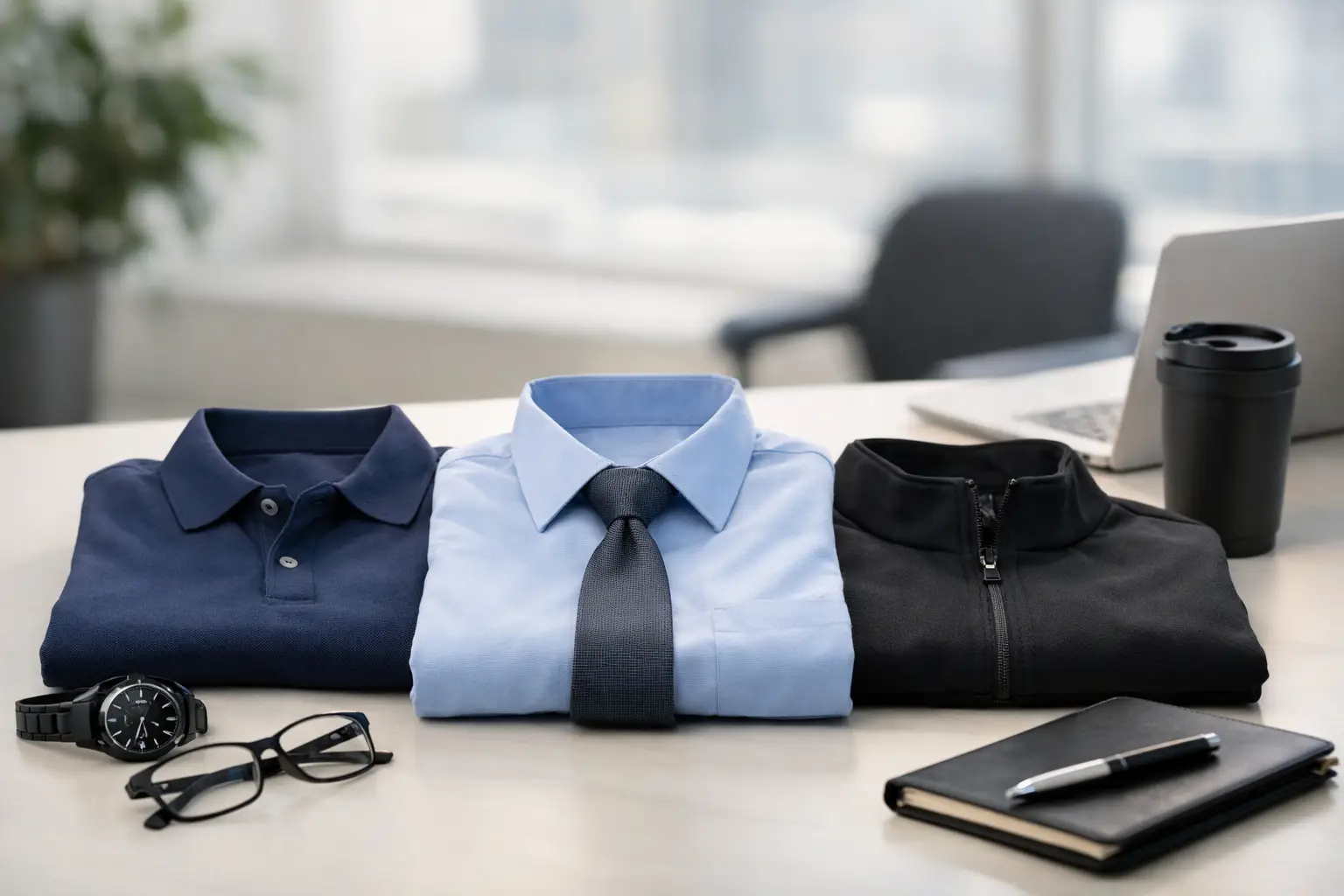
Polos are the safest choice for teams that need a clean branded look across sales floors, customer visits, branch locations, and conferences. They balance comfort and professionalism, and they are easier to standardize across departments. T-shirts work well for casual company culture, internal events, volunteer days, and large giveaways where price and broad size coverage matter.
Quarter-zips, fleece, and light jackets are stronger when you want the apparel to feel more valuable. They are a smart fit for employee appreciation, executive programs, and cooler-weather use. Button-downs can look polished, but they require more careful sizing and are less forgiving across a mixed audience. Hats and layered accessories can complement apparel programs, but they rarely replace core wearables if your goal is consistent brand presence.
Gender fit, size inclusivity, and climate should guide the final mix. A single unisex style may simplify ordering, but it does not always deliver the best wear rate. If people do not like the fit, the apparel ends up in a drawer. That is wasted spend.
Fabric, decoration, and wearability matter more than buyers expect
This is where many orders go off track. A shirt can look great online and still fail in the field. Lightweight cotton may be comfortable, but it can shrink or lose shape faster with repeated washing. Performance polyester can hold color and resist wrinkles, but some audiences prefer a softer hand feel. Blends often strike the best balance for general business use.
Decoration method matters just as much. Embroidery gives polos, outerwear, and hats a more durable, professional finish. Screen printing is cost-effective for T-shirts and large-volume event runs. Heat transfer can work for certain designs and smaller runs, especially when art complexity is high. The mistake is choosing decoration based only on price instead of garment type and logo detail.
Logo placement deserves discipline. A left-chest logo is standard for a reason – it is clean, wearable, and works across many settings. Large front or back graphics can be effective for event staff or campaign visibility, but they are less versatile for office or client-facing use. If you want people to wear the apparel often, subtle usually wins.
Build your budget around total cost, not item cost
Procurement teams know this already, but apparel buying still gets derailed by sticker pricing. The blank garment price is only one part of the total. Decoration count, stitch count, setup fees, size upcharges, freight, split shipments, and rush production all affect the final number.
That is why comparison shopping has to be apples to apples. A cheaper item with weaker fabric, limited sizes, or higher decoration charges can end up costing more in practice. The same goes for vendors that look competitive on basic products but lose value when you add warehousing, kitting, or multi-location shipping.
For high-volume orders, consistency matters as much as cost. If you find an apparel program that works, the ability to reorder reliably can save more over time than chasing a slightly lower initial price. Trusted supplier quality and strong pricing are not opposites. They should come together.
Plan for distribution before you place the order
A good corporate apparel guide has to cover fulfillment, because shipping complexity changes what makes sense to buy. Sending 500 identical shirts to one office is straightforward. Sending personalized apparel kits to remote hires across the US is not.
If your recipients are spread across locations, size collection becomes a project of its own. So does packaging, labeling, and delivery timing. Premium outerwear may be a great choice for employee gifts, but it also increases freight and can complicate exchanges. Lightweight apparel may be easier to ship and easier to build into custom branded boxes.
This is where operational support matters. Buyers often focus on the merchandise and underestimate the lift required to get it to the right people on time. When deadlines are tight, reliable production and distribution support are not extras. They protect the entire campaign.
How to avoid the most common apparel buying mistakes
The most expensive mistakes are usually simple ones. Ordering based on internal preference instead of audience behavior is one. Over-branding is another. So is choosing a premium item for a large group without pressure-testing the full landed cost.
A few checkpoints help. First, verify the primary use case. Second, ask whether the apparel is meant to be worn once, occasionally, or weekly. Third, make sure the garment, decoration, and logo placement support that goal. Fourth, review size range and shipping requirements before approval, not after. Finally, confirm the true delivered cost.
If you are sourcing at scale, speed matters, but so does predictability. Business buyers need fewer surprises, not more. That is why a value-driven partner can make a measurable difference. When pricing is aggressive, supplier quality is vetted, and fulfillment can support single-site or distributed delivery, the buying process gets easier. Discount Swag is built around exactly that kind of practical support.
The best corporate apparel guide is one your team can actually use
The right apparel program is not the flashiest option or the cheapest line item. It is the one that fits your audience, supports your brand, and arrives without creating work your team did not plan for. For some organizations that means dependable polos at scale. For others it means premium layers for retention, recruiting, or remote employee engagement.
Buy apparel the same way you buy any smart promotional product – with clear use cases, realistic cost review, and a fulfillment plan that matches your operation. When those pieces line up, branded apparel stops being a sourcing headache and starts doing its job.
 Bottle Carriers
 Mugs
Mugs