

Promotional Items for Product Demos That Convert

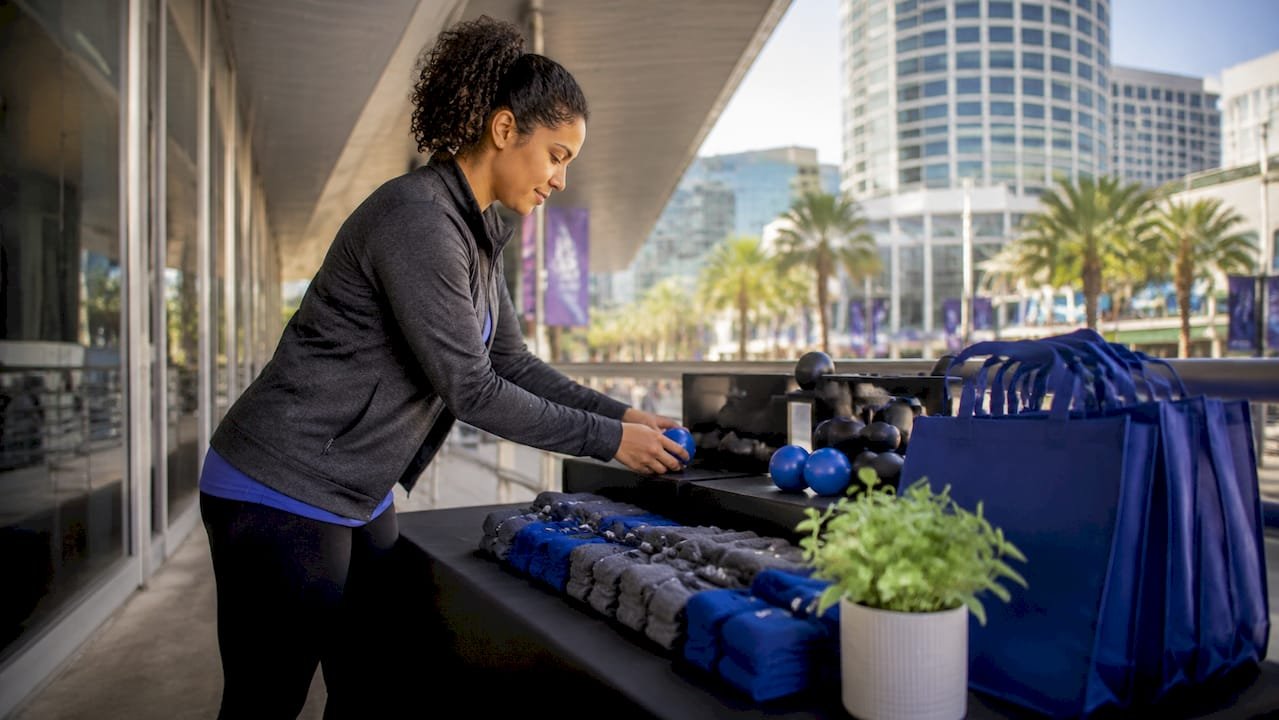
Promotional items for product demos are customized giveaways designed to attract, qualify, and convert prospects during live demonstrations. The best programs use a tiered giveaway model, combining physical branded merchandise with digitally interactive tools like QR and NFC-enabled products, to maximize lead quality and extend engagement well past the event floor. Platforms like Custom Ink and VistaPrint give marketing teams broad product options, but the strategy behind the giveaway matters more than the item itself.
1. what is the best tiered giveaway strategy for product demos?
A tiered giveaway approach is the most effective structure for demo events because it balances foot traffic, lead qualification, and budget control in one system. Instead of handing out the same item to every passerby, you segment your giveaway inventory across three levels based on visitor behavior.
Custom Ink’s tiered model recommends allocating 60–70% of giveaways as small items for casual traffic, 20–30% as mid-tier items for scanned and qualified visitors, and 5–10% as premium items for demo completions or booked meetings. That ratio keeps your budget focused on the visitors most likely to convert.
Here is how each tier works in practice:
- Tier 1 (All visitors): Branded pens, stickers, or lanyards. Low cost, high volume, and they draw people to your booth.
- Tier 2 (Scanned or qualified leads): Tech accessories, custom drinkware, or branded notebooks. Awarded after a badge scan and one qualifying question.
- Tier 3 (Demo completions or booked meetings): Premium items like branded apparel, gift sets, or NFC-enabled products. Reserved for your best prospects.
Gated giveaways tied to demo completions consistently outperform open-handout swag on lead quality. The gate creates a natural conversation starter and filters out visitors with no purchase intent.
Pro Tip: Set aside a separate allocation of 10–15 premium items specifically for VIPs, press, and key accounts. Keep this stock off the main display and brief your team on who qualifies before the event opens.
Clear signage and consistent staff scripting are non-negotiable. Displaying gating rules simply and explaining them briefly makes the process feel fair and expected, which improves adoption rates and reduces friction at the booth.
2. top promotional items for product demos
The best demo merchandise falls into two categories: physical items that create immediate brand impressions and digital items that extend engagement after the event. The strongest programs use both.
Physical items
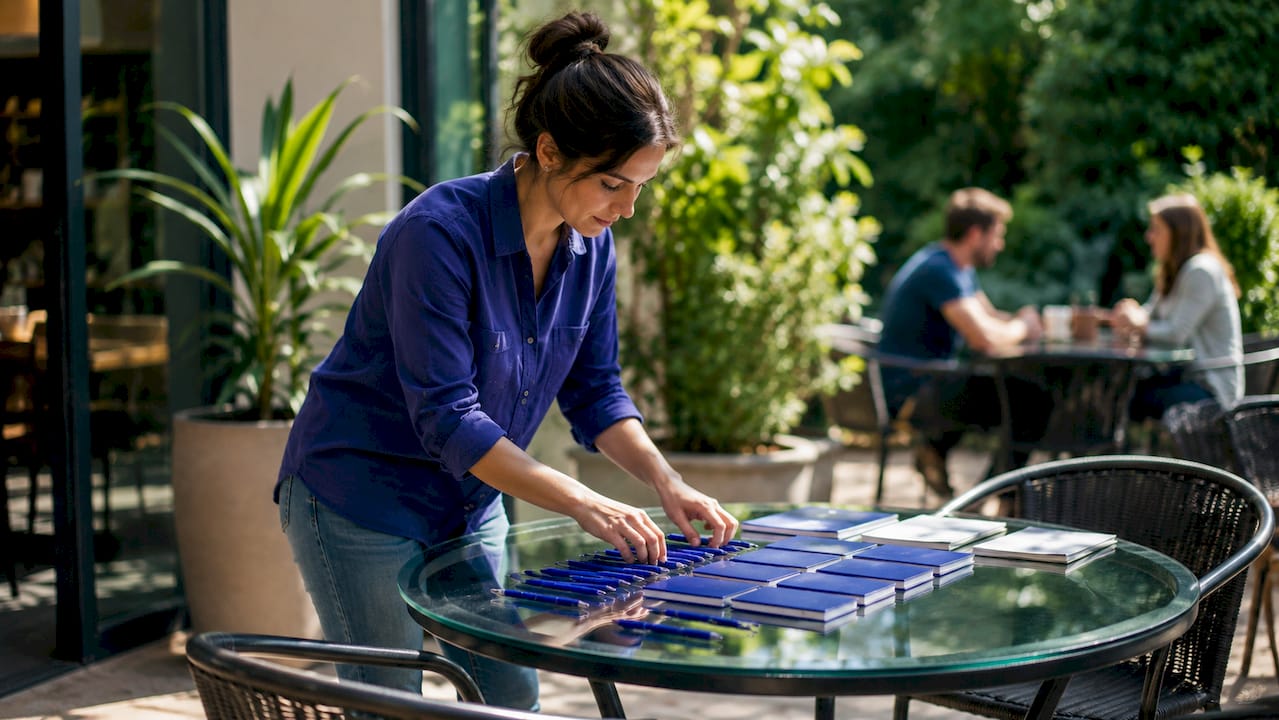
Custom pens and notebooks are the most cost-effective Tier 1 item. They are universally useful, easy to brand, and inexpensive enough to distribute freely. Use them to draw initial traffic.
Branded drinkware (tumblers, water bottles) performs well as a Tier 2 item. Recipients use them daily, which means repeated brand exposure long after the event ends.
Custom USB drives and phone holders are strong mid-tier choices. Tech accessories create memorable brand impressions and fit naturally into the tiered giveaway model because they carry enough perceived value to motivate demo participation.
Branded apparel (T-shirts, caps, jackets) is the most effective Tier 3 item. It signals exclusivity, and recipients wearing your brand at the event become walking advertisements on the show floor.
Digital and interactive items
QR code-linked video demos are a high-impact option that most teams underuse. QR-linked personalized videos are shareable, trackable, and continue the sales conversation after the trade show ends. Print the QR code on a card or embed it in a physical product.
NFC-enabled promotional products take this further. An NFC tag embedded in a branded item can trigger a product registration page, a loyalty portal, or a personalized follow-up sequence when tapped with a smartphone.
Here is a quick comparison to help you choose:
| Item Type | Best Tier | Cost Range | Measurable? |
|---|---|---|---|
| Branded pens | Tier 1 | Low | No |
| Custom drinkware | Tier 2 | Medium | No |
| Tech accessories | Tier 2 | Medium | No |
| Branded apparel | Tier 3 | High | No |
| QR-linked video card | Tier 2–3 | Low-Medium | Yes |
| NFC-enabled product | Tier 3 | Medium-High | Yes |
Pro Tip: If your budget allows only one digital item, choose a QR-linked card over a standard business card. The video content it delivers is far more persuasive than a printed URL, and you can track every scan.
3. how to integrate digital and physical items for extended engagement
Digitally interactive promo items are defined as physical giveaways embedded with QR codes or NFC tags that connect recipients to digital content after the event. This combination solves the biggest problem with traditional swag: the conversation ends when the visitor walks away.
NFC-enabled items collect granular interaction data and trigger content portals, which gives your marketing team measurable post-event touchpoints. A physical item without a digital layer is a one-time impression. A physical item with an NFC tag is a recurring engagement channel.
Here are the most effective ways to deploy digital-physical combinations at demos:
- Personalized follow-up videos: A QR code on a branded card links to a video that addresses the prospect’s specific pain point, recorded before the event and customized by segment.
- Product registration portals: An NFC tag on a sample product directs the recipient to a registration page, capturing contact data and triggering a nurture sequence automatically.
- Loyalty and reward portals: NFC-linked items can unlock exclusive content, discounts, or early access offers, giving recipients a reason to tap the tag more than once.
“Digitally interactive giveaways such as QR-linked personalized videos provide scalable, trackable post-demo engagement that physical items alone cannot match.” — Marketing Juice
The data advantage is significant. Physical items tell you nothing about post-event behavior. Digital layers tell you who engaged, when, and how many times. That information feeds directly into your CRM and improves follow-up timing and messaging. For teams focused on promotional items and lead generation, this is the most measurable upgrade available.
4. choosing the right demo furniture and display solutions
Branded demo furniture is not a luxury. It is a workflow tool that directly affects how smoothly your team runs demonstrations and how professional your booth appears to visitors.
Portable demo counters with built-in branding and storage create professional demo stations and improve the visitor experience. Foldable counters at approximately 875mm tall include shelving and branded front panels. They are lightweight, easy to set up, and hide excess inventory so your presentation stays clean.
Most portable counters assemble in under 5 minutes without tools, which matters when you are setting up across multiple show days or traveling between events. That efficiency reduces setup stress and lets your team focus on the demo itself.
Built-in shelving and ergonomic design help staff manage demos consistently, which improves visitor impressions across every interaction. A disorganized demo table signals a disorganized company. A clean, branded counter signals the opposite.
| Feature | Benefit |
|---|---|
| Branded front panel | Reinforces brand visibility at eye level |
| Built-in shelving | Keeps samples and brochures organized and out of sight |
| Foldable design | Easy transport and fast setup for multi-day events |
| Ergonomic height (~875mm) | Comfortable for staff and visitors during extended demos |
| Printable surface | Customizable messaging per event or product line |
Customized demo tables from suppliers like Printodelivery are lightweight, easy to assemble, and built for teams that run frequent events. Pairing a branded counter with your tiered giveaway system creates a cohesive, professional demo environment that signals credibility before a word is spoken.
5. inventory planning: how much to order
Order giveaway inventory based on expected qualified interactions, not total event attendance. This is the most common planning mistake event coordinators make, and it leads to either running out of premium items on day one or shipping boxes of unused swag back to the office.
Operational experts recommend planning per day of qualified scans and demos, then adding a 10–20% buffer for each tier. Separate your VIP and press allocation before the event opens and store it away from the main display. This prevents your best items from disappearing into casual traffic.
A practical planning formula looks like this: estimate your daily qualified leads based on past events or booth traffic data, multiply by the number of show days, then add your buffer. For a three-day show expecting 50 qualified leads per day, you need 150 Tier 3 items plus 15–30 in reserve. Tier 1 quantities follow total expected booth traffic, not qualified leads.
Staff briefings on inventory rules are as important as the items themselves. Expert Darren Amato recommends gating giveaways to demo completions to prevent paying for unqualified traffic. Your team needs to know exactly who gets what and when, without hesitation, so every visitor interaction feels consistent and intentional.
Key takeaways
The most effective promotional items for product demos combine a tiered giveaway structure with digitally interactive elements to maximize lead quality and extend engagement beyond the event.
| Point | Details |
|---|---|
| Use a tiered giveaway model | Allocate 60–70% small items, 20–30% mid-tier, and 5–10% premium based on visitor qualification. |
| Gate premium items to demo completions | Tying better giveaways to demos or booked meetings filters out unqualified traffic and improves ROI. |
| Add digital layers to physical items | QR and NFC-enabled products create trackable, post-event engagement that physical items alone cannot deliver. |
| Invest in branded demo furniture | Portable counters with storage and branding panels improve workflow, professionalism, and visitor impressions. |
| Plan inventory by qualified interactions | Order based on expected qualified leads plus a 10–20% buffer, not total attendance. |
Why most demo giveaway budgets get wasted
I have watched marketing teams spend thousands on premium swag and walk away with a pile of business cards and no pipeline. The problem is almost never the item. It is the absence of a gate.
The instinct to hand out everything freely feels generous, but it is actually a budget leak. When a $40 branded jacket goes to someone who stopped by for the free stuff and has zero purchase intent, that is $40 that could have rewarded a prospect who just sat through your full demo. Gating is not unfriendly. It is professional, and most visitors respect it when your signage and staff explain it clearly.
The shift I recommend is this: treat your Tier 3 item as a closing tool, not a traffic driver. It should feel like a reward for the prospect’s time and attention, not a bribe for stopping by. That framing changes how your team presents it and how the visitor receives it.
On the digital side, I am consistently surprised by how few teams use QR-linked video content as a giveaway. A well-produced two-minute product video on a branded card costs less than most physical Tier 2 items and outperforms them on every measurable metric. You can track who watched, when, and for how long. You cannot track what someone did with a tote bag.
Branded demo furniture is the last piece most teams overlook. A clean, professional counter is not just aesthetic. It signals that you run a tight operation, and that signal matters to the buyers you most want to attract.
— Jerry
How Discountswag helps you build a smarter demo program
Discountswag specializes in corporate promotional products built for exactly this kind of event marketing work. Whether you need high-volume Tier 1 items, tech accessories for mid-tier qualification, or premium branded merchandise for demo completions, Discountswag offers bulk pricing and custom branding across every category.
The catalog covers everything from custom trade show giveaways to branded apparel and tech accessories, with expert guidance on what works at different demo formats and event sizes. If you are building a tiered giveaway program from scratch or refreshing an existing one, start with the full range of branded promotional products for marketers to find the right mix for your next event.
FAQ
What are the best promotional items for product demos?
The best items depend on your tier. Custom pens and stickers work for Tier 1 traffic, tech accessories and drinkware for qualified mid-tier leads, and branded apparel or NFC-enabled products for demo completions.
How do gated giveaways improve lead quality?
Gated giveaways tie better items to specific actions like demo completions or booked meetings, which filters out casual visitors and ensures your budget reaches prospects with genuine purchase intent.
Should i use digital or physical promotional items?
Use both. Physical items create immediate brand impressions, while QR and NFC-enabled products deliver trackable, post-event engagement that physical items alone cannot provide.
How much giveaway inventory should i order?
Order based on expected qualified interactions per day, not total attendance, then add a 10–20% buffer. Keep a separate VIP and press allocation stored away from your main display stock.
What demo furniture works best at trade shows?
Portable foldable counters at approximately 875mm tall with built-in shelving and branded front panels are the most practical choice. They set up in under 5 minutes, hide excess inventory, and reinforce brand visibility throughout the event.
 Bottle Carriers
 Mugs
Mugs