

Promotional Items Lead Generation: A Marketer’s Guide


Most marketing teams have a box of branded pens and tote bags sitting in a storage closet somewhere. They were ordered for a trade show, handed out freely, and produced zero measurable results. That is the most common failure mode in promotional items lead generation. The items themselves are not the problem. The absence of a system around them is. This guide walks you through exactly how to build that system, from pre-campaign planning and item selection to on-floor capture, follow-up workflows, and ROI measurement.
Table of Contents
- Key takeaways
- Promotional items lead generation: what to prepare first
- How to execute a campaign that actually captures leads
- Common mistakes that kill lead quality
- Measuring results and optimizing your program
- My take: why a system beats a giveaway every time
- Build your lead gen campaign with Discountswag
- FAQ
Key takeaways
| Point | Details |
|---|---|
| System beats giveaway | Promo items only generate leads when integrated into a capture and follow-up workflow, not handed out freely. |
| Item and offer must align | Pairing a branded item with a specific lead magnet tied to the same message converts at far higher rates. |
| Speed determines conversion | Following up within 24 to 48 hours post-event is one of the highest-leverage actions in the entire campaign. |
| Qualification data is non-negotiable | Capturing product interest, authority level, and timeline on the spot enables personalized outreach that closes deals. |
| Measure what matters | Track scan-to-lead conversion, cost per impression, and follow-up conversion rates to refine every future campaign. |
Promotional items lead generation: what to prepare first
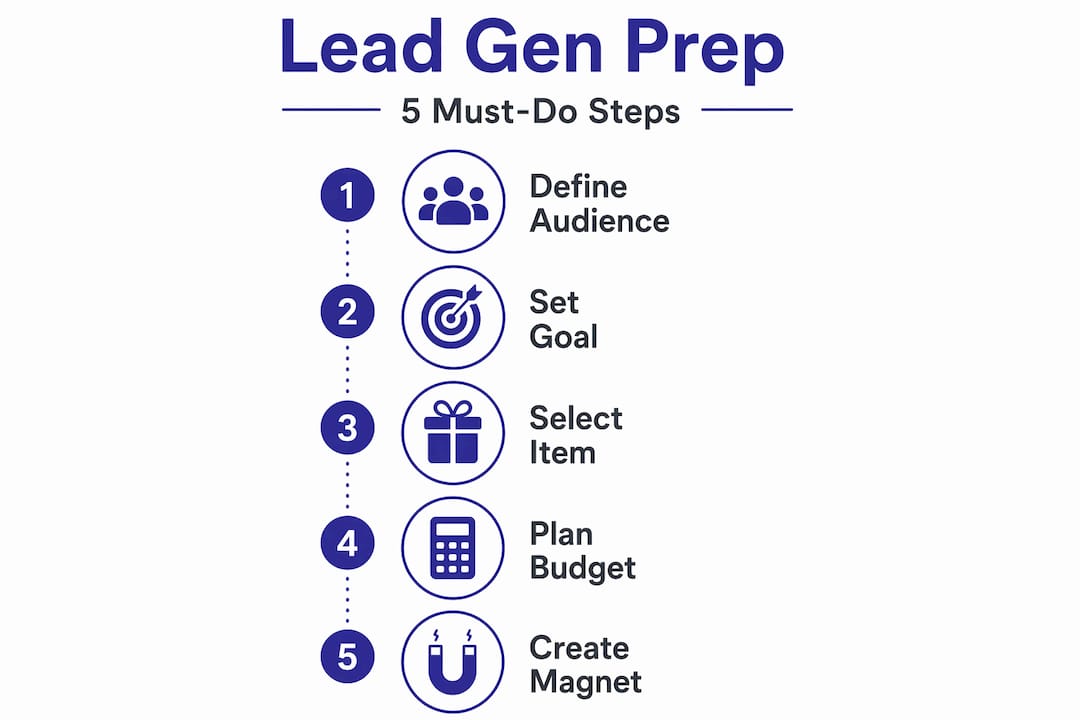
Before you order a single item, you need clarity on three things: who you are targeting, what outcome you want, and how you will capture and route leads. Skipping this step is why most branded merchandise marketing efforts produce a pile of contacts with no context and no conversion.
Define your audience and campaign goal. Promotional items for B2B lead generation work best when the item, the message, and the offer are all pointed at a specific buyer profile. A cybersecurity firm targeting IT directors needs a different item and a different lead magnet than a logistics company targeting operations managers. Get specific before you get creative.

Choose items that align with your message. The item is not just a giveaway. It is a physical representation of your brand promise. Logo tech accessories like branded USB hubs or wireless chargers communicate innovation and practicality to a tech-forward audience. A water bottle communicates wellness and sustainability. The item should make the recipient think of your brand in the right context every time they use it.
Budget with the right metrics. Most teams budget by unit cost. The better approach is cost-per-impression budgeting tied to lead outcome metrics. A $15 item that generates 40 qualified leads is a far better investment than a $3 item that generates zero.
Build a specific lead magnet. This is the step most teams skip entirely. Tailored lead magnets like calculators, audits, and checklists convert at 25 to 50 percent versus generic offers that land at 1 to 3 percent. Your promo item is the hook. The lead magnet is what they exchange their contact information for. A branded tote bag with a QR code linking to “Download our 2026 Vendor Evaluation Checklist” is a system. A branded tote bag with your website URL is just a bag.
Pro Tip: Set up your CRM integration and lead routing rules before the campaign launches, not after. Decide in advance who owns each lead tier, what the follow-up sequence looks like, and what qualifies a contact as sales-ready versus nurture-ready.
Finally, map out your lead capture tools. You need a way to collect contact information and qualification data in real time. Tablet forms, QR opt-in pages, and badge scanners all serve different contexts. Know which tools you are using and test them before the event.
How to execute a campaign that actually captures leads
Execution is where most well-planned campaigns fall apart. The strategy is solid, the items are ordered, and then the show floor gets chaotic and leads slip through the cracks. Here is a step-by-step process that prevents that.
-
Distribute items with intent, not volume. Handing items to everyone who walks by is a brand awareness tactic, not a lead generation strategy. For custom giveaways focused on lead generation, distribute items in exchange for an interaction. A brief qualifying conversation, a badge scan, or a QR code scan should precede the handoff.
-
Put QR codes on every item. QR codes on promo items yield 15 to 80 percent scan-to-lead conversion rates depending on the incentive and code type. vCard QR codes that save contact information directly to a phone see save rates of 60 to 80 percent. Form-based codes land at 15 to 40 percent. Use dynamic QR codes so you can update the destination URL without reprinting the item.
-
Use a blended capture approach. Mixing capture methods, including badge scanning, QR opt-in, tablet forms, and handwritten notes, reduces the risk of losing leads on busy show floors. No single method works perfectly in every situation. Badge scanners fail when Wi-Fi drops. Tablet forms are slow when traffic spikes. Having backup methods keeps your capture rate high.
-
Capture qualification data in real time. There is a critical difference between lead retrieval and lead capture. Retrieval gives you a name and email. Capture gives you context. Capturing product interest, authority level, timeline, and next step during the conversation enables personalized follow-up that actually converts. Build these fields into your capture form so your team collects them consistently.
-
Sync to your CRM the same day. Same-day pipeline flow beats spreadsheet delays for fresh follow-up. Technology tools like lead capture apps with offline modes and real-time CRM syncing keep data accurate and immediately actionable. Some lead capture apps with badge and QR scanning start at $49 per month, which is a small cost relative to the leads you protect.
Pro Tip: Assign a dedicated lead capture owner for every event, someone whose sole job is to monitor form completion, flag incomplete records, and make sure every interaction gets logged before the booth closes each day.
- Use campaign-specific landing pages. Every QR code on every item should point to a dedicated URL, not your homepage. A campaign-specific page with a single call to action removes friction and makes attribution clean. You know exactly which item, which event, and which offer drove each conversion.
Common mistakes that kill lead quality
Even well-executed campaigns hit avoidable pitfalls. Here are the most common ones and how to fix them.
-
Relying on badge scans alone. Badge scanning collects contact data but captures zero context. A list of names with no qualification notes is nearly impossible to follow up on effectively. Always pair badge scans with a short qualifying conversation and a form field for notes.
-
Forms that are too long or too short. Complex lead capture forms discourage use under show-floor pressure. Forms with only name and email give you nothing to personalize with. The sweet spot is four to six fields: name, company, email, product interest, authority level, and a notes field. That is enough to qualify and personalize without slowing your team down.
-
Delayed follow-up. This is the single most expensive mistake in the entire process. Interest fades fast after an event. Following up within 24 to 48 hours is the established best practice, with emails on days one and two, LinkedIn connection on days three through five, and a phone call on day seven. Every day you wait, conversion rates drop.
-
Generic giveaways with no aligned offer. A branded stress ball with your company logo and website URL is not a lead generation tool. It is a brand awareness item. For effective marketing through giveaways, the item must connect to a specific, relevant offer that gives the recipient a reason to take the next step.
-
No lead ownership or follow-up tracking. Operationalizing lead capture with standardized forms, ownership rules, and timing expectations is what separates teams that convert leads from teams that collect contacts. If no one is accountable for a lead, no one follows up on it.
Measuring results and optimizing your program
Running a campaign without measuring it is how you repeat the same mistakes at the next event. Here is how to build a measurement framework that actually improves performance over time.
The metrics that matter
| Metric | What it tells you | How to track it |
|---|---|---|
| Scan-to-lead conversion rate | How many item interactions became captured leads | QR code analytics, CRM entry count vs. item distribution count |
| Cost per lead | True cost of each captured contact | Total campaign spend divided by qualified leads captured |
| Lead quality score | How well leads match your ideal buyer profile | CRM qualification fields scored against your ICP |
| Follow-up conversion rate | How many leads moved to opportunity or sale | CRM pipeline stage tracking post-event |
| Lead magnet conversion rate | How well your offer converts scans to form completions | Landing page analytics tied to campaign URL |
Attribution and optimization
Use redemption codes and campaign-specific landing pages to tie every lead back to the item, the event, and the offer that generated it. This is how you answer the question “which promo item actually works” with data instead of gut feel. Coordinating merchandise with broader marketing channels like direct mail and digital retargeting creates a unified campaign that extends reach and improves attribution.
Segment your leads immediately after capture. Hot leads with high authority, clear need, and short timeline go directly to sales. Warm leads enter a nurture sequence. Cold leads get added to a longer-term email program. Lead scoring based on authority and timeline and routing high scores to immediate sales follow-up is a proven method for maximizing conversion from event-captured contacts.
Pro Tip: Run a 30-day post-event review covering scan-to-lead rate, follow-up conversion rate, and lead quality scores. Use that data to adjust your item selection, your lead magnet offer, and your capture form fields before the next campaign.
Review your lead magnet conversion rates after every campaign. If your form-based QR codes are converting at 12 percent, test a different offer or a lower-friction capture method. Benchmarking against the 25 to 50 percent conversion rates that tailored offers achieve gives you a clear target to work toward.
My take: why a system beats a giveaway every time
I have watched marketing teams spend thousands of dollars on beautifully branded merchandise and walk away from events with a stack of business cards and no clear next step. The items were great. The system was nonexistent.
What I have learned from working with teams across dozens of campaigns is that the gap between a giveaway and a lead generation tool is almost entirely operational. It comes down to whether you have a capture form with qualification fields, a same-day CRM sync, a follow-up sequence with assigned ownership, and a lead magnet that gives someone a genuine reason to share their contact information.
The teams that do this well are not necessarily spending more on their items. They are spending more time on the workflow around the items. A $5 branded notebook with a QR code pointing to a relevant, specific offer and a 24-hour follow-up sequence will outperform a $20 premium gift with a generic website link every single time.
The other thing I would push back on is the obsession with lead volume. I would rather have 30 well-qualified leads with notes on product interest and decision timeline than 300 badge scans with no context. Quality beats quantity at every stage of the funnel, and your promo item strategy should reflect that.
— Jerry
Build your lead gen campaign with Discountswag
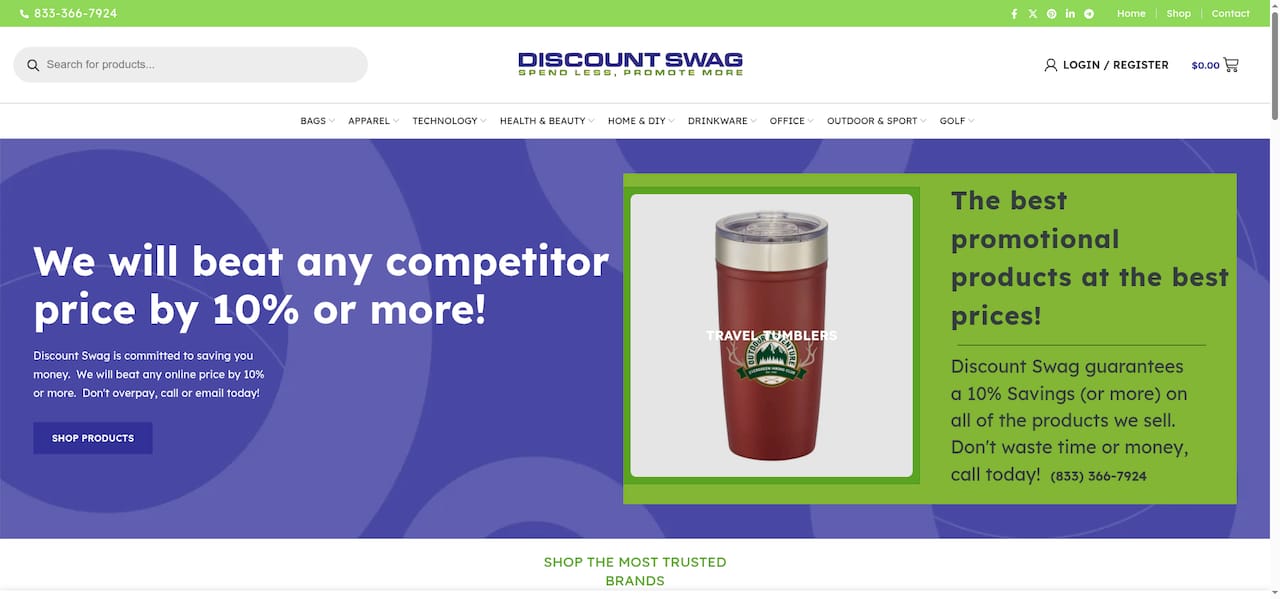
Choosing the right promotional products is the foundation of everything covered in this guide. Discountswag carries a full range of branded promotional products designed specifically for marketing professionals who need items that perform at events, in direct mail campaigns, and across multi-channel lead generation programs. Whether you need custom trade show giveaways that pair well with QR code campaigns or budget-friendly bulk options for wide distribution, Discountswag makes it straightforward to find items that fit your audience, your message, and your budget. Start building a promo item program that actually generates leads.
FAQ
What makes promotional items effective for lead generation?
Promotional items generate leads when paired with a specific offer, a frictionless capture method like a QR code, and a fast follow-up sequence. The item alone does not generate leads. The system around it does.
What types of promo items work best for B2B lead generation?
Tech accessories, notebooks, and practical everyday items tend to have the highest retention and usage rates in B2B contexts. The best item is one that aligns with your brand message and gives your audience a reason to keep it on their desk.
How do QR codes on promo items improve lead capture?
QR codes on promotional products can yield 15 to 80 percent scan-to-lead conversion rates depending on the incentive and code type. Dynamic QR codes pointing to campaign-specific landing pages make attribution clean and allow you to update the offer without reprinting the item.
How quickly should you follow up with leads from a promo campaign?
Follow up within 24 to 48 hours of the initial interaction. Research points to emails on days one and two, LinkedIn outreach on days three through five, and a phone call on day seven as the sequence that produces the highest conversion rates.
How do you measure ROI from a promotional items campaign?
Track scan-to-lead conversion rate, cost per lead, lead quality scores, and follow-up conversion rates using campaign-specific landing pages, redemption codes, and CRM pipeline data. These metrics tell you which items, offers, and events deliver real return.
 Bottle Carriers
 Mugs
Mugs