

Why Unique Swag Stands Out for Brand Managers


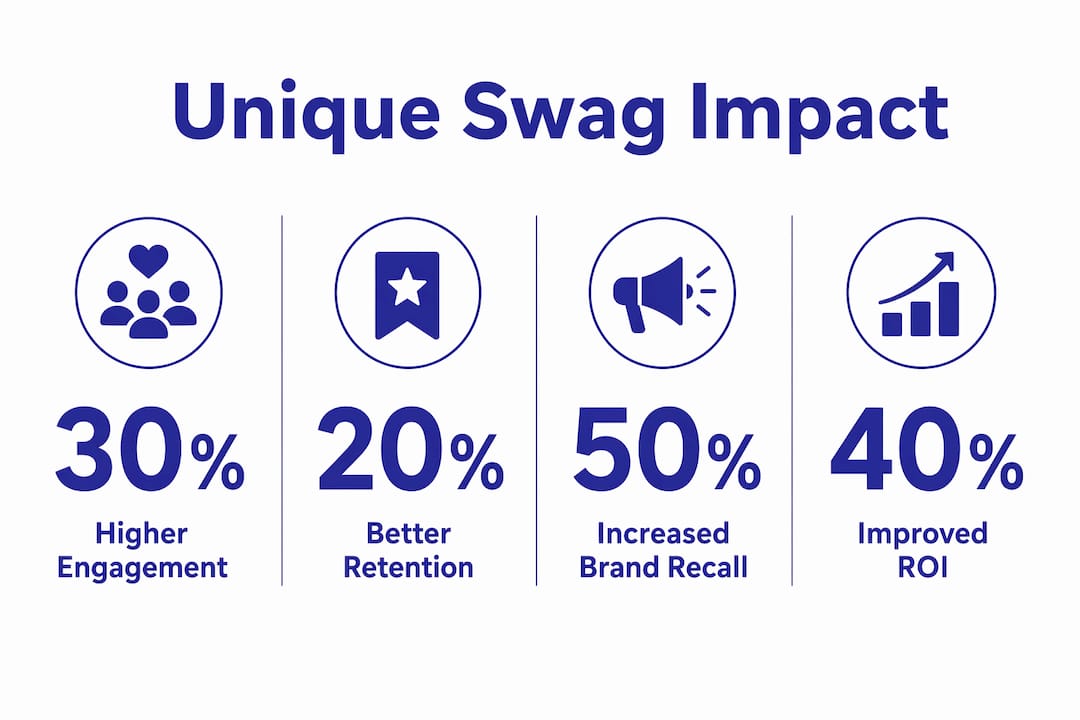
Unique swag is defined as customized promotional merchandise that resonates personally with recipients, creating memorable brand experiences that generic items cannot replicate. Organizations that shift from generic to hyper-personalized swag report a 30% increase in active engagement and 20% higher retention. That gap explains why the industry is moving decisively away from bulk branded pens and toward curated gift experiences. Discountswag works with brand managers navigating exactly this shift, helping teams select promotional products that recipients actually keep, use, and talk about.
Why unique swag stands out in a crowded market
Distinctive merchandise earns attention because it signals that a brand paid attention first. A generic branded pen tells a recipient nothing about the company except that it had a budget line for giveaways. A bespoke item tied to a recipient’s known interests or professional role tells a story. That story is what builds brand loyalty and converts a passive recipient into an active brand ambassador.
The psychology behind this is straightforward. People use and display items that connect them to a group or identity they value. Swag that reflects shared values creates a sense of belonging. That belonging drives the behavior brand managers want most: recipients wearing the item, sharing it on social media, and mentioning the brand in conversation. Generic swag skips this step entirely.
The industry term for this approach is experiential gifting, which treats a promotional product as a brand touchpoint rather than a throwaway freebie. The distinction matters because throwaway freebies waste budget. Experiential gifts generate impressions long after the initial handoff.

How does unique swag create stronger emotional connections?
Emotional resonance, not utility, drives long-term brand affinity. A recipient who receives a well-chosen, personalized item feels seen. That feeling is far more powerful than the practical value of the item itself. Personalized storytelling embedded in a product, such as a card explaining why a specific item was chosen for that recipient, amplifies this effect significantly.
The contrast between generic and personalized swag is stark when you look at actual recipient behavior:
- Generic branded mug: Used until a better one appears, then discarded or left in an office kitchen.
- Personalized leather notebook with the recipient’s initials: Kept on a desk, used daily, and noticed by colleagues.
- Bulk-printed tote bag: Often forgotten in a closet within weeks.
- Curated wellness kit aligned with a recipient’s known lifestyle: Opened with genuine excitement and shared on social media.
The difference is not price. The difference is relevance. A $10 item chosen with care outperforms a $40 item chosen for convenience.
Pro Tip: Before ordering swag, survey a sample of your recipient group. Ask three questions: What do you use daily at work? What brands do you trust? What causes matter to you? The answers will reveal personalization opportunities that no catalog can predict.
Swag that carries a meaningful backstory also strengthens professional relationships. Artisanal craftsmanship and a clear narrative about why a product was made a certain way create the kind of professional ties that survive beyond a single campaign. Recipients remember the brand that gave them something thoughtful long after they forget the brand that gave them something cheap.
What qualities make swag items stand out and avoid being discarded?
The attributes that separate kept items from discarded ones are consistent across industries and recipient types. Brand managers who understand these qualities make better purchasing decisions and waste less budget.
- Hyper-personalization. Items that include the recipient’s name, role, or a reference to a shared experience feel personal rather than mass-produced. Co-creation, where recipients choose colors, styles, or configurations, takes this further.
- High-quality materials. Useful, high-quality items have higher retention rates and generate more brand impressions over time. A well-made item signals that the brand values quality in everything it does.
- Artisanal craftsmanship. Handcrafted or small-batch items carry a perceived value that mass-produced alternatives cannot match. Recipients notice the difference and associate it with the brand.
- Alignment with brand values. Swag that reflects a brand’s actual commitments, such as sustainability or local sourcing, reinforces brand identity rather than contradicting it.
- Sustainability. Eco-friendly materials and packaging increase perceived value among recipients who prioritize environmental responsibility. This is no longer a niche preference.
The table below shows how these qualities translate into recipient behavior:
| Swag attribute | Recipient behavior |
|---|---|
| Generic, low-cost material | Discarded within days or weeks |
| High-quality, practical design | Used regularly, increases daily brand impressions |
| Personalized with recipient’s name | Kept longer, shared with colleagues |
| Aligned with recipient’s values | Displayed publicly, generates organic brand exposure |
| Sustainable packaging and materials | Perceived as premium, associated with brand integrity |
Timing also shapes how a swag item is received. Delivering swag during off-peak seasons, such as summer, creates a “meaningful surprise” effect. Recipients are not competing with holiday gift noise. The brand gets uninterrupted attention, and the gesture reads as genuinely thoughtful rather than obligatory.
How does unique swag impact marketing ROI and business outcomes?
The ROI case for distinctive merchandise is built on two numbers: 30% higher engagement and 20% better retention for organizations that switch from generic to personalized swag. Those figures represent real budget impact. Higher retention means fewer dollars spent re-acquiring lapsed customers. Higher engagement means more organic brand impressions per dollar spent on merchandise.
Generic swag items are discarded quickly, which means the entire production and distribution cost generates zero ongoing return. A personalized item that sits on a recipient’s desk for two years generates daily brand impressions at no additional cost. The math strongly favors quality over volume.
Unique promotional items also support multi-channel marketing in ways that generic items cannot. Strategic gifting creates memorable offline brand touchpoints that drive online behavior. A recipient who receives a well-chosen item is more likely to engage with the brand’s social media, respond to email campaigns, and refer colleagues. The swag becomes a physical anchor for a digital relationship.
The business case extends to employer branding as well. Well-designed company swag strengthens internal culture, boosts morale, and increases customer loyalty simultaneously. That dual function makes it one of the more cost-effective tools in a brand manager’s kit.
Key outcomes brand managers should track when shifting to distinctive merchandise:
- Brand recall rate among recipients at 30, 60, and 90 days post-distribution.
- Social media mentions tied to swag campaigns, measured by branded hashtag volume.
- Referral conversion rate among recipients compared to non-recipients.
- Item retention rate, measured through follow-up surveys asking whether recipients still have the item.
What practical strategies can marketing professionals use to select and deliver unique swag?
Selecting the right promotional products starts with knowing your audience at a level most brand managers skip. Demographic data is not enough. You need behavioral and psychographic data: what recipients do outside work, what they care about, and what they already own. That research shapes every product decision that follows.
- Conduct recipient research before budgeting. Survey existing customers or employees before selecting products. Even a five-question survey reveals preferences that prevent costly mismatches.
- Prioritize personalization at scale. Work with vendors that offer name printing, color customization, or modular kits where recipients choose components. Discountswag offers corporate gift sets designed for exactly this kind of flexible personalization.
- Time delivery for maximum impact. Summer gifting campaigns generate goodwill and uninterrupted brand attention. Avoid the holiday window when recipients are processing dozens of gifts simultaneously.
- Invest in packaging and presentation. The unboxing experience shapes the recipient’s first impression before they even see the product. Branded tissue paper, a handwritten note, and a clean box communicate care and quality.
- Choose vendors with artisanal or sustainable options. Products made with traceable materials or by small-batch producers carry a story that recipients can share. That shareability extends the campaign’s reach organically.
Pro Tip: For B2B campaigns, send swag to the recipient’s home address rather than their office. Home delivery feels personal and avoids the visual noise of a shared workspace. Recipients are more likely to notice, appreciate, and remember the gesture.
Integrating swag into a branded swag campaign strategy also means connecting the physical item to a digital follow-up. A QR code on the packaging that leads to exclusive content, a personalized landing page, or a video message from the brand team turns a one-way gift into a two-way conversation.
Key Takeaways
Unique swag stands out because hyper-personalization, high-quality materials, and strategic timing convert promotional products from disposable items into lasting brand assets that drive measurable engagement and retention.
| Point | Details |
|---|---|
| Personalization drives retention | Organizations using hyper-personalized swag report 20% higher retention than those using generic items. |
| Quality over volume | A single high-quality, relevant item generates more brand impressions than a large batch of generic giveaways. |
| Timing amplifies impact | Delivering swag during off-peak seasons like summer creates a surprise effect that increases brand recall. |
| Swag supports multi-channel ROI | Physical swag drives digital engagement, including social media interaction and referral conversions. |
| Storytelling extends reach | Items with a meaningful backstory and strong packaging are shared more often, expanding organic brand exposure. |
Why I think most swag budgets are spent backwards
Most brand managers allocate swag budgets by volume first and quality second. I have watched campaigns spend $15,000 on 3,000 branded items that recipients forgot within a week. The same budget spent on 300 well-chosen, personalized products would have generated more engagement, more social sharing, and more referrals.
The uncomfortable truth is that cheap swag does not just fail. It actively damages brand perception. A flimsy branded item signals that the brand cuts corners. Recipients notice, even if they do not say so out loud.
The shift toward experiential gifting and artisanal quality is not a trend. It is a correction. Brands are finally aligning their swag investments with what recipients actually value. The brands that make this shift early will build the kind of loyalty that no digital ad campaign can replicate. The ones that keep buying bulk pens will keep wondering why their engagement metrics are flat.
If you are planning a 2026 swag campaign, start with one question: Would I keep this if someone gave it to me? If the answer is no, the budget is better spent elsewhere.
— Jerry
Discountswag’s 2026 guide to promotional items that get noticed
Brand managers who want to move beyond generic giveaways need a clear starting point for product selection and campaign planning.
Discountswag’s 2026 promotional items guide covers curated merchandise options built for brand visibility and recipient retention. The guide walks through product categories, personalization options, and delivery strategies that align with the hyper-personalization shift covered in this article. For teams building their first high-impact swag campaign or refining an existing one, Discountswag also offers a full range of branded merchandise options selected for quality, sustainability, and brand alignment. The next step is choosing products your recipients will actually keep.
FAQ
What makes swag memorable to recipients?
Swag becomes memorable when it is personalized, high-quality, and aligned with the recipient’s identity or values. Items that reflect genuine knowledge of the recipient are kept and displayed far longer than generic alternatives.
Why does personalized swag outperform generic promotional products?
Organizations using personalized swag report 30% higher engagement and 20% better retention compared to those using generic items. The difference comes from emotional resonance: recipients feel valued rather than marketed to.
When is the best time to deliver unique swag?
Off-peak seasons like summer produce the strongest results because recipients are not competing with holiday gift volume. Summer delivery creates a surprise effect that increases brand recall and goodwill.
How does unique swag support marketing ROI?
Distinctive merchandise drives offline brand touchpoints that feed digital engagement, including social media mentions, referrals, and email response rates. A well-chosen item generates ongoing brand impressions at no additional cost after distribution.
What qualities should brand managers prioritize when selecting swag?
Prioritize high-quality materials, personalization options, sustainability, and alignment with brand values. Items that check all four criteria have the highest retention rates and generate the most organic brand exposure over time.
 Bottle Carriers
 Mugs
Mugs