

Why Promotional Gifts Boost NPS: A 2026 Guide


Promotional gifts are a direct driver of Net Promoter Score improvement, converting satisfied customers into active brand advocates. NPS, the standard metric for measuring customer loyalty and referral likelihood, rises when customers feel genuinely valued. The 2026 ASI Global Advertising Impressions Study found that 78% of consumers view a brand more favorably after receiving a promotional item, and 76% are more likely to do business with that brand again. Those two numbers map almost perfectly onto the NPS framework: favorability drives passive customers toward promoter status, and repeat purchase intent keeps them there.
Why promotional gifts boost NPS: what the 2026 research shows
The evidence connecting promotional items to NPS improvement is now quantified, not anecdotal. The 2026 ASI Global Advertising Impressions Study, which surveyed nearly 5,000 consumers across multiple markets, gives marketing professionals a reliable benchmark to build campaigns around.
Three findings stand out:
- Favorability lift: 78% of consumers view a brand more favorably after receiving a promotional product. Favorability is the precondition for a customer to score a brand 9 or 10 on an NPS survey.
- Repeat business intent: 76% of recipients say they are more likely to do business with the brand again. Repeat business intent is the behavioral signal that separates promoters from passives.
- Product retention: Recipients keep promotional products 78% of the time because they find them useful. Every day a customer uses a branded item, the brand earns another positive impression without additional spend.
The cost side of the equation is equally compelling. A $6 tote bag generates approximately 5,000 brand impressions over its lifetime, producing a cost-per-impression of roughly $0.001. That figure makes promotional items one of the most cost-effective channels available to a marketing budget. For NPS purposes, the implication is clear: sustained, low-cost exposure keeps a brand top of mind precisely when customers are deciding whether to recommend it.
How promotional gifts build loyalty through psychology
The psychological mechanism behind the impact of promotional gifts is the Law of Reciprocity. When a brand gives something of genuine value, the recipient feels a natural pull to return that goodwill. That returned goodwill shows up in NPS surveys as higher scores and in real behavior as referrals.
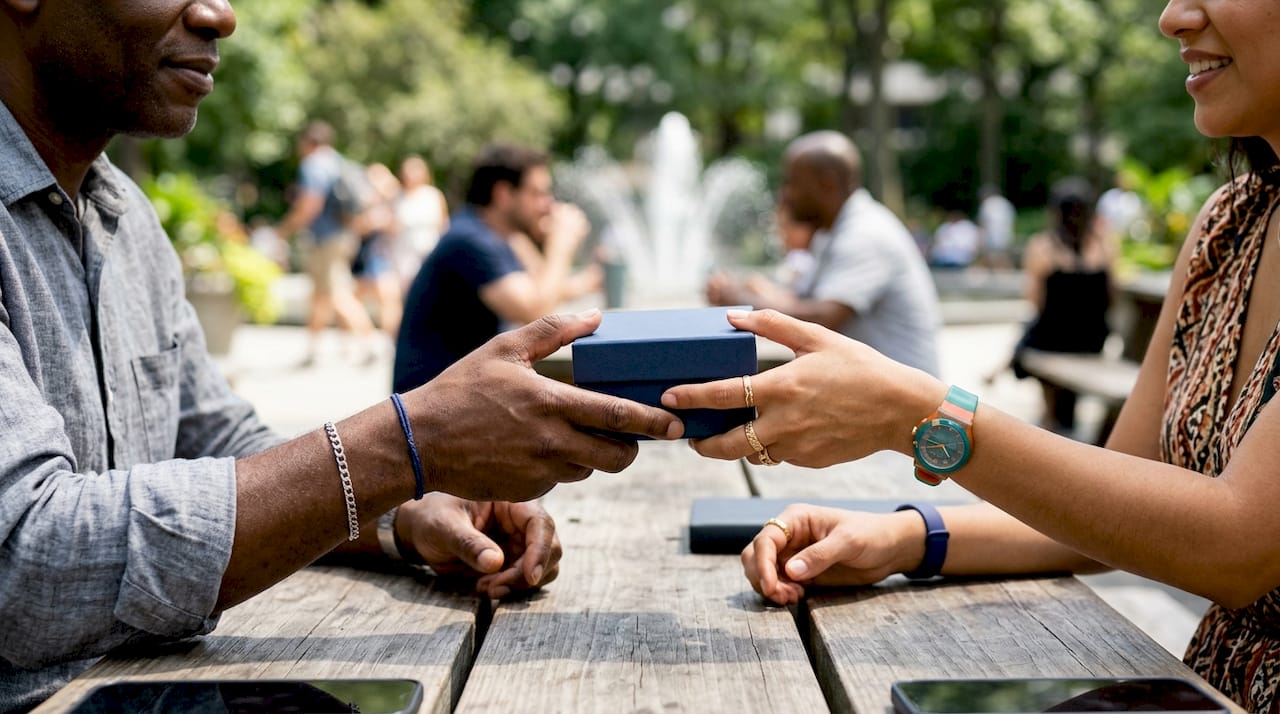
Harvard’s Program on Negotiation confirms that trust grows through reciprocal behavior. A gift signals good faith. Good faith lowers the psychological barrier between customer and brand, which is exactly what converts a passive customer into a promoter. This is not a soft, feel-good theory. It is a documented behavioral pattern with direct commercial implications.
The difference between transactional and relational customer interactions matters here. Most marketing touchpoints, including email campaigns, retargeting ads, and discount codes, are transactional. They ask the customer to do something. A well-chosen promotional gift asks nothing. That distinction is what signals genuine appreciation rather than a sales tactic, and customers recognize the difference immediately.
Personalization amplifies this effect significantly. A branded item chosen to match a customer’s role, industry, or known preferences communicates that the brand paid attention. That level of care is rare enough that it creates a memorable moment, and memorable moments are what customers describe when they recommend a brand to a colleague.
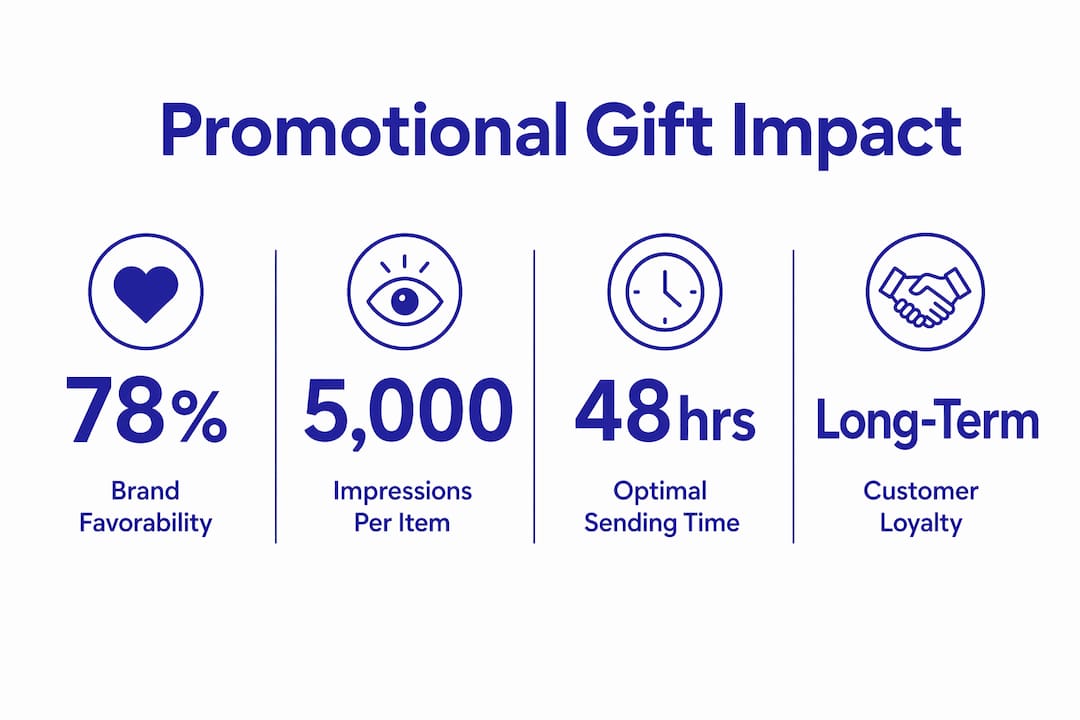
Pro Tip: Send a personalized gift within 48 hours of a customer milestone, such as a contract renewal or a first anniversary. The timing reinforces the connection between the positive event and your brand, making the emotional association stronger and longer-lasting.
Do promotional gifts outperform digital ads for brand recall?
The short answer is yes, and the margin is wider than most marketing professionals expect. Promotional items consistently outperform digital and TV ads on consumer preference and retention metrics, according to the 2026 ASI Global Advertising Impressions Study.
The core reason is physical longevity. A digital ad disappears in seconds. A quality branded bag, apparel item, or tech accessory stays in a customer’s environment for months or years. That longevity means repeated use keeps brands top of mind far longer than any fleeting digital impression. For NPS, this matters because customers who see a brand regularly are more likely to feel connected to it when survey time arrives.
| Channel | Impression duration | Cost-per-impression | Customer preference |
|---|---|---|---|
| Promotional product | Months to years | ~$0.001 | Outperforms digital and TV |
| Digital display ad | Seconds | Higher per recall event | Lower retention |
| TV commercial | 30 seconds | Higher per recall event | Lower retention |
High-impact product categories reinforce this advantage. Bags generate some of the highest lifetime impression counts because they travel into public spaces, multiplying brand exposure beyond the original recipient. Apparel turns customers into walking brand ambassadors. Tech accessories, such as branded charging cables or wireless earbuds, earn daily use and daily brand recall. Each of these categories earns its place in a loyalty campaign because usefulness drives retention, and retention drives NPS.
The data-driven case for promotional products over digital channels is not about abandoning digital. It is about recognizing that physical gifts occupy a different and more durable space in a customer’s memory and daily life.
Best practices for using promotional gifts to raise NPS
Timing, relevance, and personalization determine whether a promotional gift lifts NPS or lands as clutter. The following framework gives marketing professionals a repeatable structure for gifting campaigns.
-
Send welcome kits at onboarding. The first 90 days of a customer relationship set the tone for everything that follows. A branded welcome kit, including a quality notebook, a tote bag, and a personalized note, communicates investment from day one. Customers who feel valued at the start score higher on NPS surveys throughout the relationship.
-
Mark milestones with meaningful gifts. Contract anniversaries, usage milestones, and project completions are natural gifting moments. Practical and personalized promotional gifts tied to these events reinforce the customer’s perception that the brand tracks and values the relationship, not just the revenue.
-
Run surprise and delight campaigns. Unexpected gifts create disproportionate emotional impact. Surprise and delight campaigns using branded items strengthen emotional bonds precisely because the customer did not anticipate them. No transaction triggered the gift, which makes it feel like genuine generosity rather than a retention tactic.
-
Choose useful products over decorative ones. Usefulness is the primary reason recipients keep promotional products. A branded item that earns daily use generates daily brand impressions and daily positive associations. A decorative item that sits in a drawer does neither.
-
Pair gifts with personal messaging. A handwritten note or a personalized card transforms a product into a relationship moment. The message does not need to be long. It needs to be specific enough that the customer knows it was written for them, not copied from a template.
Marketers tend to underuse promotional gifts throughout the customer journey, concentrating them at renewals and upsells. Integrating gifts at earlier and less expected touchpoints builds the authentic emotional connections that shift customers from passives to promoters. A branded swag campaign strategy built around the full customer lifecycle, rather than just commercial milestones, produces measurably stronger loyalty outcomes.
Pro Tip: Before selecting a gift, review the customer’s LinkedIn profile or CRM notes for role-specific details. A field sales rep values a durable bag differently than a remote developer values a quality webcam cover. Matching the product to the person doubles the perceived thoughtfulness.
Key Takeaways
Promotional gifts raise NPS by creating favorable brand perceptions, building reciprocal trust, and generating sustained impressions that keep customers engaged long after the initial interaction.
| Point | Details |
|---|---|
| Favorability drives NPS | 78% of consumers view a brand more favorably after receiving a promotional item, directly lifting NPS scores. |
| Reciprocity converts passives | Gifting triggers the Law of Reciprocity, turning neutral customers into active brand promoters. |
| Physical longevity beats digital | Promotional products generate impressions for months or years, far outlasting digital ad exposure. |
| Timing and personalization multiply impact | Welcome kits, milestone gifts, and surprise campaigns produce stronger emotional connections than generic gifting. |
| Cost-per-impression is unmatched | A $6 tote bag generates roughly 5,000 impressions at $0.001 each, making promo gifts one of the most efficient loyalty investments. |
What I’ve learned about promotional gifts and NPS after years in the field
Most marketing teams treat promotional gifts as a budget line item rather than a relationship investment. That framing is the root cause of most gifting failures I have seen.
The brands that consistently see NPS improvements from their gifting programs share one habit: they choose products their customers will actually use, not products that look impressive in a catalog. A $40 branded tumbler that a customer uses every morning is worth more to your NPS than a $100 gift set that sits unopened on a shelf. Usefulness is the multiplier. Without it, the gift is just noise.
The second pattern I have noticed is that timing matters more than budget. A modest, well-timed gift at an unexpected moment outperforms an expensive gift sent with a renewal invoice every time. The renewal gift feels like a transaction. The unexpected gift feels like a relationship. Customers score relationships higher on NPS surveys.
The third lesson is harder to accept: most companies gift too infrequently. They save it for big moments and miss the dozens of smaller touchpoints where a simple, branded item would have reinforced loyalty at a fraction of the cost of a churn recovery campaign. The brands winning on NPS in 2026 are the ones treating gifting as a continuous practice, not an occasional event. The role of branded merchandise in engagement is not a campaign tactic. It is a relationship discipline.
— Jerry
Discountswag’s promotional products for customer loyalty campaigns
Marketing professionals who want to put these strategies into practice need a reliable source for quality branded merchandise. Discountswag offers a wide range of corporate promotional products designed for exactly this purpose, from branded apparel and tech accessories to tote bags and welcome kit components.
Every product category at Discountswag is available with custom branding, making it straightforward to match gifts to your brand identity and your customers’ preferences. The 2026 brand awareness guide covers the full product range with recommendations organized by campaign type, including onboarding kits, milestone gifts, and surprise and delight programs. For marketing teams building a loyalty program around NPS improvement, Discountswag’s catalog is a practical starting point for selecting products that earn daily use and lasting brand recall. You can also review the full types of branded products available to find the right fit for your next customer campaign.
FAQ
How do promotional gifts directly affect NPS scores?
Promotional gifts increase NPS by raising customer favorability and repeat purchase intent. The 2026 ASI study found that 78% of consumers view a brand more favorably after receiving a promotional item, which directly correlates with higher NPS responses.
What types of promotional products generate the most brand impressions?
Bags, apparel, and tech accessories generate the highest lifetime impression counts because customers use them daily and in public spaces. A single tote bag can produce approximately 5,000 brand impressions over its lifetime.
How often should businesses send promotional gifts to customers?
Gifting should occur at multiple points in the customer journey, not just at renewals. Welcome kits, milestone gifts, and surprise campaigns at unexpected moments produce the strongest loyalty and NPS outcomes.
Why do promotional gifts outperform digital ads for customer loyalty?
Promotional products stay in a customer’s environment for months or years, generating repeated brand impressions. Digital ads disappear in seconds and score lower on consumer preference and retention metrics than physical promotional items.
Does personalization matter when choosing promotional gifts?
Personalization significantly increases the emotional impact of a gift. A product matched to a customer’s role or known preferences signals genuine attention, which strengthens trust and increases the likelihood of a high NPS score.
 Bottle Carriers
 Mugs
Mugs