

Drinkware in Promotions: A 2026 Marketer’s Guide

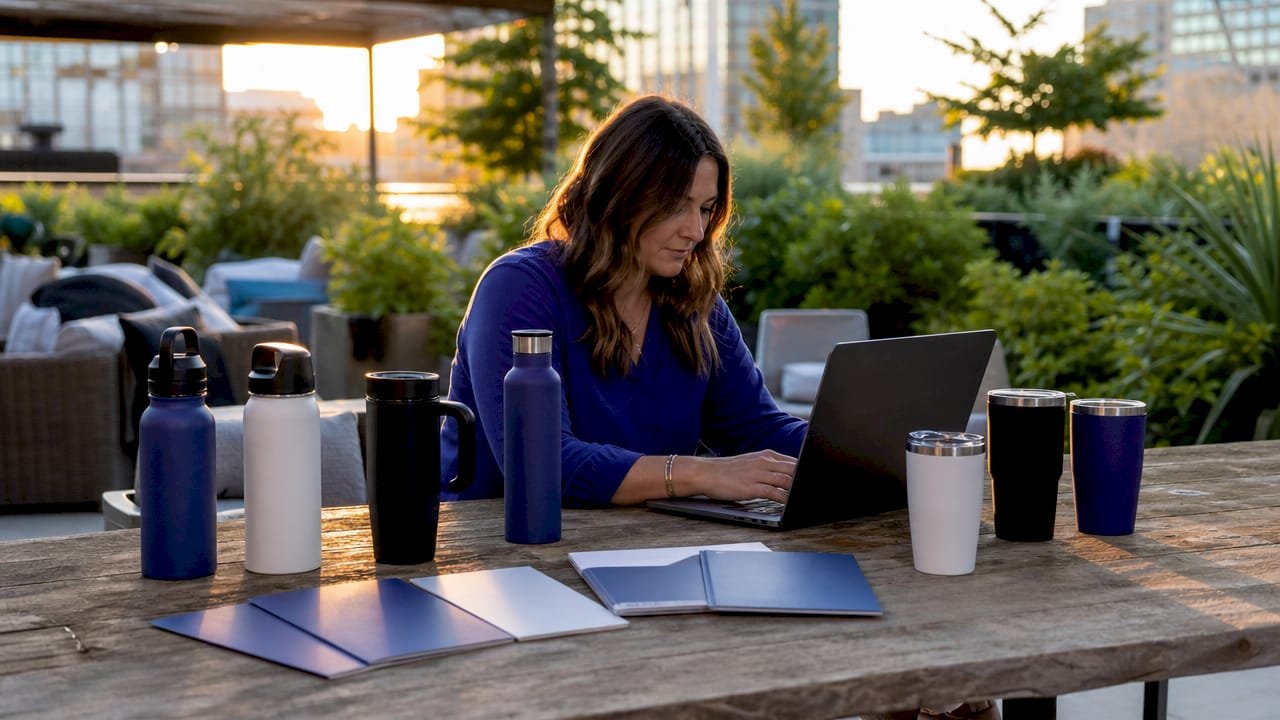
Promotional drinkware is defined as branded beverage vessels, including mugs, tumblers, water bottles, and cups, distributed to promote brand awareness and customer loyalty. This category accounts for over 10% of total industry sales in 2026, ranking as the third most preferred B2B promotional item. With 33% consumer preference and the ability to generate up to 3,162 lifetime brand impressions per item, drinkware outperforms most other promotional formats on pure exposure value. The Advertising Specialty Institute (ASI) and the Promotional Products Association International (PPAI) both cite drinkware as a top-performing category for brand recall and recipient retention.
What is drinkware in promotions and why does it matter?
Promotional drinkware refers to any branded cup, mug, bottle, or tumbler given to prospects, customers, or employees to build brand recognition. The industry term used by ASI and PPAI is “promotional drinkware,” and it covers everything from a $1.50 stadium cup to a $45 insulated stainless steel tumbler. What separates drinkware from other promotional categories is daily utility. People drink beverages multiple times a day, which means a branded vessel earns impressions every single time it is used.
The numbers behind this category are hard to ignore. Drinkware generates 1,300 to 3,162 lifetime brand impressions per item. That figure reflects repeated daily use over months or years, not a single event touchpoint. For a marketer calculating cost per impression, few media buys come close to that efficiency.

What are the common types of promotional drinkware and their use cases?
Each drinkware format serves a different audience and marketing context. Choosing the wrong format wastes budget. Choosing the right one turns a giveaway into a daily brand touchpoint.
- Ceramic mugs. The classic desk anchor. Ceramic mugs work best for office gifting, employee onboarding kits, and client appreciation packages. They stay visible at workstations all day and pair well with laser-engraved or full-color wrap decoration.
- Insulated stainless steel tumblers. The dominant format for commuters and on-the-go professionals. Premium insulated 24oz tumblers hold over one-third of B2B drinkware sales. Their thermal performance keeps beverages hot or cold for hours, which drives daily adoption.
- Reusable water bottles. The go-to choice for wellness brands, outdoor events, and health-focused audiences. BPA-free plastic and stainless steel options both perform well here. These align naturally with sustainability messaging.
- Stadium cups. High-volume, low-cost plastic cups ideal for large outdoor events, festivals, and sports sponsorships. Unit costs sit at the low end of the range, making them practical for audiences in the thousands.
- Koozies and can coolers. The most affordable format in the category. Koozies work at tailgates, cookouts, and casual brand activations where the audience is large and the budget is tight.
Decoration methods vary by material. Ceramic accepts full-color printing and laser engraving. Stainless steel responds best to laser engraving and powder-coat printing. Plastic cups typically use screen printing or digital print for short runs.
Pro Tip: Match the decoration method to the product’s use environment. Laser engraving on a stainless tumbler survives the dishwasher indefinitely. Screen printing on a plastic cup fades after repeated washing. Choose the method that keeps your logo visible for the product’s full lifespan.
What are the key benefits of using drinkware in promotional marketing campaigns?
Drinkware earns its place in marketing budgets through three measurable advantages: retention, frequency of use, and cost efficiency.
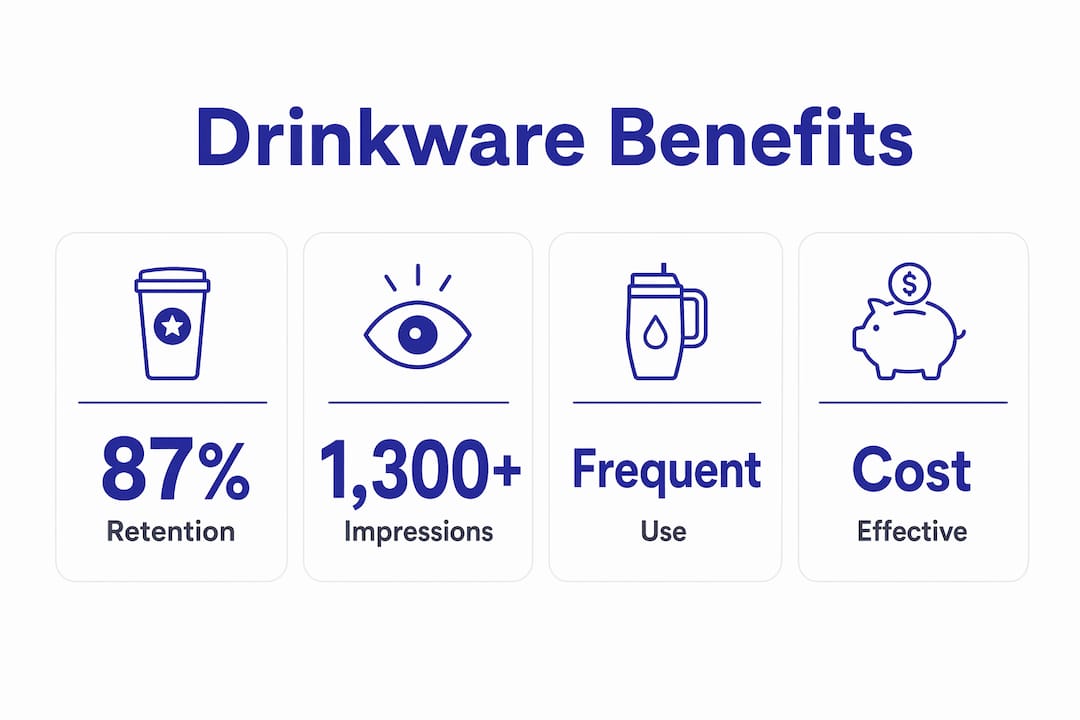
87% of promotional drinkware recipients keep their item because it is useful. That retention rate is not accidental. Drinkware solves a daily problem, which means recipients actively choose to keep it. Over 75% use their branded drinkware weekly, and 63% hold onto it for at least a year. Those figures translate directly into repeated brand exposure without additional spend.
The cost-per-impression metric makes the financial case clear. At a cost per impression as low as $0.003, branded drinkware beats most digital ad formats on pure efficiency. A $15 insulated tumbler generating 1,500 impressions over its lifespan costs less per view than a paid social media click. That math shifts how smart marketers think about their media mix.
Additional benefits worth factoring into campaign planning:
- Brand perception lift. Premium drinkware signals quality. Recipients associate the product’s finish and weight with the brand behind it.
- Sustainability alignment. The 2026 trend toward reusable drinkware reinforces brand messages of environmental responsibility. Reusable bottles and tumblers replace single-use cups, which resonates with ESG-conscious audiences.
- Audience reach beyond the recipient. A branded tumbler used in a coffee shop or office is seen by everyone nearby, not just the person who received it.
- Long shelf life. Unlike digital ads that disappear after a campaign ends, a quality drinkware item continues generating impressions for years.
How do costs, materials, and design features affect drinkware ROI?
Unit costs for promotional drinkware range from approximately $1.50 for stadium cups and koozies up to $45 or more for premium insulated stainless steel tumblers. The gap between those price points reflects real differences in material quality, insulation technology, and decoration options. Choosing where to land on that spectrum depends on your audience, your budget, and how long you want the item to stay in use.
| Format | Typical unit cost | Best use case | Decoration method |
|---|---|---|---|
| Stadium cup | $1.50–$3.00 | Large events, festivals | Screen print |
| Ceramic mug | $4.00–$10.00 | Office gifting, onboarding | Full-color print, laser engraving |
| Plastic water bottle | $5.00–$12.00 | Outdoor events, wellness | Screen print, digital print |
| Insulated tumbler | $15.00–$45.00 | Commuters, premium clients | Laser engraving, powder coat |
Material choice directly affects how long a logo stays visible. Stainless steel with laser engraving holds its finish through thousands of dishwasher cycles. Ceramic with full-color printing holds up well but can chip if the glaze is thin. Plastic screen printing fades with repeated washing, which shortens the item’s effective impression window.
Lid design is the single most important factor for daily adoption among commuter and travel drinkware recipients. A leak-proof, spill-resistant lid determines whether a tumbler ends up in a bag or stays on a desk. Ergonomics matter too. A handle that fits naturally in the hand, or a grip that prevents slipping, increases how often someone reaches for that specific item.
Perceived product weight and decoration quality also shape how recipients feel about the brand behind the item. Heavier, well-finished drinkware reads as higher value. That perception transfers to the brand. A mid-tier quality tumbler from a reputable supplier outperforms the cheapest option on every retention metric.
Pro Tip: If your budget allows only one upgrade, choose a better lid. A quality spill-proof lid on a mid-range tumbler will get used daily. A premium tumbler with a flimsy lid will sit in a drawer.
What are the best practices for choosing promotional drinkware that works?
Effective drinkware campaigns start with one question: what does this person do every day? Aligning drinkware type to recipient habits is the single most reliable way to increase impressions and retention. A ceramic mug sent to a remote employee who works from a home office will sit on their desk for years. That same mug sent to a field sales rep who spends eight hours in a car is the wrong product entirely.
Follow these steps when building a drinkware campaign:
- Define the recipient’s daily context. Office workers, commuters, gym-goers, and outdoor event attendees all have different drinkware needs. Map the product to the lifestyle before selecting a format.
- Set a realistic quality floor. Cheap drinkware that breaks or fades within weeks damages brand perception. The washability and ergonomics of drinkware directly determine whether it stays in rotation or gets discarded. Dishwasher-safe products with ergonomic designs last longer and generate more impressions.
- Treat drinkware as a media buy, not a giveaway. Viewing drinkware as a long-term media strategy shifts the focus from unit cost to cost per impression. A $20 tumbler used daily for two years costs less per impression than a $0.50 pen used once.
- Prioritize sustainability for 2026 audiences. Reusable, premium drinkware aligns with ESG goals and signals that your brand takes responsibility seriously. This matters especially to younger professional audiences. You can find more on this shift in 2026 promotional trends.
- Audit your decoration choice before ordering. Confirm that the logo placement, color accuracy, and finish method match the product’s material. A logo that looks great on a mockup but fades after three washes is a wasted investment.
For buyers sourcing in volume, the branded drinkware buying guide from Discountswag covers decoration methods, material comparisons, and bulk pricing strategies in detail.
Pro Tip: Order a physical sample before committing to a large run. Weight, lid feel, and logo clarity are impossible to judge from a digital mockup. One sample order prevents a costly mistake at scale.
Key Takeaways
Promotional drinkware delivers more brand impressions per dollar than almost any other physical marketing format, making it a media buy that earns returns for years.
| Point | Details |
|---|---|
| Drinkware dominates B2B promotions | It holds over 10% of industry sales and earns up to 3,162 lifetime impressions per item. |
| Retention is driven by usefulness | 87% of recipients keep drinkware because it solves a daily need, not because it looks good. |
| Match format to recipient lifestyle | Ceramic mugs suit office workers; insulated tumblers suit commuters. Wrong format means wasted spend. |
| Lid and material quality determine adoption | Spill-proof lids and dishwasher-safe materials keep items in daily rotation longer. |
| Cost per impression beats digital ads | At as low as $0.003 per impression, quality drinkware outperforms most paid media on efficiency. |
Why cheap drinkware is the most expensive mistake in promotions
I have watched marketing teams spend $8,000 on a drinkware order and get almost nothing back in brand recall. The items looked fine in the catalog. They arrived, got handed out at a trade show, and ended up in hotel room trash cans by the end of the day. The lids leaked. The logo was off-center. The plastic felt thin. That experience taught me something that no industry report fully captures: recipients make a judgment about your brand in the first 30 seconds of holding a promotional item.
The psychology here is straightforward. A heavy, well-finished tumbler with a tight lid communicates that the brand behind it pays attention to quality. A flimsy cup with a smeared logo communicates the opposite. That impression sticks. I have seen clients win new business conversations that started with someone asking about a branded tumbler sitting on a desk. That does not happen with a $1.50 stadium cup.
The sustainability angle adds another layer that matters more in 2026 than it did even two years ago. Buyers at mid-size and enterprise companies are increasingly evaluated on ESG criteria. Handing out reusable, premium drinkware is a visible, tangible signal of that commitment. It is not just a giveaway. It is a statement about what the brand values. The marketers who understand this are treating drinkware as a brand positioning tool, not a budget line item to minimize.
My advice: set a quality floor of at least $12 per unit for anything going to a client or prospect. Below that threshold, the risk of a negative brand impression starts to outweigh the cost savings. For employee gifts and internal programs, branded tumblers for employees that actually get used are worth every dollar of the premium.
— Jerry
Discountswag’s drinkware selection for serious marketers
Discountswag sources promotional drinkware across every format and budget, from high-volume stadium cups for large events to premium insulated tumblers for client gifting programs. Every product in the catalog is vetted for decoration quality, material durability, and brand impression longevity.
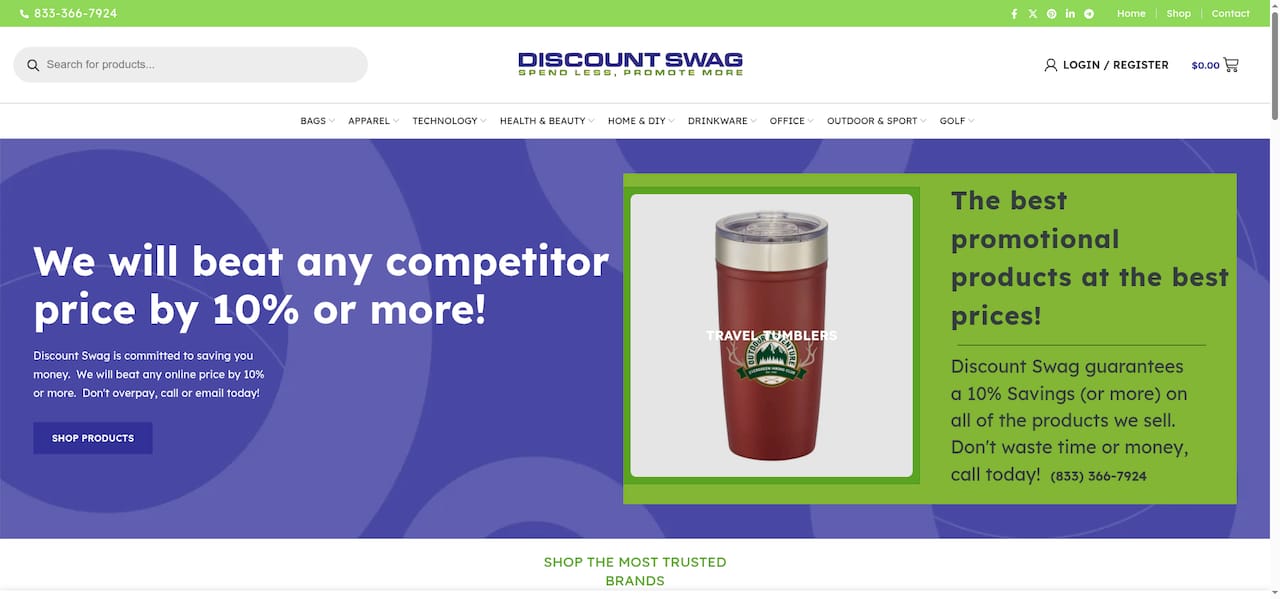
Marketers who want to build a drinkware campaign that actually performs can start with Discountswag’s promotional items for brand awareness guide, which covers product selection by audience type, budget tier, and campaign goal. For buyers sourcing in volume, Discountswag offers design support, sample ordering, and competitive bulk pricing across the full drinkware range. The goal is simple: get your logo on a product that recipients use every day, not one that ends up in a drawer.
FAQ
What is promotional drinkware?
Promotional drinkware is any branded beverage vessel, including mugs, tumblers, water bottles, and cups, distributed to promote a brand. ASI classifies it as the third most preferred B2B promotional product category.
How many impressions does a branded drinkware item generate?
A single promotional drinkware item generates between 1,300 and 3,162 lifetime brand impressions, according to ASI’s 2026 Ad Impressions Study. That range depends on how frequently the item is used and how long it stays in circulation.
What is the most effective type of promotional drinkware?
Premium insulated 24oz tumblers account for over one-third of B2B drinkware sales and deliver the strongest long-term brand exposure. Their daily utility among commuters and professionals drives consistent repeat impressions.
How much does promotional drinkware cost per unit?
Unit costs range from approximately $1.50 for budget options like stadium cups up to $45 or more for premium insulated stainless steel tumblers. Material, insulation, and decoration method are the main cost drivers.
Why do recipients keep promotional drinkware longer than other items?
87% of recipients keep promotional drinkware because it is useful in their daily routine. Usefulness is the primary retention driver, not aesthetics or novelty, which is why matching the product format to the recipient’s lifestyle is the most important decision in a drinkware campaign.
 Bottle Carriers
 Mugs
Mugs