

Branding Solutions for Marketers: The End-to-End Provider Approach


The right branding solution for most marketing teams is a single provider handling strategy, branded merchandise, and fulfillment together, not three separate vendors passing files back and forth. That combination works because it covers every touchpoint (apparel, corporate stores, gifting, uniforms), moves fast when campaigns need rush production, and ties spend to measurable KPIs like awareness lift and repeat orders. Discount Swag fits this model for marketers who need product and logistics without hiring a separate agency.
Prioritize these when you scope a project:
- Brand strategy and positioning before any merchandise order goes out
- A defined visual identity system with usage guidelines
- Branded merchandise across apparel, drinkware, bags, and tech accessories
- A corporate store setup for ongoing employee or client fulfillment
Key Takeaways
Combining brand strategy, branded merchandise, and centralized fulfillment under one provider produces faster campaigns and more measurable results than splitting the work across separate vendors.
| Point | Details |
|---|---|
| Strategy comes first | Define positioning and identity before ordering merchandise, or spend becomes disconnected guesswork. |
| Match imprint to use case | Embroidery suits uniforms, screen print suits bulk apparel, digital print suits small custom runs. |
| Vet fulfillment capacity | Confirm rush lead times, multi-site shipping, and proofing steps before signing a contract. |
| Small runs cost more per unit | Very small orders often carry setup-fee premiums that inflate unit prices. |
| Discount Swag covers the full stack | Discount Swag combines branded merchandise, corporate stores, kitting, and rush fulfillment for marketing teams. |
Table of Contents
- What Do Branding Solutions Actually Include?
- How Does Order Fulfillment Actually Work?
- How Do You Choose a Branding Solutions Provider?
- What Drives Pricing and Delivery Timelines?
- What Results Do Branding Solutions Actually Produce?
- Where Does Branding Budget Actually Get Wasted?
- Getting Started With Discount Swag
- Sources
What Do Branding Solutions Actually Include?
“Branding solutions” is a catch-all term, and it covers more ground than most procurement briefs account for. The full stack runs from strategy work through physical execution, and skipping the first half is why so many merchandise programs feel disconnected from the brand they’re supposed to represent.
Strategy comes first. Brand strategy defines positioning, differentiation, and personality before any logo gets designed or any hoodie gets embroidered. Skip this step and your visual identity becomes guesswork, and your brand guidelines end up as a style sheet with no rationale behind it. A seven-step framework that moves from audience research to voice, name, story, and a documented brand kit gives teams a repeatable structure rather than a one-off design sprint.
From there, execution splits into categories:
- Visual identity and guidelines: logo systems, color palettes, typography rules, and templates that keep every touchpoint consistent
- Branded merchandise and apparel: shirts, jackets, drinkware, bags, and tech accessories used for awareness campaigns, trade shows, and employee gifts
- Corporate/company stores: an ordering portal that lets employees or regional offices self-serve branded gear without procurement bottlenecks
- Custom kitting and corporate gifting: curated onboarding kits, client gift sets, and event bundles assembled and shipped as one package
- Awards and recognition programs: pins, plaques, and trophies for service anniversaries and sales incentives
- Branded uniforms: workwear and custom embroidery for retail, hospitality, and field teams
Typical strategic engagements deliver a positioning statement, visual identity system, messaging architecture, and activation playbook, while merchandise orders usually come with minimums that range from a few dozen units for templated designs to several hundred for fully custom runs.
How Does Order Fulfillment Actually Work?
A typical order moves through design, sampling, bulk production, quality check, and fulfillment. Most delays happen at the sampling stage, so approving proofs quickly matters more than most buyers realize.
Fulfillment itself splits into a few models: drop-shipping to individual employees or clients, multi-site shipments to regional offices, ordering through a corporate store portal, or kitting and assembly for onboarding boxes and gift sets.
Imprint method affects both cost and timeline:
- Screen printing for large apparel runs with simple designs
- Embroidery for uniforms and polished, durable branding
- Digital print for full-color, small-batch, or gradient designs
- Engraving for drinkware, awards, and tech accessories
Pro Tip: Confirm color matching (Pantone reference, not “close enough”), physical proof timelines, and packaging specs (poly bag, branded box, kit assembly) before you approve a bulk order. Catching a mismatch after 500 units ship is a much more expensive fix than catching it on a sample.
How Do You Choose a Branding Solutions Provider?
Vet a provider the way you’d vet any operational partner, not just a creative vendor. Coverage and reliability matter more here than a flashy portfolio.
Weigh these criteria:
- Scope coverage across strategy, design, merchandise, and fulfillment
- Production capacity for your typical order volume plus surge capacity for peak seasons
- Transparent pricing with visible minimums and bulk discount tiers
- A documented sample and proofing policy
- Turnaround guarantees, including a real rush-order option
- Fulfillment flexibility (single-site, multi-site, corporate store, kitting)
- Data handling practices if you’re running an employee-facing ordering portal
Ask providers directly:
- What’s your standard lead time versus your rush lead time?
- What’s your minimum order quantity per product category?
- How do you handle color matching and proof approval?
- Can you ship internationally or only domestically?
- What’s your returns and reorder policy on misprints?
Red flags worth walking away from: no formal proofing step, vague lead-time language (“a few weeks,” never a date), no multi-location fulfillment option, and testimonials you can’t trace to a real client or case study.
What Drives Pricing and Delivery Timelines?
Cost breaks down into item type and material, imprint method, order quantity, artwork setup fees, kitting or packaging, and shipping. Quantity is the biggest lever: unit prices usually drop as volume climbs, but very small runs (under 25 to 50 units, depending on the item) often carry a setup-fee premium that makes per-unit cost spike.
Lead times generally run in stages: sampling takes about a week, bulk production takes one to three weeks depending on imprint complexity, and standard shipping adds another few days on top. Rush programs can compress that timeline significantly, at a cost premium. Budget for artwork revisions early. A logo file that needs vectorizing or color correction can quietly add days to a schedule that otherwise looked tight.
What Results Do Branding Solutions Actually Produce?

Numbers matter more than mockups when you’re justifying a merchandise budget internally. Programs that pair strategy with execution tend to show up in three places: awareness metrics, onboarding completion, and repeat order rates from the same buying teams.
A useful framework ties spend to specific KPIs: awareness (search volume, reach), perception (sentiment, NPS), equity (market share indicators), and loyalty (repeat purchase rate, customer lifetime value). A corporate store rollout, for instance, is often the difference between a one-time campaign and a program that keeps generating repeat orders month over month, since employees and regional teams can self-serve instead of routing every request through procurement.
Programs that combine a clear positioning strategy with consistent merchandise execution consistently outperform ad hoc giveaway campaigns on brand recall and repeat engagement, because every touchpoint reinforces the same message instead of diluting it.
Custom branding done well ties logo, color, typography, and messaging into one framework across every touchpoint, which is exactly why cohesion drives recognition and trust more reliably than volume alone.
Where Does Branding Budget Actually Get Wasted?
Most waste traces back to two habits: buying cheap, generic items with no tie to a campaign goal, and skipping the sample stage to save a week. Both feel efficient in the moment and cost more later, either in reprints or in merchandise nobody remembers receiving.
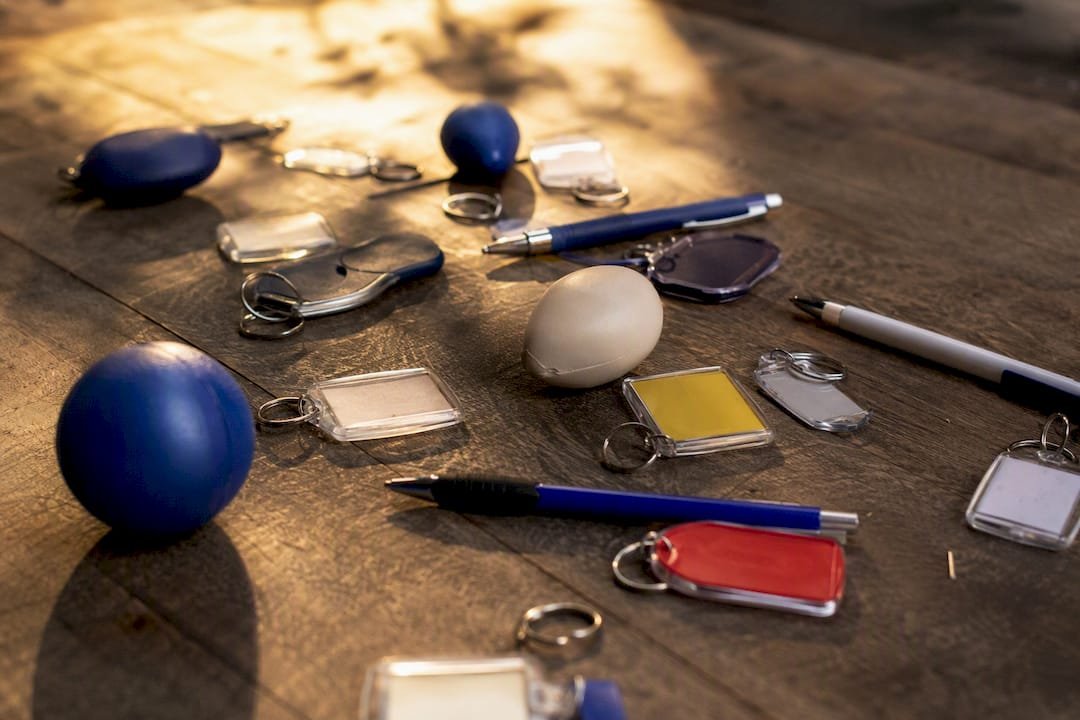
The fix is boring but effective: pick one campaign goal, set a KPI against it, and spend more per unit on fewer, better items instead of flooding a trade show with giveaways nobody keeps.
Getting Started With Discount Swag
Discount Swag runs strategy, branded merchandise, corporate stores, kitting, and rush fulfillment under one roof, which means marketers stop juggling a design agency, a separate print vendor, and a shipping logistics contact for every campaign. That matters most when a launch date won’t move: one point of contact for proofing, production, and multi-site shipping cuts the coordination time that usually eats a week off any tight timeline.
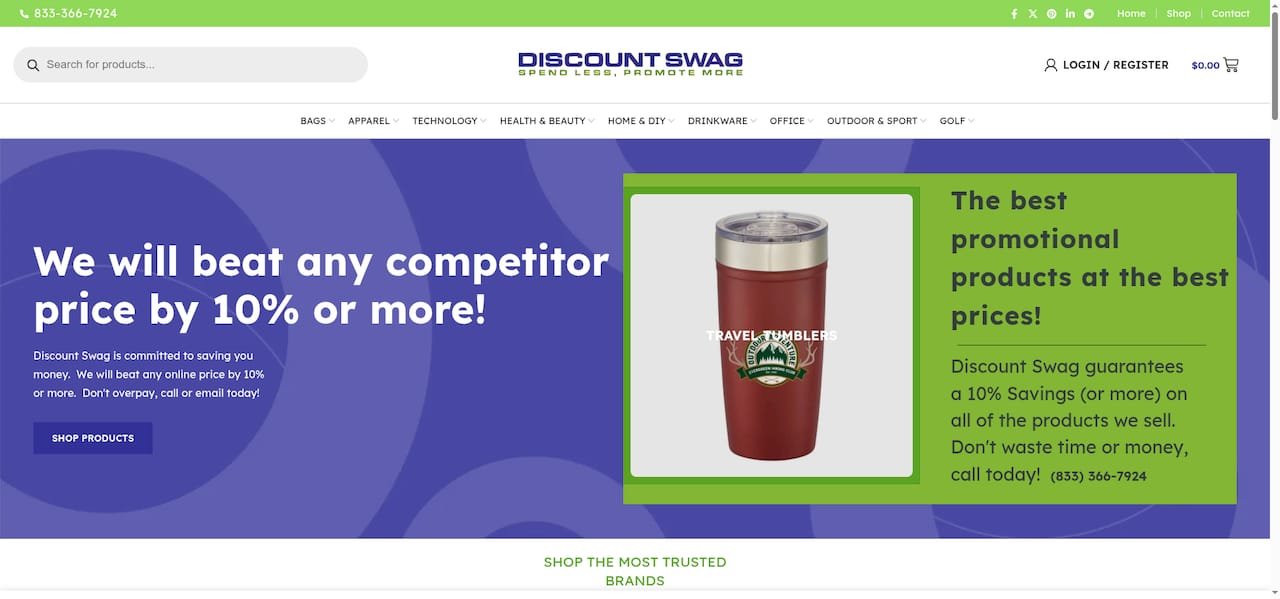
Sample policies and turnaround commitments are documented before you commit to a bulk order, so there’s no guessing on lead times once artwork gets approved. If you’re planning a campaign or onboarding rollout, start with the promotional items guide for brand awareness to map product categories to your goal, then request a quote on quantities and turnaround for your specific timeline.
Sources
- Brand Strategy: Complete Guide and Frameworks for 2026
- How to build a brand (Shopify)
- Brand Development – Forverd
 Bottle Carriers
 Mugs
Mugs