

Promotional Products Brand Alignment: A Marketer’s Guide


Promotional products brand alignment is defined as the practice of selecting, designing, and deploying branded merchandise so every item directly reflects your brand’s identity, values, and audience expectations. When alignment works, a branded item does more than carry a logo. It reinforces what your brand stands for every time someone uses it. The ASI’s 2026 Ad Impressions Study ranks promotional products as the top-performing advertising format compared to TV, social media, radio, and online ads. That ranking holds only when the product is useful, relevant, and consistent with the brand behind it.
What core brand attributes should guide your promotional product choices?
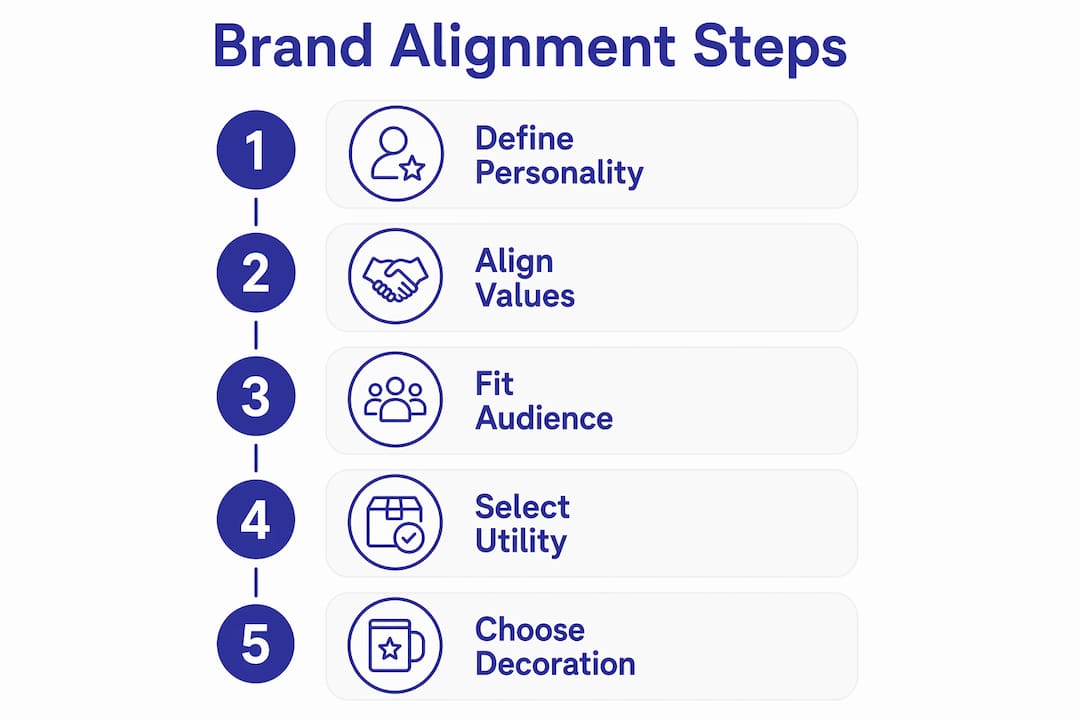
Brand attributes are the foundation of every sound merchandise decision. Before you select a product, you need a clear picture of your brand’s personality, values, and the audience you serve. A financial services firm projecting trust and stability will choose different items than a tech startup projecting speed and creativity.
Start with brand personality. Brands typically cluster around a handful of traits: approachable, authoritative, playful, premium, or purpose-driven. Each trait points toward a product category. An approachable consumer brand fits casual drinkware or tote bags. A premium B2B brand fits laser-engraved leather notebooks or weighted metal pens. Matching the product’s feel to the brand’s personality is the first filter every marketer should apply.
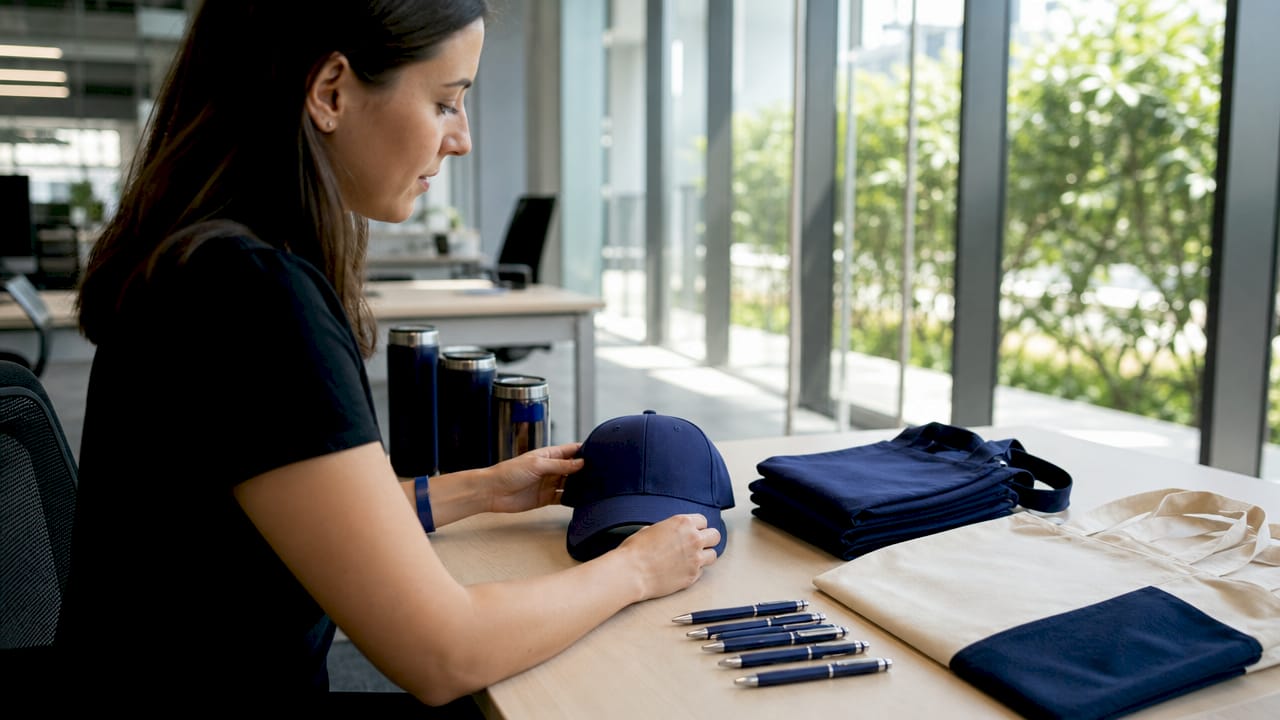
Values alignment is the second filter, and it is increasingly non-negotiable. Promotional merchandise that reflects brand story and values builds positive emotional connections and stronger marketing outcomes. A brand that publicly champions sustainability loses credibility when it hands out single-use plastic items at a trade show. Choosing recycled materials, organic cotton apparel, or products certified by recognized sustainability standards keeps the brand story intact.
Audience fit is the third filter. The best promotional products solve a real problem for the specific person receiving them. A cybersecurity firm giving branded USB drives to IT professionals is on target. That same firm giving branded lip balm at a developer conference is not. Audience relevance determines whether an item gets used daily or ends up in a drawer.
| Brand attribute | Product category examples |
|---|---|
| Premium / luxury | Leather journals, weighted metal pens, engraved glassware |
| Sustainability-focused | Recycled totes, bamboo drinkware, seed paper notebooks |
| Tech / innovation | Wireless chargers, cable organizers, branded USB hubs |
| Approachable / consumer | Branded mugs, custom tote bags, soft-touch apparel |
| Purpose-driven / nonprofit | Fair-trade products, locally sourced items, cause-branded gear |
How to select promotional products that truly embody your brand identity
The industry has shifted away from mass cheap giveaways. Marketing teams now invest in fewer, high-quality promotional products to boost retention and brand perception. The trend in 2026 is purchasing 500 premium items rather than thousands of generic ones. That shift matters because a single well-chosen product creates a stronger impression than a bag full of forgettable items.
Utility is the most reliable selection criterion. Items that don’t solve a need are likely discarded and fail long-term branding goals. Joe Richards of Koozie Group describes this as “brandfill,” the promotional equivalent of landfill. A product that earns a permanent spot on someone’s desk or in their bag delivers repeated brand impressions for months or years. A product that gets tossed delivers one impression and zero return.
Decoration technique is where most marketers leave value on the table. Subtle, high-quality decoration methods like embroidery, laser engraving, and debossing elevate perceived value and shift an item from disposable swag to a genuine gift. Screen printing a large logo across the chest of a cheap polo reads as advertising. A small embroidered logo on a quality quarter-zip reads as a gift the recipient will actually wear. The decoration method signals how much the brand values the relationship.
Pro Tip: Place your logo where it integrates with the product’s function rather than dominating it. A debossed logo on the spine of a leather notebook feels intentional. A full-color logo splashed across the cover feels like a billboard.
Key criteria for choosing aligned promotional products:
- Utility first. The item must solve a daily problem for your specific audience.
- Quality threshold. Choose a product you would be proud to receive yourself.
- Brand personality match. The product’s material, weight, and finish should feel like your brand.
- Decoration technique. Match the method to the product and the brand’s positioning.
- Longevity. Prioritize items built to last months or years, not days.
- Audience relevance. Confirm the item fits the recipient’s actual lifestyle or work context.
Pro Tip: On-demand fulfillment lets you order smaller quantities more frequently. This keeps your merchandise current with brand updates and avoids warehousing items that no longer reflect your identity.
How to ensure consistent brand messaging across promotional merchandise
Brand consistency in promotional merchandise means every item, regardless of product category, communicates the same visual and verbal identity. Misalignment often comes from disconnected visual identities that do not reflect brand strategy, which weakens market credibility. A brand that uses a clean, minimal aesthetic in its digital marketing but orders loud, heavily branded merchandise sends a contradictory signal to its audience.
Visual identity elements to maintain across every product include:
- Color accuracy. Use Pantone codes or exact CMYK/RGB values when briefing suppliers. Color drift across products erodes brand recognition.
- Logo version. Specify which logo version applies to each product type. A full horizontal lockup works on a wide tote. A stacked or icon-only version works on a pen cap.
- Typography. If your brand uses a specific typeface on taglines or messaging, carry that through to any text printed on merchandise.
- Tone of voice. Packaging inserts, thank-you cards, and product tags should match the brand’s written voice, whether that is warm and direct or formal and precise.
The most common pitfall is treating merchandise as a decoration exercise rather than a brand extension. Experts at AvreaFoster and Spellbrand recommend maintaining a tight connection to brand strategy to preserve credibility and consistency. Choosing a product because it is trendy or cheap, then slapping a logo on it, produces merchandise that looks unrelated to the brand’s actual identity.
Pro Tip: Build a one-page merchandise brand guide that specifies approved logo versions, color codes, and decoration methods for your most common product categories. Share it with every supplier before production begins.
What operational strategies help maintain brand alignment over time?
Brand alignment is not a project with a finish line. Karl Bischoff notes alignment as a long game, requiring ongoing operational attention rather than one-off fixes. Most misalignment problems accumulate gradually. A logo gets updated, but the warehouse still holds 2,000 units of the old version. A brand repositions upmarket, but the trade show giveaways still look budget. These gaps compound over time and quietly undermine brand credibility.
Agile, on-demand fulfillment approaches allow better inventory control and brand identity updates without wasting budget on obsolete merchandise. Practitioners who avoid bulk-only buying keep their branded merchandise aligned with brand evolution and current marketing goals. The operational discipline of ordering smaller, more frequent runs costs more per unit but saves significantly on waste and misalignment.
Periodic brand reviews are the other half of the equation. Schedule a merchandise audit at least twice a year. Check every active product against the current brand guide. Retire items that no longer fit. Brief your fulfillment partner on any brand updates before the next order cycle.
| Approach | One-time bulk order | Continuous alignment program |
|---|---|---|
| Order size | Large, infrequent | Small, frequent |
| Brand currency | Risk of outdated items | Merchandise stays current |
| Budget waste | High if brand evolves | Low, minimal obsolete stock |
| Flexibility | Low | High |
| Alignment risk | Increases over time | Managed proactively |
Common mistakes that break alignment over time include ordering large quantities without checking the current brand guide, using different suppliers with no shared brand brief, allowing individual departments to order merchandise independently, and skipping decoration quality reviews when switching suppliers. Each of these mistakes is avoidable with a simple governance process. Assign one person or team to own the merchandise brand standard and require sign-off before any new product goes into production.
Key takeaways
Promotional products brand alignment requires matching product utility, decoration quality, and visual consistency to your brand’s identity as an ongoing discipline, not a one-time decision.
| Point | Details |
|---|---|
| Start with brand attributes | Define personality, values, and audience fit before selecting any product. |
| Prioritize utility and quality | Choose fewer, higher-quality items that recipients will use daily for lasting impressions. |
| Match decoration to brand positioning | Use embroidery, engraving, or debossing to signal quality and elevate perceived value. |
| Maintain visual consistency | Apply a merchandise brand guide with approved colors, logo versions, and tone across all items. |
| Treat alignment as ongoing | Schedule regular audits and use on-demand ordering to keep merchandise current with brand evolution. |
What I’ve learned about alignment after years in promotional merchandise
The most expensive mistake I see marketing teams make is treating promotional merchandise as a budget line item rather than a brand touchpoint. They approve the cheapest option that fits the logo, order 5,000 units, and move on. Six months later, the brand has evolved, the warehouse is full of outdated items, and the team is stuck either using misaligned merchandise or writing off the inventory.
The brands that get this right treat every product decision the way they treat a campaign creative brief. They ask: does this item reflect who we are right now? Does it serve the person receiving it? Does the decoration method match the quality of the product and the positioning of the brand? Those three questions filter out most bad decisions before they reach production.
The subtler lesson is that brand alignment functions quietly when it is working. Nobody notices that your branded notebook perfectly matches your brand’s premium positioning. They just feel good about your company. That invisible effect is the whole point. When alignment breaks, people notice. A cheap pen with a luxury brand’s logo creates a small but real moment of cognitive dissonance. Multiply that across thousands of recipients and you have a measurable credibility problem.
My recommendation: build a simple merchandise governance process before your next order cycle. One brand guide, one approval step, one fulfillment partner who understands your standards. The role of branded merchandise in building genuine brand engagement is too significant to leave to ad hoc decisions.
— Jerry
Discountswag’s curated products for brand-aligned marketing
Discountswag works with marketing professionals who need promotional merchandise that holds up to real brand scrutiny, not just items that carry a logo.
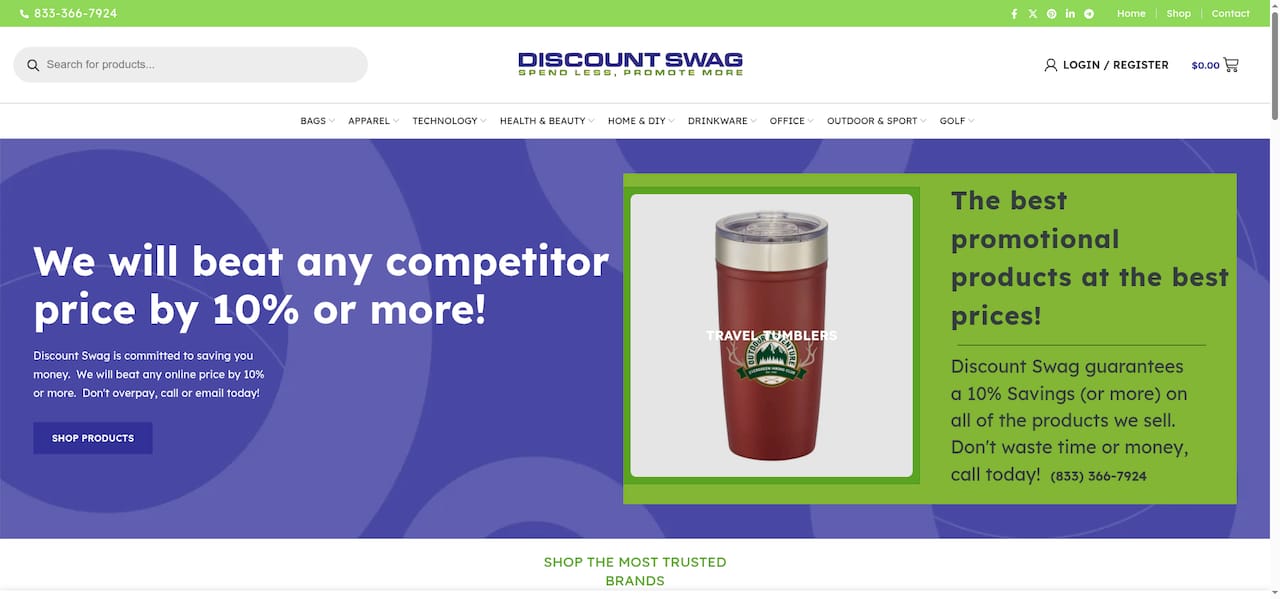
The catalog covers everything from branded awareness items built for sustained visibility to corporate gift sets designed to reinforce premium brand positioning. Every product category includes customization options across decoration methods, so you can match embroidery, engraving, or print to your brand’s specific standards. Discountswag also offers guidance on how to choose corporate swag that fits your brand identity and marketing goals, not just your budget. If you are building or refreshing a merchandise program, the Discountswag catalog is a practical starting point.
FAQ
What is promotional products brand alignment?
Promotional products brand alignment is the practice of selecting and designing branded merchandise so every item reflects your brand’s identity, values, and audience expectations consistently. It goes beyond logo placement to include product quality, utility, decoration method, and visual consistency.
How do I choose promotional products that fit my brand?
Start by defining your brand’s personality traits and values, then filter products by utility for your specific audience, quality threshold, and decoration method. The ASI’s 2026 Ad Impressions Study confirms that useful, relevant items outperform generic giveaways across all advertising formats.
Why does decoration technique matter for brand alignment?
Decoration technique signals brand quality and intent. Methods like laser engraving, embroidery, and debossing elevate perceived value and shift an item from disposable swag to a gift. A cheap decoration method on a quality product undermines the brand impression the product was meant to create.
How often should I audit my promotional merchandise for brand alignment?
Conduct a merchandise audit at least twice a year. Check every active product against your current brand guide, retire items that no longer fit your brand positioning, and brief your fulfillment partner on any updates before the next production run.
What is the biggest operational mistake in promotional merchandise programs?
Bulk ordering without a current brand guide review is the most common and costly mistake. On-demand fulfillment approaches reduce this risk by allowing smaller, more frequent orders that stay current with brand evolution and avoid warehousing obsolete stock.
 Bottle Carriers
 Mugs
Mugs