


8 Field CSV to Ship Swag to Multiple Locations for Marketers and HR

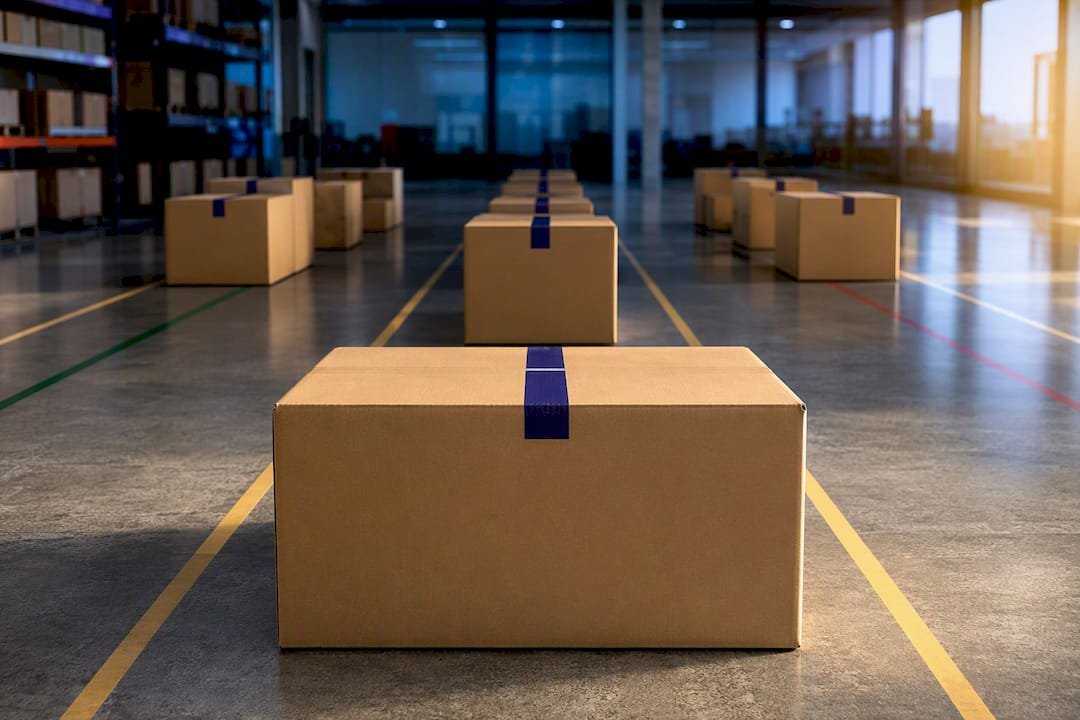
The fastest reliable way to ship swag to multiple locations is a centralized workflow, either an outsourced swag fulfillment partner or an internal kitting operation with batch-carrier upload. Choose a partner for volume over a few hundred recipients or tight deadlines; keep it in-house for small, one-off drops you can pack yourself. Start now: collect your recipient CSV, lock your production timeline, and pick your shipping model before you order a single item.
TL;DR:
- Using a fulfillment partner is recommended for large or recurring multi-location swag shipments to streamline inventory management, batching, and delivery scheduling.
- Proper recipient data validation, detailed packaging instructions, and clear delivery dates are critical to prevent mismatched orders, delays, and unnecessary reshipments.
- Custom decoration lead times typically range from one to three weeks, with additional buffers needed for proofing and unexpected delays, especially for international shipping.
- Cost differences between single-box-per-recipient and bulk-to-location models may be minimal on total program cost; shipping and labor efficiencies should guide the choice.
- Outsourcing becomes financially and operationally justified once shipments expand beyond roughly 50 to 100 recipients or become a regular operation, reducing manual effort and error rates.
Table of Contents
- What Is Multi-Location Swag Shipping, and How Does the Workflow Work?
- Prepare Your Recipient Data and Packaging Rules Before You Order
- In-House Kitting vs. Third-Party Swag Fulfillment: How to Choose
- Production, Lead Times, and What Shipping Actually Costs
- The Mistakes That Wreck a Multi-Address Shipment
- How Discountswag Runs Multi-Location Distribution
- When to Keep It In-House vs. When to Pay for a Partner
- Ready to Simplify Your Next Multi-Location Swag Run?
- Sources
- FAQ
What Is Multi-Location Swag Shipping, and How Does the Workflow Work?
Shipping branded merchandise to dozens or hundreds of addresses at once is not the same job as mailing one box. It requires a system that connects sourcing, decoration, inventory, and carrier logistics into a single, repeatable process. Get any link in that chain wrong and you end up with mismatched sizes at one office and empty boxes at another.
The workflow generally runs through the same six stages, whether you manage it in-house or hand it to a partner:
- Source and decorate the product. Items get ordered from suppliers and branded (embroidered, screen printed, laser engraved) in a single production run to keep colors and logo placement consistent.
- Receive and inventory the goods. Finished product lands in a warehouse or storage room and gets counted, so you know exactly what’s available before you promise it to anyone.
- Build the recipient list. Names, addresses, and item selections get compiled, usually as a spreadsheet, before any packing begins.
- Split the order by destination. The system breaks one bulk order into individual shipments, one per address, or into palletized drops for offices receiving many units at once.
- Kit and pack. Each shipment gets assembled according to a packing standard, so every recipient opens the same experience regardless of location.
- Ship and report. Packages go out through the carrier, tracking numbers get logged, and delivery status feeds back into a dashboard or spreadsheet.
In-house teams typically run steps one through six manually, often coordinating between procurement, an office manager, and whoever has a UPS account. A fulfillment partner collapses most of that into one system: you send a CSV, they warehouse the stock, kit it, and ship it. That structure also solves a problem in-house teams underestimate: delivery-date coordination. If your Chicago office needs kits by Tuesday and your Austin office needs them by Thursday for a different event, someone has to schedule two separate shipping runs. Vendor platforms increasingly build per-destination scheduling directly into the cart, letting you set different ship dates per recipient group in one order rather than filing two.
Split billing works the same way. Multi-entity companies (agencies with client accounts, franchises with regional budgets) need shipments coded back to the right cost center, which is a manual accounting headache in a DIY setup and usually a checkbox in a fulfillment platform.
Prepare Your Recipient Data and Packaging Rules Before You Order
Every failed multi-address shipment traces back to one of two problems: bad data or inconsistent packing. Fixing both starts before production, not after boxes are already labeled.
Your recipient file needs to carry more than a name and street address. A usable CSV template includes:
- First and last name
- Company or department (for office deliveries)
- Full street address, including suite or floor number
- City, state, ZIP code
- Country (even for domestic-only programs, since fields get reused)
- Email or phone for delivery notifications
- Item or size selection, if the kit varies by recipient
- Special delivery instructions (loading dock hours, security desk names)
Address hygiene matters more than most marketers expect. Run your list through a validation tool like the USPS address verification system before you commit to production, because a missing suite number or a mistyped ZIP code turns a $12 box into a $40 reshipment. PO boxes also need separate handling: some carriers won’t deliver oversized swag boxes to a PO box at all, so flag those recipients early and get a street address instead.
Kitting rules decide whether recipients get a consistent unboxing experience or a mismatched grab bag. Two models dominate: single-box-per-recipient, where each person gets one sealed kit shipped directly, and bulk-to-location, where a single larger shipment goes to an office manager who distributes items internally. The first costs more per unit in shipping but guarantees a uniform experience. The second cuts shipping costs but shifts the labor of distribution onto someone at the destination.
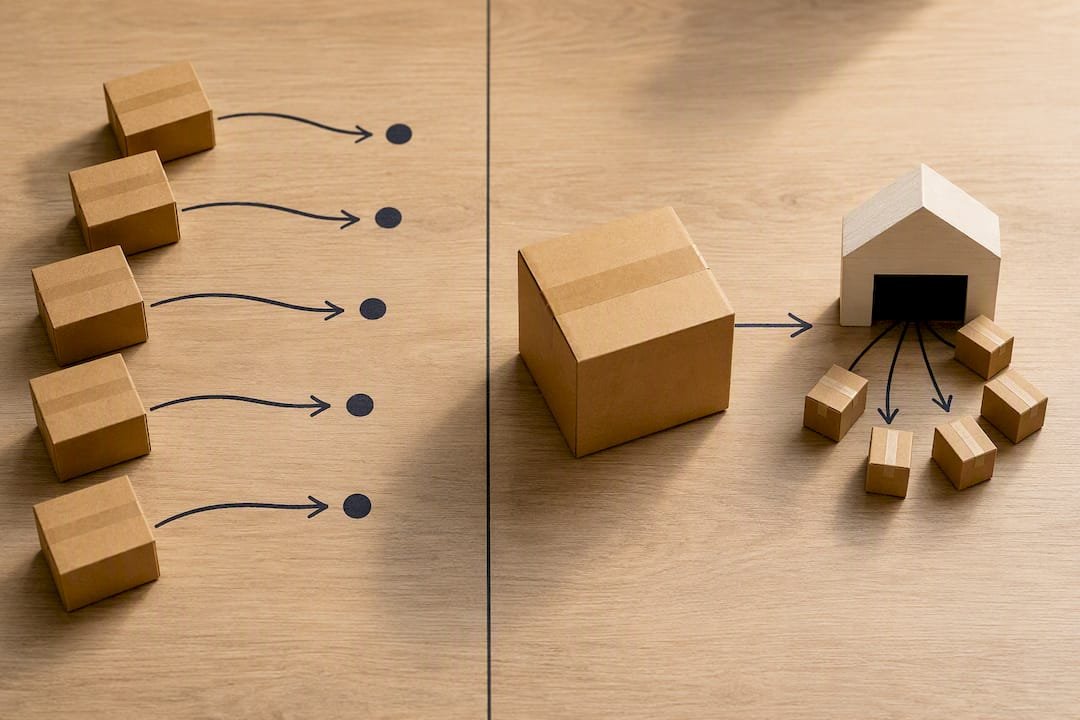
Pro Tip: Label every bulk-to-location box with a packing slip that lists exactly who gets what inside. Office managers are not going to guess sizes, and “figure it out” is how three people end up fighting over the one medium hoodie.
In-House Kitting vs. Third-Party Swag Fulfillment: How to Choose
Running kitting yourself works fine at a small scale. It falls apart the moment you’re shipping to more than a handful of addresses on a recurring basis.
In-house kitting gives you full control over packing quality and lets you adjust on the fly, since the boxes are sitting in your own conference room. The downside is real: someone’s calendar gets eaten by an all-day packing session, storage space becomes a problem fast, and a single employee going on vacation can stall an entire shipment cycle. There’s also no inventory buffer. If you run out of medium shirts halfway through packing, the whole batch waits on a reorder.
Outsourcing to a fulfillment partner flips those trade-offs and offers strategic brand and impact marketing services that can enhance your swag shipping campaigns. You lose the ability to physically inspect every box, but you gain warehouse-level inventory, professional packing lines, and staff who do this daily instead of once a quarter. Consolidating sourcing, decoration, and shipping under one partner also cuts down on the branding mismatches that happen when different vendors handle different steps, and it simplifies billing when shipments need to be coded across departments or client accounts.
Before you commit to any fulfillment provider, confirm they support:
- CSV or batch upload for recipient lists, not manual entry per address
- A dashboard showing real-time inventory levels and shipment status
- Rush order capability with a stated turnaround
- Quality assurance checks before boxes leave the warehouse
- Nationwide shipping coverage, not just regional service
Many providers built for corporate programs bundle these as standard, offering CSV bulk uploads, centralized inventory, and nationwide distribution in one package. Centralized inventory in particular solves the on-demand problem: instead of ordering swag every time a new hire starts, you order once, store it, and ship single kits as needed.
Production, Lead Times, and What Shipping Actually Costs
Budget for production before you budget for shipping. Custom decoration (embroidery, screen printing, laser engraving) typically needs one to three weeks depending on order size and item complexity, and that clock doesn’t start until artwork is approved. Add a buffer of at least five business days on top of any quoted production window for proofing rounds and unexpected reorders.
Shipping costs hinge on a few levers you can actually control. Dimensional weight, the carrier’s calculation based on box size rather than actual weight, punishes oversized packaging for lightweight items like t-shirts and stickers. Sizing boxes tighter to contents cuts cost without changing what’s inside. Zone-based pricing means shipments to nearby regions cost less, so consolidating recipients by geography before splitting a batch can reduce the total spend. Fulfillment platforms that store inventory and ship on demand often publish per-pack pricing for international orders, which matters if any recipients sit outside the continental US.
<call_callout type=“statistic”>
A single-box-per-recipient model costs more per shipment in carrier fees than a bulk-to-location drop, but it eliminates the labor cost of on-site redistribution, so the “cheaper” option on paper isn’t always cheaper in total program cost.
</call_callout>
For a rough planning template: a small recipient program needs several weeks from art approval to delivery; a large program across multiple states requires additional time, with extra buffers for zone splitting and QA sampling.
The Mistakes That Wreck a Multi-Address Shipment
Nearly every failed batch traces back to one of three causes: bad address data, size or item mismatches, and missed production deadlines. Each has a specific fix, not a general one.
- Bad addresses. Run every recipient row through address validation before kitting starts, not after boxes are labeled. Catching a typo at the CSV stage costs nothing; catching it after shipment costs a reshipment fee and a delayed recipient.
- Inconsistent size or item splits. Collect sizes as a required CSV field, not an afterthought email thread. A missing size defaults to guesswork, and guesswork is how the wrong hoodie ends up at the wrong desk.
- Missed deadlines from underestimated lead time. Lock your delivery date first, then work backward through production, kitting, and shipping windows, rather than ordering and hoping the timeline holds.
International recipients add a fourth failure point: customs documentation and duties, which can stall a package for weeks if the commercial invoice is missing or undervalued. Flag every non-domestic address early and confirm your provider handles customs paperwork before you commit to a ship date.
Undeliverable packages and last-minute address changes need a standing process, not a scramble. Set a rule that any address change after kitting begins gets flagged for manual review rather than auto-corrected, since auto-correction is exactly how a package ends up at someone’s old apartment.
Pro Tip: Before you submit any batch, run a five-minute QA pass: recount recipients against your CSV, confirm every row has a complete address and size, and spot-check three random boxes against the packing slip. Five minutes here saves a week of reshipping later.
How Discountswag Runs Multi-Location Distribution
Discountswag’s swag box fulfillment service follows the same inventory-to-shipping structure outlined above, built specifically for teams distributing to multiple offices, new hires, or event locations at once.
To start a project, prepare three things: a recipient CSV with names, addresses, and item selections; final artwork for decoration; and target delivery dates per location. From there, the operational flow runs through inventory intake, kitting to your packaging standard, batch upload of the recipient list, scheduled shipping by destination, and reporting back on delivery status.
Whether you run this through Discountswag or manage it internally, the same checklist applies before any batch goes out:
- Recipient CSV validated for complete, correctly formatted addresses
- Sizes and item variants collected up front, not chased down after the fact
- Artwork approved and locked before production starts
- Delivery dates set per destination, with production and shipping buffers built in
- A QA spot check completed before the batch ships
Discountswag also publishes a broader swag fulfillment guide for business buyers covering the process in more depth for readers building out a recurring program rather than a one-time drop.
When to Keep It In-House vs. When to Pay for a Partner
Small campaigns, a single office event, a batch of ten new-hire kits, rarely justify outsourcing. Pack it yourself, ship it through your existing carrier account, and move on.
The math changes once you cross roughly 50 to 100 recipients spread across multiple addresses, or once shipments become recurring rather than one-off. That’s when manual hours start compounding: every new hire cohort, every regional office event, eats another afternoon of someone’s week. The KPIs that justify paying for a partner are concrete: fewer manual packing hours per cycle, a lower reshipment rate from address or sizing errors, and predictable per-unit costs instead of a new quote every time. If you’re recalculating shipping costs from scratch on every order, that’s the signal you’ve outgrown the DIY model.
— Jerry
Ready to Simplify Your Next Multi-Location Swag Run?
Discountswag exists for exactly the scenario this article walks through: getting consistent, branded merchandise to a lot of addresses without the coordination falling apart.
Beyond the swag box fulfillment service, Discountswag offers fully custom branded boxes for a cohesive unboxing experience across every office, and rush orders for the campaigns that can’t wait three weeks for production. Before reaching out, pull together your recipient CSV, final artwork, and target delivery dates per location. That’s the same intake checklist covered above, and having it ready cuts the back-and-forth down to a single conversation.
Head to the Discountswag distribution page to start a project or request a quote for your next multi-location shipment.
Sources
- Supply chain integration benefits — ShipBob
- I want to send multiple gifts to multiple places. Do I have to make more than one order? — Modern Sprout Help
FAQ
What Is Swag Distribution?
Swag distribution is the process of sourcing, decorating, storing, and shipping branded merchandise to a group of recipients, whether that’s employees, clients, or event attendees. At scale, it involves batch processes like CSV uploads and centralized inventory rather than one-off individual orders.
Where Can I Order Swag for My Company?
Companies typically order through a promotional products distributor that handles sourcing, decoration, and shipping in one place. Discountswag offers branded apparel, drinkware, bags, and tech items, alongside distribution and fulfillment services for single or multi-location orders.
Who Makes Swag?
Branded merchandise usually comes from promotional product suppliers who manufacture or source blank items, then decorate them with a company’s logo through embroidery, screen printing, or engraving. Distributors like Discountswag work with a network of these suppliers and handle decoration, kitting, and shipping on the buyer’s behalf.
How Do I Ship Swag to Multiple Locations Without Placing Separate Orders?
Most vendor platforms let you upload a single CSV of recipients and addresses, then split one bulk order into individual shipments automatically. This is the same cart-based multi-address feature that eliminates the need to check out separately for each destination.
How Much Does Discountswag Charge for Fulfillment or Rush Orders?
Pricing for Discountswag’s distribution, custom box, and rush order services is available on request through its site rather than published as a flat rate, since costs depend on volume, item selection, and timeline. Reach out through the Discountswag landing page for a quote specific to your program.
 Bottle Carriers
 Mugs
Mugs