

Cut Return Risk on Bulk Orders: Piqué vs Jersey Polo

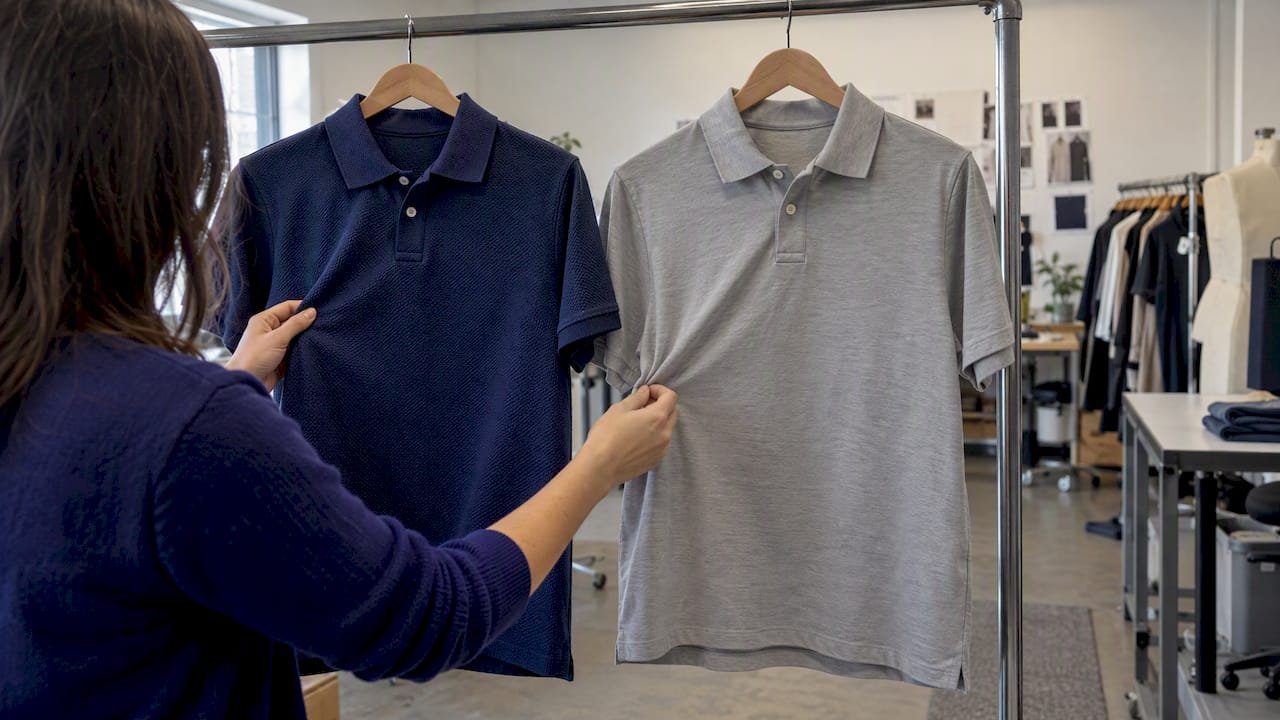
Piqué is the go-to for structured, breathable polos; jersey is the soft, tee-like option for layering and casual comfort. The main trade-off is texture and airflow versus smooth drape and stretch, and fiber quality or finishing (wicking treatments, mercerization) can narrow that gap considerably. For most buyers, the right choice depends on how the shirt gets worn and how often.
TL;DR:
- Piqué fabric generally weighs between 200 and 240 GSM, offering better durability, structure, and breathability than jersey’s typical 150 to 200 GSM.
- Piqué’s tuck-stitch construction creates air pockets that enhance heat and moisture management, making it ideal for active and warm-weather wear.
- Jersey’s softer, stretchier knit drapes closer to a T-shirt and requires engineered collars or finishes to maintain its shape and appearance.
- Heavy rotation and frequent washing favor piqué because it resists pilling and retains shape, while jersey is better suited for casual or layering use.
- Buyers should request fabric swatches, review stitch details, and verify GSM before large-volume orders to ensure product quality and performance.
Table of Contents
- Quick comparison: texture, weight, breathability, and durability
- How pique and jersey are knitted
- Feel, fit, and how the collar holds up
- Breathability, moisture handling, and seasonal fit
- Durability and care that preserves shape
- Matching the knit to the occasion
- How to tell pique and jersey apart before you buy
- Applied buying guidance for bulk polo orders
- Our take on picking between the two
- How we supply pique and jersey polos for bulk orders
- FAQ
- Sources
Quick comparison: texture, weight, breathability, and durability
Before getting into the knit mechanics, here is how the two fabrics stack up on the points that matter most when you are choosing or specifying a polo.
- Texture: piqué has a raised, waffle-like surface, while jersey is flat and smooth, closer to a T-shirt.
- Weight: piqué typically runs 200 to 240 GSM, while jersey typically sits in the 150 to 200 GSM range.
- Breathability: piqué’s textured knit builds in air pockets that move heat and moisture away from the skin more readily than jersey’s flat surface.
- Durability: piqué’s denser structure resists pilling and holds its shape better over repeated washes, though premium jersey narrows that gap.
- Formality: piqué reads as the classic, business-casual polo; jersey leans toward a softer, off-duty look.
Each of these differences traces back to how the yarns are looped together, which is worth understanding before you commit to an order.
How pique and jersey are knitted
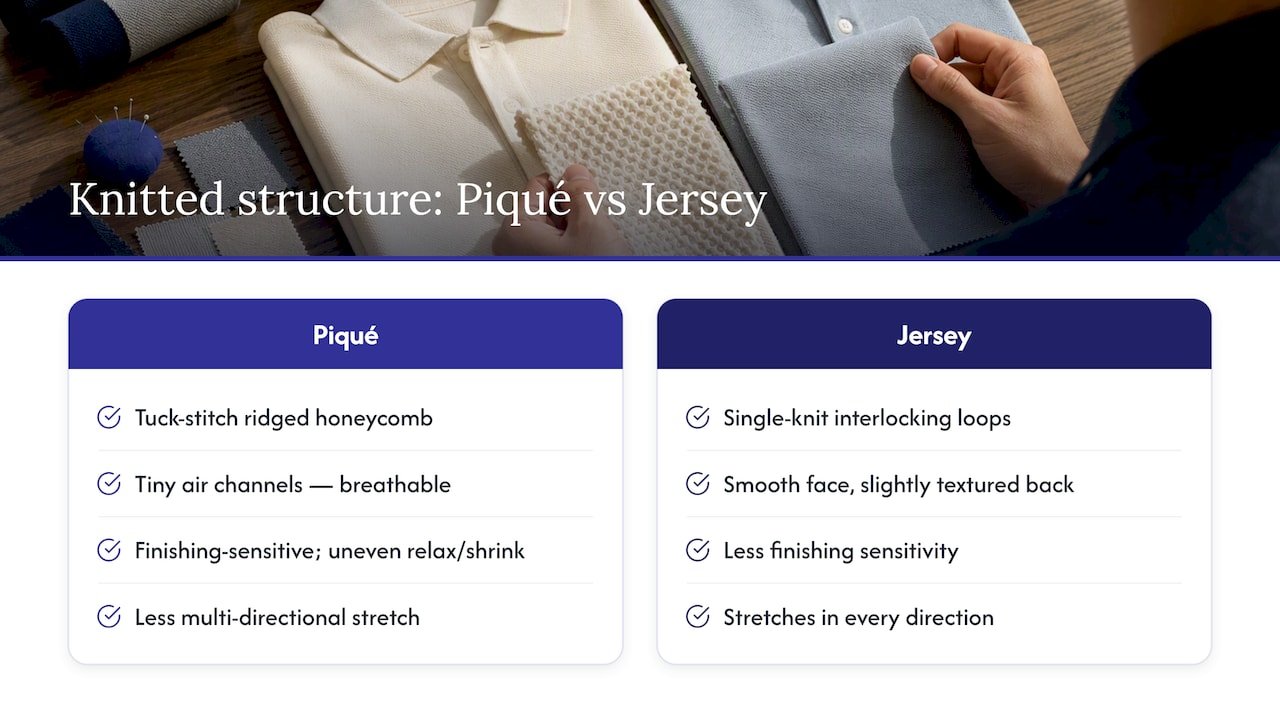
Piqué gets its texture from tuck stitches: certain loops are held rather than knitted every row, which raises small ridges and creates the honeycomb pattern you can feel with your fingertips. Those raised sections also form tiny air channels across the fabric surface, which is the structural reason piqué breathes differently than a flat knit. Because the tuck-and-knit pattern relaxes unevenly off the machine, piqué requires careful finishing. Mills have to set finish width and stitch length precisely, since the fabric tends to spread wider and shrink unevenly if that step is rushed, a detail worth asking about when you compare suppliers.
Jersey, by contrast, is a single-knit construction built from simple interlocking loops, which is what gives it a smooth face on one side and a slightly textured back. That looped structure stretches more in every direction, which makes jersey feel softer but also more prone to torque, the slight twisting you sometimes see in a jersey shirt after washing. Both fabrics respond to yarn quality and added stretch fibers: a higher-grade cotton or a small percentage of Lycra improves recovery and cuts down on pilling in either knit, but it does more to narrow jersey’s weaker points than it does for piqué, which starts from a more stable base.
Feel, fit, and how the collar holds up
Run your hand across a piqué polo and you feel ridges and a bit of stiffness; that same structure is what lets piqué collars stand up on their own without heavy interfacing. The fabric holds its shape through a shift and doesn’t cling, which is why it has become the default for classic, structured polos.
Jersey feels closer to a well-worn T-shirt: softer, with more stretch and a drape that follows the body rather than standing away from it. That softness is a selling point for casual wear, but it means jersey collars need engineered support, usually a fused band or heavier interlining, to avoid going limp after a few washes. A poorly built jersey collar is one of the fastest ways to spot a lower-quality shirt.
On sizing, piqué’s structure tends to hold a true fit, so standard sizing works well. Jersey’s extra stretch and cling mean that if you are between sizes, sizing up usually gives a cleaner drape instead of a shirt that reads as tight.
Breathability, moisture handling, and seasonal fit
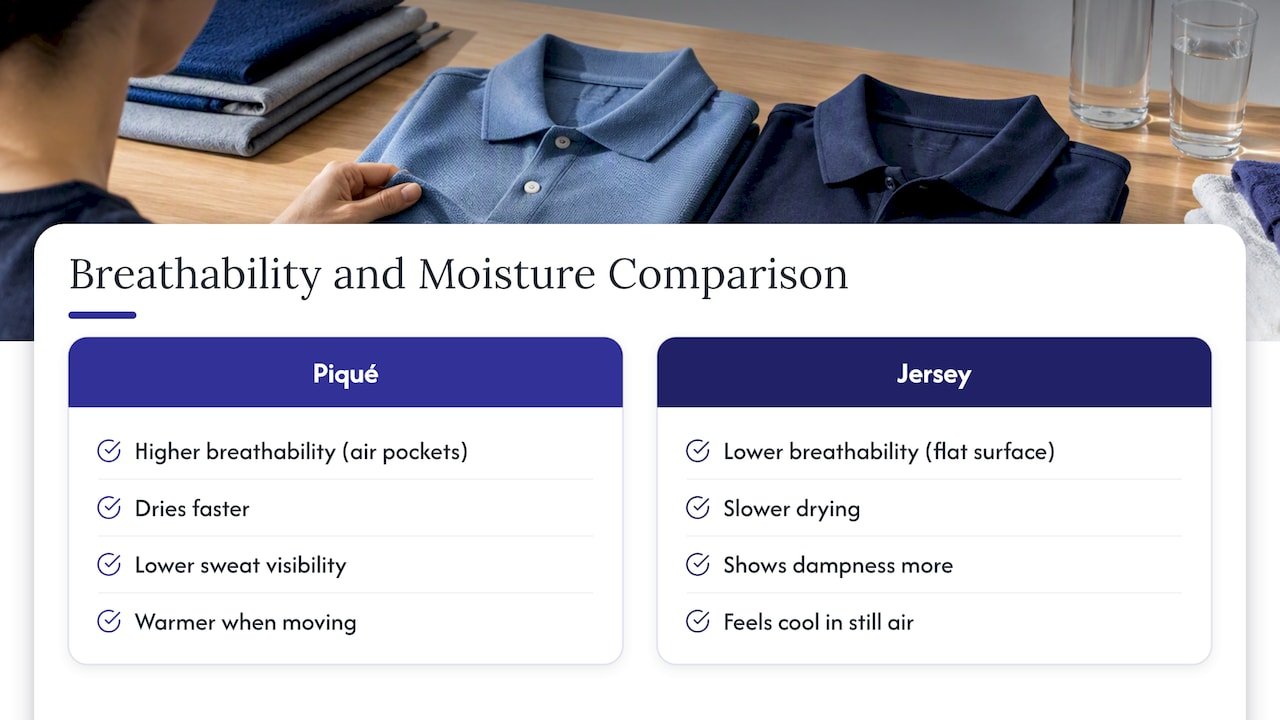
Piqué’s tuck-stitch construction creates raised texture and air pockets that improve breathability compared with a flat knit, which is the main reason it tends to perform better in heat and during active wear. Those micro-channels let air move across the skin instead of trapping it, and the same structure helps piqué dry a little faster after it gets damp.
Jersey’s flat, contact-heavy surface can feel cool to the touch in still air, but once it picks up sweat it tends to cling and show dampness more visibly than piqué, since there is less surface texture to lift the fabric away from the skin.
Finishes close a lot of this gap. Technical treatments such as mercerized or sweat-hiding cotton finishes can meaningfully reduce sweat visibility and shorten drying time, which matters more than the base knit for some buyers. Fiber choice plays a role too: longer-staple cottons such as Supima add softness and strength to either knit without sacrificing much performance. If a jersey polo is the look you want but heat and sweat are a concern, look for one of these finishes before switching knit types entirely; it is often the more practical fix.
Durability and care that preserves shape
Piqué’s denser, tuck-stitch structure naturally resists pilling and holds its shape through repeated wear, while standard jersey is more prone to stretching at the neckline and pilling under friction points like bag straps. Premium fibers change that math: a Supima-grade jersey resists pilling far better than a budget jersey and can close much of the durability gap with piqué.
A few habits extend the life of either fabric:
- Wash in cold or warm water, never hot, to limit shrinkage and fiber stress.
- Skip the high-heat dryer cycle and air dry or tumble on low instead.
- Turn polos inside out before washing to protect printed or embroidered logos.
- Use a gentle cycle for jersey specifically, since its looser knit is more vulnerable to agitation damage.
Pro Tip: Fused collars and printed logos last longest when you wash cold, skip the dryer’s high-heat setting, and avoid ironing directly over a decorated area.
Matching the knit to the occasion
Piqué earns its reputation as the office standard: it looks sharp on a video call, holds a crease, and survives heavy rotation on the golf course or in a uniform program where the same shirts get worn and washed weekly. Its structure photographs well too, which matters for brand consistency across a team.
Jersey fits a different wardrobe slot: travel, layering under a jacket, and weekend wear where a slimmer, softer silhouette matters more than a crisp collar. It packs smaller and wrinkles less visibly than piqué in a suitcase, which is a real advantage for frequent travelers.
Hybrid options exist for buyers who want both. A performance piqué blended with moisture-wicking synthetics keeps the structured look while adding stretch, and a silky, finished jersey can shed some of the cling that makes standard jersey feel too casual for client-facing work. These treated versions are worth requesting when a straight piqué or jersey doesn’t quite match the use case.
How to tell pique and jersey apart before you buy
A quick touch test settles most questions, and a few label checks confirm it when you’re shopping online.
- Run two fingers across the fabric: a textured, slightly bumpy waffle pattern means piqué, while a smooth, flat surface means jersey.
- Hold the shirt up to light and look for a visible honeycomb grid, piqué’s texture reads clearly at an angle.
- Check the product description for the words “piqué,” “single jersey,” GSM weight, or “tuck stitch,” all of which identify the construction directly.
- Look at the collar in photos: a piqué collar typically stands with minimal interfacing, while a jersey collar often shows a visible fused band.
- Request a close-up fabric photo if the listing only shows a full-body shot, since lighting and distance can make jersey look more textured than it is.
Applied buying guidance for bulk polo orders
For procurement teams ordering in volume, the knit choice affects cost control as much as appearance. Piqué tends to be the safer default for programs where the same shirts see heavy rotation, client meetings, or outdoor events, since its structure resists pilling and keeps a uniform look across dozens or hundreds of units. Jersey suits programs built around comfort-first giveaways or casual team wear, where a softer hand matters more than structure.
Collar engineering and finish quality deserve a specific line item in any purchase order, since a poorly fused jersey collar or an unevenly finished piqué can undercut an otherwise good design. Our Men’s DADE Short Sleeve Performance Polo and Women’s WILCOX Short Sleeve Performance Polo reflect how piqué and jersey construction choices show up in a finished, decorated garment. Requesting a physical swatch or sample run before committing to a large order remains the most reliable way to confirm GSM, hand feel, and collar quality match what the spec sheet promises; our custom corporate apparel bulk buying guide walks through how to specify those details.
Our take on picking between the two
If you only remember one rule, make it this: default to piqué when the shirt needs to look sharp and survive heavy use, and reach for jersey when softness and layering matter more than structure. The exceptions are real, though. A travel-heavy role or a casual Friday program often does better in jersey, and a premium jersey with a well-built collar can outperform a cheap piqué on both comfort and looks. Before placing a large order, check the fabric spec sheet for GSM and stitch type, and request a swatch. A five-minute touch test saves a lot of regret on a few hundred units.
— Jerry
How we supply pique and jersey polos for bulk orders
We stock both piqué and jersey performance polos and build our process around the two things bulk buyers care about most: getting the fabric right and getting it fast. Rush ordering is available when a launch date or event doesn’t leave room for a standard production timeline, and a fully custom branded boxes option lets a program add unboxing polish without juggling a second vendor.

A few starting points if you’re specifying polos for a team or event:
- Compare piqué and jersey swatches side by side before finalizing a large order.
- Pair your fabric choice with the right decoration method using our embroidered polos vs printed tees guide.
- Review bulk pricing and cost control strategies in our bulk custom apparel for smarter brand spending guide.
Head to Discountswag to request a quote or sample swatch for your next order.
FAQ
Is pique good for summer?
Yes. Piqué’s tuck-stitch construction creates small air pockets that improve breathability compared with a flat knit, which makes it a strong choice for hot weather and active use. A wicking or mercerized finish can improve warm-weather comfort further on either knit.
What does “pique” mean for polos?
Piqué refers to a knit structure built with tuck stitches that create a raised, waffle-like texture on the fabric surface. That construction is what gives classic polo shirts their structured feel and visible honeycomb pattern.
Which fabric is best for a polo shirt?
It depends on use. Piqué suits office wear, client meetings, and active or outdoor settings because it breathes well and holds its shape, while jersey suits casual, travel, or layered looks where softness and drape matter more than structure.
What are the differences between knit polo and pique polo?
A standard knit polo is usually made from single jersey, a smooth, flat-faced knit with more stretch and a softer drape than piqué. Piqué polos use a tuck-stitch structure that creates a textured surface, more body, and better airflow, which is why piqué has become the standard for classic, structured polos.
Sources
- Knit Basics | CottonWorks™
- Pique vs Jersey Knit Polo: The Fabric Difference Explained – Essential Layers
 Bottle Carriers
 Mugs