

BPA-Free Drinkware Isn’t Enough: Brand Buyers, Pick Glass or Steel

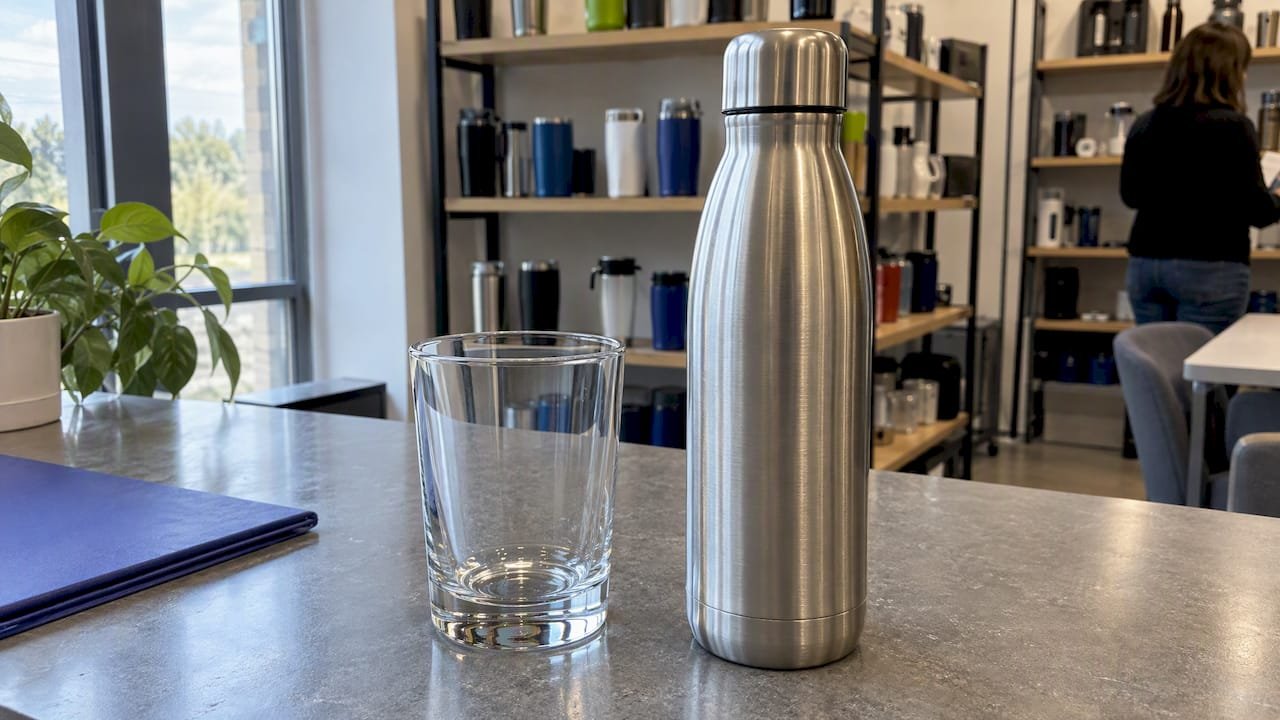
BPA-free means a manufacturer did not intentionally add bisphenol A (BPA) to a product during manufacturing. It does not guarantee the complete absence of other bisphenols or zero chemical leaching into your drink. If minimizing chemical exposure matters to you, glass or food-grade stainless steel is the safer default over any plastic bottle, labeled or not.
TL;DR:
- Many BPA-free plastics, including some Tritan products, can still release chemicals with estrogenic activity under stress conditions.
- Resins such as BPS and BPF are common BPA substitutes, but they are less studied, and “BPA-free” labels do not confirm the absence of similar chemicals.
- Glass and food-grade stainless steel are the safest options for minimizing chemical exposure, especially for infants, pregnant individuals, and frequent users.
- Heat, scratches, acidity, and sunlight significantly increase the risk of chemical leaching from plastics, regardless of BPA content.
- Choosing products with clear material specifications, third-party testing, and avoiding damaged or multi-part plastics reduces exposure more effectively than relying solely on “BPA-free” claims.
Table of Contents
- Where BPA Shows Up in Drinkware and Food Packaging
- How BPA and Similar Chemicals Get Into Your Drink
- What the Health Research and Regulators Actually Say
- The Limits of “BPA-Free”: Why the Label Isn’t the Whole Story
- How to Spot Safer Drinkware When You’re Shopping
- Comparing Your Real Alternatives: Glass, Steel, Silicone, and Newer Plastics
- Simple Habits That Cut Your Exposure Starting Today
- Why Material Choice Matters for Branded Drinkware
- A Realistic Take on BPA-Free Claims
- Shop BPA-Free and Non-Plastic Drinkware for Your Brand
- FAQ
- Sources
Where BPA Shows Up in Drinkware and Food Packaging
BPA is an industrial chemical used to make two materials common in older drinkware: polycarbonate, the hard, clear plastic once used for reusable water bottles, and epoxy resins, which line the inside of metal cans and some bottle caps. Polycarbonate is often marked with resin code 7, the catch-all “other plastics” category, which can signal that BPA was part of the manufacturing process.
You’ll find BPA historically used in:
- Rigid, clear plastic water bottles and travel mugs sold before the early 2010s
- Metal can linings for soda, beer, and canned foods
- Baby bottles, sippy cups, and infant formula packaging, before regulatory changes phased it out
- Some reusable food storage containers and bottle caps
Not every plastic container contains BPA, and the resin code system is a rough guide rather than a guarantee. Clear, rigid plastic that feels almost glass-like is the material most worth checking before you buy or reuse it.
How BPA and Similar Chemicals Get Into Your Drink
Chemicals don’t need a crack or a visible flaw to migrate out of plastic. Heat, physical stress, and the acidity or alkalinity of whatever you’re drinking all raise the odds that resin components end up in your liquid instead of staying locked in the container wall.
- Heat is the biggest driver: microwaving a plastic bottle or pouring boiling water into one built for cold drinks increases migration.
- Repeated dishwasher cycles stress plastic over time, creating microscopic surface damage that speeds up leaching.
- Acidic drinks like citrus water or alkaline ones like some sports drinks interact differently with resins than plain water does.
- Sunlight and UV exposure, such as leaving a bottle in a hot car, can degrade plastic and increase chemical release.
This isn’t limited to BPA-containing plastics. Peer-reviewed testing has found that some BPA-free replacement resins release chemicals with estrogenic activity under stressed conditions, while other BPA-free materials did not show this effect in the same lab assays. The label alone doesn’t tell you which category a product falls into.
What the Health Research and Regulators Actually Say
The concern with BPA centers on its behavior as an endocrine disruptor, meaning it can mimic or interfere with hormones in the body. Research has focused particularly on developmental sensitivity in infants and fetuses, since hormone systems are still forming during those stages.
- The FDA has amended its regulations to remove approval for BPA-based polycarbonate resins in baby bottles and sippy cups, and for BPA-based epoxy resin in infant formula packaging.
- Mayo Clinic notes that most BPA exposure for the general population comes through diet, and recommends practical steps to reduce contact rather than treating any single exposure as an emergency.
- Independent testing adds nuance to the picture at the shelf level.
Consumer Reports testing found no detected BPA in sampled baby bottles, but flagged that manufacturers commonly substitute BPS and BPF instead. That finding matters because it shows the industry has largely moved away from BPA itself, while the chemicals replacing it haven’t been studied nearly as long.
Regulators have acted specifically on products meant for infants, which is the group where the evidence base is strongest and the precautionary response has been most direct. For everyone else, the guidance leans toward reducing avoidable exposure rather than eliminating all risk, since a complete absence of chemical migration from any plastic is not realistic.
The Limits of “BPA-Free”: Why the Label Isn’t the Whole Story
“BPA-free” is largely a voluntary marketing claim, not a certification backed by a single enforced legal standard. A product can legitimately carry the label while containing a close chemical cousin of BPA that behaves similarly in the body.
This pattern has a name: regrettable substitution. Manufacturers remove a flagged chemical and replace it with a structurally similar one that hasn’t drawn the same scrutiny yet, so the product technically clears the “BPA-free” bar without necessarily being safer.
- BPS (bisphenol S) and BPF (bisphenol F) are the most common substitutes found in BPA-free plastics.
- Academic and policy analysis points out that “BPA-free” does not mean “bisphenol-free,” and documents regulatory moves, including a Washington State restriction and a European Union proposal, aimed at restricting bisphenols as a class rather than one chemical at a time.
- This class-based approach is a direct response to the substitution pattern: regulating one molecule at a time invites manufacturers to swap in a near-identical replacement.
Pro Tip: Treat “BPA-free” as a starting filter, not a finish line. Pair the label with a check on the actual material, since glass and stainless steel sidestep the bisphenol question entirely.
How to Spot Safer Drinkware When You’re Shopping
Material matters more than any label printed on the box. Glass, food-grade stainless steel, and food-safe silicone are the lowest-risk choices because none of them rely on bisphenol-based resins in the first place.
When you’re reading a product page or a label in person, a few checks help you sort real information from marketing noise.
- Look for “food-grade” or “food-safe” language tied to a specific material, not just a “BPA-free” sticker.
- Check for NSF certification or another named third-party testing standard rather than an unverified claim.
- Note the resin code on plastic items. Codes 1, 2, 4, and 5 are generally lower-concern plastics than code 7.
- Avoid bottles that feel cloudy, overly flexible, or scratched, since surface damage increases the chance of chemical migration.
- Favor single-material construction over multi-part plastic assemblies with separate liners, gaskets, and lids.
A bottle that is upfront about its exact material, whether that’s 18/8 stainless steel or tempered glass, gives you more to verify than one that only advertises what it lacks.
Comparing Your Real Alternatives: Glass, Steel, Silicone, and Newer Plastics
Once you move past “BPA-free” as the deciding factor, the choice comes down to trade-offs between weight, durability, and how carefully a specific plastic resin has been tested.
- Glass is chemically inert and essentially leach-free, making it one of the safest options for cold and room-temperature drinks. The trade-off is weight and breakability, which rules it out for a lot of daily carry or outdoor use.
- Food-grade stainless steel, generally 18/8 (also labeled 304) grade, is durable, inert, and handles temperature extremes without the heat-driven migration concerns that come with plastic. It’s a strong default for reusable bottles meant for years of use.
- Silicone labeled as food-grade works well for flexible components like lids, straws, and collapsible cups, though quality varies widely between suppliers, so a specific food-safe certification matters more than the material name alone.
- Newer BPA-free resins such as Tritan, PETG, and COC/COP cover a wide range of performance. Lab testing has found that some of these resins, including Tritan, released chemicals with estrogenic activity, while others like COC, COP, and PETG did not in the same assays. That split means the resin name matters more than the blanket “BPA-free” claim.
If you’re choosing between a hard plastic bottle and a stainless steel one at a similar price, steel removes an entire category of uncertainty that plastic can’t fully escape.
Simple Habits That Cut Your Exposure Starting Today
You don’t need to replace every container you own overnight. A handful of habits does most of the work.
- Skip the microwave for plastic bottles and avoid pouring hot coffee or tea into containers not rated for heat.
- Hand-wash older or unmarked plastics instead of running them through repeated dishwasher cycles.
- Replace any bottle that’s visibly scratched, cloudy, or warped, since damaged plastic leaches more readily.
- Choose glass or stainless steel for infants, pregnant people, and anyone drinking from the same bottle multiple times a day.
Pro Tip: When you’re sourcing drinkware for a group, whether for a household or a company giveaway, prioritize the material spec over whatever claim is printed on the packaging by following guidance on environmentally friendly branding and office design.
Why Material Choice Matters for Branded Drinkware
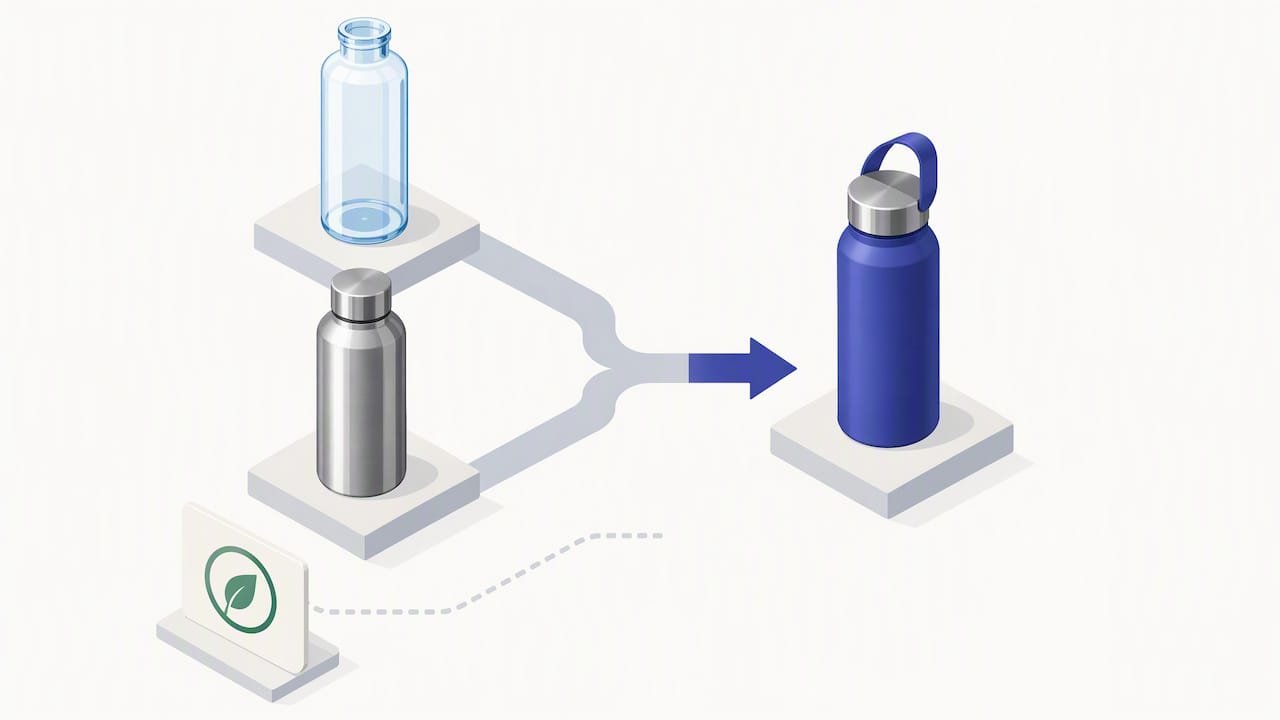
When we source promotional drinkware, we lead with material rather than a label claim, because the same scrutiny applies to a giveaway bottle as to one you’d buy for yourself. For buyers choosing items that employees or customers will actually keep using, picking a sustainable, non-plastic construction matters more than a marketing sticker.
A Realistic Take on BPA-Free Claims
The science on BPA-free substitutes is still catching up to the marketing. For babies, pregnant people, and anyone drinking from the same bottle daily, I’d rather see glass or stainless steel than any plastic, labeled or not. For everyone else, checking the actual resin and skipping heat exposure matters more than the words on the box.
— Jerry
Shop BPA-Free and Non-Plastic Drinkware for Your Brand
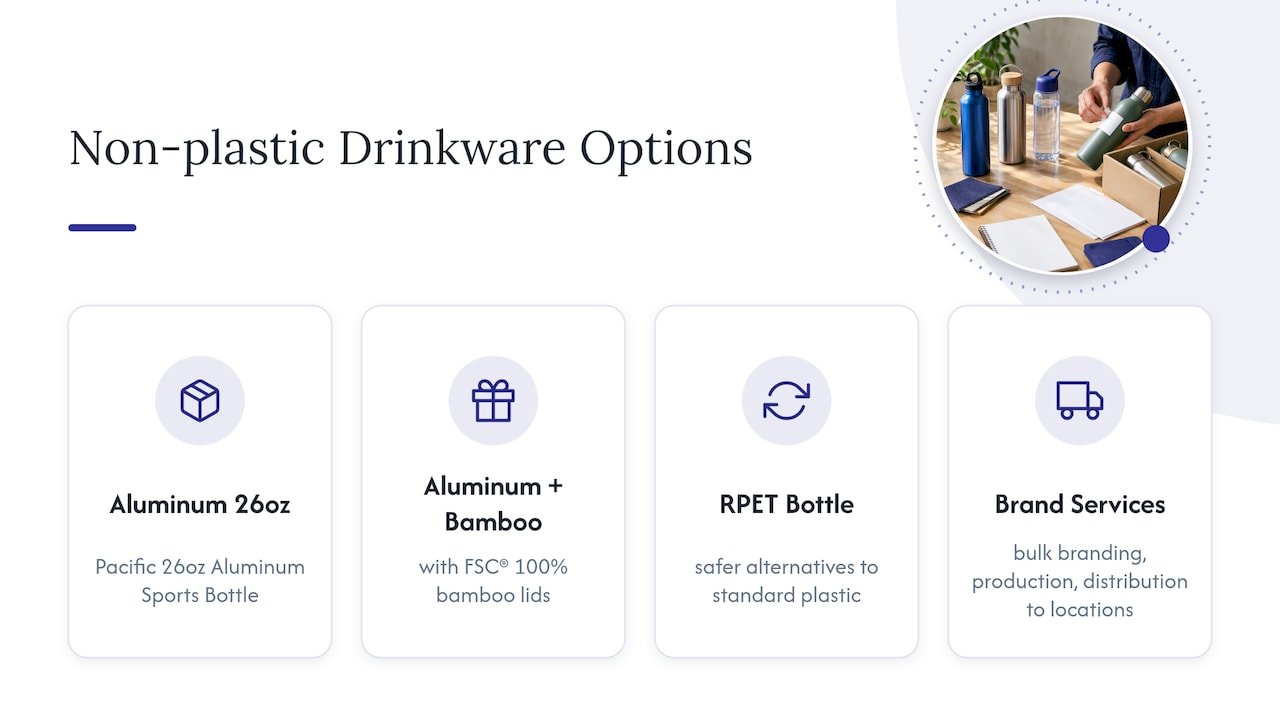
We stock eco-friendly, non-plastic drinkware built for programs that need to look good and hold up to daily use, including the Pacific 26oz Aluminum Sports Bottle, aluminum bottles with FSC® 100% bamboo lids, and RPET reusable bottles designed as safer alternatives to standard plastic.
We handle bulk branding, production, and distribution to single or multiple locations. Browse our full catalog at Discount Swag to find drinkware that fits your program and your standards.
This article is general information, not a substitute for advice from a qualified doctor. Consult a qualified healthcare professional about your own circumstances before acting on anything here.
FAQ
What does non-BPA mean on water bottles?
“Non-BPA” or “BPA-free” means the manufacturer did not intentionally add bisphenol A during production. It does not confirm the bottle is free of related chemicals like BPS or BPF, which some manufacturers use as substitutes.
Are plastic water bottles of good quality?
Quality varies widely by resin type and manufacturing standard. Some BPA-free plastics, including certain Tritan formulations, have tested positive for chemicals with estrogenic activity under lab conditions, while others like COC, COP, and PETG did not show the same result, so the specific resin matters more than the plastic category as a whole.
Is acrylic BPA-free?
Acrylic is a different polymer than polycarbonate and does not rely on BPA in its base chemistry, so it’s generally marketed as BPA-free. As with any plastic, checking for a specific food-grade certification is more reliable than the material name alone.
What is BPA and why is it harmful?
BPA is an industrial chemical used to make polycarbonate plastics and epoxy resins, and it can act as an endocrine disruptor by interfering with hormone signaling in the body. Regulatory concern has focused especially on infants and developing fetuses, which led the FDA to remove approval for BPA in baby bottles, sippy cups, and infant formula packaging.
Does BPA-free mean completely safe?
No. BPA-free only confirms the absence of that one specific chemical, and some BPA-free substitute resins have been found to release other chemicals with estrogenic activity in lab testing. Choosing an inherently inert material like glass or food-grade stainless steel is a more reliable way to reduce exposure than relying on the label alone.
Sources
- Bisphenol (BPA) | FDA
- Chemicals having estrogenic activity can be released from some bisphenol A-free, hard and clear, thermoplastic resins – PMC
- Baby Bottles With No Detected BPA, Lead, or Phthalates – Consumer Reports
- Mayo Clinic — BPA FAQs
- BPA-free does not mean bisphenol-free and how regulators are grappling to deal with it – Petrie-Flom Center
 Bottle Carriers
 Mugs