

Bank Giveaway Ideas: 7 Useful Picks That Attract Better Leads

The best bank giveaways are targeted, high-relevance items that create repeat impressions, not generic prizes that attract one-time entrants. Pairing items like insulated drinkware, tech accessories, totes, apparel, and premium experiential prizes with clear lead capture and a follow-up nurture plan drives the strongest long-term customer acquisition cost. This guide covers item picks by budget, operational steps, compliance basics, and the metrics that tell you whether a campaign actually worked.
TL;DR:
- For high volume event distribution, use inexpensive pens or totes; choose tumblers or power banks when campaigns need daily utility and repeated brand exposure.
- Use a financial planning session or local voucher instead of cash when entrant quality matters, and reward verified account actions rather than shares alone.
- For referral campaigns, award a base entry without purchase and a bonus only after a referred person opens a verified account, filtering for genuine intent.
- State that no purchase is necessary and purchases do not improve odds, then disclose prize value, odds, and eligibility on each entry form.
- Calculate blended customer acquisition cost across paid media, prizes, and operating expenses, then track account conversions and average revenue through CRM records tagged by campaign.
Table of Contents
- 1. Top giveaway items banks and credit unions should consider
- 2. Matching giveaway ideas to your campaign’s purpose
- 3. Choosing the right budget tier for your giveaway goals
- 4. Running a compliant, well-organized giveaway campaign
- 5. Tracking the metrics that show whether your giveaway worked
- 6. Why prize relevance matters more than prize size
- How Discount Swag helps banks execute giveaway programs
- FAQ
- Sources
1. Top giveaway items banks and credit unions should consider
Picking the right item matters more than picking a cheap one. An item that gets used daily puts your logo in front of a customer dozens of times a month, while a prize that only gets opened once delivers a single impression and nothing more.
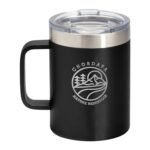
Drinkware leads most lists for a reason: a tumbler or insulated bottle rides along to the gym, the office, and the car, generating repeat visibility that a flyer never could. Tech accessories like power banks and branded chargers solve a real daily problem, which makes recipients hold onto them rather than toss them in a drawer. Apparel, including caps and polos, works well for events and community sponsorships where visible branding matters. Totes and market bags double as everyday carryalls, especially effective for grocery-adjacent partnerships or farmers market sponsorships. Premium stationery, think notepads and pens with actual heft, still resonates with older account holders who value a tactile item at the teller window. Seasonal wellness items, such as hand sanitizer or sunscreen, earn relevance during specific months without feeling like filler. At the top end, experiential prizes like a complimentary financial-planning session or a local-business gift voucher create perceived value far beyond their production cost.
A few concrete picks worth stocking for rotating campaigns:
- Insulated tumblers or bottles: daily use means dozens of logo impressions per month, far outperforming single-use swag.
- Branded power banks: solve a real problem, so recipients keep them in a bag or car rather than discarding them.
- Logo caps or outerwear: strong for outdoor events and sponsorships where visibility matters more than utility.
- Canvas totes or market bags: useful for grocery runs and farmers markets, reinforcing the brand outside the branch.
- Premium notepads and pens: resonate at the teller line and in-branch appointments, especially with longtime account holders.
- Seasonal wellness items: sanitizer, lip balm, or sunscreen tied to a specific season feel considerate rather than random.
- Experiential prizes: a financial-planning consultation or a voucher at a local restaurant signals higher value than a mass-produced trinket.
Personalization moves the needle further. A tumbler printed with a branch name instead of just a logo, or a tote that nods to a local landmark, reads as intentional rather than mass-produced. For a deeper look at items proven to earn repeat use, our guide to branded giveaway items breaks down which categories hold up best over months of daily handling, and our tech accessory ideas page covers trending options in that category specifically.
2. Matching giveaway ideas to your campaign’s purpose
Different goals call for different mechanics. A customer appreciation campaign is not run the same way as a referral push, and treating them identically wastes budget on the wrong item or the wrong incentive structure.
- Customer appreciation: send an insulated tumbler or a small branded box to existing account holders, paired with a short thank-you message that references their tenure or account type rather than generic copy.
- New-account onboarding: pair a functional staple, like a notepad set or a phone wallet, with a welcome checklist and a time-limited coupon that nudges new customers toward a second product, such as a savings account or a credit card.
- Events and community outreach: stock grab-and-go items at a table (pens, totes, stickers) for volume, and run a raffle for one premium local experience to drive booth traffic and capture leads.
- Referral programs: use a tiered structure where a successful referral earns an entry, and a verified new account opened by that referral earns a bonus entry, with no purchase required to participate at the base level.
- Digital and social giveaways: target the prize to your ideal customer persona rather than cash, and build in viral actions like sharing a post or tagging a friend, while capping bonus entries so the mechanic does not reward pure prize-hunters over genuine prospects.
Each use case benefits from matching the item’s perceived value to the moment. A welcome kit that feels like an afterthought undercuts the onboarding experience, while an overly generous raffle prize at a small community table can draw entrants who have no interest in banking with you at all. For planning logistics around in-person events specifically, our event merchandise planning guide walks through selection and shipping timelines.
3. Choosing the right budget tier for your giveaway goals
Giveaway spending breaks into three practical bands, and the right one depends on whether you need scale or perceived value.
- Low budget, inexpensive items: pens, stickers, sanitizer, and basic tote bags work for high-volume events where you want wide distribution over individual impact.
- Mid budget, moderate cost items: insulated tumblers, caps, and branded power banks strike a balance between unit cost and the kind of daily utility that earns repeat impressions.
- Premium budget, higher cost or experiential items: financial-planning sessions, higher-end apparel, or local-business vouchers create outsized perceived value relative to a typical mass-produced item.
The trade-off is straightforward: low-budget items scale to hundreds of entrants cheaply, but they rarely change anyone’s banking relationship on their own. Premium and experiential prizes cost more per unit but tend to attract a narrower, more qualified entrant pool, especially when the prize itself is relevant to a banking decision rather than generic cash.
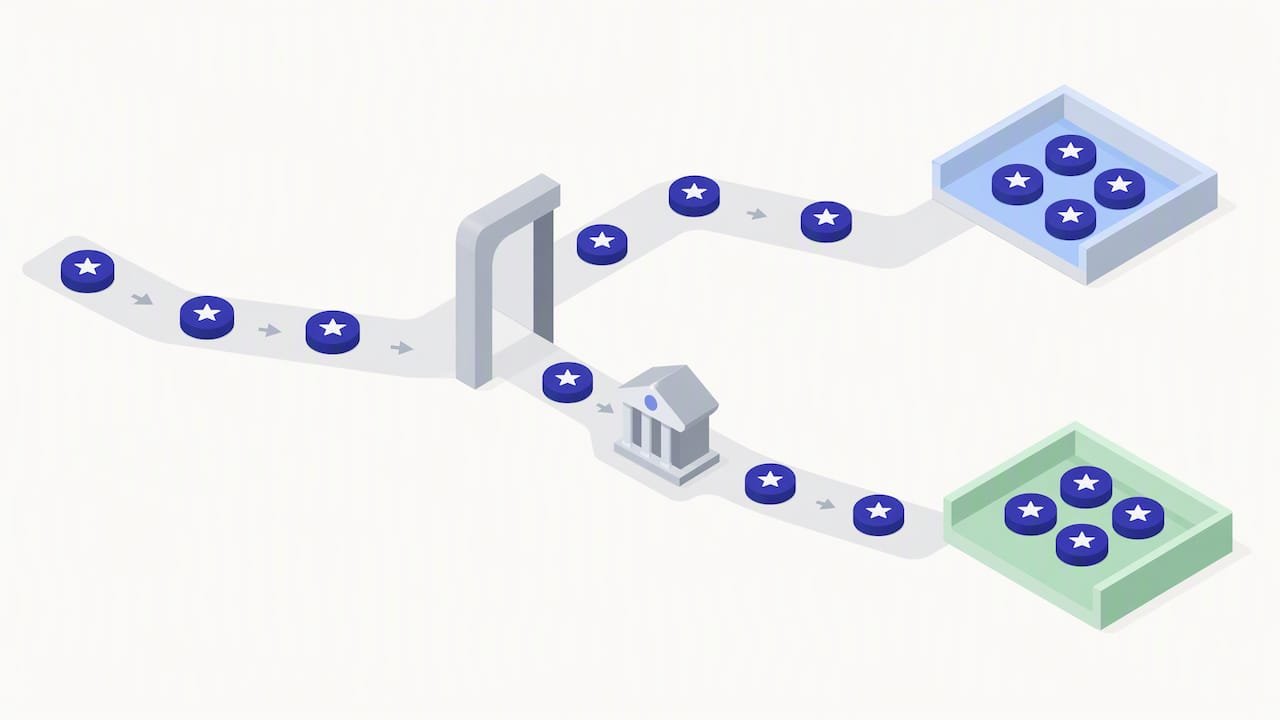
Giveaways that are seeded with paid traffic and followed by strong CRM nurture can lower blended CAC over time compared to one-off paid campaigns alone, because the entrant list becomes an owned, consented audience you can remarket to repeatedly rather than a single paid impression.
Coupons and account-qualifying bonus entries help bridge a low-cost giveaway to near-term revenue: offering a bonus entry for opening a checking account or setting up direct deposit filters for intent without requiring every entrant to spend money up front.
4. Running a compliant, well-organized giveaway campaign
A giveaway that looks successful on entry volume can still fail if the mechanics are sloppy or the legal basics get skipped. A short checklist keeps both risk and operations in order.
- Pre-launch: write clear terms and conditions, state that no purchase is necessary and a purchase will not improve odds of winning, and disclose prize value, odds, and eligibility rules conspicuously on every entry form.
- Avoid dark patterns: the FTC’s complaint against Publishers Clearing House documents sweepstakes designs that falsely implied purchases improved winning odds, a useful reference for what regulators consider deceptive.
- Tech setup: connect entry forms directly to your CRM, tag entrants by campaign and branch, and build an email nurture sequence before the giveaway goes live rather than after.
- Fulfillment: confirm production lead times, personalization options, and multi-branch shipping logistics with your vendor, and plan rush orders in advance if the campaign timeline is tight.
- Post-entry follow-up: set a nurture cadence with subject lines tied to the prize theme, outline coupon mechanics clearly, and assign someone to handle redemption questions.
Pro tip: Seed the campaign with a small paid push to a lookalike audience, then let viral actions like shares and referrals compound your reach organically.
For procurement specifics on sourcing in bulk without overpaying, our bulk giveaway sourcing guide covers vendor negotiation and timing.
5. Tracking the metrics that show whether your giveaway worked
Entry counts alone tell you almost nothing about whether a giveaway moved the business forward. The metrics that matter connect entrants to actual account activity.
- Primary KPIs: email list growth, blended customer acquisition cost, entrant-to-customer conversion rate, and average revenue per acquired customer.
- Secondary KPIs: referral rate, social shares, redemption rate on any coupon included, and attendee uplift for in-person events.
Deposit competition research from the FDIC shows banks actively use sign-up incentives and marketing margins as levers to manage deposit acquisition, which underscores why measuring a giveaway’s downstream effect on account openings matters more than measuring entries alone.
A simple attribution method works well here: attribute first-touch credit to the giveaway, track every downstream conversion through CRM tags, and calculate blended CAC across paid media, prize cost, and operational spend combined.
6. Why prize relevance matters more than prize size
Marketers tend to assume a bigger prize always produces a bigger list, but the opposite is often true once you account for lead quality. A $500 cash giveaway draws thousands of entrants who have no intention of banking with you, while a financial-planning session or a relevant local experience draws fewer entrants who are already closer to the decision you actually want them to make.
The real mistake most campaigns make is optimizing for entry volume instead of entrant fit. A tiered referral structure that rewards verified account actions, not just social shares, filters for intent in a way a sweepstakes alone cannot. Matching the prize to the customer persona you are trying to reach, rather than defaulting to whatever prize sounds most exciting, consistently produces a shorter, cheaper path from entrant to account holder.
— Jerry
How Discount Swag helps banks execute giveaway programs
We supply the branded items behind campaigns like the ones outlined above, with bulk orders, rush production, and fulfillment to single or multiple locations from one order. For clients running a welcome kit program, we can build a kit around a functional staple plus an onboarding checklist insert, and for events or referral pushes we handle a tote-plus-premium-prize package with lead times coordinated around your campaign date.
- Welcome kits: a functional item paired with onboarding materials, built for new-account campaigns.
- Event and referral packages: grab-and-go totes plus a premium prize option, with rush-order timelines available when your event date is tight.
Browse our full product catalog and ordering options to plan your next campaign timeline and get a quote based on your branch count and launch date.
FAQ
What are some cool ideas for giveaways?
Insulated tumblers, branded power banks, premium totes, and experiential prizes like a financial-planning session all perform well because they create repeat impressions or solve a real daily need. Items tied to a season or local event, such as sunscreen in summer or a local-business voucher, also feel more considered than generic swag.
What is the $3,000 rule for banks?
This phrase does not refer to a standard, codified banking regulation, and definitions of it vary depending on the source. Banks should rely on their own compliance teams or primary regulatory guidance rather than a popular rule-of-thumb when setting promotional or reporting thresholds.
What are some good banking gifts?
Everyday utility items like insulated bottles, branded totes, and quality pens tend to outperform one-time novelty gifts because they get used repeatedly, keeping the bank’s branding visible. For new account holders, a welcome kit that pairs a useful item with an onboarding checklist or coupon adds practical value beyond the gift itself.
What are some good prizes for giveaways?
Prizes that match your ideal customer, such as a financial-planning consultation or a relevant local experience, tend to attract higher-quality entrants than generic cash prizes. Tiered rewards that give bonus entries for actions like opening an account also help filter for genuine interest rather than prize-hunting.
How do I make sure my bank’s giveaway is legally compliant?
Giveaways need clear terms stating that no purchase is necessary and a purchase won’t improve your odds of winning, along with conspicuous disclosure of prize value, odds, and eligibility. Reviewing enforcement examples like the FTC’s case against Publishers Clearing House helps marketers spot and avoid deceptive entry mechanics before launch.
Sources
- Fake Prize, Sweepstakes, and Lottery Scams | Consumer Advice (FTC)
- Giveaways vs Paid Ads: A CAC Framework | Gleam
- FTC v. Publishers Clearing House — Complaint PDF
- Deposit competition beyond rates (FDIC research)
 Bottle Carriers
 Mugs