

Embossing vs. Debossing: Which Finish Fits Your Branded Merchandise

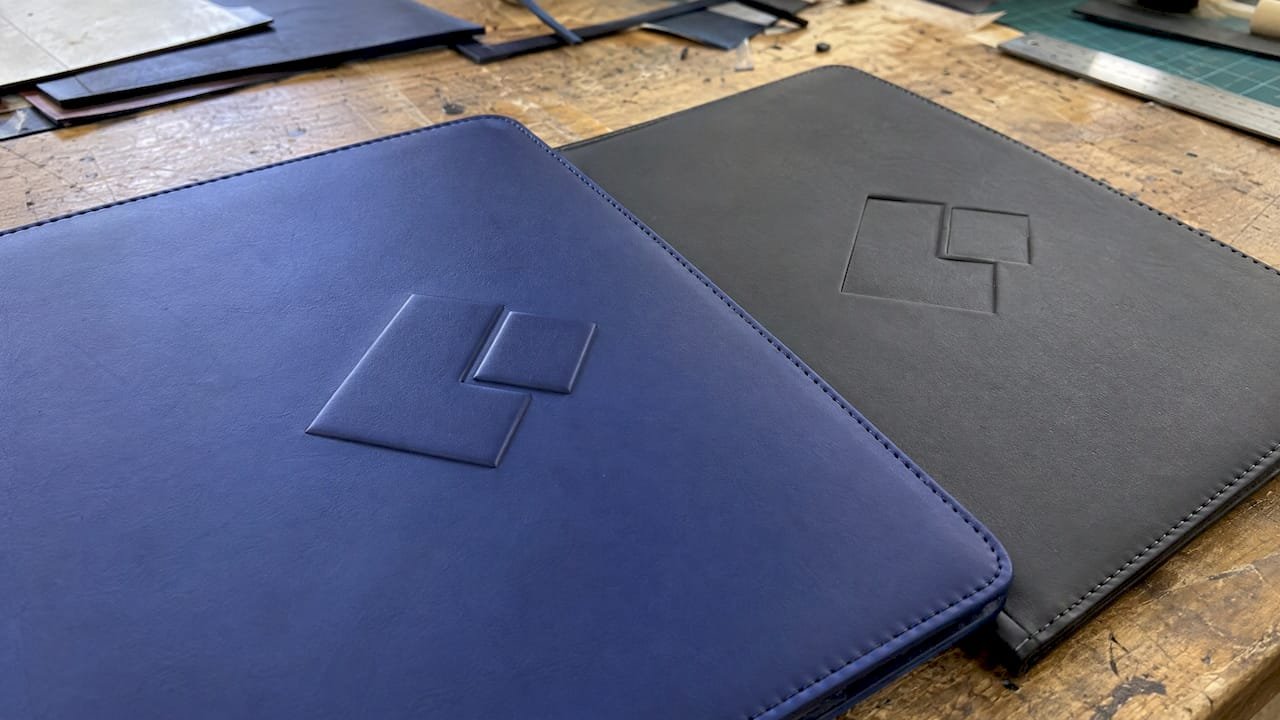
Embossing raises your logo above the surface of a material. Debossing presses it below the surface, into a recess. Both use a metal die, heat and pressure, and both can be done without ink. For a marketing team, the choice comes down to attention versus restraint: emboss when the mark should stand out, deboss when it should look built into the product.
This guide covers what each finish looks like, how it is made, what it costs you in setup and artwork limits, how debossing differs from engraving, and which finish to specify on the items you order in bulk.
TL;DR
- Emboss = raised. Deboss = recessed. Same tooling family, opposite direction of the impression.
- Emboss for a logo or title that should be the focal point. Deboss for a quiet, premium look on leather, cloth, covers and portfolios.
- Fine lines, tiny type and sharp points are the main risk in both. Simplify the artwork before it goes to a die maker.
- Debossing is pressed in with a die. Laser engraving removes material. They are different processes with different results.
- Custom dies are a setup cost, so short runs feel them most. Plan the finish with your order quantity in mind.
Table of Contents
- The difference in one look and one touch
- How each finish is made
- Which materials take which finish
- When to emboss and when to deboss
- What each finish costs you
- Artwork rules that save a reprint
- Debossing vs. engraving
- Choosing a finish: a quick decision path
- Where this fits in a corporate program
- Perspective: how we would brief this
- Ready to order branded merchandise
- FAQ
- Sources
The difference in one look and one touch
Picture a logo on a padfolio cover. If your fingertip rides up over the logo, it is embossed. If your fingertip drops into the logo, it is debossed.
A printing guide from Color Vision puts it the same way: embossing raises a logo, word or pattern above the surface, while debossing presses it below. The process also changes how the light behaves. A raised mark catches light on its upper edges and casts a small shadow. A recessed mark pools shadow inside the impression, which reads as softer and more integrated.
A second distinction matters when you brief a supplier. Either finish can be “blind,” meaning no ink or foil is added. Friesens, a book manufacturer, notes that a blind finish gets its visibility from texture, depth and light rather than color. That is elegant on a leather portfolio and weak on a poorly lit trade show table. If your logo needs to be read from three feet away, a blind finish alone may not be enough. Embossing can be combined with colored inks, clear coats or metallic foils to add contrast.
| Embossing | Debossing | |
|---|---|---|
| Direction | Raised above the surface | Pressed below the surface |
| Look | Bold, dimensional, shadow on the edges | Understated, integrated, shadow inside |
| Best for | Logos and titles meant to stand out | Subtle branding on leather, cloth, covers |
| Tooling | Die and matching counter-die | A single custom die is the typical starting point |
| Can add foil or ink | Yes | Yes |
How each finish is made
You do not need to run a press, but knowing the mechanics explains the cost and artwork rules later.
Embossing uses two matched metal pieces. Billerud’s print-technology guide describes a relief die and a matching counter-die in a press, with the material placed between them and heat and pressure forming the image. The counter-die is what pushes the design upward into a raised shape.
Debossing starts with a custom metal die pressed into the surface. Friesens describes it as a die stamped into a cover or page. The recess is formed where the die meets the material.
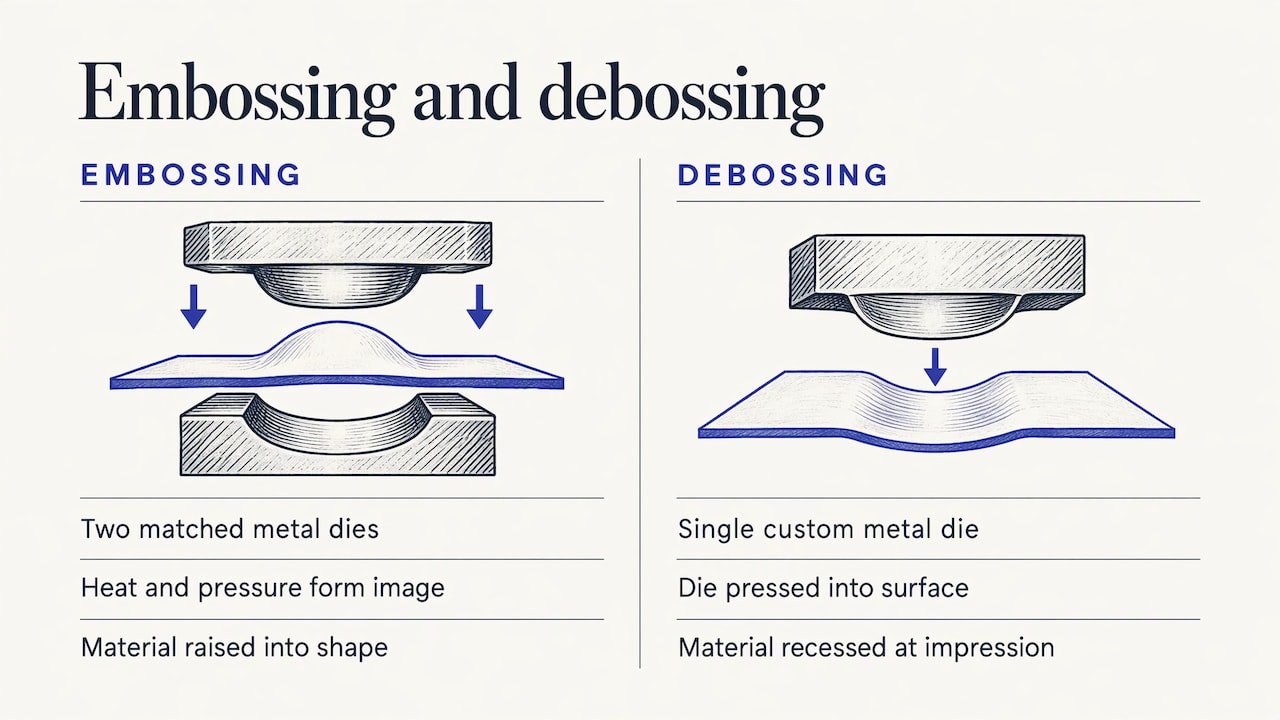
Depth is adjustable. Billerud reports that embossing depth can range from roughly 0.004 to 0.025 inch, depending on the die and the paper, from a subtle relief to a dramatic one. The same source notes that the sides of a raised or recessed image can be flat, beveled, V-shaped or rounded. Rounded edges and graduated levels produce a sculptured emboss, which costs more but looks more like a small piece of sculpture than a stamp.
Which materials take which finish
Both finishes started on paper and card, and that is still where the guidance is clearest. Typical projects include business cards, presentation folders, brochures, certificates, book covers and invitations.
For paper stock, thickness and softness matter. One production guide recommends cotton and uncoated cover stocks around 300 to 400 gsm for deep, clean relief and warns that coated gloss stocks may crack or show stress marks. A paper supplier’s cheat sheet adds that heavier cover-weight papers support greater depth.
Beyond paper, debossing is not limited to stationery. A manufacturing resource says it can be used on paper, fabric, leather and metal. In promotional merchandise this is why debossing is so common on leather and leather-look goods: portfolios, padfolios, notebook covers and similar corporate items. A leather-and-cloth recommendation from a printing comparison guide also lists background texture and borders as natural uses.
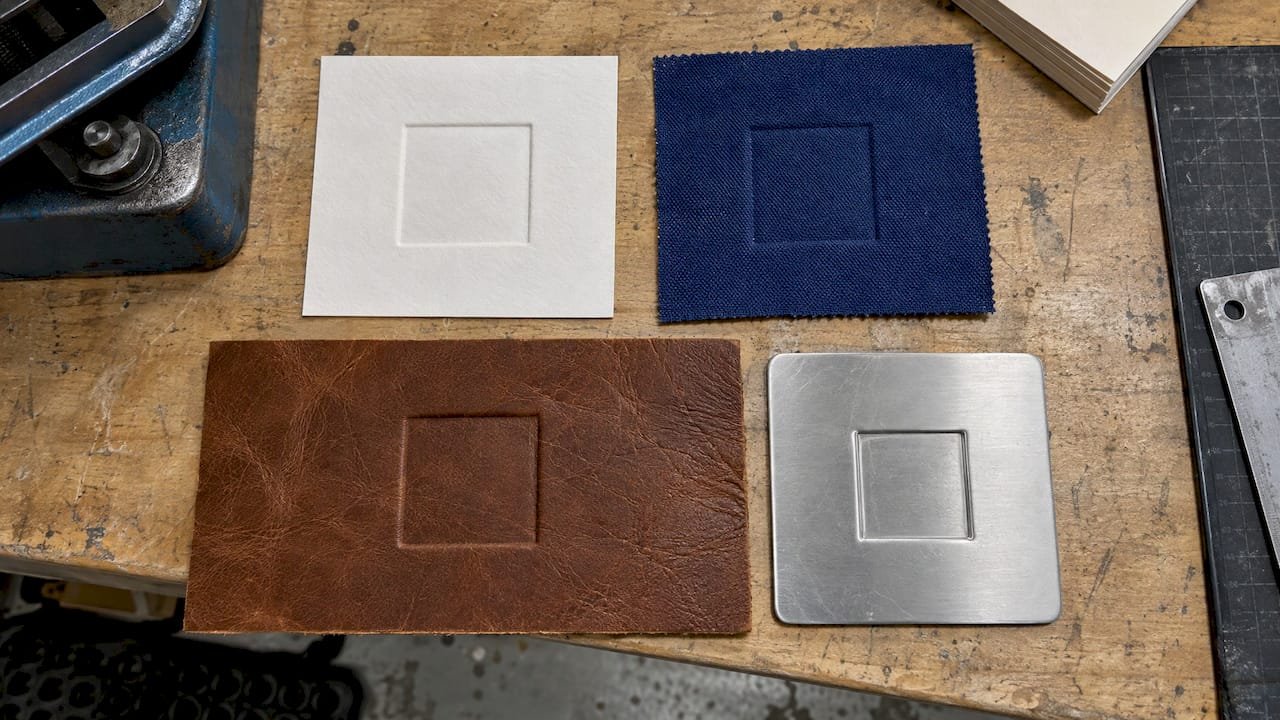
A practical rule for buyers: the finish is tied to the surface. Before you fall in love with a look, confirm that the actual product material can carry it. A glossy coated surface behaves very differently from uncoated board or a soft cover.
When to emboss and when to deboss
The cleanest summary comes from a paper maker’s guide: use embossing for logos, titles or other focal points when you want them to stand out, and debossing for a sophisticated, understated look or subtle depth. A separate comparison reaches the same conclusion: neither finish is universally better. Embossing wins when the element should dominate. Debossing wins when the material should stay the focus and the mark should feel integrated.
Translate that into the decisions a marketing department actually makes:
- Executive and client gifts. Debossing suits a portfolio or notebook that will sit on a desk for years. The mark looks part of the product rather than an advertisement stuck on it.
- Welcome kits for new hires. A restrained deboss on the notebook and padfolio makes the kit feel considered. Use color elsewhere in the kit, such as the box or a drinkware print, so brand colors still appear.
- Event giveaways where recognition matters. If attendees need to read the brand from a distance, emboss with a foil or ink accent, or choose a colored decoration method for that item.
- Packaging and inserts. An embossed logo on a branded box lid or card insert becomes the focal point that someone touches on opening.
- Large brand programs with several items. Pick one finish as the premium tier and keep it consistent. A deboss on every leather piece reads as a system, while a mix of finishes can look accidental.
A useful test is to ask what the recipient will do with the item. If they will hold it, open it and use it daily, a tactile finish earns its place. If they will glance at it across a room, color usually does more work.
What each finish costs you
Prices vary by supplier and item, so use these as the logic behind a quote, not as a rate card.
The tooling is the main driver. Because embossing needs a die and a counter-die while debossing needs one die, debossing tends to be less expensive is a common claim among suppliers, though the real difference depends on the product and the artwork. A production guide notes that custom tooling means short runs feel the die charge most, while sculpted dies and foil-emboss combinations raise both cost and lead time, and that embossing adds a separate press pass.
A published example shows the scale on paper goods. One printer of pressed business cards lists a starting price of $350 for 250 cards on 32-point cotton stock for either method, with foil, an additional color or painted edges adding to it. The same page puts turnaround at about three weeks after proof approval. Treat this as a data point on how much the finish can add to a small paper run, not a promise for any other product.
For a larger merchandise order, the same logic applies. A die is a one-time setup, and the cost per unit drops as quantity rises. Our explanation of setup charges versus run charges shows how those two lines work on a custom order, which helps you read a quote and compare finishes fairly.
Artwork rules that save a reprint
Most bad embossed or debossed results come from artwork that was fine on screen. Keep these in mind before you approve a proof:
- Simplify fine detail. A supplier cheat sheet says very fine lines do not emboss well, especially on thicker stock. Thin taglines and small serif type tend to fill in or disappear.
- Watch sharp points. Friesens cautions that sharp points or fine lines can cut through cover material, and die makers may slightly modify such artwork. Expect small changes to your logo and ask to see them on the proof.
- Use a one-color vector logo. A blind finish has no color, so gradients and shadows have nothing to show. Send a clean, solid version of the mark.
- Mind the reverse side. On paper, embossing can leave a mirror-image hollow on the back, and a deep deboss may show faintly. A printer of pressed cards notes both effects. Avoid printing something important there.
- Match depth to the surface. Deeper is not better. A shallow impression on thin stock looks crisp, while a deep one on the wrong stock looks strained.
If your logo is complex and you want a dimensional version anyway, it helps to see what turning flat artwork into a dimensional form involves. This overview of how to turn a logo into a 3D model shows why simple, bold shapes translate best, the same principle that governs a die.
Debossing vs. engraving
People often group these because both leave a recessed mark. They are different processes.
Debossing presses a design into the material with a die. Engraving removes material. A manufacturing guide draws exactly this line: debossing pushes the surface in, while laser engraving takes material away. The Promotional Products Association International (PPAI), the industry’s trade body, explains that laser engraving uses a focused beam whose heat vaporizes surface material, leaving a cavity, and that commercial systems are usually computer-controlled for speed and precision.
This changes what each can do:
- Material. PPAI lists stone, wood, glass, acrylic and metal as the best engraving media, with leather, plastic and paper also possible though not all suitable. It points to metal drinkware, awards and leather goods as ideal uses. Debossing is the pressed-in choice for paper, cloth and leather.
- Detail. The same PPAI guide says laser engraving gives high precision and intricate detail, and depending on material, depth and wear, can last the product’s lifetime. Debossing relies on a die, so it prefers bolder shapes.
- Terminology. PPAI also separates engraving from etching: engraving cuts deep grooves, while etching melts the surface to create raised marks, and etching is typically used on glass, stone or crystal.
Short version: deboss a portfolio or a leather notebook cover, engrave a metal tumbler or an award plaque. If you are specifying a kit that includes both, you will likely use both methods and keep the logo consistent across them.
Choosing a finish: a quick decision path
- Name the item and its surface. Leather, cloth or uncoated board suits deboss or emboss. Metal or glass points to engraving or printing.
- Decide what the logo should do. Be the focal point, or sit quietly in the product.
- Check your artwork. If the logo has fine lines or small type, simplify it first.
- Match to quantity. Short runs absorb die charges badly. Bulk runs spread them across every unit.
- Choose blind or accented. Blind for elegance, foil or ink for visibility.
- Approve a proof. Check edges, depth and the reverse side before production.
Where this fits in a corporate program
A finish is a small decision inside a larger one: what the recipient gets, how many people get it and where it ships. For many teams the harder part is operational. Fifty executive gifts, two hundred new-hire kits and a conference give-away may all carry the same brand but go to different offices on different dates.
That is where we work with marketing and procurement teams. Discount Swag is an online distributor of customizable corporate promotional products, from apparel and drinkware to bags, technology, gifts and event swag, and we offer rush ordering, branded kits and fulfillment to single or multiple locations. We guarantee 10% or more savings versus any competitor’s online price.
For professional, desk-ready pieces, start with our customizable Windsor Impressions presentation portfolio, the Pedova portfolio, the Metropolitan leather zippered padfolio or the FUNCTION notebook. These are the types of covers where a restrained, tactile mark tends to look at home.
Perspective: how we would brief this
Most teams we talk to start by asking which finish looks better. We would start with a different question: where will this item be seen, and by whom?
A portfolio or notebook is handled, opened and kept. That is the place for a quiet, tactile mark, and for one consistent decision across the whole kit. A tumbler, a tote or a bag has a different job, and often a different decoration method fits it better. The best program is not one finish everywhere. It is the right finish on each item, one logo treatment, and a single order that gets everything to every location.
That is why we pair product selection with branded kits, rush orders and distribution to one or many addresses. The decoration is a detail. Getting a consistent, on-brand package into the right hands on time is the program.
Jerry
Ready to order branded merchandise
If you are planning a portfolio, notebook, bag or drinkware order for a team, a client list or an event, browse the full range at Discount Swag. We handle rush orders and branded kits, and we deliver to single or multiple locations, so one order can serve several offices.
Bring your item, quantity and logo, and we will help you move from idea to a finished, shipped order.
FAQ
What is the difference between debossing and embossing?
Embossing raises a design above the surface of the material, and debossing presses it below. Both are made with metal dies, heat and pressure. Embossing gives a bold, shadowed relief, while debossing gives a subtler, recessed look.
Is debossing cheaper than embossing?
Often, because debossing generally needs one die while embossing needs a die and a counter-die. The final price still depends on the item, the artwork, the quantity and any foil or ink. Because dies are a one-time setup, per-unit cost falls as the order size grows.
Which is better for a logo on leather goods?
Debossing is the usual choice for leather, since a recessed mark looks integrated and premium. Keep the logo simple and bold so the die forms it cleanly. Embossing is possible when you want the mark to stand out more.
Is debossing the same as engraving?
No. Debossing presses the surface in with a die, so no material is removed. Laser engraving removes material with heat and is typically used on metal, glass, wood and similar surfaces. Debossing suits leather, cloth and paper.
Can I add color to an embossed or debossed logo?
Yes. Either finish can be blind, with no ink, or combined with ink, a clear coat or metallic foil. Foil and extra colors usually add to the price, so decide early whether the logo needs contrast.
Sources
- Printing Terminology: Embossing vs Debossing, Color Vision
- Embossing & Debossing, Friesens
- Embossing: See and Feel the Third Dimension, Billerud
- Embossing and Debossing Explained, Made Good Designs
- Emboss Cheat Sheet, SunDance
- Debossing: Definition, Process, Materials, and Types, Xometry
- Embossing vs. Debossing, Qin Printing
- Texture Talks: Embossing vs. Debossing, Millcraft
- Pressed Business Cards: Emboss, Deboss & Letterpress, PrintPeppermint
- A Beginner’s Guide To Four Common Decoration Methods, PPAI
- 3 Ways to Turn a Logo into a 3D Model
 Bottle Carriers
 Mugs