

Event Staff Shirts: Design, Colors and Ordering Guide

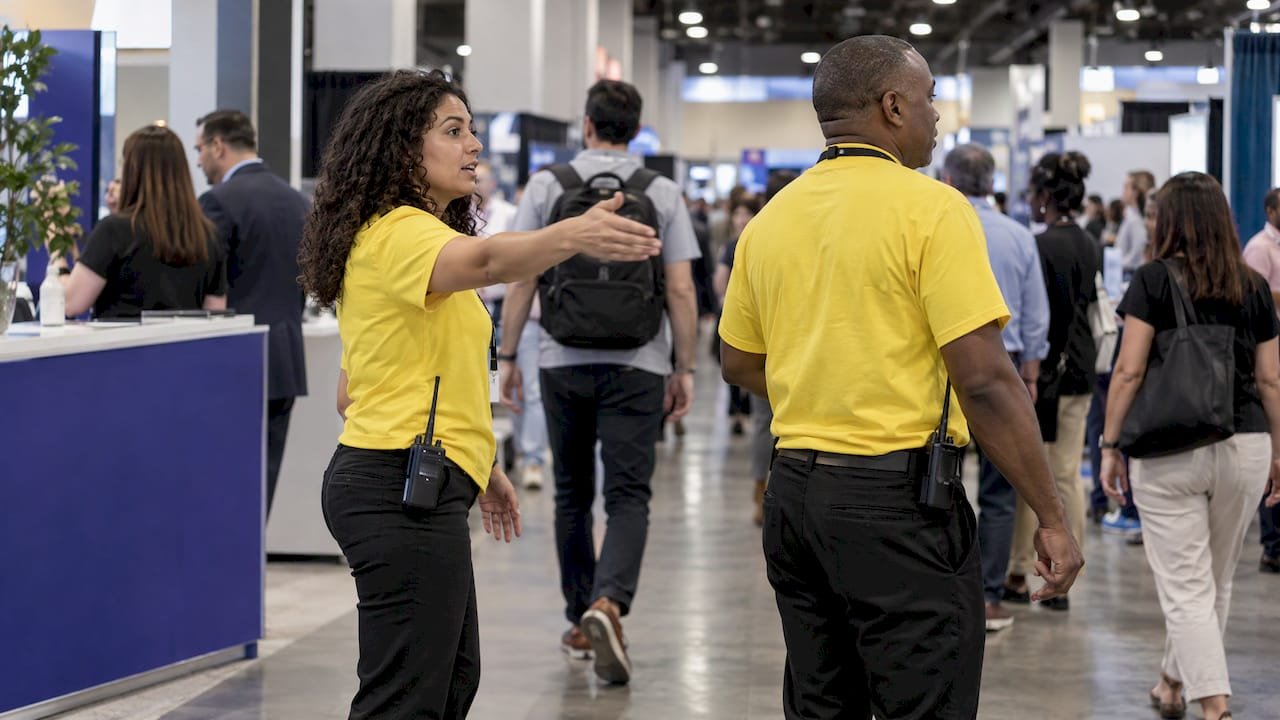
The best event staff shirt does one job first: it lets a guest spot the person who can help, from across a room, in a crowd, in bad light. Everything else, from brand polish to comfort, comes second. Get the color, the wording and the sizing run right, and order early enough to fix mistakes. We built this guide for marketing teams that buy staff apparel in volume and need it delivered to one venue or several. Discount Swag supplies customizable apparel with rush ordering and fulfillment to single or multiple locations, so the plan below ends in an order you can place.
TL;DR
- Choose a shirt color that stands apart from what attendees wear. Bright shades work better than black in dim venues.
- Put “STAFF” or the event name large on the back, and brand on the front. Add role colors or a visible signal for team leads.
- Pair the shirt with a lanyard or wristband when access control matters. The shirt is for guests, the pass is for checkpoints.
- Request a sample, run a dress rehearsal and order a size spread that covers your whole team before the event.
- Ship to every location from one order and keep a rush option in reserve for late headcount changes.
Table of Contents
- What an event staff shirt actually has to do
- Choosing the color
- What to print and where
- Staff t-shirt ideas by event type
- Trade show uniforms: visible without feeling stiff
- Beyond the shirt: layering identification
- Fit, fabric and the sample step
- Ordering without the scramble
- Where we come in
- Perspective: the shirt is part of your operations
- FAQ
- Sources
What an event staff shirt actually has to do
A staff shirt works as wayfinding, group identification and brand presentation in one garment. That is the framing in a guide to event staff t-shirts, and it matches how guests behave. According to Eventstaff, the most valuable operational function of guest-facing clothing is often recognition: people in an unfamiliar venue look for someone who seems to know the room.
That gives you a short test for any design. Can a guest identify your team from 30 feet away? Can they read the word that tells them what you can do for them? Does the shirt still look like your company in a photo?
The brand side matters too. BizBash quotes event professionals on branded apparel as a way to help attendees identify staff, and on uniform visual elements as a way to build trust with the audience. A staff shirt is the most visible piece of your event identity, because it moves through the whole room all day.
Choosing the color
Color is the decision that most affects recognition, so make it first.
Stand apart from attendees. If your guests wear business casual in black, navy and grey, a black staff shirt disappears. A UK event-staffing guide from Tickts recommends colors distinct from attendee wear, such as bright red, orange or yellow, and points out that black is hard to spot indoors or at night. The same logic holds at a US convention center or evening reception.
Think about the venue lighting. Dim ballrooms, outdoor evening events and busy exhibit halls with colored lighting wash out dark and muted shirts. Bright shades hold up.
Match the brand, within reason. If your brand color is a deep navy, you can still use it, but pair it with a high-contrast element: a bright back panel, a bold “STAFF” print in white or yellow, or a vivid hoodie for outdoor shifts.
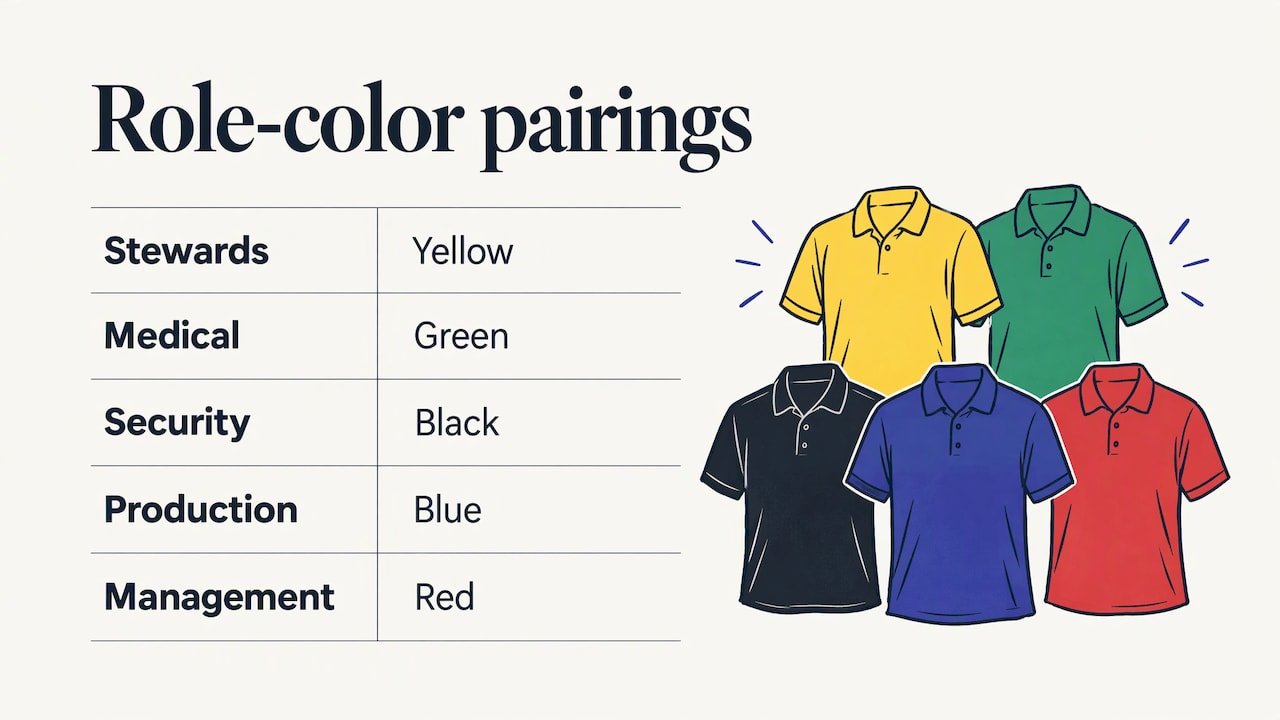
Use role colors for larger events. The Tickts guide describes a role-color system: stewards in yellow, medical in green, security in black, production in blue and management in red. You do not need that exact palette. You need a rule guests and colleagues can learn in ten seconds. For a typical corporate conference, two colors cover it: one for guest-facing staff and one for team leads or production.
What to print and where
A shirt that looks fine on a mockup can fail in a hallway. Use this layout as your starting point.
| Placement | What goes there | Why |
|---|---|---|
| Back, upper | “STAFF” or the event name in large, clear type | Guests often approach from behind or see staff walking away, and back text is what a crowd sees |
| Front, left chest | Your logo, small and clean | Brand presence and a professional look in conversation |
| Sleeve or lower front (optional) | Role word such as “Registration”, “Info” or “Volunteer” | Tells guests what that person can help with |
| Neckline or tag area | Nothing | Keeps the design uncluttered |
The Tickts guide recommends the event name or “STAFF” in large clear text on the back, with event branding on the front. Event Marketer lists the logo choices to settle: printed or embroidered, which logo color (monochrome, white, grey or full color) and where it sits on the garment.
A few practical rules for the design brief:
- One message per surface. Do not stack a logo, a tagline, a sponsor list and a hashtag on one shirt.
- Large type beats clever type. Use a plain, heavy typeface for “STAFF”. Save the brand font for the front.
- Contrast first. White or black text on a mid-tone shirt can look elegant and read poorly. Test it against your actual shirt color.
- Keep sponsor logos off unless contracted. They clutter the shirt and slow approval.
- Add a visible signal for leads. Eventstaff recommends deciding on an extra visible signal for team leads and explaining it at the briefing. A different color shirt, a colored lanyard or a cap all work.
Staff t-shirt ideas by event type
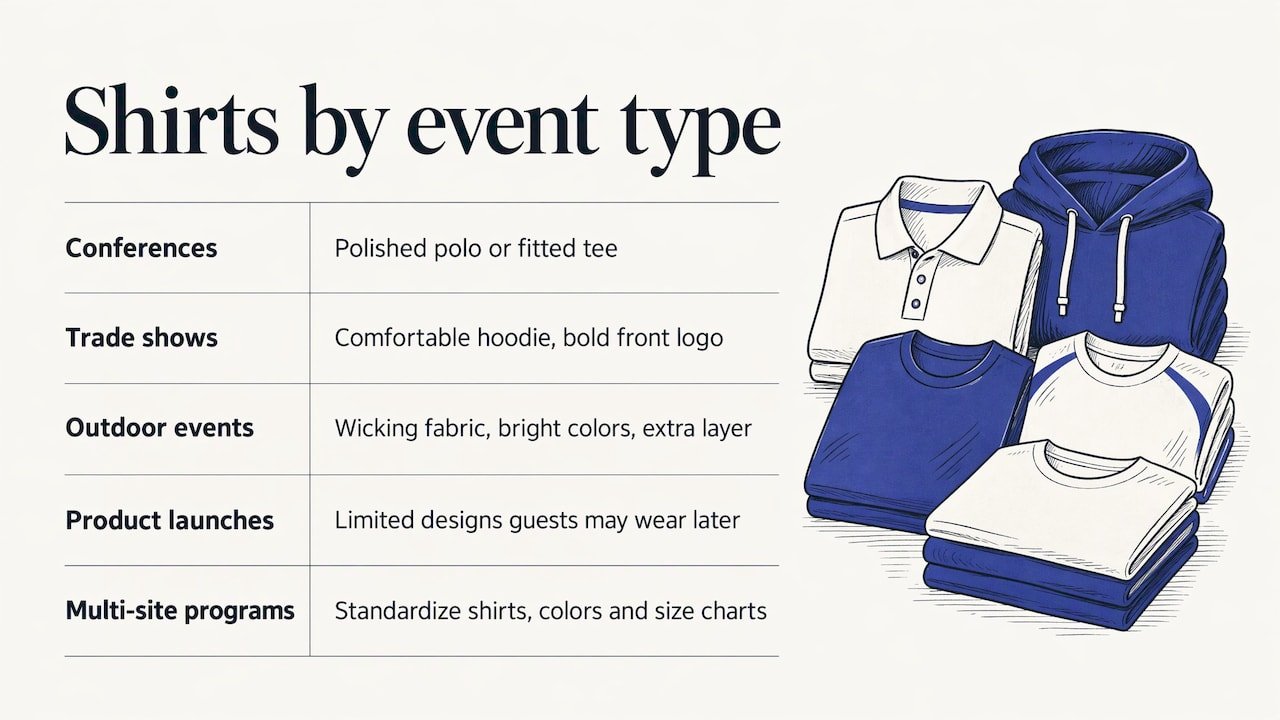
The same “STAFF” tee does not suit every event. Here is how teams adapt the garment to the setting.
Conferences and corporate summits. A polo or a soft, fitted tee in a brand color, with a clean left-chest logo and bold back text. Guests are professionals, so the look should lean polished.
Trade show booths. Event Marketer’s trade show coverage starts with goals: do you need your team to be easily recognizable in a busy booth, approachable in a smaller one, camera-ready for receptions or clearly affiliated with the company? A bold front logo on a comfortable hoodie, the example in that piece, gave one company brand visibility in event photography that was later used for PR. Practical needs count too, such as freedom of movement for demos and temperature in a cold hall.
Outdoor and field events. Moisture-wicking or lightweight fabrics, bright colors for visibility and a layer for cooler hours. Think about sun, so a cap or visor with the same mark rounds out the kit.
Product launches and brand activations. Here the shirt is part of the experience. A limited design, a clever back line or a coordinated color story turns staff into a branded backdrop, and gives guests something they may want to wear later.
Large multi-site programs. Standardize one shirt, one color system and one size chart, then ship to each location so every team looks the same. If you run regional events, plan the distribution before you finalize design.
Recruiting and campus events. Friendly, youthful and easy to spot in a crowded quad or career fair. Our guide to campus recruiting swag covers what to hand out alongside the shirts.
Healthcare and community events. Clear role wording and soft fabrics matter more than style. See our healthcare swag ideas for items that staff, patients and visitors use.
Workplace celebrations. For inclusive internal events, Pride Month swag ideas show how to carry a theme across apparel and giveaways.
Trade show uniforms: visible without feeling stiff
A trade show team has two goals that pull against each other. You want to be seen from the aisle, and you want visitors to feel comfortable walking up. A rigid uniform can look like a wall. A plain tee can look like nobody is in charge.
The middle path:
- Consistent top, flexible bottom. Everyone wears the same branded shirt or polo. Let people choose dark pants or jeans, whichever suits the booth tone.
- Layers for temperature. Exhibit halls swing between cold and warm. A matching quarter-zip or hoodie keeps the team looking unified when someone needs another layer.
- Name and role visible. A name badge on a lanyard handles this better than printing names on shirts, since staff rotate.
- Camera-ready. If you expect photos or video, choose colors that read well on camera and keep logos large and clean.
Event Marketer’s practitioners treat apparel as a strategic tool, not an afterthought. They advise asking how attire supports recognizability, approachability, brand vibe and camera-readiness, and building in time for samples and a dress rehearsal.
Beyond the shirt: layering identification
A shirt tells guests who to ask. It does not tell a security checkpoint who is allowed backstage. The Tickts guide describes the best systems as layered: a colored uniform item for public-facing visibility, an accreditation pass on a lanyard for access control, and a wristband for quick, tamper-resistant checks in restricted areas. It also says passes and uniforms should be handed out at a designated check-in with identity verification and recorded issuance, then collected at the end of the shift or event.
For your planning, that means three small decisions: who gets which item, where they pick it up and who collects it. Put those in your staffing brief, and the shirt stops carrying jobs it was never meant to do.
If your booth or event has a wider campaign look, extend it to the items staff use and hand out. Branded tech accessories for events such as chargers and cable organizers can sit alongside the shirts as part of one visual story.
Fit, fabric and the sample step
Staff stand, walk and lift for hours. A shirt that itches or runs small gets replaced by whatever the person brought from home, which breaks your look.
Event Marketer’s practitioners recommend requesting samples in advance to judge fabric and construction firsthand, and holding a dress rehearsal with enough time to fix sizing or other issues before the event. Make that a fixed step in your calendar.
A simple fit plan:
- Collect sizes early. Ask every staff member and volunteer for their size, and ask whether they prefer a fitted or relaxed cut.
- Order a spread. Add extra shirts beyond your headcount in the middle sizes, plus a few at each end of the range, to cover late additions and size swaps.
- Check the sample in the venue lighting. Wear it, wash it once and photograph it.
- Hold the rehearsal. Put a few team members in full kit and walk the floor plan. Check whether the back text reads from the entrance.
- Plan a spare set per location. If one shipment is delayed, you have backup stock.
Ordering without the scramble
Most staff shirt problems are timing problems. Headcounts change, venues add shifts and a sponsor asks for a logo swap. Build the schedule backward from the event date:
- Decide the design and color system as soon as the event concept is set.
- Approve a sample with enough buffer to fix an error.
- Lock sizes and quantities with a spare margin.
- Confirm delivery locations for every site, with receiving contacts and dock hours.
- Keep a rush option for last-minute headcount changes.
Check the cost side as well. Bulk orders bring per-unit savings, and customization fees apply per design, so fewer color variants keeps the budget simple. Discount Swag guarantees 10% or more savings versus any competitor’s online price, which gives procurement a clear benchmark when it reviews a quote.
Where we come in
Discount Swag is an online distributor of customizable corporate promotional products: apparel, drinkware, bags, technology items, gifts and event swag. For staff shirts, the pieces that matter to a marketing team are the ones that remove operational work: rush orders for late changes, fulfillment to single or multiple locations, branded kits and fully custom branded boxes that bundle a shirt with lanyards or welcome items, and curated quality from trusted suppliers.
If you are building a staff apparel program for one event or a series, start at Discount Swag, browse the apparel category and set up your order. We built our workflows for large-scale corporate programs, so a multi-site rollout runs the same way as a single booth.
Perspective: the shirt is part of your operations
We look at staff apparel the way a buyer does: as an order with a deadline, a headcount that moves and several places to deliver. The design question matters, but the shirt that arrives late or in the wrong sizes fails no matter how good it looks.
That is why we focus on the parts around the garment. Our approach to corporate programs is built on curated quality from trusted suppliers, rush ordering that supports you when plans change, and distribution to one location or many. When a marketing team can order the shirts, the kits and the giveaways from one place, there are fewer vendors to chase and one consistent look at every site.
Our advice is simple. Pick a color that stands out, put the word guests need on the back, run a sample and a rehearsal, and order with a size buffer. Then spend your attention on the event itself.
Jerry
FAQ
What color should event staff shirts be?
Choose a color that differs from what attendees will wear. A UK event-staff guide from Tickts suggests bright red, orange or yellow over black, which is hard to spot indoors or at night. If your brand color is dark, add a bright back print or a high-contrast accessory.
What should be printed on a staff shirt?
Put “STAFF” or the event name in large type on the back, and your logo on the front. Add a role word such as “Info” or “Registration” if guests need to know what each person handles. Keep sponsor logos and taglines off unless required.
How far ahead should we order and sample?
Order early enough to receive a sample, wear it, hold a dress rehearsal and fix sizing before the event. Event Marketer practitioners recommend exactly that sequence. If plans change late, a rush order can cover added staff.
How do trade show uniforms differ from event staff shirts?
Trade show uniforms need the same visibility, plus approachability and camera-readiness inside a booth. A consistent branded top with a matching layer for cold halls usually works. Event staff shirts at larger events lean more on bold back text and role colors for wayfinding.
Do staff need anything besides a shirt?
For access control, yes. The Tickts guide describes layering a colored uniform item with a lanyard pass and, in restricted areas, a wristband. Decide who issues and collects each item at check-in.
Sources
- Event Staff Dress Code and What to Wear on Shift, Eventstaff
- How to Create an Event’s Visual Identity, BizBash
- Event Staff Uniforms and Identification, Tickts
- Dress Like a Rockstar: What to Wear to Trade Shows, Event Marketer
- Corporate Tech Gifts and Bulk Orders, The Urban Geek
 Bottle Carriers
 Mugs