

What Is a Promotional Apparel Item for Marketers?


Most brand managers have a drawer full of branded T-shirts they never wear. That is the problem with treating promotional apparel as an afterthought. Understanding what is a promotional apparel item at a strategic level, not just a product level, is what separates campaigns that generate thousands of brand impressions from giveaways that end up in the trash. This article breaks down definitions, data, and decisions that actually move the needle for your branding programs.
Table of Contents
- Key takeaways
- What a promotional apparel item actually is
- Marketing effectiveness: data, cost, and impressions
- Types of promotional apparel and how to use them strategically
- How to use promotional apparel effectively
- Benefits of promotional clothing for loyalty and recall
- My honest take on where most apparel programs go wrong
- Ready to source smarter promotional apparel?
- FAQ
Key takeaways
| Point | Details |
|---|---|
| Apparel is wearable advertising | Promotional clothing items generate roughly 3,300 brand impressions over their lifetime at fractions of a cent per impression. |
| Usefulness drives retention | 78% of consumers keep promotional products because they are practical, which directly extends brand exposure. |
| Item choice must match context | Selecting apparel by audience role, climate, and setting outperforms generic logo-on-a-shirt approaches. |
| Quality reinforces brand perception | Low-quality promotional wear signals low brand standards. Invest in items recipients will actually use. |
| Data should guide campaign design | Track impressions, retention rates, and recall metrics to measure whether your apparel marketing is working. |
What a promotional apparel item actually is
The industry term you will encounter is promotional merchandise, and apparel is its most visible category. A promotional apparel item is any piece of clothing imprinted with a company’s name, logo, or marketing message and distributed to build brand awareness, reward customers, or support a campaign. That definition sounds simple. The execution is where most brands stumble.
The category covers a wide spectrum of garments:
- T-shirts and tank tops for general brand visibility
- Polo shirts for professional or corporate settings
- Hoodies and sweatshirts for colder climates or lifestyle branding
- Hats and caps for outdoor events, sports, or casual audiences
- Jackets and vests for higher perceived value and year-round use
- Gloves, beanies, and socks for niche seasonal campaigns
Branding methods vary just as much as the garment types. Screen printing works well for bold, high-contrast designs on cotton. Embroidery signals quality and durability, making it the preferred choice for corporate polos and outerwear. Heat transfer and direct-to-garment printing open up photographic detail and color gradients that screen printing cannot achieve.
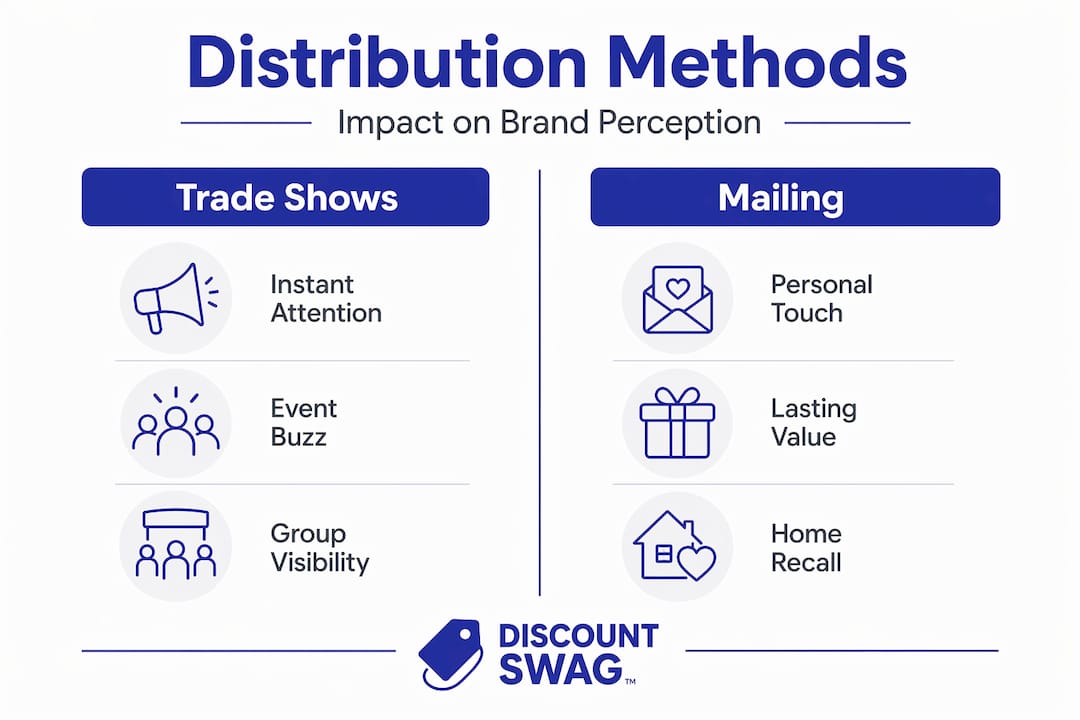
Distribution shapes perception too. Items handed out at trade shows carry different psychological weight than pieces mailed directly to a customer as part of a loyalty reward. One feels transactional. The other feels personal. Both use the same garment category but produce different brand relationships. The connection between apparel quality, design execution, and brand reputation is not theoretical. Poorly made shirts with cracked prints tell your audience exactly how much you value their experience.
Marketing effectiveness: data, cost, and impressions
Here is a number worth anchoring your next budget conversation around. Promotional products, including apparel, generate approximately 3,300 impressions over their lifetime at an average cost-per-impression of just $0.006. Compare that to a paid social ad or a display banner, both of which disappear the moment you stop paying for them.

The table below puts cost-per-impression in perspective across common promotional items:
| Item | Approximate Cost | Estimated Impressions | Cost per Impression |
|---|---|---|---|
| T-shirt | $8 | 3,500+ | ~$0.002 |
| Baseball cap | $13 | 3,400+ | ~$0.004 |
| Tote bag | $6 | 3,300+ | ~$0.002 |
| Hoodie | $25 | 4,000+ | ~$0.006 |
| Polo shirt | $18 | 3,200+ | ~$0.006 |
These numbers hold up only when the item gets used. That is the critical qualifier. Usefulness drives retention in promotional products, with 78% of consumers citing practicality as the reason they hold onto an item. A T-shirt someone wears to the gym three times a week generates far more impressions than one stuffed in a closet after a single use.
“Impressions depend heavily on how often and how long recipients use the item. Designing for wear-life beats designing for logo size.”
Pro Tip: Before finalizing your apparel selection, ask yourself whether someone who did not work for your brand would genuinely choose to wear it. If the answer is no, reconsider the design or the item.
Types of promotional apparel and how to use them strategically
T-shirts lead internationally as the most desired promotional apparel item across multiple countries. But leading in popularity does not mean leading in every situation. Choosing the right type of branded apparel requires thinking through campaign goals, audience profile, and distribution context before you place an order.
Here is how the main categories break down strategically:
- T-shirts deliver the broadest appeal and lowest unit cost. Best for large events, employee programs, and campaigns where volume matters more than perceived prestige. They work across age groups and fit casual to athletic wear occasions.
- Polo shirts project a more polished image and suit corporate clients, sales teams, or B2B event contexts where a T-shirt would feel too casual. The embroidered logo on a well-made polo communicates a different brand story than a screen-printed chest logo.
- Jackets and outerwear carry the highest perceived value in the apparel category. Recipients keep them longer, wear them in more public settings, and notice the brand more often because outerwear is a considered wardrobe piece. Budget accordingly.
- Hats and caps punch above their price point for outdoor audiences. A well-designed structured cap worn at a weekend event reaches dozens of bystanders the wearer never directly contacts.
The following comparison helps map these choices to common campaign scenarios:
| Apparel Type | Typical Cost Range | Best Campaign Use | Audience Fit |
|---|---|---|---|
| T-shirt | $5 to $15 | Mass events, onboarding kits | Broad, casual |
| Polo shirt | $15 to $30 | Corporate gifting, trade shows | Professional, B2B |
| Jacket or vest | $40 to $90 | VIP programs, staff uniforms | Premium, loyal customers |
| Hat or cap | $8 to $20 | Outdoor events, sports sponsorships | Active, casual |
| Hoodie | $20 to $45 | Employee culture, campus programs | Younger, lifestyle-oriented |
Regional preferences matter more than most marketers account for. Tailoring products to local market conditions including climate, professional norms, and cultural context, improves campaign outcomes significantly. A heavy fleece jacket sent to customers in a warm climate is not a gift. It is a storage problem.
How to use promotional apparel effectively
Getting the most out of custom apparel for marketing is less about picking the right product and more about thinking through the full deployment. Start with use case, not product type. That shift in thinking changes everything downstream. Custom apparel ordering decisions on garment, decoration method, artwork, quantity, and timeline all affect cost, appearance, and longevity. Treat them as connected variables, not independent checkboxes.
Here is a practical sequence for any campaign:
- Define the end user. Who is wearing this? An outdoor sales rep, an office administrator, a marathon participant, or a trade show attendee? Each profile has different practical needs and wear frequency patterns.
- Match the garment to the setting. A polyester performance tee makes sense for a 5K sponsorship. A structured fleece zip-up makes sense for a client holiday gift. The setting should drive the selection.
- Choose the decoration method based on durability expectations. If the item will be washed frequently, embroidery outlasts most print methods. If you need photographic color fidelity, direct-to-garment printing is worth the higher unit cost.
- Design for the wearer, not just the brand. Campaigns focused on wear-life generate significantly more impressions than campaigns built around maximizing logo placement. Subtle, well-placed branding on a genuinely attractive garment gets worn. A billboard-style logo on a cheap shirt does not.
- Plan distribution timing intentionally. Distributing winter gear in November before cold sets in, or branded sun hats two weeks before a summer product launch, ties the item to a moment in the recipient’s life. That connection improves recall.
- Integrate apparel into a broader campaign. Promotional clothing works best as part of a multi-touch effort. Pair it with a digital follow-up, an event experience, or a loyalty milestone to reinforce the brand message.
Pro Tip: Order a wearable sample from your supplier before committing to a full run. Fit, fabric hand-feel, and print quality are things you cannot fully assess from a digital mockup, and they directly affect whether recipients wear the item or discard it.
You can also explore Discountswag’s corporate apparel buying guide for practical frameworks on aligning apparel choice with campaign objectives and budget constraints.
Benefits of promotional clothing for loyalty and recall
Beyond immediate impressions, the longer-term case for branded apparel items is compelling. 85% of individuals remember the company that gave them a promotional item, and promotional products increase positive brand impressions at 2.5 times the rate of digital ads. That is not brand recall data from a single interaction. It is the compounding effect of a physical object that re-enters someone’s visual field every time they open their closet or reach for their favorite hat.
The benefits stack across multiple dimensions:
- Brand recall stays elevated long after the initial distribution, unlike a banner ad that disappears in seconds
- Customer loyalty deepens when the gift signals that the brand knows who the recipient is and what they need
- New audience reach happens organically every time a recipient wears the item in public, creating impressions with people who were never part of the original campaign
- Employee alignment improves when internal teams wear branded apparel, reinforcing culture and presenting a unified front to customers
Measuring success requires more than counting units distributed. Track impressions per item using wear-frequency surveys. Monitor coupon redemptions or landing page visits tied to apparel campaign periods. Compare customer retention rates before and after apparel-based loyalty programs. The data is there if you build the measurement into the campaign from the start.
My honest take on where most apparel programs go wrong
I have reviewed enough promotional apparel campaigns to spot the pattern almost immediately. The brand picks the cheapest T-shirt that fits the budget, slaps a logo across the chest, and wonders why nobody is wearing it six months later.
The problem is not the budget. It is the thinking. Most teams treat promotional apparel as a line item to clear, not a media channel to optimize. When I see a company spend $3,000 on display ads that run for two weeks and $800 on apparel expected to generate impressions for two years, the math stops making sense to me.
What I have learned from watching this play out repeatedly: the brands that get apparel right start with the wearer’s actual life, not the brand’s visual identity guidelines. They ask what the recipient actually does on a Saturday. They consider whether the person works outdoors or in a climate-controlled office. They think about whether the garment needs to be machine-washable or dry-clean only. Those details sound small but they determine whether the item gets worn or gets donated.
The other mistake I see consistently is logo overload. A large chest print communicates brand insecurity more than brand confidence. Some of the most effective branded apparel I have encountered uses a small, well-placed logo on a genuinely good garment. Recipients wear it because they like the shirt, and the brand gets the impressions as a byproduct.
Trends are shifting this further. Recipients increasingly expect promotional apparel to meet the same quality and aesthetic standards as retail clothing. That raises the bar. But it also means brands willing to invest thoughtfully get significantly more mileage out of every piece they distribute.
— Jerry
Ready to source smarter promotional apparel?
If this article clarified the strategic value of promotional clothing items for your campaigns, the next step is knowing where to find items worth distributing.
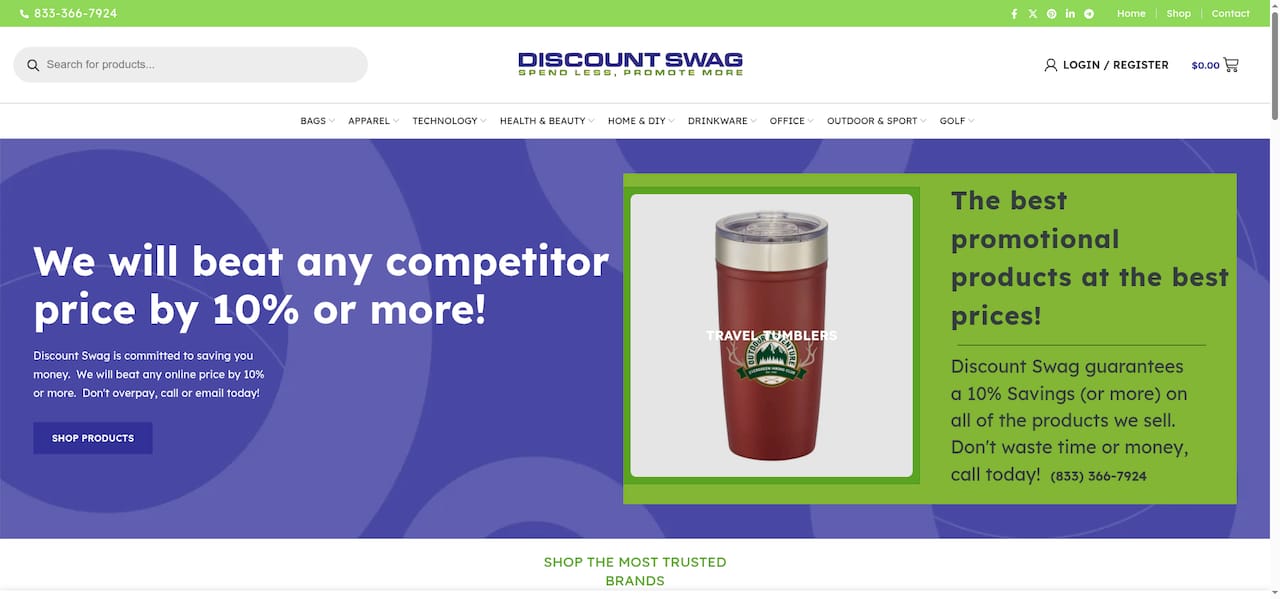
Discountswag specializes in corporate promotional products, offering a wide selection of branded apparel and related items built for marketers who care about quality and impression counts, not just unit cost. Whether you are building a trade show kit, a client appreciation program, or an employee onboarding package, the right apparel partner makes the difference between items that get worn and items that get forgotten. Browse the full branded promotional product catalog to find apparel options that align with your campaign goals and budget. For bulk order guidance, Discountswag also offers a detailed bulk buying resource to help you plan quantities, timelines, and decoration options effectively.
FAQ
What is a promotional apparel item?
A promotional apparel item is clothing branded with a company’s logo, name, or message, including shirts, hats, jackets, and gloves, distributed to increase brand awareness and support marketing campaigns.
What types of promotional apparel work best for marketing?
T-shirts lead globally as the most desired promotional clothing item, followed by jackets and hats. The best choice depends on your audience profile, campaign setting, and distribution context.
How many impressions does promotional apparel generate?
Promotional apparel items generate approximately 3,300 impressions over their lifetime at an average cost-per-impression of $0.006, outperforming most digital ad channels.
Why do people keep promotional clothing items?
78% of consumers keep promotional products because they find them genuinely useful, making practicality the primary driver of retention and long-term brand exposure.
How does promotional apparel affect brand recall?
Research shows 85% of recipients remember the brand that gave them a promotional item, with positive brand impressions running 2.5 times higher than those generated by digital advertising.
 Bottle Carriers
 Mugs
Mugs