

15 Employee Onboarding Swag Examples

The first week shapes how a new hire feels about your company, and the right employee onboarding swag examples can make that impression immediate. A rushed welcome kit feels forgettable. A well-built one tells employees your team is organized, your brand is thoughtful, and their arrival actually matters.
For HR, marketing, and procurement teams, the challenge is rarely coming up with ideas. It is choosing items that look good, stay within budget, and ship reliably across one office or fifty home addresses. That is why the best onboarding swag is not about stuffing a box with random branded items. It is about selecting practical products employees will keep using after week one.
What makes onboarding swag worth the spend
Good onboarding merchandise does three jobs at once. It creates a stronger first impression, gives employees useful tools they can put to work right away, and reinforces brand visibility without feeling forced.
That balance matters. If every item is purely decorative, employees may appreciate the gesture but forget the brand fast. If every item is purely functional, the package can feel transactional. The strongest kits mix daily-use essentials with one or two pieces that feel a little more elevated.
Budget also changes the right answer. A fast-growing company hiring 200 people per quarter needs consistency and cost control. A smaller team hiring selectively may want a more premium kit. Neither approach is automatically better. It depends on hiring volume, shipping model, and how important branded presentation is to your culture.
15 employee onboarding swag examples that work
1. Branded backpacks or laptop bags
A bag is one of the highest-visibility onboarding items you can buy. Employees use it on commutes, for travel, and in meetings, which gives your logo repeat exposure without extra effort. It also helps new hires carry equipment, notebooks, and daily essentials from day one.
For office-based teams, a backpack often feels more modern than a basic tote. For conferences and light use, totes can still be cost-effective. The trade-off is durability and perceived value. If you want one hero item in the box, bags are a strong place to start.
2. Water bottles and tumblers
Drinkware stays popular because it is useful, easy to brand, and available across a wide range of price points. A solid insulated tumbler or reusable bottle can become a desk staple fast, especially in hybrid workplaces.
This is also one of the safer choices for mixed audiences. Sizes, departments, and roles do not matter much here. If you want onboarding swag with broad appeal and low risk, drinkware belongs near the top of the list.
3. Branded notebooks
Notebooks are practical, budget-friendly, and easy to pair with almost any welcome kit. New hires can use them in orientation sessions, training meetings, or daily note-taking. That immediate usefulness gives the item a better chance of sticking around.
The downside is that notebooks can feel generic if the presentation is weak. Better materials, clean branding, and pairing them with a quality pen can make a low-cost item feel more intentional.
4. Pens that actually write well
Cheap pens send the wrong message. If you include writing instruments, they should feel dependable and smooth enough that employees keep them instead of tossing them into a drawer.
Pens work best as supporting items rather than the main attraction. They add function to a kit, but they should complement a stronger anchor product like apparel, drinkware, or tech accessories.
5. Company T-shirts
A branded T-shirt is one of the most common employee onboarding swag examples for a reason. It helps employees feel part of the team quickly, especially during orientation, volunteer events, or casual office days.
Fit and fabric matter more than many buyers expect. A soft shirt with modern sizing gets worn. A stiff, low-quality shirt becomes sleepwear. If apparel is part of your program, quality control matters because employees treat wearability as a reflection of your standards.
6. Quarter-zips or hoodies
If you want a more premium onboarding piece, branded outerwear makes a strong impression. Quarter-zips, pullovers, and hoodies tend to get more long-term use than basic tees, especially for remote workers and cooler offices.
The trade-off is cost and sizing complexity. These items work best for companies with a larger per-employee budget or for higher-touch onboarding tiers such as leadership hires, technical talent, or client-facing teams.
7. Desk organizers and office accessories
Phone stands, mouse pads, cable organizers, and desktop accessories are smart additions because they fit both home offices and corporate workstations. They support productivity while keeping your brand visible in the background every day.
These items are especially effective in hybrid and remote onboarding kits. They tell employees, in a practical way, that you expect them to do real work from wherever they sit and that you planned for that experience.
8. Tech accessories
Charging cables, power banks, webcam covers, wireless chargers, and Bluetooth accessories are strong onboarding options when your workforce is heavily digital. They are useful, easy to distribute, and often appreciated more than novelty products.
This category does require a little more attention to compatibility and quality. A low-cost charger that fails quickly creates frustration. A reliable accessory from a trusted supplier does the opposite and makes the kit feel current.
9. Coffee mugs
Mugs are classic, affordable, and easy to customize for nearly any brand style. In-office hires use them at their desks. Remote employees use them at home. That kind of versatility is hard to ignore.
Still, mugs are not very original on their own. They work better when paired with coffee packets, tea, or another desk item that gives the package a fuller feel.
10. Snack packs and treats
Edible items add instant warmth to an onboarding box. They make the package feel welcoming rather than purely branded. This can be especially useful when you are trying to make a remote hire feel included before they meet the team in person.
The caution here is shelf life and dietary restrictions. Snacks are best treated as an optional layer, not the centerpiece. Useful keepsakes should still carry the main value.
11. Branded gift sets
Pre-built gift sets can simplify sourcing when you need a polished look without managing a dozen separate items. A set might include drinkware, a notebook, a pen, and packaging that already feels coordinated.
This approach is efficient for HR and procurement teams that care about speed and consistency. It can also reduce the risk of a kit looking mismatched. If you are onboarding at scale, gift sets often save time without sacrificing presentation.
12. Employee badges and badge accessories
Badge reels, holders, and lanyards may not feel exciting, but they are useful in many workplaces and can reinforce a clean, organized onboarding experience. New hires often need them immediately.
These products are best viewed as support items, not culture items. They help employees function in the workplace, but they should sit alongside more personal and brand-forward pieces.
13. Wellness items
Lip balm, hand sanitizer, sunscreen, and small health-focused products can add practical value to a welcome kit. They are easy to distribute and often used up rather than forgotten.
The best use case is as a complementary category. Wellness items can round out a package, but they rarely carry enough perceived value to stand alone.
14. Travel-friendly accessories
Luggage tags, travel pouches, and compact organizers make sense for field teams, sales organizations, and employees who visit clients or attend events. They signal that your company understands how the role operates in real life.
This is a more targeted category, which can be a strength. Not every onboarding item needs universal appeal. If a product aligns closely with how a team works, it often lands better than a generic giveaway.
15. Custom mailer boxes for remote hires
Sometimes the packaging is part of the swag strategy. A custom mailer box with coordinated inserts, branded messaging, and organized product placement can turn ordinary merchandise into a more memorable onboarding experience.
This matters most for remote teams. When there is no office welcome moment, the shipped box becomes the welcome moment. Strong presentation helps close that gap.
How to choose the right onboarding swag mix
The best employee onboarding swag examples are the ones that match your hiring reality. If you onboard in volume, prioritize products that are easy to reorder, easy to size, and easy to ship. If you hire across multiple states, choose items that pack well and avoid unnecessary breakage risk. If your brand leans premium, focus on fewer, better products instead of adding filler.
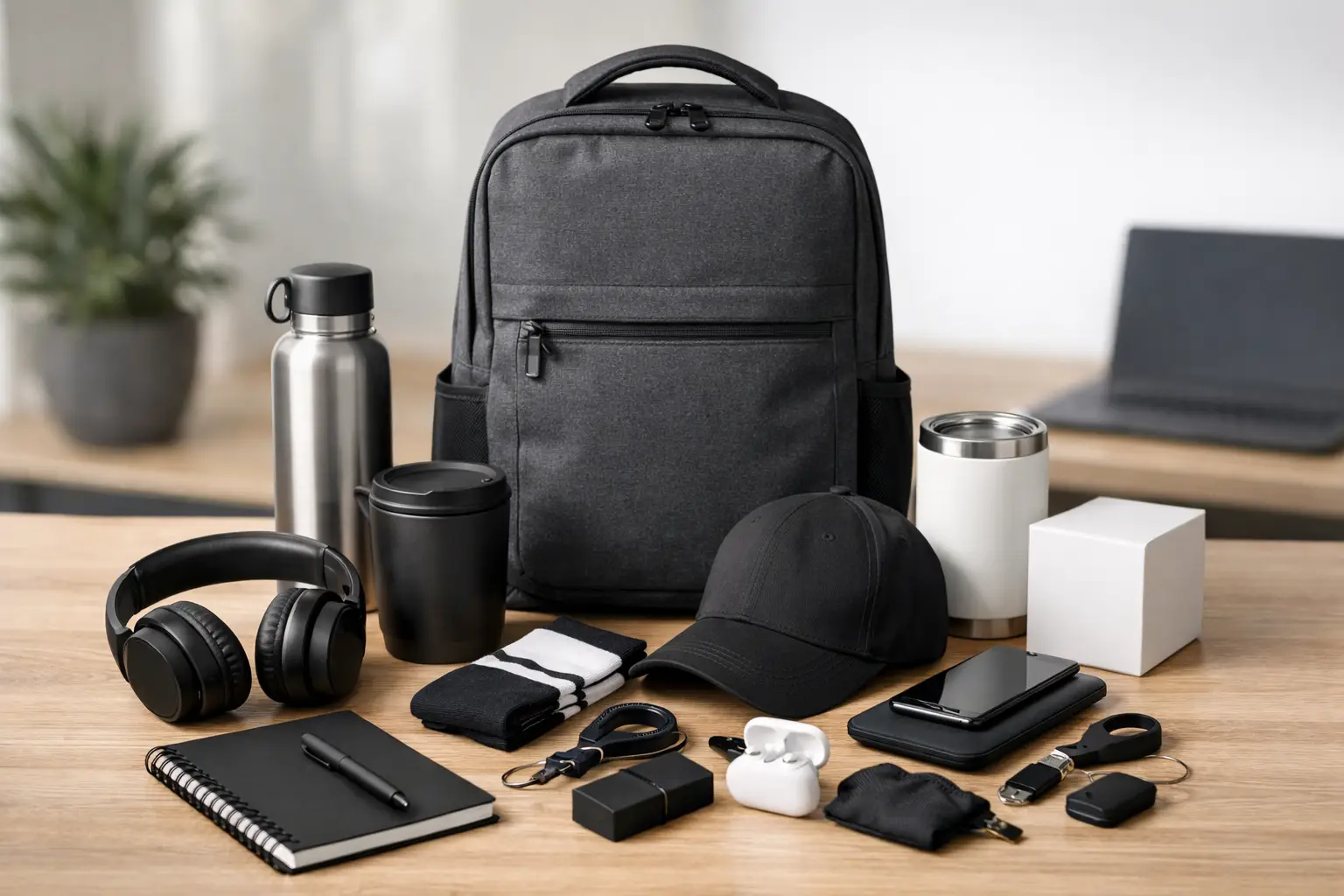
A smart baseline kit often includes one visible brand item, one desk or work-use item, and one comfort item. That combination covers identity, function, and welcome. For many companies, that could mean a backpack, notebook, and tumbler. For others, it could be a hoodie, charger, and snack pack.
It also helps to think beyond the first day. The best swag continues working after orientation ends. Employees keep carrying the bag, using the bottle, or wearing the quarter-zip months later. That is where onboarding merchandise starts delivering more than a short-term gesture.
Common mistakes that weaken onboarding kits
The biggest mistake is choosing based on price alone. Cost matters, especially for high-volume programs, but the lowest unit price is not always the best value if the product feels disposable. A slightly better item that employees actually use can outperform a cheaper one that never leaves the box.
Another issue is overloading the kit with too many small items. More products do not automatically create more impact. In many cases, a tighter selection feels more premium and is easier to fulfill accurately.
Finally, distribution planning gets overlooked too often. Multi-location shipping, remote addresses, and staggered start dates can create avoidable problems if the program is not built for operational reality. This is where a supplier with broad inventory and dependable fulfillment can save time, reduce errors, and protect the experience. For teams trying to control spend without sacrificing quality, Discount Swag fits that need well.
Onboarding swag works best when it feels useful on Monday, relevant by Friday, and still worth keeping months later. If your kit can do that while staying on budget and arriving on time, you are not just sending merchandise. You are setting the tone for the working relationship.
 Bottle Carriers
 Mugs
Mugs