

How to Choose Promo Products That Work

A box of cheap pens can disappear in a week. A well-chosen branded tumbler can stay on a desk, in a car, or at the gym for months. That is the difference that matters when you are deciding how to choose promo products for a campaign, event, employee program, or client gift. The right item protects your budget and puts your brand in front of people longer. The wrong one burns spend fast and leaves very little behind.
For business buyers, the real challenge is not finding products. It is narrowing thousands of options into the few that make sense for your goals, budget, audience, and delivery window. If you are buying for a trade show, onboarding kit, sales leave-behind, or multi-location rollout, the smartest approach is simple: start with the use case, then work backward into product type, price point, decoration, and fulfillment.
Start with the job the product needs to do
The fastest way to waste money on swag is choosing items because they are popular instead of useful for your specific campaign. A giveaway for booth traffic has a different job than a gift for top clients. Employee welcome kits need a different mix than conference handouts. If the objective is broad reach, lower-cost items with practical daily use can make sense. If the objective is retention, appreciation, or executive gifting, perceived value matters more than sheer quantity.
This is where many teams overcomplicate the process. You do not need a perfect product. You need a product that fits the moment. A notebook, tote, or water bottle may not feel exciting on its own, but if it matches the audience and gets used repeatedly, it will outperform trend-driven items that look good in a mockup and disappear after one use.
How to choose promo products by audience
If you want better results, think less about what your company wants to hand out and more about what the recipient will actually keep. Marketing teams, HR leaders, event planners, and procurement buyers all face the same reality: people keep useful items and ignore clutter.
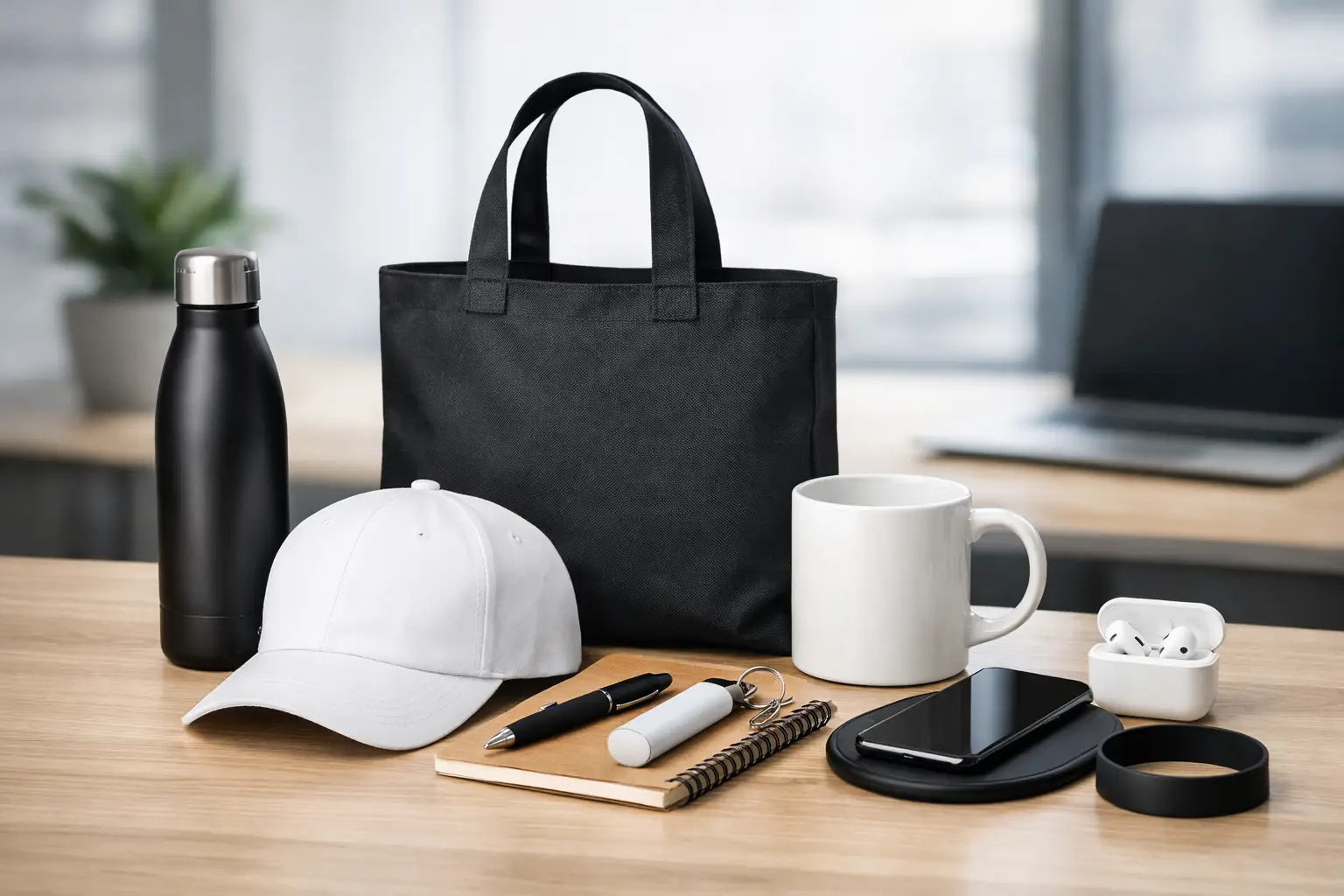
A trade show audience usually responds well to portable, easy-to-pack products with clear utility. Drinkware, tech accessories, totes, and desk items tend to travel well and deliver repeat impressions. Remote employees may value branded boxes with apparel, drinkware, and work-from-home accessories because the experience feels more complete. For clients, stepping up into recognized brands or premium bundles can improve perceived value and make the gift feel intentional rather than generic.
Audience also affects style. Younger teams may prefer modern colors, cleaner design, and products they can use beyond the office. A more traditional corporate audience may lean toward practical business items, executive drinkware, or classic bags. The product does not need to appeal to everyone. It needs to make sense for the group receiving it.
Set a budget that accounts for the full order
Unit price matters, but it is not the full story. When buyers compare products, they often focus too hard on base cost and miss the expenses that change the real total. Setup charges, decoration method, imprint colors, packaging, shipping, drop shipments, and rush production can all affect the final number.
The best budgeting method is to set a true all-in target before you start browsing. If your cap is $5 per person, that should include more than the product itself. If your campaign has a hard ceiling, it is better to know early whether you need one premium item, a two-piece bundle, or a lower-cost giveaway that lets you reach more people.
There is also a trade-off between quantity and impact. A lower-cost pen may stretch the budget across a large event. A higher-end tumbler may reach fewer recipients but create stronger recall. Neither option is automatically better. It depends on whether your goal is mass exposure or stronger individual value.
Prioritize usefulness over novelty
Novelty can get attention, but usefulness drives retention. That is why the safest promotional categories remain consistent year after year. Bags, apparel, drinkware, tech accessories, office products, and gift sets keep performing because people know how to use them.
That does not mean you should avoid creative products. It means you should pressure-test them. Ask a simple question: will the recipient use this more than once? If the answer is uncertain, the item may not be the best place to put your budget.
Products tied to routine often win. A tumbler used during a commute, a tote reused for errands, or a charger kept in a laptop bag can generate far more impressions than a novelty piece that gets a quick reaction and then gets tossed. For most business buyers, practical products are the safer and stronger investment.
Quality matters because your brand is on it
When buyers try to save money, quality is usually the first area where mistakes show up. That is risky. A promotional product is not just merchandise. It is a branded representation of your company. If it leaks, breaks, fades, or feels flimsy, that impression transfers to your brand.
This does not mean every order has to be premium. It means the item should feel appropriate for the purpose. Event giveaways can be economical and still dependable. Employee gifts and client appreciation items should generally step up in material quality, finish, and presentation. If you are investing in recognizable brand-name merchandise, the perceived value often increases immediately, which can make the spend easier to justify for key audiences.
The safest buying decision usually sits in the middle ground: strong utility, proven quality, and pricing that still works at volume. That balance is where smart procurement lives.
Match the product to your timeline and distribution plan
Even the best item becomes a problem if it cannot arrive when and where you need it. Timing should shape product selection earlier than many teams expect. Some products have longer production cycles. Others may be easy to source but harder to ship efficiently, especially if you are sending to multiple offices, event venues, or individual employee homes.
This is especially important for distributed teams and national campaigns. A simple bulk shipment to one location is very different from kitting and mailing hundreds of packages to separate addresses. The more complex the fulfillment, the more important it is to choose products that are easy to pack, cost-effective to ship, and available on a realistic production schedule.
If your deadline is tight, flexibility matters. You may need to adjust color choices, decoration options, or even the category itself to stay on track. Buyers who decide early can usually get the best combination of price, product selection, and shipping control. Buyers who wait often end up paying more for fewer options.
Think about decoration before you approve the item
A product can look excellent in the catalog and underperform once your logo is applied. That is why decoration should never be an afterthought. Your logo size, imprint area, color requirements, and overall brand standards need to fit the product naturally.
A detailed logo may not reproduce well on a small item. A one-color imprint may be perfect for budget efficiency on some products, while others deserve full-color decoration or embroidery. Apparel needs special attention because fit, placement, and garment quality all influence whether people actually wear it.
Good promo buying is not just about picking the item. It is about choosing an item and decoration method that work together. If the imprint looks forced, too small, or low contrast, the product loses value quickly.
Keep your product mix focused
Many organizations try to solve every need with one item. That rarely works. A better approach is to build a small, intentional mix based on use case. One reliable low-cost giveaway, one mid-range everyday product, and one premium gifting option can cover a lot of ground without creating sourcing headaches.
This is especially useful for companies managing multiple internal teams. Marketing may need event merchandise, HR may need onboarding kits, and sales may need client gifts. Standardizing within a few proven categories can simplify approvals, control spend, and keep brand presentation more consistent. A broad product catalog helps, but the real advantage comes from reducing decision fatigue and staying focused on what actually performs.
Avoid the most common buying mistakes
Most promo product problems are predictable. Buyers order too late, choose based on trend instead of utility, underestimate shipping complexity, or chase the absolute lowest price without checking quality. The result is usually the same: rushed approvals, underwhelming products, and budget that does not go as far as planned.
A better process is practical and repeatable. Define the goal, know the audience, set the true budget, check the timeline, and choose items that deliver everyday use. If you can also work with a supplier that offers dependable quality, broad category coverage, and aggressive pricing, you reduce friction across the entire order. That is where a value-focused partner like Discount Swag can make a real difference for teams that need to move fast without overspending.
The best promo products are not the flashiest items in the lineup. They are the ones people keep, use, and connect back to your brand long after the event ends. If you choose with that standard in mind, your next order is far more likely to earn attention instead of wasting budget.
 Bottle Carriers
 Mugs
Mugs