

How to Order Branded Merch Without Delays

If you need 500 tumblers for a sales kickoff, 2,000 tote bags for a trade show, or branded boxes shipped to remote employees in three states, the question is not just how to order branded merch. The real question is how to order it without blowing your budget, missing your date, or ending up with products nobody wants.
That is where most orders go sideways. Teams rush product selection, approve artwork too late, or forget to plan for split shipping. The result is familiar – higher costs, avoidable back-and-forth, and merch that creates more work than value. A better process keeps pricing tight, quality on track, and delivery aligned with the campaign.
How to order branded merch the right way
The fastest way to get branded merchandise right is to treat it like a business purchase, not a last-minute giveaway. Start with the use case. Are you buying for lead generation, employee onboarding, client gifting, internal culture, or event traffic? The answer affects almost everything else, from product category to packaging to ship date.
A trade show giveaway usually calls for lower per-unit pricing and easy portability. An employee anniversary gift needs better perceived value and a more polished presentation. A remote onboarding kit may need multiple product types packed together and shipped to home addresses. If you define the use case first, you make better product decisions and avoid paying for features that do not matter.
Budget should come next, but not as a vague ceiling. Set a realistic target by unit and by total order. If your finance team approved $5,000, determine whether that needs to cover product, decoration, setup, packaging, and freight. Buyers often compare item prices without factoring in imprint costs or delivery. That is how a “cheap” item turns into an expensive order.
Start with quantity, timeline, and ship-to details
Before you request pricing or narrow products, lock in the operational details. Quantity matters because price breaks can change dramatically at different order levels. An order of 144 pieces may price very differently than 250 or 500. If your volume is flexible, ask where the best value sits.
Timeline matters just as much. Standard production can work well when you have breathing room, but rush production narrows your options and usually raises costs. If your event is fixed, build backward from the in-hands date, not the order date. You need time for art approval, proof review, production, and transit.
Shipping details are where many business buyers underestimate complexity. One office address is simple. Shipping 300 welcome kits to remote employees is not. If your order needs to go to multiple locations, say that upfront. The best supplier can plan for split shipments, kitting, and address management early instead of trying to patch it together after production starts.
Choose products people will actually keep
A branded item only works if someone uses it. That sounds obvious, but plenty of companies still buy merchandise based on the lowest unit cost alone. Price matters, especially in volume, but the cheapest option is not always the best value.
Useful categories usually outperform novelty items. Drinkware, bags, apparel, tech accessories, office products, and curated gift sets tend to have staying power because they fit into work and daily life. If your audience is broad, choose items with universal appeal. If your recipients are more specific, tailor the product. Field sales teams may appreciate portable tech and travel gear. New hires may respond better to apparel, notebooks, and desk items.
Brand perception matters here too. There is a difference between generic merchandise and products that feel like a real gift. In some campaigns, recognizable retail-style brands make sense because they raise perceived value. In others, a dependable non-retail item at a sharper price point is the better decision. It depends on the audience, the occasion, and how far your budget needs to stretch.
Match decoration method to the product and the budget
Once you shortlist products, review decoration options carefully. This is where appearance, durability, and cost meet. Screen printing, embroidery, laser engraving, heat transfer, and full-color methods each have trade-offs.
If you are ordering T-shirts in volume, screen printing may be the most economical route. If you want a premium look on polos or caps, embroidery often carries more perceived value. For drinkware or metal items, engraving can look cleaner and hold up better over time. Full-color printing works well when your logo has gradients or multiple brand colors, but it may raise costs depending on the product.
This is not just a design decision. It is also a procurement decision. The right decoration method protects your brand standards while keeping the order within budget. If your logo is too detailed for a small imprint area, simplify the artwork instead of forcing a poor print result.
Get the artwork and proofing process under control
Artwork delays are one of the easiest ways to miss a deadline. Before placing the order, make sure your logo files are production-ready and that internal approvers are identified. If marketing needs to sign off, do not wait until the proof arrives to start the conversation.
A digital proof should confirm imprint size, placement, color treatment, and spelling. Review it closely. Check the orientation, not just the logo itself. A strong supplier will help catch issues, but final approval still sits with the buyer.
This step matters even more when the order includes multiple SKUs or branded kits. If you are mixing apparel, drinkware, and printed inserts in one campaign, consistency matters. A logo that looks great on a black tumbler may need a different treatment on a navy backpack or heathered hoodie.
Compare quotes the smart way
If you are evaluating vendors, compare total value, not just headline item prices. A low unit cost can hide setup fees, higher freight, limited inventory, or weaker customer support. The smartest buyers ask what is included and what can change.
Check the product spec, decoration count, production time, minimum quantity, packaging assumptions, and shipping terms. Ask whether inventory is confirmed. Ask whether there are alternatives if stock changes. Ask who manages the order if something needs to move fast.
Price still matters, of course. It matters a lot. But in branded merchandise, the lowest price only wins if the product arrives on time and looks right. That is why many business buyers work with a supplier that can sharpen pricing while still handling proofing, logistics, and quality control. Discount Swag fits that model well for teams that need aggressive pricing without extra procurement friction.
Plan for distribution before production starts
Ordering branded merch is easier when distribution is part of the initial plan. If all units are shipping to one warehouse, your job is simpler. If the order needs to be divided across offices, events, sales reps, or employee homes, build that structure early.
This affects labeling, carton counts, freight strategy, and sometimes even product choice. Heavier items like drinkware can drive up shipping fast. Apparel requires size breakdowns. Gift sets may need assembly and inserts. None of that is a problem if it is scoped in advance.
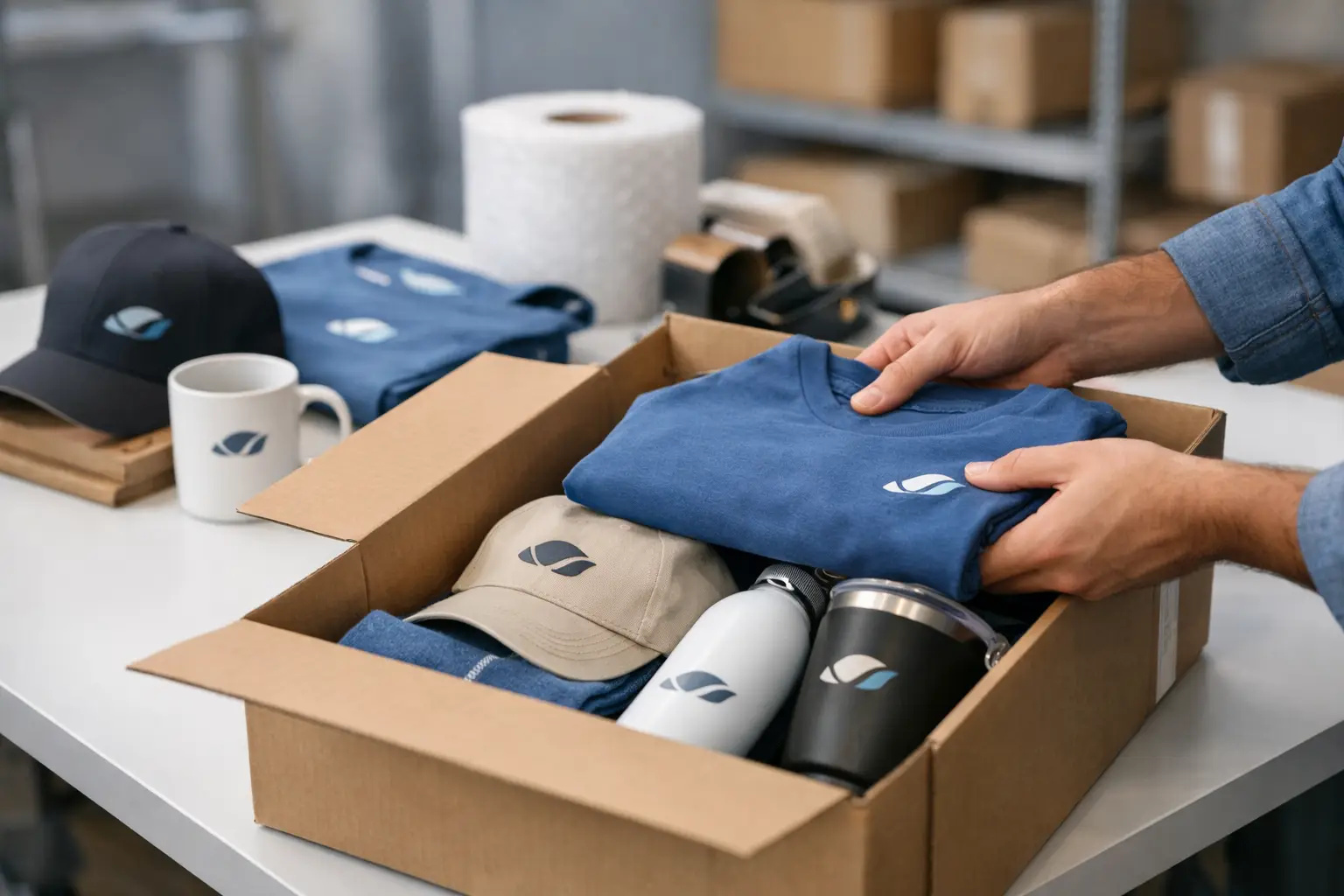
For remote teams, custom branded boxes can be especially effective because they bundle the experience into one shipment. They also require more coordination. You need final contents, packaging direction, recipient addresses, and realistic lead times. The payoff is worth it when you want a stronger employee or client touchpoint, but this is not the place for last-minute planning.
Avoid the common mistakes that increase cost
Most overspending in branded merch comes from preventable decisions. Ordering too late is the biggest one because it forces rush production or expensive shipping. Choosing products before clarifying the use case is another. So is approving artwork without checking size or placement.
The other common mistake is ignoring inventory risk. If you need a specific color, size run, or brand-name item, availability can shift. The larger the order, the more important it is to confirm stock before you commit internally. Flexibility helps. Sometimes a backup color or similar item protects the timeline and keeps the campaign moving.
Finally, do not separate product decisions from fulfillment decisions. A product may look perfect on paper and still be the wrong choice if it creates shipping headaches, packing complexity, or extra handling costs.
What a smooth branded merch order looks like
A good order process feels controlled from the start. You know the purpose, the quantity, the target budget, and the delivery window. You choose products based on audience fit, not guesswork. You review proofs quickly, confirm logistics early, and compare quotes based on total cost and execution, not just unit price.
That kind of discipline pays off. You spend less time chasing updates, less money fixing avoidable problems, and less energy explaining delays to internal stakeholders. More important, the merchandise does its job – it gets used, supports the campaign, and reflects well on your brand.
If you are placing a large order, working against a deadline, or shipping to multiple locations, the smartest move is to slow down just enough to get the details right. A few extra questions upfront usually save far more than they cost.
 Bottle Carriers
 Mugs
Mugs