

No Dead Stock: Personalized Swag at Scale for Marketing & Procurement

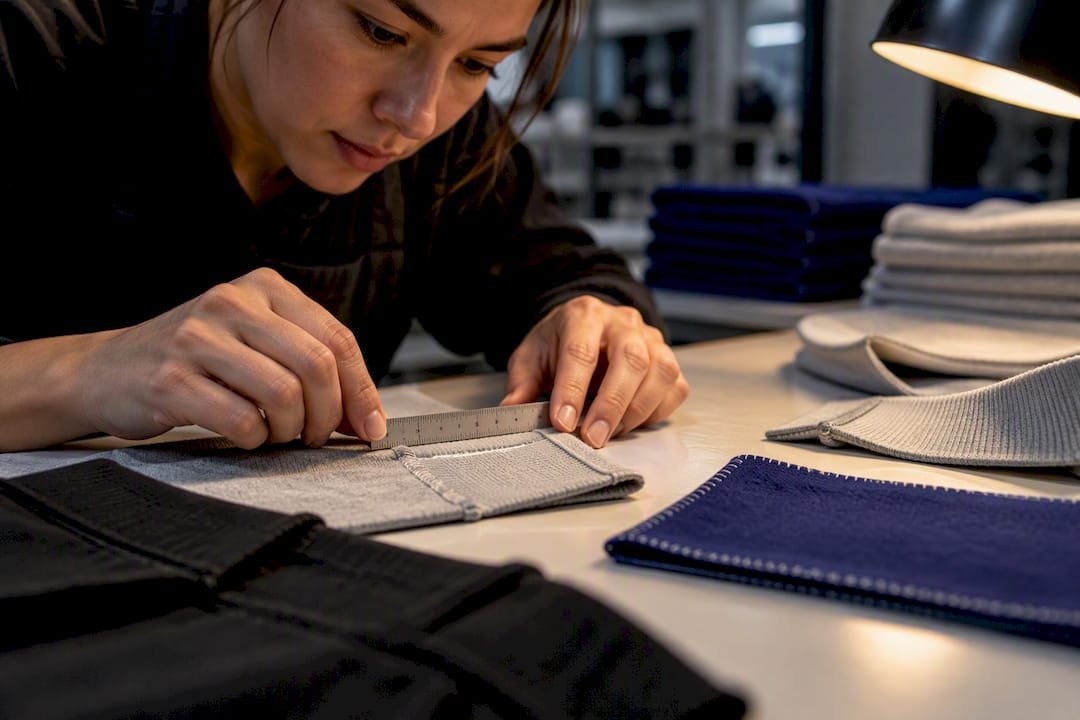
Personalized swag at scale works best with a hybrid fulfillment model: warehouse your evergreen items, and produce personalized pieces on demand against a structured recipient roster with a human approval checkpoint before anything ships. This combination cuts fulfillment time for repeat programs, keeps dead stock off your balance sheet, and catches the personalization errors that turn a nice gesture into an embarrassing reprint. Some distributors run this kind of pilot-first, sample-tested program for enterprise clients.
TL;DR:
- A hybrid fulfillment model, warehousing evergreen items and producing personalized pieces on demand, minimizes dead stock and reduces fulfillment time for large-scale programs.
- Standardizing recipient data, replacing free text with controlled choices, and routing unusual requests through human review greatly decrease personalization errors at scale.
- Apparel, drinkware, bags, office products, and tech accessories tend to perform well at scale due to their durability, flexibility, and perceived long-term value.
- Bulk preproduction suits predictable SKUs, while print-on-demand handles long-tail or unpredictable requests without inventory risks, with a hybrid approach balancing both.
- Running a pilot with sample validation, sample approval, and clear SLAs before full rollout prevents operational mistakes and costly reprints in enterprise swag programs.
Table of Contents
- What “Personalized Swag at Scale” Actually Means
- Building a Personalization Workflow That Doesn’t Break
- Which Product Categories Actually Hold Up at Scale
- Bulk, Print-on-Demand, or Hybrid: Which Fulfillment Model Fits?
- How to Govern Data and Quality Without Slowing Down
- From Pilot to Full Rollout: The Playbook
- What I’ve Learned Watching Enterprise Swag Programs Succeed and Fail
- Getting Started With a Pilot Order Through Discount Swag
- Sources
- FAQ
What “Personalized Swag at Scale” Actually Means
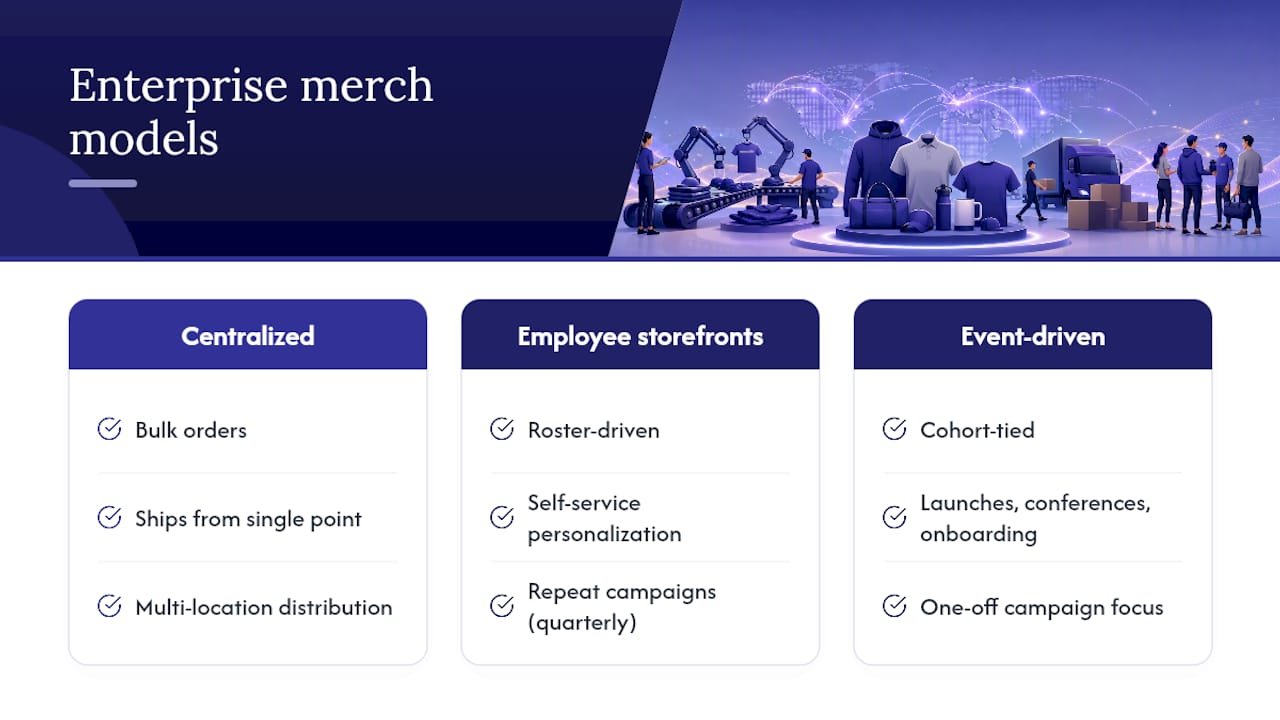
Scale in an enterprise merchandise program means multi-location distribution, recipient counts in the thousands, and campaigns that repeat quarterly instead of running once. That’s different from a one-off order of 200 matching T-shirts. Most enterprise buyers fall into one of three program models: centralized procurement that orders in bulk and ships from a single point, employee storefronts where a roster drives self-service personalization, or event-driven programs tied to a launch, conference, or onboarding cohort.
Personalization adds real value when it drives usage. A name on a jacket or a department color on a badge holder gets kept and worn. It adds cost and risk without much payoff on throwaway items nobody will use twice, and personalized products tend to command higher perceived value only when the base product itself is worth keeping.
Building a Personalization Workflow That Doesn’t Break
Most personalization failures trace back to one thing: messy input data. A name field with three different formats, a size column that mixes “L” and “Large,” or a shipping address nobody validated before the print run started. Fix the data pipeline before you touch a print file.
- Standardize recipient data first. Use one field format for names, a controlled list for sizes, department codes for routing, and validate every shipping address before it enters production.
- Replace free text with controlled choices. Dropdowns for sizes, preset color palettes, and prefilled roster imports eliminate the typos that cause reprints.
- Template everything. Build one design template per product and auto-generate a production-ready print file for every personalized order rather than hand-building files one at a time.
- Gate unusual requests. Route open-ended image uploads, unusual names, or high-value orders through a human reviewer before they hit the production queue.
This sequence matters because personalization at scale works best when recipient data gets structured before production, and the approved version of that personalization stays attached to the order’s own production record, not floating in a separate spreadsheet.
Pro Tip: Run one full roster through the workflow with placeholder data before your first real batch. It surfaces formatting problems in minutes instead of after 500 items are already printed.
Which Product Categories Actually Hold Up at Scale
Not every promotional item survives repeated personalization and multi-location shipping. The categories that consistently work share three traits: broad size or format flexibility, decoration that doesn’t degrade fast, and enough perceived value that recipients keep them instead of tossing them in a drawer.
- Apparel — sizing complexity is real, but a good retail-quality garment holds embroidery or print far longer than a bargain blank.
- Drinkware — durable decoration, high daily visibility, and low breakage risk in transit.
- Bags — totes and backpacks handle logo placement and name drops well, and they travel light for multi-destination shipping.
- Office products — notebooks, desk organizers, and similar items personalize cleanly with a single color and low decoration cost.
- Tech accessories — chargers, cables, and similar small items scale well because they’re light, cheap to ship, and genuinely useful.
Multi-color, multi-location decoration adds cost and lead time fast, so a retail-branded product strategy usually favors one or two decoration colors per SKU. Always order physical samples before a wide release. Feel, decoration durability, and perceived quality don’t show up reliably in a digital mockup.
Bulk, Print-on-Demand, or Hybrid: Which Fulfillment Model Fits?
Fulfillment strategy should follow predictability, not preference. Ask how repeatable the SKU is and how much personalization variance you’re actually dealing with before choosing a model.
- Bulk preproduction fits predictable, repeatable SKUs, like a single branded polo ordered every quarter for the same office. Lead times are shorter per unit once the run starts, and unit costs drop with volume, but you carry inventory risk if demand shifts.
- Print-on-demand or made-to-order fits long-tail personalization, individual name variants, one-off event orders, or unpredictable request volume. Unit costs run higher, but you eliminate the dead stock that piles up when nobody wants last year’s colorway.
- Hybrid fulfillment warehouses evergreen SKUs in bulk while routing personalized or experimental items through on-demand production. A hybrid model limits dead stock while preserving speed for the recurring orders that make up most enterprise volume.
Rush handling and replenishment planning depend on which model owns which SKU. Build in a buffer for proof turnaround regardless of which path you pick as described in our proofing custom promotional signage guide.
How to Govern Data and Quality Without Slowing Down
A personalized swag program collects names, sizes, addresses, and sometimes photos or department affiliations. That’s recipient data, and it deserves the same discipline you’d apply to any other data-enabled marketing operation.
- Collect only the fields fulfillment actually needs, and validate every address before it enters a production queue.
- Restrict who can view or export the recipient roster, and set a retention and deletion timeline instead of letting the file live forever on a shared drive.
- Require human review for unusual names, uploaded images, or any order above a set dollar threshold.
- Tie every brand approval to the actual production-ready file, and require sign-off on that exact proof before manufacturing starts.
Programs at this level should run like a governed data operation: tight fields, restricted access, defined retention, and a human in the loop for anything outside the standard pattern. Platforms increasingly split simple variable fields (name, size) from open-ended creative personalization like photo uploads, and the open-ended category needs stricter preview and privacy checks every time.
Pro Tip: Automation should accelerate your proofing workflow, not replace it. Auto-generating a print file still needs a human eye on the final proof, especially for anything with a photo or a name field.
From Pilot to Full Rollout: The Playbook
Skipping the pilot is the single most common way enterprise swag programs go wrong. A five-step sequence keeps risk contained while you scale.
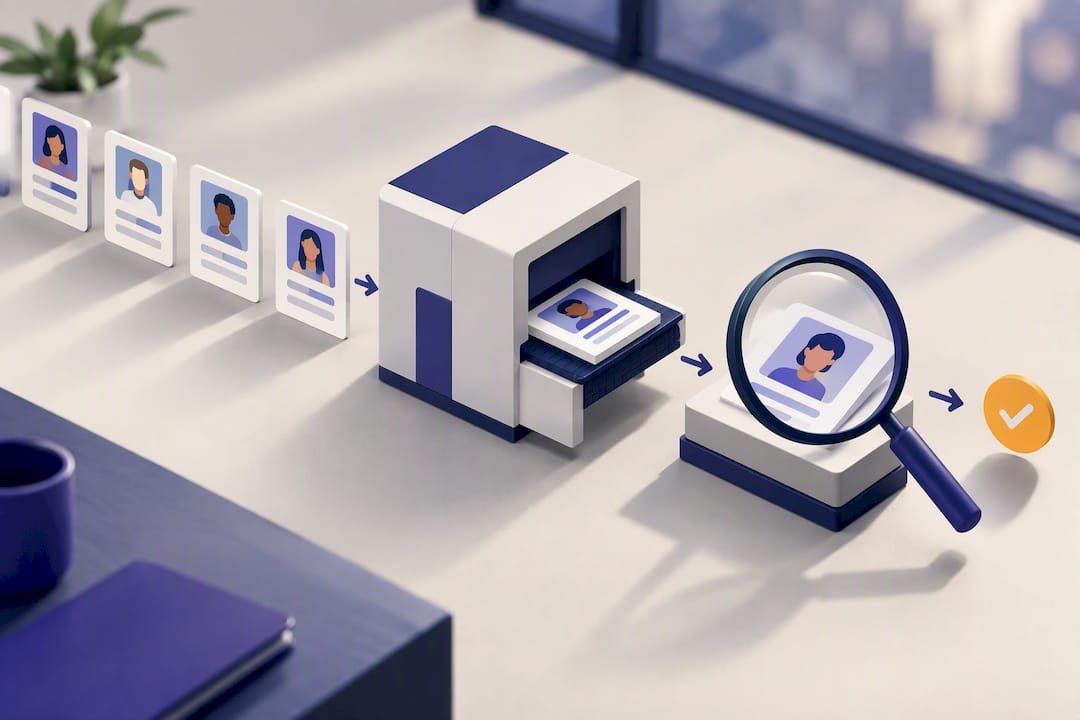
- Run a small pilot. Order a sample batch, validate your recipient data end to end, and inspect real mockups before committing to volume.
- Get sign-off on the sample. Someone with brand authority needs to physically approve the decorated item, not just a digital rendering.
- Lock supplier SLAs. Confirm lead time, proof turnaround, rush fees, and the return or replacement process in writing before the full order goes in.
- Choose your distribution pattern. A single bulk ship to one warehouse works for one-off events; multi-destination dropshipping to individual locations fits recurring programs with scattered recipients.
- Scale to full production. Once the pilot batch clears review, release the full run against the validated roster and confirmed SLA.
A realistic timeline runs about one to two weeks for pilot production and sample approval, then another two to four weeks for full-volume production depending on decoration complexity and order size. Build rush-order buffers into that estimate if your event date is fixed.
What I’ve Learned Watching Enterprise Swag Programs Succeed and Fail
The programs that fail almost never fail because the T-shirt was the wrong color. They fail because nobody validated the roster, nobody sampled the decoration method, or nobody built in a review step before 3,000 items went to print with a typo baked into every single one. That’s an operation problem dressed up as a merchandise problem, and most procurement teams don’t treat it that way until they’ve already eaten the cost of a reprint.
Some distributors of corporate promotional products have experience in department-level customization, marketing team distribution logistics, and inventory management that supports multi-location programs. That operational lens, treating a swag order like a data workflow instead of a one-time purchase, is the difference between a program that scales cleanly and one that generates a support ticket every quarter.
— Jerry
Getting Started With a Pilot Order Through Discount Swag
This hybrid model includes fulfillment features such as distribution to single or multiple locations, rush order handling, and fully custom-branded boxes that extend personalization to the unboxing.
Every claim in this guide about pilots, sampling, and approval checkpoints before full production maps directly to how Discount Swag structures a new account. You start with a sample order, not a 5,000 unit commitment. That single decision protects your budget and your brand from the reprint scenario described above.
If you’re planning a rollout across multiple offices or an upcoming event cycle, the practical next step is to request a sample and pilot order and walk your roster data through the process before committing to full volume. For teams weighing custom box builds specifically, start with a smaller kit run to see how the branded unboxing experience holds up before scaling it company-wide.
Sources
This guide draws on PPAI’s promo channel sales data for market context, Brikl’s personalization workflow guidance for data structuring, ASI’s Ad Impressions study on personalization’s effect on brand perception, BCG’s operations governance framework, and Personalize.design’s platform standards for open-ended personalization controls.
- Product Personalization | Names, Numbers & Logos on Every Item | Brikl
- BCG (operations and governance guidance)
- Personalize
FAQ
What Does “Personalized Swag at Scale” Actually Require?
It requires a structured recipient roster, controlled personalization fields instead of free text, and a fulfillment model matched to how predictable your order volume is. A hybrid approach warehousing evergreen items while producing personalized pieces on demand handles most enterprise programs without generating dead stock.
Should We Use Bulk Preproduction or Print-on-Demand?
Use bulk preproduction for repeatable, predictable SKUs like a standard event shirt ordered every quarter. Use print-on-demand for long-tail personalization or unpredictable request volume, since it eliminates leftover inventory even though the per-unit cost runs higher.
How Do We Prevent Personalization Errors at Volume?
Standardize your data fields before production starts, replace open text entry with dropdowns and prefilled rosters, and route anything unusual, like an uploaded photo or a high-value order, through human review before it prints. That approval step is what catches errors a spreadsheet macro will miss.
Does Discount Swag Offer Pilot or Sample Orders Before a Full Run?
Yes. Discount Swag supports sample and pilot orders so buyers can validate decoration quality and recipient data before committing to full volume, alongside rush order options and fully custom branded boxes for larger campaigns. Current pricing and program details are available on the Discount Swag site.
Why Does Personalization Increase Perceived Value?
Recipients rate personalized promotional items more favorably than generic giveaways, and ASI’s research links personalized and higher-quality items to stronger favorable impressions of the brand behind them. A cheap, generic item that gets discarded does more damage to brand perception than a better item that gets kept.
 Bottle Carriers
 Mugs
Mugs