

Screen Printing vs Embroidery Apparel

Ordering branded apparel gets expensive fast when the decoration method does not match the job. That is why screen printing vs embroidery apparel is not just a design decision – it is a budget, durability, and brand presentation decision. If you are buying for events, employee uniforms, onboarding kits, or client-facing teams, the right choice depends on how the garment will be used, how many pieces you need, and what kind of impression you want to make.
Screen printing vs embroidery apparel: what changes the outcome
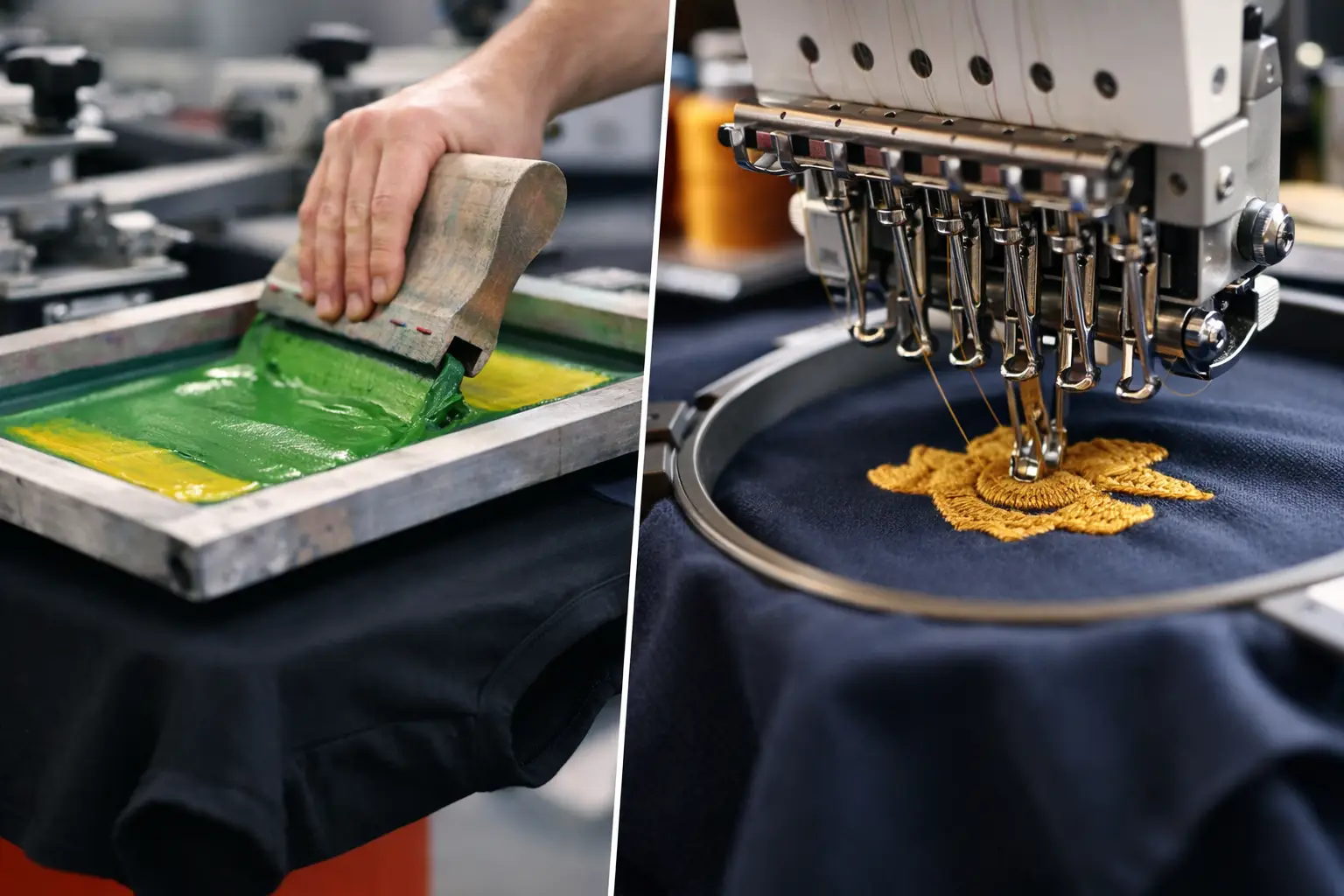
Screen printing applies ink directly to the fabric. It is usually the best fit for larger graphics, bold artwork, and high-volume orders where keeping unit cost down matters. You will see it often on event T-shirts, campaign apparel, company spirit wear, and giveaway items where visual impact and budget control are the priorities.
Embroidery stitches the design into the garment with thread. It creates a textured, premium finish that tends to work best for polos, jackets, hats, fleece, and uniforms. It is a common choice when the apparel needs to look polished in front of customers, prospects, or partners.
Neither method is automatically better. The real question is whether you need low per-piece pricing, large and colorful graphics, and fast scale, or a more elevated finish with a longer-wear professional appearance.
When screen printing makes more sense
If you are ordering in volume, screen printing usually wins on cost efficiency. Once the setup is complete, the per-unit price tends to stay attractive on larger runs. For procurement teams and event planners managing a fixed budget, that matters. Saving even a few dollars per piece can change the scope of an employee campaign or trade show order.
Screen printing also gives you more freedom with large designs. Full-front logos, back graphics, slogans, multi-color artwork, and campaign messaging are all easier to reproduce with ink than with thread. If your brand design relies on vibrant color fills, gradients, or oversized placement, embroidery can become restrictive or simply too expensive.
This method is especially practical for short-term or broad-distribution use cases. Think conference giveaways, recruiting events, charity walks, field marketing teams, or seasonal staff shirts. In these situations, buyers usually need a clean branded look at scale without turning every item into a premium-cost piece.
That said, screen printing has trade-offs. It is not always the best match for very small logos, intricate stitching-style detail, or garments where a more upscale finish matters. A printed left-chest logo on a polo can work, but it often does not carry the same authority as embroidery in a customer-facing setting.
When embroidery is the better investment
Embroidery usually makes sense when appearance and perceived value matter more than maximizing graphic size. A stitched logo on a polo, quarter-zip, soft shell, or hat immediately reads as more refined. For sales teams, hospitality staff, managers, and client-facing employees, that difference is not subtle.
It also performs well over time on the right garments. Because the logo is stitched rather than printed, embroidery can hold up extremely well through repeated wear, especially on thicker materials. For uniforms or branded apparel that employees use week after week, that long-term durability can justify the higher upfront cost.
Embroidery is also the safer choice for certain logo placements. Left chest branding, sleeve logos, hat fronts, and outerwear decoration are classic examples. These are areas where stitching looks intentional and professional, while printing can sometimes feel more promotional than permanent.
The limitation is cost and complexity. Embroidery generally costs more per piece than screen printing, especially when stitch counts are high. Very detailed artwork, tiny text, or large filled-in designs can create problems. A logo that looks great in a digital brand file may need simplification before it can be embroidered cleanly.
Budget is not just the piece price
Business buyers often compare methods based only on unit cost, but that can lead to the wrong decision. The better question is total value for the intended use.
If you are ordering 500 event shirts that will be worn once or twice, screen printing is usually the smart move. You keep costs down, get strong visual branding, and avoid paying a premium for decoration that the use case does not require.
If you are ordering 50 branded polos for a sales team that meets customers every day, embroidery may offer better return even at a higher piece price. The apparel presents better, lasts longer, and reinforces brand credibility in every interaction.
This is where buyers save money by being selective instead of uniform across the board. Not every item in a program needs the same decoration method. Event tees, warehouse staff shirts, executive outerwear, and onboarding apparel can all serve different purposes. Matching the method to the use case often creates the best blend of savings and performance.
Fabric and garment type matter
The garment itself often decides the answer before price does. Screen printing works best on smooth, flat surfaces like cotton T-shirts, cotton blends, and many lightweight casual garments. It is built for broad decoration areas and consistent repeat production.
Embroidery performs better on structured items and heavier apparel. Polos, fleece, jackets, woven shirts, and caps are strong candidates because the fabric can support stitching without puckering or losing shape. On very thin or stretchy garments, embroidery may pull the material or distort the logo unless the item is specifically suitable for it.
That is why a single logo does not behave the same way across every product. A mark that looks sharp screen printed on a tee may need cleanup before it works on a cap. A logo that looks excellent embroidered on a quarter-zip may lose impact if printed too small on a lightweight shirt. Good apparel planning starts with the garment first, then the decoration method.
Brand image should drive the decision
Screen printing often feels energetic, bold, and promotional. It is ideal when you want visibility, color, and message-driven apparel. For brand launches, employee events, trade shows, fundraising, or awareness campaigns, that can be exactly the right tone.
Embroidery feels established, polished, and higher value. It is a better fit when apparel represents your company in professional settings. If employees wear the item during meetings, site visits, customer service interactions, or partner events, embroidery usually supports a stronger brand impression.
This is not about one method being cheap and the other being premium. It is about context. A printed shirt at a 2,000-person event can be the smarter, more effective buy. An embroidered polo for an account executive can be the smarter, more credible buy. The best buyers know the role each item has to play.
Screen printing vs embroidery apparel for common business orders
For trade shows and large event handouts, screen printing is usually the stronger choice because it keeps cost per item manageable and supports bigger branding. For employee uniforms, sales apparel, and outerwear, embroidery usually earns its keep by delivering a cleaner professional finish.
For onboarding kits, the answer often depends on what mix you want. A printed T-shirt adds comfort and brand energy. An embroidered cap or polo adds perceived value. For remote team mailers or multi-location distribution, mixing both methods can create a stronger kit without overspending on every piece.
For schools, nonprofits, construction teams, hospitality groups, and corporate departments, the same rule applies: buy based on use, not habit. Many organizations overspend by embroidering items that do not need it or undershoot their brand by printing items that should look more elevated.
How to choose without wasting budget
Start with three questions. First, where will the apparel be worn? Second, how many units do you need? Third, what does the garment need to communicate about your brand?
If the answer is high volume, broad visibility, larger graphics, and cost control, screen printing is likely the better fit. If the answer is professional appearance, long-term wear, and a premium presentation, embroidery is usually worth the extra spend.
It also helps to think in tiers. Use screen printing for mass-distribution apparel and embroidery for core team wear or higher-visibility roles. That approach protects your budget while keeping brand standards high where they matter most.
For many buyers, the winning move is not choosing one method forever. It is building a smarter apparel program around both. That is where a value-focused supplier can make a real difference by helping you align product type, decoration method, order size, and shipping needs without adding friction.
When the choice is made correctly, branded apparel stops being just another line item. It becomes something your team will actually wear, your audience will actually notice, and your budget will actually support.
 Bottle Carriers
 Mugs
Mugs