

Tri-Blend vs Cotton Shirts: Which to Order in Bulk

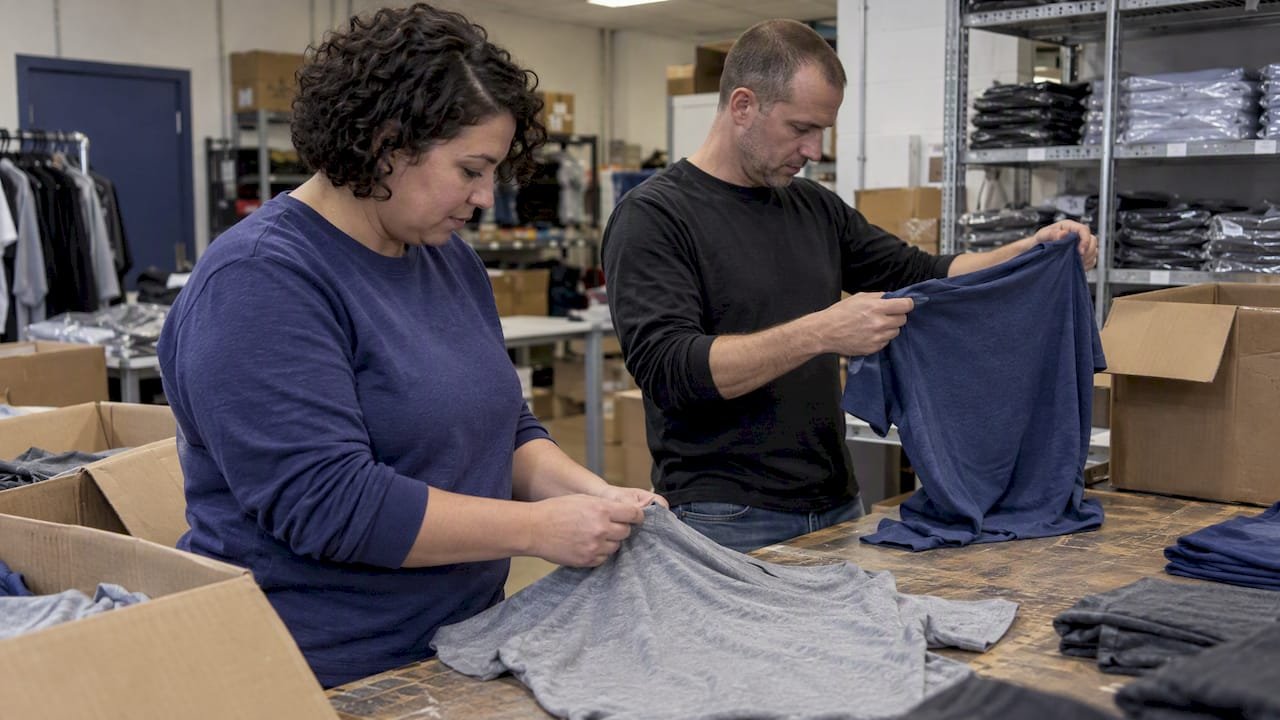
Choose tri-blend when the shirt is a keepsake meant to feel soft and look relaxed, and choose cotton when the logo must match your brand color exactly, the crowd will be sweating through long days, or the order has to suit every body type and every budget. Tri-blend wins the first touch. Cotton wins on print fidelity, breathability and predictability. This guide covers what each fabric is, where each one fails, and how to decide for a run of 200 or 5,000 shirts.
TL;DR
- Tri-blend is a mix of cotton, polyester and rayon. It is lighter, drapier and softer out of the bag, with a heathered, vintage look.
- Cotton, especially combed ring-spun, gives a flatter surface. It holds brand colors more faithfully and breathes better, but it can shrink if laundered hot.
- Polyester-rich tri-blends dry fast but can hold on to body odor. Cotton stays damp longer after hard exercise.
- Whatever you pick, fiber content on labels and in catalog copy must be accurate under FTC rules.
- For Pantone-critical logos, choose cotton. For giveaways people will actually wear on weekends, tri-blend is a strong pick.
Table of Contents
- What tri-blend and cotton actually are
- Side-by-side comparison
- Softness and fit: where tri-blend earns its reputation
- Print quality and brand color
- Breathability, sweat and odor
- Shrinkage, durability and care
- Cost and what it means for a bulk budget
- Labeling and claims: what the FTC expects
- Perspective: how we would choose
- A quick decision guide
- Order samples before you commit
- Ordering with Discount Swag
- FAQ
- Sources
What tri-blend and cotton actually are
A tri-blend is a knit made from three fibers: cotton, polyester and rayon. Many popular blanks use roughly half polyester with the remainder split between cotton and rayon, but the ratios vary by mill and style, so always read the spec sheet for the exact shirt you are ordering. Each fiber contributes something. Polyester adds strength and stretch recovery, rayon adds drape and a silky hand, and cotton keeps a natural feel.
Cotton shirts come in a few grades. Basic carded cotton is the budget workhorse. Combed and ring-spun cotton is spun from finer, smoother yarn, which gives a softer, tighter surface that prints better. When people compare “tri-blend vs cotton,” the useful comparison is usually tri-blend against combed ring-spun cotton, because that is the tier most brands consider for a premium giveaway.
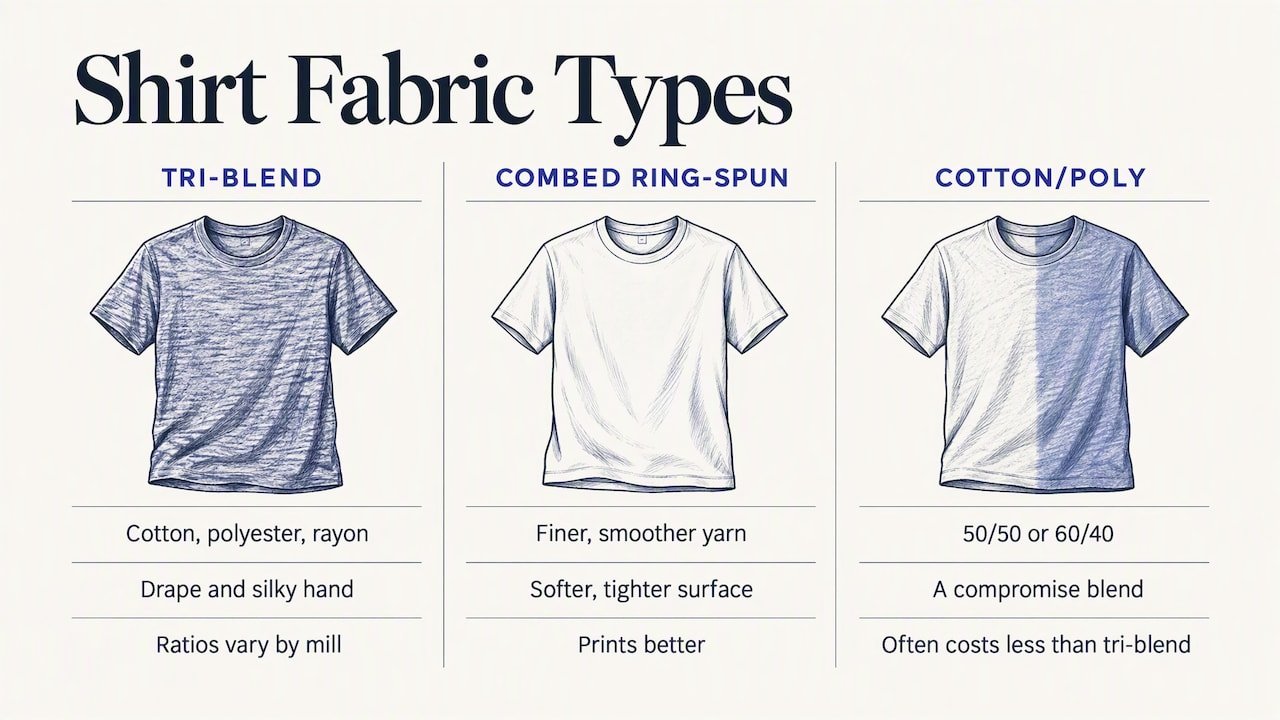
There is also the middle ground: cotton/polyester blends such as 50/50 or 60/40, sometimes called CVC when cotton dominates. They behave like a compromise and often cost less than a tri-blend. Next Level Apparel’s fabric guide walks through cotton, CVC and tri-blend from a manufacturer’s view, if you want to see the three tiers side by side.
Side-by-side comparison
| Factor | Tri-blend | 100% cotton (combed, ring-spun) |
|---|---|---|
| First-touch softness | Very soft, lightweight, worn-in feel | Soft, but with more structure |
| Drape and fit | Flowy, body-skimming | Classic, holds its shape on the body |
| Look | Heathered, muted, vintage | Solid, crisp, saturated |
| Print color accuracy | Shifts and mutes ink | Most faithful |
| Breathability | Moderate | Highest |
| Dry time after sweat | Fast | Slower |
| Odor risk | Higher with polyester-heavy mixes | Lower |
| Shrinkage | Generally lower | Can shrink if washed hot or dried on high heat |
| Typical cost | Usually higher per unit | Usually lower per unit |
| Best for | Lifestyle swag, events, employee gifts | Brand-critical logos, uniforms, large mixed audiences |
The cost line is a general pattern, not a quote. Blank prices move by brand, weight, color and quantity.
Softness and fit: where tri-blend earns its reputation
The reason tri-blends took off in promotional programs is simple: people put them on and say “this is nice.” The lightweight knit and rayon drape make a shirt feel like something from a retail shelf rather than a trade-show handout. That reaction matters. A giveaway that gets worn is a giveaway that does its job.
The flip side is fit. A drapey, lightweight fabric clings differently across body types, and it can look clingy on some recipients where a structured cotton tee looks neutral. If your audience is broad, a cotton tee in a unisex cut tends to offend fewer people. If your audience skews toward a creative, retail or younger crowd, tri-blend lands better.
Combed ring-spun cotton narrows the softness gap more than most buyers expect. If you have only felt a bargain cotton tee, you may be comparing tri-blend to the worst version of its competitor.
Print quality and brand color
This is the section procurement teams should read twice. The heathered, multi-toned base that gives a tri-blend its vintage charm is also a printing variable. Polyester does not take dye or ink the way cotton and rayon do, so the finished color on a tri-blend looks different from the same ink on flat cotton. If your guidelines call for exact Pantone matching, the muted, shifted result on a tri-blend can be a problem. Combed ring-spun cotton gives a consistent canvas.
In practice:
- Solid, saturated logos (a corporate blue, a bright red) look truest on cotton.
- Distressed, tone-on-tone or vintage artwork looks intentional on tri-blend, because the fade is part of the design.
- Dark tri-blend colors with polyester content can behave differently under heat, so ask for a production proof before approving a full run.
The decoration method matters too. Our comparison of screen printing vs embroidery on apparel explains how each method sits on different fabrics, and the point carries over: the garment and the decoration method have to be chosen together, not separately.
Breathability, sweat and odor
Here the fibers’ chemistry shows. Cotton absorbs and releases moisture slowly and is the more breathable choice, but it stays damp longer after intense activity. Polyester barely absorbs moisture at all: research summarized in a peer-reviewed paper puts polyester moisture regain near 0.4% versus roughly 7 to 8% for cotton. That is why polyester-heavy tri-blends dry quickly.
The catch is odor. The same paper explains that bacteria colonize textiles and break down sweat and sebum, and that the process is governed by how water-repellent the fiber is. Hydrophobic synthetic fibers bind body oils more readily, which can make odors persistent. Researchers at Ghent University who compared microbial odor on polyester and cotton clothes after a fitness session point to the same pattern. This is a laundering and microbiology issue, not a toxicity one, so there is no reason to fear a tri-blend for skin safety on those grounds.
What that means for a promotional order:
- Be careful with “performance” claims on a tri-blend. It dries fast, but that is not the same as staying fresh.
- For fun runs, 5Ks, volunteer crews and sports sponsorships, consider a purpose-built moisture-managing athletic fabric rather than assuming a tri-blend fills that role.
- If you do send tri-blends to an active audience, a care card in the kit is a low-cost courtesy: wash promptly, avoid letting damp shirts sit in a bag.
Cotton is not stuck on the performance side, either. Cotton Incorporated’s TransDRY brochure describes a patented treatment that lets cotton fabrics wick and spread perspiration, so moisture-managing cotton exists if you need it.
Shrinkage, durability and care
Cotton’s weak point is heat. A 100% cotton tee that goes through a hot wash and a high-heat dryer can come out a size smaller. Cotton Incorporated’s guide to improving shrinkage performance notes that low shrinkage in cotton knits depends on engineering from fiber selection through every processing step. In plain terms: a pre-shrunk, well-made cotton tee behaves, and a cheap one does not. Ask whether the blank is pre-shrunk or enzyme-washed.
Tri-blends generally resist shrinking better because polyester does not contract the way cotton does, and they tend to hold their shape. Their trade-off is the long-term feel of the fabric and the odor issue above. Some independent comparisons rank cotton ahead on long-term wear, while others favor tri-blend for shape retention. The answer depends on the specific blank, weight and wash habits, which is why we suggest sampling before committing to a large run.
Cost and what it means for a bulk budget
Tri-blends usually carry a higher blank cost than basic cotton. On a 150-piece event order the difference is small enough to ignore. On a 5,000-piece onboarding program it becomes a real line item. A useful way to decide is cost per wear rather than cost per shirt. If a premium tri-blend gets worn 30 times and a cheap cotton tee gets worn twice before landing in a drawer, the tri-blend was the cheaper marketing impression.
Budgeting also includes decoration, setup fees, shipping and any kitting. Our corporate swag budgeting guide and the bulk custom apparel guide for smarter brand spending show how to weigh those pieces together.
Labeling and claims: what the FTC expects
If you describe a shirt in a catalog, a landing page or an internal request form, the fiber content you state has to be true. Under the Textile Fiber Products Identification Act, which the FTC enforces, labels must reflect fabric content accurately when you advertise or sell clothing containing cotton. Calling a cotton-polyester blend “cotton” is the kind of shortcut that creates trouble.
For marketing teams, two habits help. First, copy the exact fiber percentages from the supplier’s spec sheet into your purchase order. Second, avoid shorthand such as “100% cotton feel” or “performance fabric” in recipient-facing copy unless the garment genuinely qualifies. If you resell or give shirts under your own label, check the current FTC guidance or ask counsel to confirm what applies to your program.
Perspective: how we would choose
We talk with marketing teams every week who start with the question “which fabric is better?” and end up with a better question: “who will wear this, and what must the logo do?”
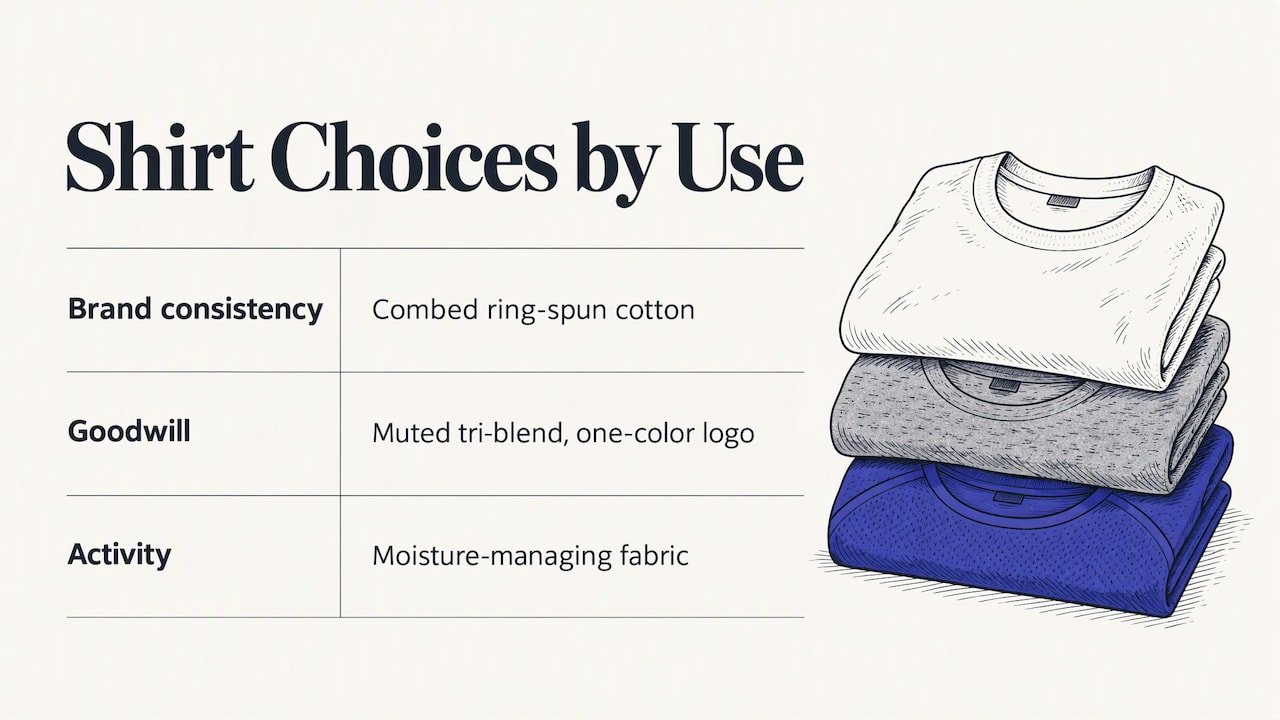
Our rule of thumb is to separate the shirt’s job into three. If the job is brand consistency (a uniform, a booth crew, a customer-facing team), pick combed ring-spun cotton and approve a color proof. If the job is goodwill (a gift for customers, a kit for new hires, an event tee people keep), a tri-blend in a muted color with a simple one-color logo is hard to beat. If the job is activity (a run, a tournament, a volunteer day), step away from both and ask for a moisture-managing fabric built for it.
The most common mistake we see is choosing the tri-blend because the sample felt great, then approving artwork designed for a crisp white cotton tee. The second most common is ordering a single fabric for a program that has three audiences. Splitting one order into two fabrics is usually cheaper than one mismatched one.
We also push buyers to look at the whole order, not just the blank: sizes, decoration, delivery to single or multiple locations, and timing. That is where programs succeed or stall.
— Jerry
A quick decision guide
Work through these questions in order:
- Does the logo need exact brand color? If yes, choose cotton. If the design is intentionally faded or tonal, tri-blend works.
- Will recipients be active or sweating? If yes, avoid polyester-heavy tri-blends as a default and ask for a moisture-managing option.
- Is the audience broad and varied in body type? Cotton in a unisex cut is the safer choice. Tri-blend suits a narrower, style-led audience.
- Is the shirt a keepsake or a utility? Keepsake favors tri-blend. Utility favors cotton.
- How tight is the budget per unit? If cost per unit is the limit, combed cotton or a cotton/polyester blend gives most of the comfort for less.
- Will the shirts be laundered hot? Choose pre-shrunk cotton or a tri-blend, and add care instructions.
For a broader view of how apparel fits into a program, see our custom corporate apparel bulk buying guide and the guide to the best materials for branded merchandise. If you are also weighing a printed tee against a more formal option, embroidered polos vs printed tees covers that choice.
Order samples before you commit
Whatever the data says, a hand-held sample settles most arguments in a meeting. Before approving a run:
- Request one shirt in each fabric you are considering, in your actual color.
- Wash and dry one the way a recipient would, then compare size and feel.
- Ask for a printed proof of the logo on each fabric, not just a digital mockup.
- Confirm the exact fiber percentages and write them into the purchase order.
- Check sizing across the range, not just a medium.
This takes a few days and prevents the expensive kind of surprise.
Ordering with Discount Swag
We supply customizable corporate apparel along with drinkware, bags, technology and event swag, and we support rush orders, branded kits and delivery to single or multiple locations. We also guarantee 10% or more in savings versus any competitor’s online price. If you are building an apparel program, start from our catalog at Discount Swag, tell us the audience and the logo, and we will help you match the fabric to the job. Our guide to logo apparel buying for bulk orders is a good companion while you plan.
FAQ
Is tri-blend better than cotton?
Neither is better across the board. Tri-blend feels softer and lighter and holds its shape, while cotton prints truer, breathes better and tends to stay fresher. Match the fabric to the logo, the audience and the budget.
Do tri-blend shirts shrink?
Generally less than 100% cotton, because polyester does not contract with heat the way cotton can. Pre-shrunk cotton also performs well, so check how the specific blank is made. Following the care label is the best protection for either.
Do tri-blend shirts smell more?
They can. Polyester is hydrophobic, so it binds body oils that bacteria feed on, and research on textile bacteria links that to persistent odor. Prompt washing helps, and cotton tends to be the safer choice for heavy sweat.
Which fabric is best for printing a logo?
Combed ring-spun cotton gives the flattest, most consistent surface and the most accurate color. Tri-blend suits vintage or distressed artwork where a muted look is part of the design.
Is a cotton blend better than polyester?
For everyday comfort and wearability, a cotton blend usually feels better than 100% polyester. Polyester is stronger and dries faster, so it suits athletic use. A blend sits in between.
Sources
- The Bacterial Life Cycle in Textiles is Governed by Fiber Hydrophobicity (PMC)
- Microbial odor profile of polyester and cotton clothes after a fitness session (Ghent University)
- Calling It Cotton: Labeling and Advertising Cotton Products (FTC)
- T-Shirt Fabric Guide: Cotton vs. CVC vs. Tri-Blend (Next Level Apparel)
- TransDRY Technology brochure (Cotton Incorporated)
- A Guide to Improve Shrinkage Performance of Cotton Fabrics (Cotton Incorporated)
 Bottle Carriers
 Mugs