

Marketing Procurement: RFP Ready Specs for Vinyl vs Paper Stickers

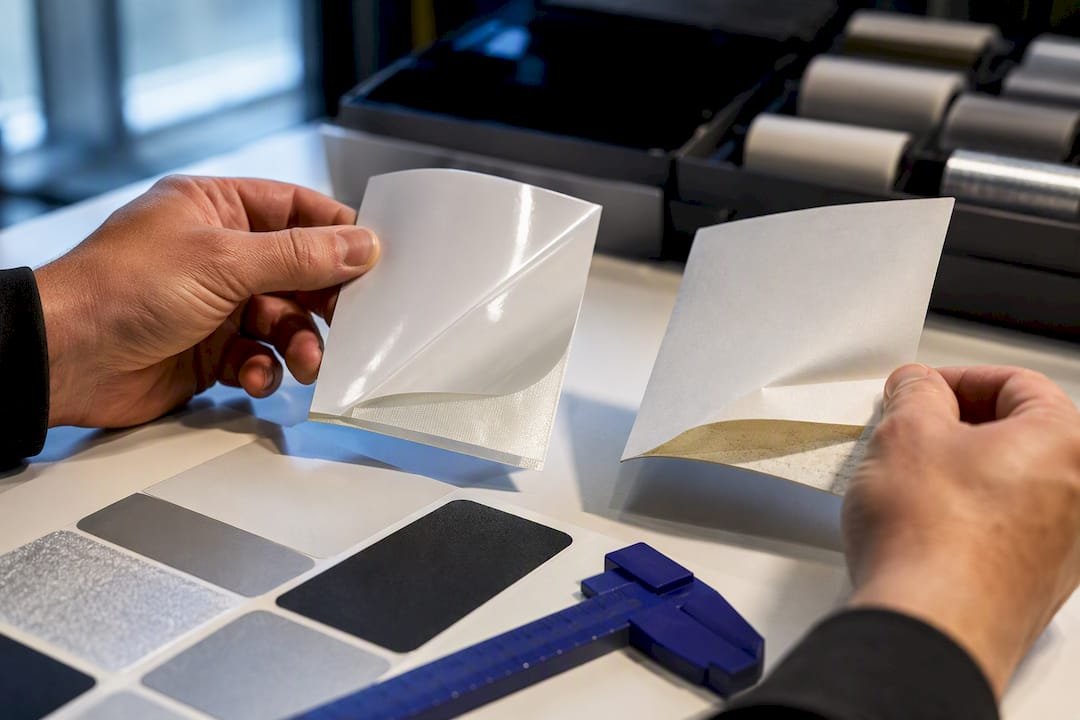
For bulk branded stickers that need to survive outdoor exposure, moisture, or heavy handling, vinyl or another synthetic facestock is the safer default. Paper works well for short-term packaging seals or indoor giveaways where cost and a specific finish matter more than longevity. Either way, the adhesive and laminate you specify can change the outcome more than the facestock name, so request samples and confirm the adhesive’s temperature range and laminate options before you commit to a print run.
TL;DR:
- Synthetic facestocks like vinyl and polyester offer superior water, UV, and abrasion resistance for outdoor or high-handing environments compared to paper, which is best suited for short-term indoor use.
- The performance of a sticker depends heavily on adhesive and laminate choices, with proper testing on the specific surface before large orders being essential for success.
- Application temperature is critical; adhesives may fail below 40°F (5°C), so surfaces must be warm, or application planned indoors to ensure bonding integrity.
- Print compatibility varies by material, requiring confirmation of whether surface coatings or inks are suitable for digital, flexo, or laser printing methods.
- Cost and lead times depend on material, lamination, adhesive grade, and order volume, making sample testing and clear quotations vital before big purchases.
Table of Contents
- Material differences: facestock, adhesives, and laminates
- Durability and environment: water, abrasion, chemicals, and temperature
- Print methods, finishes, and production compatibility
- Cost, lead time, and ordering considerations
- Quick recommendations by common use case
- A one-page checklist before you place your order.
- What procurement teams get wrong about sticker materials
- How Discount Swag supports bulk sticker and label orders
- Sources
- FAQ
Material differences: facestock, adhesives, and laminates
“Vinyl” and “paper” are shorthand, not full specs. The facestock is only one layer of a label construction that includes the adhesive and, often, a laminate or varnish on top.
Facestock options fall into a few groups. Vinyl (PVC) stretches to wrap curved surfaces and resists moisture well, which is why it shows up on vehicle decals and outdoor product labels. Polyester (PET) adds heat resistance and rigidity. BOPP (biaxially oriented polypropylene) is a lower-cost film often used for product labeling where some durability is needed but full vinyl performance is not. Synthetic papers like Teslin sit in a category of their own: they look and feel closer to paper but perform like a film. Coated paper offers a smooth print surface for short-term labels, while uncoated paper is cheaper and more common for basic packaging seals.
Adhesive families matter just as much as the facestock. General-purpose adhesives work on flat, clean surfaces at room temperature. High-tack adhesives bond to textured or low-energy plastics that resist standard formulas. Structured adhesives, often paired with vinyl or polyester facestocks, add chemical and abrasion resistance for industrial use, according to 3M’s technical documentation on vinyl label materials.
Laminates and varnishes are the final layer of defense. An overlaminate adds UV, scuff, and chemical resistance that the facestock alone cannot provide, which is why two “vinyl” labels can perform very differently depending on what sits on top.
- Vinyl (PVC): flexible, moisture-resistant, good for curves and outdoor use.
- Polyester (PET): rigid, heat-tolerant, suited to industrial nameplates.
- BOPP: budget film option for product labeling with moderate durability needs.
- Coated or uncoated paper: lowest cost, best for short-term or indoor labels.
Durability and environment: water, abrasion, chemicals, and temperature
Vinyl and other synthetic facestocks generally outperform paper in wet, sunny, or high-friction conditions. Paper absorbs moisture and tears under repeated handling, while vinyl and polyester resist water, UV exposure, and abrasion far better.
Vinyl decals installed outdoors on vehicles can last for several years before fading or peeling becomes a problem, according to Registrationdecals, though actual lifespan depends heavily on adhesive quality and laminate protection.
Temperature at the point of application matters as much as the material itself. Adhesives may fail to bond properly on surfaces below 40°F (5°C), according to 3M’s application guidance, even when the facestock itself is rated for cold environments. Procurement teams ordering for cold-climate installation or refrigerated packaging should confirm the adhesive’s stated application range before placing a large order.
A few signals tell you it is time to specify a synthetic over paper:
- The sticker will be applied to a vehicle, outdoor sign, or equipment left in weather.
- The label will be handled repeatedly, scanned, or exposed to friction.
- The application involves solvents, cleaning chemicals, or high humidity.
- The surface is curved, textured, or made of low-surface-energy plastic like polyethylene.
Print methods, finishes, and production compatibility
Material choice narrows your print options, so confirm compatibility before you finalize artwork. Some synthetic facestocks require special coatings or inks to accept standard digital or flexographic printing, while others, like Teslin, are formulated to work across most common processes, including laser printing, thanks to a microporous structure that locks ink into the surface, per PPG’s Teslin product documentation.
Finish choices affect both branding and perceived quality. A gloss laminate makes colors pop and adds scuff resistance, matte reduces glare and fingerprints, and a clear “no label” look on film facestock can make a design appear printed directly on the product.
Conversion format is a production detail buyers often skip and later regret. Roll-fed labels suit automated applicators and high-volume runs, while sheet-fed formats are more practical for smaller batches or hand-applied stickers.
- Confirm whether your chosen material needs a topcoat for digital printing.
- Ask whether the facestock is rated for laser, flexo, or screen printing.
- Specify roll versus sheet based on your application method and volume.
- Request a layflat sample if labels will run through an automated applicator.
Cost, lead time, and ordering considerations
Per-unit cost depends on facestock, lamination, adhesive grade, and order quantity, in that rough order of impact. A laminated vinyl label with a structured adhesive costs more per unit than an uncoated paper label, but the gap narrows at higher volumes as setup costs get spread across more units, a dynamic explained in more detail in Discount Swag’s breakdown of setup-fee economics.
Before committing to a full run:
- Request a physical proof on the actual intended substrate, not just a digital mockup.
- Confirm adhesive performance on your specific surface, especially plastics or curved parts.
- Lock lead times early if you need rush production or delivery to multiple event locations.
- Get a written quote that separates facestock, lamination, and adhesive costs so you can compare options.
Pro Tip: Never approve a bulk sticker order without testing a sample on the exact surface it will be applied to, since a label that performs perfectly on cardboard can fail entirely on curved plastic.
Quick recommendations by common use case
Matching material to use case avoids most procurement mistakes before they happen.
- Packaging seals and short-run promotional labels: coated or uncoated paper offers a clean finish at lower cost when the label only needs to survive shipping and shelf time.
- Event giveaways and outdoor decals: vinyl or polyester-based synthetics hold up to sun, rain, and repeated handling at trade shows, festivals, or on vehicles.
- Asset tags and product identification: polyester or BOPP films resist scuffing from routine handling better than paper.
- Tamper-evident, industrial, or safety labels: synthetic options like Teslin are built for this category, with a microporous surface that locks in ink and resists abrasion, per PPG’s Teslin comparison page; these applications often require specific security features like void patterns or destructible film.
A one-page checklist before you place your order.
Send this list to any supplier before approving a bulk sticker or label run.
- Facestock name and thickness (vinyl, PET, BOPP, coated paper, Teslin, etc.).
- Adhesive family and its stated temperature application range.
- Laminate or varnish specification, including UV and chemical resistance claims.
- Print process compatibility (digital, flexo, screen, laser).
- Roll or sheet format, matched to your application method.
- Expected quantity and confirmed lead time, including rush options if needed.
- A physical sample tested on your actual substrate before full production.
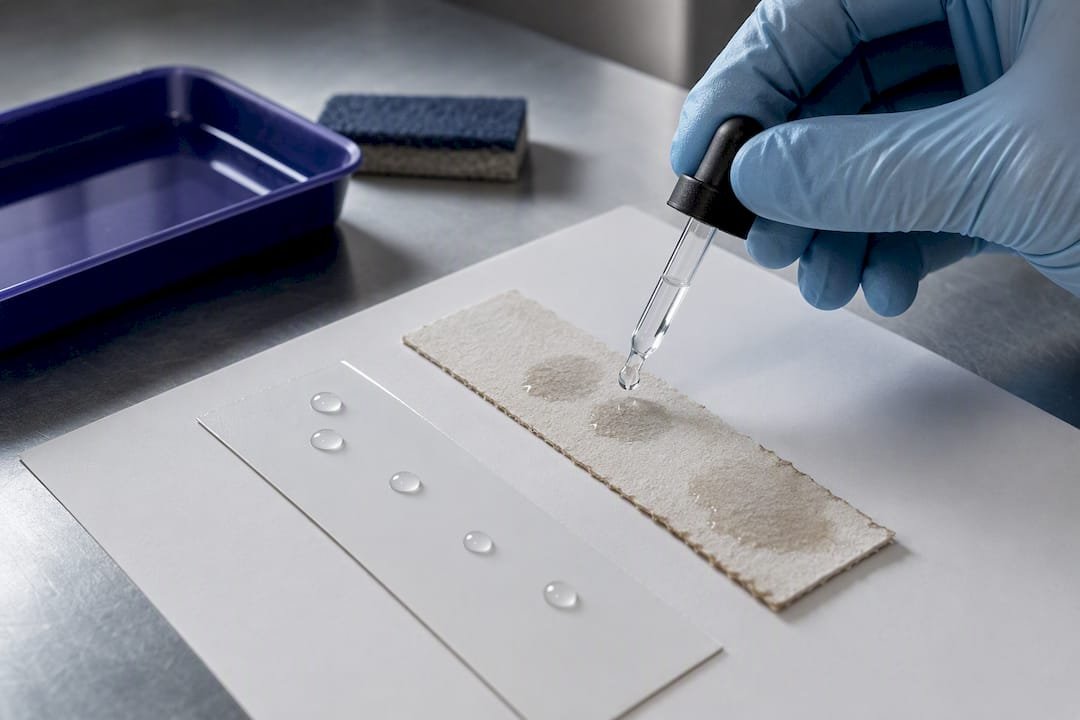
For sample acceptance, run quick checks like adhesion on the intended surface, abrasion by rubbing the printed face, a visual check for color accuracy and finish, and cold or wet exposure tests if relevant. Full construction, not facestock name alone, determines whether a label survives its job, a point Avery Dennison’s label guidance makes clear for anyone comparing materials on paper specs alone.
What procurement teams get wrong about sticker materials
The biggest mistake in bulk sticker procurement is not picking the wrong facestock. It is assuming the facestock name tells you everything you need to know. Two vinyl labels can perform completely differently depending on the adhesive and laminate paired with them, and a well-specified paper label can outlast a poorly built vinyl one on the same job. Buyers who focus only on “vinyl versus paper” as a binary choice skip the step that actually determines success: testing the full construction on the real surface, in the real conditions, before committing to thousands of units. Ask for the adhesive spec. Ask for the laminate. Ask for a sample on your actual product, not a flat test card. The material name is a starting point for a conversation with your supplier, not the end of one.
— Jerry
How Discount Swag supports bulk sticker and label orders
Some corporate promotional product distributors offer custom-branded stickers and labels, supporting rush production and fulfillment to single or multiple locations. Operational setups built around bulk corporate orders rather than one-off runs mean procurement teams get sample handling and production timelines suited to real launch dates instead of guesswork.
If you are weighing vinyl against paper for an upcoming order, request samples on your actual packaging or product surface and confirm adhesive and laminate specs before production starts. Visit Discount Swag to start a sample request or place a bulk order.
Sources
These technical resources back the specs discussed above and are worth reviewing before finalizing a supplier brief: 3M’s vinyl label material datasheet for adhesion and temperature ratings, Avery Dennison’s PSL 101 guide for construction and conversion detail, and PPG’s Teslin comparison page for synthetic paper performance.
- 3M™ Screen Printable Vinyl Performance Label Material 7051SA | 3M United States
- Synthetic Label Paper | PPG TESLIN Face Stock
FAQ
Do vinyl stickers really last longer than paper stickers?
In most outdoor or high-handling conditions, yes: vinyl and other synthetic facestocks resist moisture, UV, and abrasion better than paper. The exact lifespan still depends on the adhesive and laminate used, so a poorly built vinyl label can underperform a well-specified paper one.
What temperature should I avoid when applying stickers?
Avoid applying most adhesive-backed stickers to surfaces below 40°F (5°C), since adhesives may not bond properly at low temperatures, according to 3M’s application guidance. Warm the surface or move the application indoors whenever possible.
Is paper or vinyl more sustainable for branded stickers?
Paper facestocks are generally easier to recycle with standard paper streams, while vinyl and other plastic-based films typically require specialized recycling and are less commonly accepted curbside. The better environmental choice depends on your local recycling infrastructure and how long the sticker needs to last, since a short-lived plastic label that gets replaced often may have a larger footprint than a durable one used once.
Do vinyl stickers leave residue when removed?
Vinyl stickers can leave adhesive residue behind, especially structured or high-tack adhesives used for long-term outdoor applications. Paper labels tend to tear rather than peel cleanly, which can leave paper fragments instead of a sticky residue.
Can Discount Swag help with bulk custom sticker orders?
Discount Swag distributes custom-branded corporate promotional products, including stickers and labels, with support for rush orders and fulfillment to multiple locations. Pricing for custom sticker orders is available on request through Discount Swag.
 Bottle Carriers
 Mugs