

Why Branded Giveaways Matter for Marketing ROI

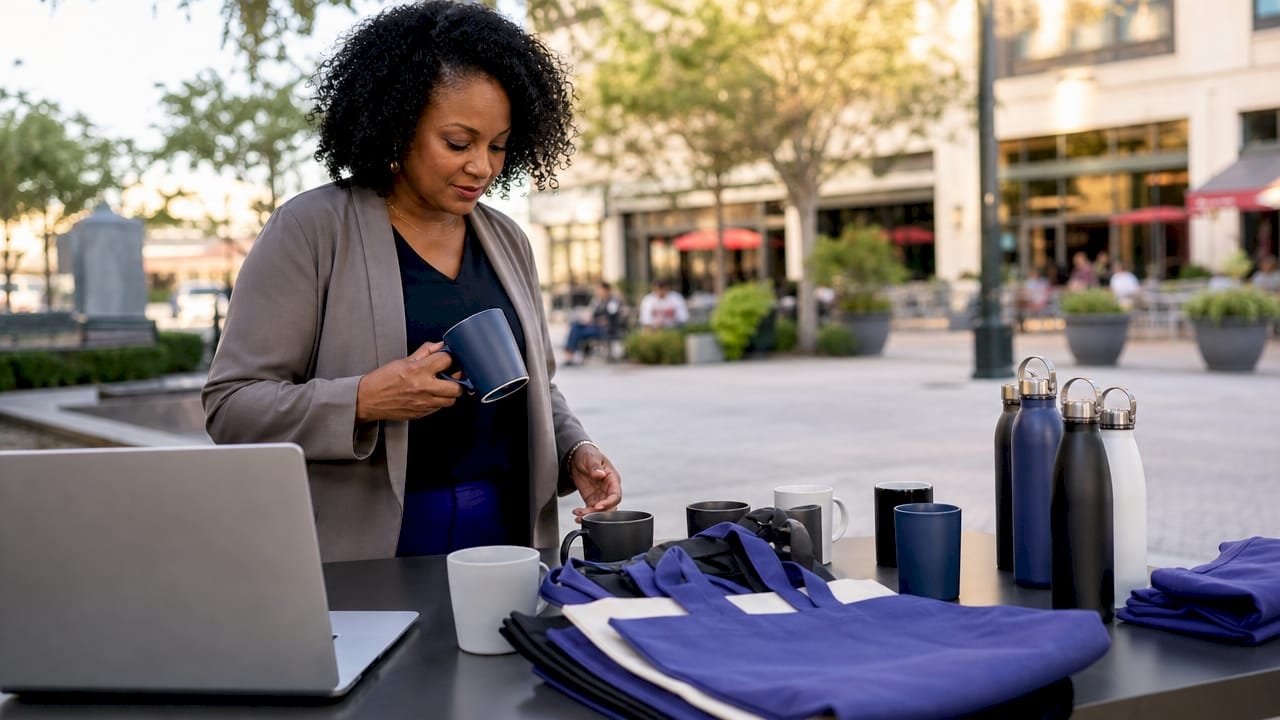
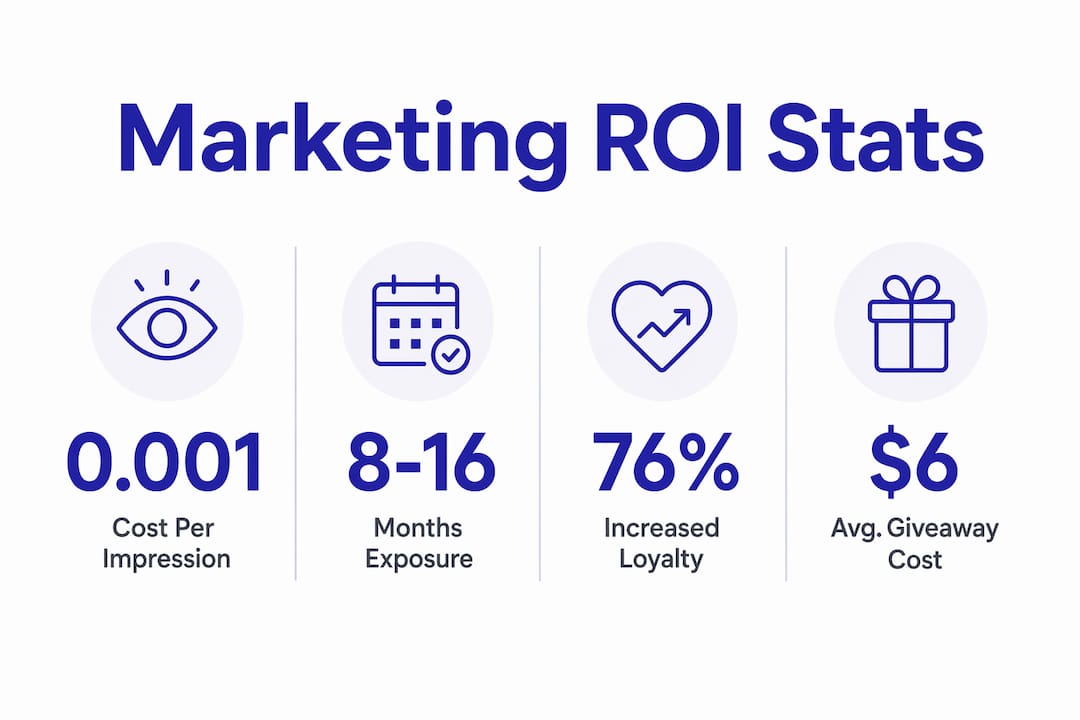
Branded giveaways are physical marketing tools that generate measurable brand impressions, build customer loyalty, and outperform most digital advertising channels on cost-per-impression. The importance of branded giveaways is backed by hard data: the 2026 ASI Global Ad Impressions Study confirms that a single $6 tote bag can produce roughly 5,000 brand impressions at a cost-per-impression of $0.001, a figure no paid search or display campaign can match. The Promotional Products Association International (PPAI) and the Advertising Specialty Institute (ASI) have spent decades documenting what experienced marketers already know: a well-chosen branded item stays in a consumer’s hands for months, sometimes years, delivering repeated exposure that a 30-second ad slot simply cannot replicate. For marketing professionals and business owners, understanding why branded giveaways matter is not a philosophical exercise. It is a budget decision with a clear, defensible answer.
Why branded giveaways matter for consumer behavior
The psychology behind promotional products is grounded in the endowment effect, a well-documented cognitive bias where people assign higher value to items they physically possess. When a consumer receives a branded item, they do not just see a logo. They experience a small act of generosity, and that experience reshapes how they perceive the brand behind it.
The numbers from PPAI’s 2026 research are striking. According to the study, 76% of U.S. consumers are more likely to do business with a brand after receiving branded merchandise, and 78% view that brand more favorably. That is not a marginal lift. That is a behavioral shift triggered by a single physical touchpoint. The same study found that 83% of recipients feel appreciated when they receive a promotional item, which means branded giveaways are simultaneously building goodwill and purchase intent.
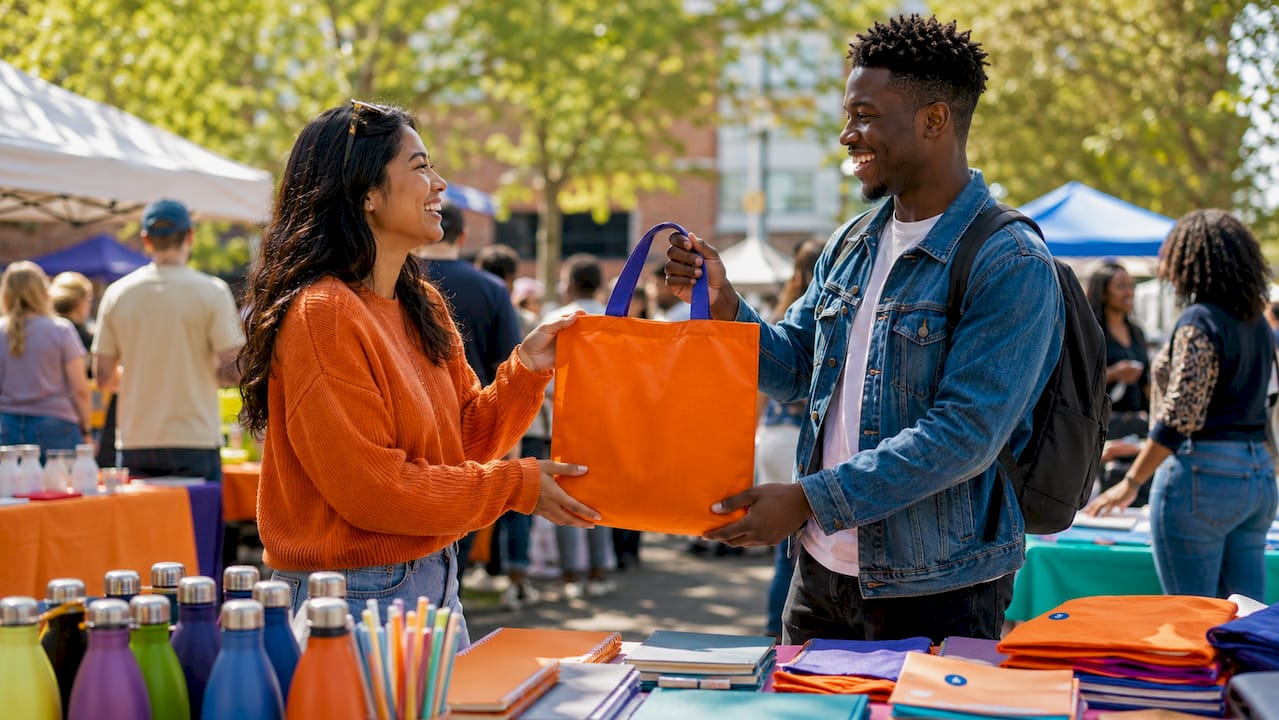
Functional value is the primary driver of this effect. 73% of consumers choose to keep a promotional item because it serves a practical purpose in their daily lives. This matters because a useful item is a retained item, and a retained item keeps delivering impressions. Emotional connection compounds the effect: 38% of consumers say an emotional connection to a brand strongly increases their brand affinity, while another 46% say it somewhat increases it. Together, that is 84% of consumers whose loyalty is influenced by how a brand makes them feel, not just what it sells.
Key behavioral outcomes of branded giveaways include:
- Purchase intent: Recipients are significantly more likely to buy from the gifting brand within 12 months.
- Brand recall: 85% of consumers remember the advertiser who gave them a promotional product.
- Positive word-of-mouth: Consumers who feel appreciated share that experience, extending reach beyond the original recipient.
- Repeat engagement: Items used daily, like drinkware or tote bags, create multiple brand exposures per week without additional spend.
Pro Tip: Choose items that solve a real problem for your specific audience. A tech company giving away a cable organizer pouch will see far higher retention than one giving away a generic pen.
How do branded giveaways compare to other ad channels on ROI?
The cost efficiency of promotional products is not a marketing myth. It is a documented competitive advantage over television, digital display, and print advertising when measured on a cost-per-impression basis.
The 2026 ASI Global Ad Impressions Study places promotional products at the top of the efficiency ranking. A $6 branded tote bag generating 5,000 impressions works out to a CPI of $0.001. Compare that to the average CPM for digital display advertising, which typically runs between $2 and $5 per thousand impressions, and the gap becomes impossible to ignore. Promotional products do not just compete with digital channels. They beat them on pure cost efficiency while also delivering a tactile, emotional experience that no banner ad can replicate.
The trade show context makes this even clearer. According to research on branded merchandise ROI, trade show giveaways cost approximately $112 per lead, compared to $259 for the average field sales call. That is a 57% reduction in cost per qualified lead, achieved by putting a branded item in the right person’s hands at the right moment.
| Ad Channel | Estimated Cost Per Impression | Longevity of Exposure |
|---|---|---|
| Promotional products | $0.001 | 8 to 16 months average |
| Digital display ads | $0.002 to $0.005 | Seconds |
| Television (national) | $0.006 to $0.010 | 30 seconds |
| Print (magazine) | $0.003 to $0.008 | Days to weeks |
The longevity column is where branded merchandise separates itself entirely. A digital ad impression lasts seconds. A branded fleece jacket, by contrast, stays with the recipient for over a year in 87% of cases. That is not a single impression. That is hundreds of impressions delivered passively, every time the item is used in public.
For business owners evaluating marketing spend, the implication is direct: branded giveaways deliver a compounding return that most digital channels cannot. The initial cost is fixed, but the impression count grows over the item’s lifetime.
What types of branded giveaways generate the most engagement?
Not all promotional products perform equally. The impact of branded merchandise depends heavily on the item’s relevance, quality, and daily utility for the recipient. Choosing the wrong item is not just a wasted budget. It is a missed opportunity to build the kind of brand association that drives repeat business.
Research on promotional product longevity shows that soft goods consistently outperform hard goods, with a 3.2x advantage on 30-day retention. Fleece jackets are retained by 87% of recipients for over a year. Branded drinkware is used by 77% of recipients at least once a week. These are not passive items sitting in a drawer. They are active brand ambassadors worn and carried in public spaces.
Sustainability and origin also shape perceived brand value. According to a CustomXM study, 79% of consumers favor USA-made promotional products, 74% favor sustainable items, and 73% favor products from socially responsible brands. For companies whose brand identity includes environmental or ethical commitments, this alignment between giveaway choice and brand values is not optional. It is expected by the audience.
| Item Category | Retention Rate | Weekly Use Rate | Best Use Case |
|---|---|---|---|
| Fleece jackets / apparel | 87% over 1 year | High | Premium client gifts, events |
| Branded drinkware | High | 77% weekly | Trade shows, employee gifts |
| Tote bags | High | Frequent | Conferences, retail promotions |
| Pens / basic stationery | Low to moderate | Variable | High-volume, low-cost impressions |
| Tech accessories | Moderate to high | Daily | B2B campaigns, tech audiences |
When selecting items, prioritize these criteria:
- Daily utility: Will the recipient use this item at least weekly?
- Public visibility: Does the item get used in spaces where others will see the brand?
- Quality signal: Does the item’s construction reflect positively on your brand?
- Audience alignment: Does the item match the lifestyle or professional needs of the recipient?
You can explore the full range of promotional product categories to match item types to specific campaign goals. The right item for a financial services firm differs significantly from the right item for a fitness brand, and that specificity is what separates effective programs from forgettable ones.
How to implement a branded giveaway strategy that drives results
Effective branded giveaway programs are not built around a single item distributed at a single event. The most successful programs use a tiered approach that matches item value to audience qualification, maximizing both reach and return.
A tiered giveaway strategy works as follows:
- Tier 1 (mass impressions): Low-cost, high-volume items like branded pens, stickers, or tote bags distributed broadly at events or in direct mail campaigns. The goal is reach and recall, not relationship depth.
- Tier 2 (engaged prospects): Mid-range items like branded drinkware or notebooks given to prospects who have shown genuine interest. These items reward engagement and reinforce the brand relationship.
- Tier 3 (qualified leads and clients): Premium items like apparel, tech accessories, or curated gift sets reserved for high-value prospects and existing clients. These items signal that the relationship matters and generate the strongest emotional connection.
Event timing is a critical variable that most marketers underestimate. Pre-event mailers generate a 12 to 18% increase in booth visits at trade shows, meaning the giveaway strategy should begin before the event, not at it. Post-event items extend the brand’s presence into the recipient’s daily life after the conversation has ended, reinforcing recall during the decision-making window.
Measuring the impact of branded giveaways requires a combination of methods. Post-event surveys can capture brand recall and sentiment shifts. Pipeline tracking can connect giveaway distribution to lead conversion rates. For digital-forward teams, unique QR codes or landing page URLs printed on items allow direct attribution of web traffic to specific giveaway campaigns.
Pro Tip: For trade shows, send a branded item to pre-registered attendees one week before the event with a personalized note. The combination of physical touch and personal acknowledgment consistently outperforms booth-only distribution.
Connecting your giveaway program to a broader digital branding strategy amplifies the effect. A recipient who receives a quality branded item and then encounters consistent digital messaging from the same brand experiences a reinforced identity signal that accelerates trust.
Key takeaways
Branded giveaways deliver measurable ROI through cost-efficient impressions, behavioral loyalty shifts, and compounding exposure that digital advertising cannot replicate.
| Point | Details |
|---|---|
| Cost efficiency is proven | Promotional products generate impressions at $0.001 CPI, outperforming all major ad channels. |
| Behavior shifts are significant | 76% of consumers are more likely to buy from a brand after receiving a promotional item. |
| Item quality drives retention | High-quality apparel and drinkware are retained for months to years, multiplying brand exposure. |
| Tiered strategy maximizes ROI | Match item value to audience qualification to balance reach with relationship depth. |
| Sustainability increases favorability | 74% of consumers favor sustainable promotional products, making item choice a brand statement. |
Why most branded giveaway programs underperform (and how to fix it)
After years of working in the promotional products space, the pattern I see most often is not a budget problem. It is a relevance problem. Companies spend real money on branded merchandise and then choose items based on what is cheapest or what they personally like, rather than what their audience will actually use and value.
The shift I have watched happen across the industry is meaningful. The brands that treat giveaways as “free stuff” consistently report weak results. The brands that treat them as physical brand experiences, where every item is a deliberate expression of what the company stands for, consistently report stronger recall, higher event engagement, and better lead quality from trade shows.
The sustainability trend is not a passing preference. It reflects a genuine values alignment that consumers now expect. When a brand that markets itself as environmentally conscious hands out cheap plastic items, the disconnect is noticed. The item becomes a liability, not an asset.
The future of branded merchandise is curated and purposeful. Quality over quantity is not just a slogan. It is the operating principle that separates programs generating real pipeline from programs generating landfill. If you are evaluating your current giveaway program, ask one question: would your best customer keep this item for a year? If the answer is no, the budget is better spent elsewhere or on fewer, better items.
— Jerry
Build your branded giveaway program with Discountswag
Discountswag specializes in corporate promotional products that align with the strategies outlined above, from high-volume trade show items to premium client gifts built for long-term retention. The catalog covers apparel, drinkware, tech accessories, bags, and sustainable product lines, all available with custom branding. Whether you are building a tiered giveaway program for a national conference or sourcing quality items for a targeted account-based marketing campaign, Discountswag has the product range and expertise to match your goals. Browse the full selection of branded promotional products to find items that will actually stay in your customers’ hands.
FAQ
Why do branded giveaways matter more than digital ads?
Branded giveaways generate impressions at $0.001 CPI and remain with recipients for 8 to 16 months on average, while digital display ads deliver impressions lasting seconds at a significantly higher cost. The physical, emotional nature of a promotional item also builds brand affinity in ways that screen-based advertising cannot replicate.
Do giveaways improve brand loyalty?
Yes. According to PPAI’s 2026 research, 76% of consumers are more likely to do business with a brand after receiving a promotional item, and 83% feel appreciated by the gifting brand. That combination of purchase intent and emotional goodwill is the definition of loyalty-building.
What branded items have the highest retention rates?
Fleece jackets and apparel lead retention, with 87% of recipients keeping them for over a year. Branded drinkware follows closely, with 77% of recipients using it at least weekly. Both categories generate high public visibility, compounding the impression count over time.
How do I measure the ROI of a branded giveaway campaign?
Use post-event surveys to capture brand recall and sentiment, track pipeline conversion rates for leads who received items, and embed unique QR codes or URLs on items to attribute web traffic directly to specific distributions. Trade show programs can benchmark against the $112 cost-per-lead figure from branded merchandise research.
How much should I spend per item in a branded giveaway program?
Spending depends on audience tier. Low-cost items under $5 work for mass impression campaigns, mid-range items between $10 and $25 suit engaged prospects, and premium items above $50 are appropriate for high-value clients and qualified leads. The key metric is not the item cost but the cost-per-impression delivered over the item’s retained lifetime.
 Bottle Carriers
 Mugs
Mugs