

Why Branded Merchandise Increases Conversions in 2026

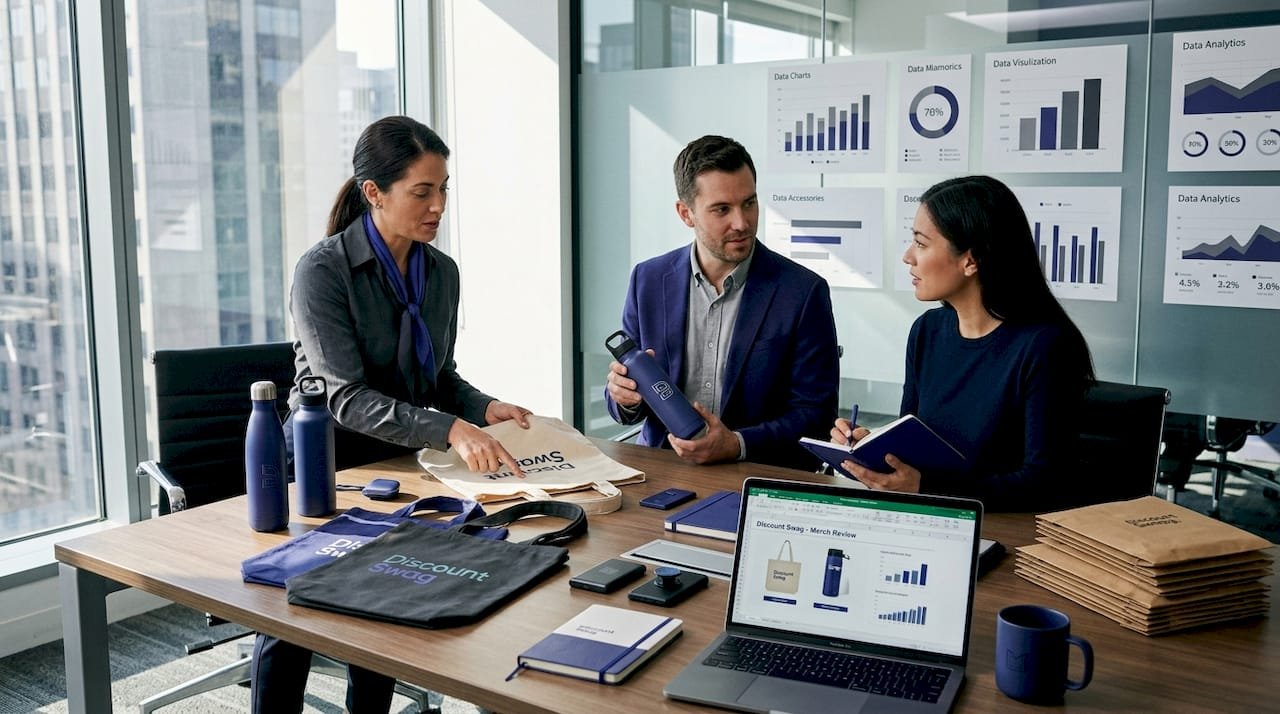
Most marketers still treat branded swag as a budget line item with fuzzy ROI. That framing is costing them real conversions. Understanding why branded merchandise increases conversions requires looking past the logo on a pen and into the psychology of repeated exposure, tangible trust, and the economics of attention. Promotional products now generate impressions at $0.006 each, outperforming nearly every digital and traditional ad channel on cost efficiency. This article breaks down the data, the psychology, and the practical playbook.
Table of Contents
- Key Takeaways
- Why branded merchandise increases conversions: the numbers
- The psychology behind merchandise and conversions
- Sustainability as a conversion multiplier
- Building a merchandise strategy that actually converts
- Real-world results: merchandise in action
- My take: merch lives in the retention economy, not the attention economy
- Explore Discountswag’s branded merchandise for your next campaign
- FAQ
Key Takeaways
| Point | Details |
|---|---|
| Unmatched cost-per-impression | Branded merchandise delivers impressions at fractions of a cent, far below digital and print advertising. |
| Psychology drives conversions | Repeated physical exposure builds familiarity and trust, which directly increases purchase likelihood. |
| Sustainability is a conversion lever | Eco-friendly, durable merchandise generates more impressions and improves brand perception simultaneously. |
| Attribution is non-negotiable | Embedding QR codes or promo codes in merchandise campaigns lets you track and prove downstream conversions. |
| Product utility determines ROI | Items used daily generate thousands of impressions over their lifetime, maximizing your conversion impact per dollar. |
Why branded merchandise increases conversions: the numbers
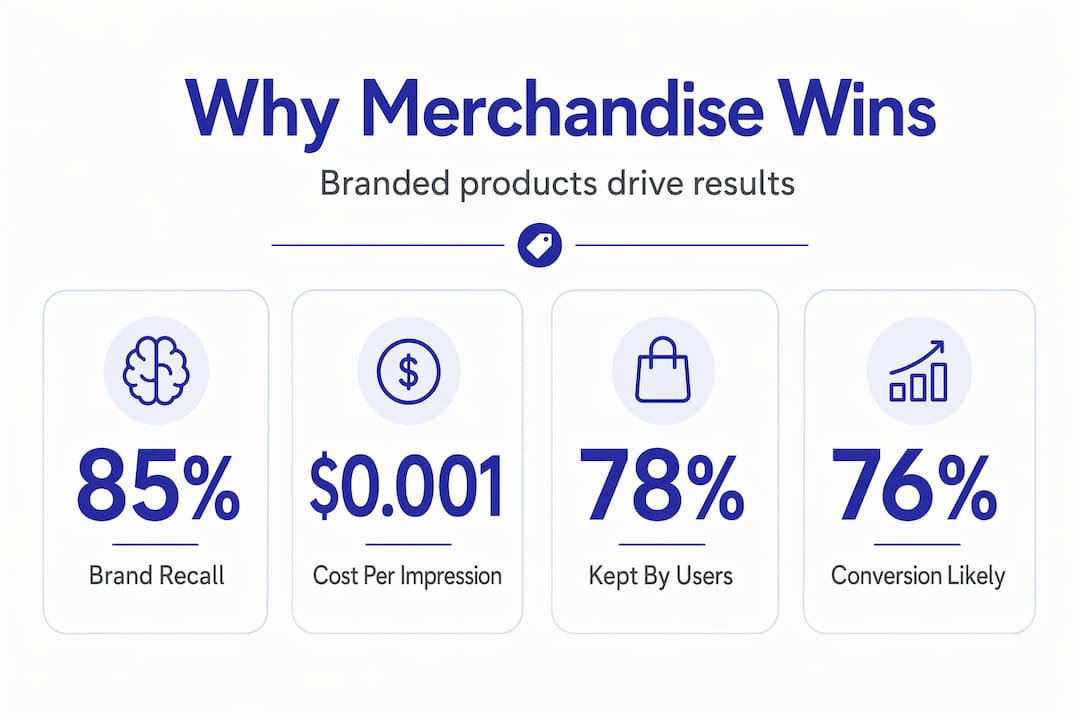
The first argument against branded swag is always cost. So let’s start there. A single $6 branded tote bag generates roughly 5,000 lifetime impressions, putting its cost-per-impression at approximately $0.001. Compare that to digital display ads, which typically run between $0.50 and $3.00 per thousand impressions, or television spots that cost far more per viewer reached.
The table below puts the contrast in clear perspective:
| Ad Channel | Avg. Cost Per Impression | Avg. Recall Rate |
|---|---|---|
| Branded merchandise | ~$0.001 | ~85% |
| Digital display ads | ~$0.002–$0.003 | ~20–30% |
| Online video ads | ~$0.01–$0.05 | ~35–45% |
| Print advertising | ~$0.03–$0.07 | ~40–50% |
| TV advertising | ~$0.10–$0.30 | ~50–60% |
What makes those numbers even more compelling is the keeping rate. 78% of consumers retain promotional products because they find them genuinely useful. A digital ad disappears the moment someone scrolls past it. A branded water bottle sits on a desk for two years, generating impressions every single day.
The benefits of branded merchandise go beyond raw impression volume. Approximately 85% of consumers remember the brand that gave them a promotional item, and 75% hold a positive opinion of that brand afterward. No retargeting pixel achieves that kind of recall at that price point.
The psychology behind merchandise and conversions
Understanding how branded items boost sales requires a short detour into behavioral psychology. The mechanism at work is called the mere exposure effect. When people encounter a brand repeatedly through a physical object they use daily, that brand starts to feel familiar. Familiarity reads as trustworthiness in the brain. And trust is what converts a prospect into a buyer.
Repeated exposure to branded items builds the kind of low-level familiarity that makes your brand the default choice when a purchase decision arrives. It is not a dramatic moment. It is a quiet accumulation of positive associations that tips the scale.
There are three specific psychological levers at work:
- Reciprocity. Receiving a gift creates a social obligation to return the favor. When a prospect receives a useful branded item, they are psychologically primed to engage with or purchase from that brand.
- Emotional memory. Tangible objects create stronger memories than digital impressions. A branded notebook from a conference becomes associated with the positive energy of that event.
- Perceived brand value. High-quality merchandise signals that a brand invests in its relationships. Cheap, forgettable items do the opposite.
The data confirms this. 76% of consumers are more likely to do business with a brand after receiving promotional merchandise, and 78% view that brand more favorably. Those are not soft metrics. Those are conversion preconditions.
Pro Tip: Print a unique QR code or promo code on every piece of merchandise you distribute. This lets you directly attribute website visits, sign-ups, and purchases back to specific merch campaigns, giving you the hard ROI data you need for budget conversations.
Sustainability as a conversion multiplier
Here is something most marketers miss entirely. Branded merchandise is not just cost-effective. It is also one of the most environmentally efficient advertising channels available. The ASI “Promotional Product CO2 Project” found that branded merchandise produces up to 8x less carbon impact per memorized impression compared to digital advertising, largely because each item generates repeated impressions over its useful life rather than requiring continuous energy-intensive ad serving.
This matters for conversions because consumer brand perception is increasingly shaped by environmental values. When your merchandise is practical, durable, and made responsibly, it signals alignment with values your customers actually hold. That alignment translates directly into brand preference and purchase intent.
“Merchandise is evolving from a simple giveaway tactic to a strategic brand-building asset focused on emotional connection and cultural relevance.” — LBBOnline
Consumers favor eco-friendly promo products and Made-in-USA items, and that preference directly enhances positive brand sentiment. Choosing sustainable merchandise is not just good ethics. It is a conversion strategy.
Pro Tip: When selecting merchandise, prioritize “time-in-use” over unit cost. A $15 reusable water bottle that gets used daily for three years will outperform a $2 keychain that ends up in a drawer within a week. Daily visibility is where the conversion power lives.
Building a merchandise strategy that actually converts
The impact of merchandise on conversions depends almost entirely on execution. Here is a practical framework for getting it right.
Step 1: Choose products with daily utility
Selecting promotional products should prioritize daily visibility and time-in-use over unit cost. Items like tote bags, apparel, drinkware, and logo tech accessories sit in front of people constantly. A branded phone stand on someone’s desk generates brand impressions every single workday.
Step 2: Match product to audience and context
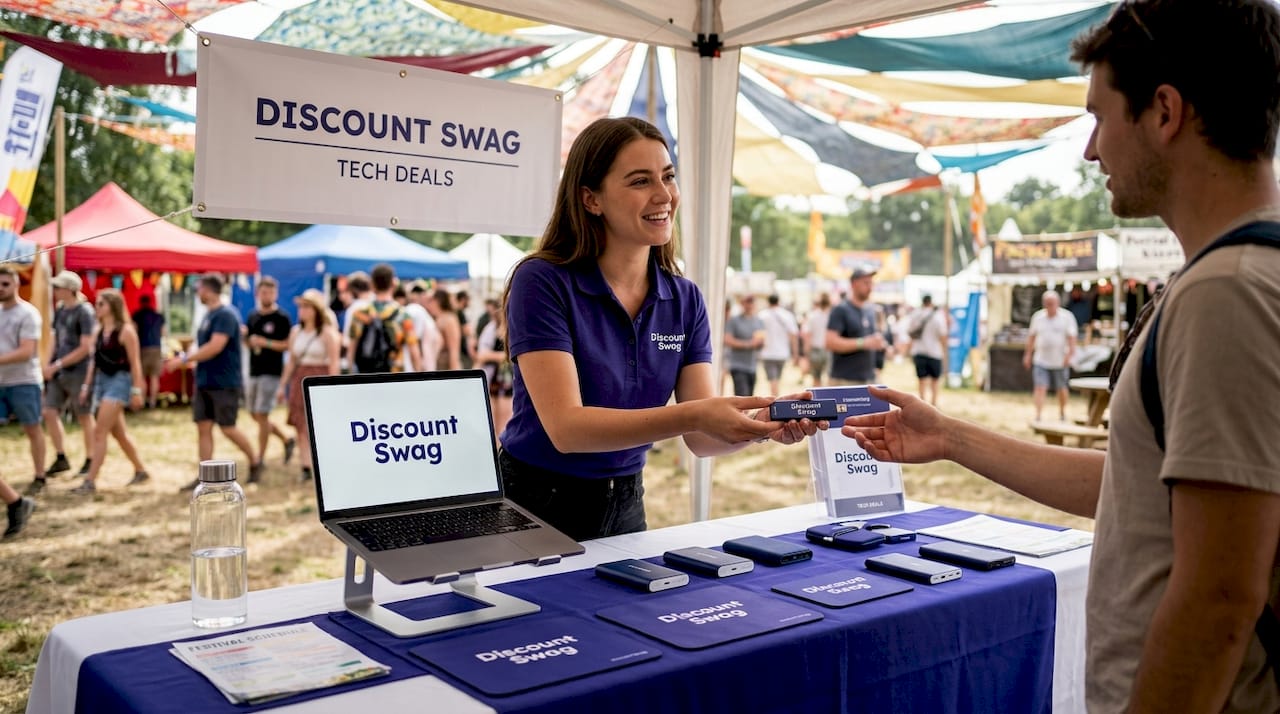
A tech company giving away branded USB hubs at a developer conference is speaking the right language. A wellness brand distributing insulated water bottles at a fitness event creates an immediate emotional alignment. Cultural relevance amplifies every other conversion mechanism.
Step 3: Instrument every campaign for attribution
Measuring branded merchandise ROI requires combining brand engagement outcomes with conversion tracking through unique QR codes and promo codes. Without this layer, you cannot connect merch distribution to downstream revenue. Set up a dedicated landing page for each campaign and track it properly.
Step 4: Select the right distribution scenario
The table below shows how different distribution contexts affect conversion potential:
| Distribution Scenario | Best Product Types | Conversion Impact |
|---|---|---|
| Trade shows and conferences | Tech accessories, tote bags, notebooks | High: direct prospect contact |
| Client appreciation gifts | Premium drinkware, apparel, kits | High: loyalty and repeat purchase |
| Employee engagement programs | Tumblers, branded apparel, desk items | Medium: internal advocacy and referrals |
| Direct mail campaigns | Compact useful items, branded stationery | Medium: recall and response rate lift |
| Event sponsorships | Branded outdoor gear, apparel | Medium to high: mass visibility |
For trade show contexts specifically, custom trade show giveaways that combine utility with visual appeal generate the strongest post-event recall and follow-through rates.
Step 5: Measure two layers of impact
Effective merch campaigns measure brand awareness and engagement metrics alongside conversion attribution via unique tracking mechanisms. The first layer tells you about reach. The second tells you about revenue. You need both to justify spend and optimize future campaigns.
Real-world results: merchandise in action
The effectiveness of branded merchandise becomes clearest when you look at how it performs across different business contexts.
At trade shows, companies that distribute genuinely useful branded items consistently report higher booth traffic and stronger post-event follow-up rates. The mechanism is simple: a prospect who takes your branded item back to their office sees your logo every day until they are ready to buy. The best trade show giveaways are not the cheapest ones. They are the ones that earn a permanent spot on a desk or in a bag.
Employee-facing merchandise tells a different conversion story. Branded tumblers for employees that get used daily turn your workforce into walking brand ambassadors. Every time an employee uses a branded item in public, they generate impressions for your brand among their networks. That kind of organic reach has real downstream conversion value.
A few lessons from campaigns that underperform are worth noting:
- Cheap, low-quality items damage brand perception rather than building it. The reciprocity effect only works when the gift feels like a genuine gesture.
- Merchandise without attribution tracking produces impressions you cannot measure. You end up unable to defend the spend.
- Distributing items that have no relevance to your audience or product category creates cognitive dissonance rather than positive association.
The brands that win with merchandise treat it as a customer retention strategy with a physical touchpoint, not a promotional afterthought.
My take: merch lives in the retention economy, not the attention economy
I have watched brands pour money into digital ad spend chasing clicks that evaporate in seconds, while completely underinvesting in physical brand touchpoints that compound over time. That is a fundamental misread of where conversion actually happens.
In my experience, the biggest ROI from branded merchandise does not come from the moment of distribution. It comes from the 18 months after, when someone uses your branded item every day and your brand becomes part of their routine. That is not the attention economy. That is the retention economy. And it is where the real conversion leverage sits.
What I find most underrated is the authenticity signal that quality merchandise sends. A well-made branded item says: this company thinks about details. That perception transfers directly to how a prospect evaluates your product or service.
The marketers I respect most treat merchandise as a long-game conversion asset. They pick products their audience will actually use, they instrument campaigns with tracking codes, and they measure both awareness and revenue impact. They do not treat merch as a giveaway budget. They treat it as a conversion channel with a physical delivery mechanism.
If you are not measuring it, you are not managing it. Start there.
— Jerry
Explore Discountswag’s branded merchandise for your next campaign
Ready to put these conversion principles into practice? Discountswag carries a curated selection of corporate promotional products built for exactly the kind of high-impact campaigns described in this article.
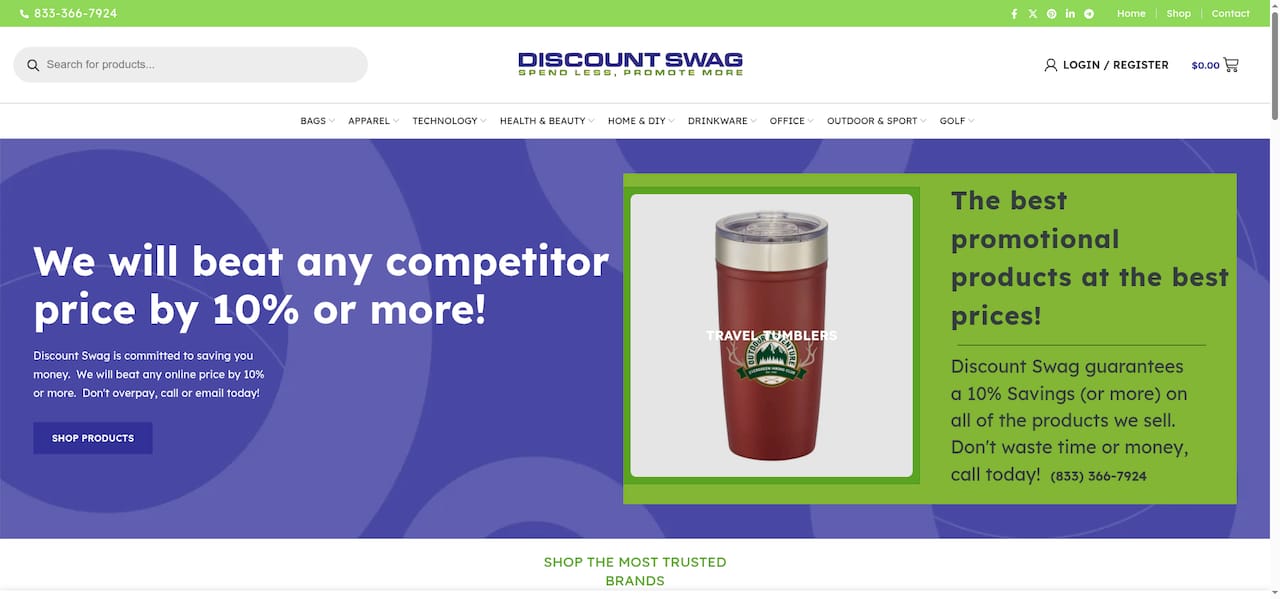
From bulk promotional products that keep costs low without sacrificing quality, to premium tech accessory giveaways that earn permanent desk real estate, Discountswag covers every distribution scenario. All products are available with full custom branding, bulk pricing, and fast turnaround. Whether you are planning a trade show campaign, a client appreciation program, or an employee engagement initiative, the right merchandise is the difference between a forgettable giveaway and a conversion asset that works for years.
Browse the full catalog at Discountswag and find products matched to your campaign goals and budget.
FAQ
Why does branded merchandise increase conversions?
Branded merchandise increases conversions by creating repeated physical exposure to your brand, which builds familiarity and trust through the mere exposure effect. 76% of consumers are more likely to do business with a brand after receiving a promotional item.
How do I measure ROI from branded merchandise campaigns?
Embed unique QR codes, promo codes, or dedicated landing page URLs on every piece of merchandise you distribute. This lets you directly attribute website visits and purchases to specific merch campaigns, giving you hard conversion data to justify spend.
What types of branded merchandise drive the most conversions?
Products with high daily utility, such as drinkware, tech accessories, and tote bags, generate the most impressions over time and deliver the strongest conversion impact. Daily visibility and time-in-use matter far more than unit cost when selecting merchandise.
How does branded merchandise compare to digital advertising on cost?
Branded merchandise delivers impressions at approximately $0.001 each, compared to $0.002 to $0.003 for digital display ads, with significantly higher recall rates. The keeping rate of useful items means those impressions compound over months or years, not seconds.
Does sustainable merchandise actually affect brand perception?
Yes. Eco-friendly and durable promotional products generate up to 8x less carbon per memorized impression than digital ads, and consumers actively favor brands that provide responsibly made merchandise, which directly improves purchase intent.
 Bottle Carriers
 Mugs
Mugs