

What Is a Promotional Bundle? A Marketer’s Guide

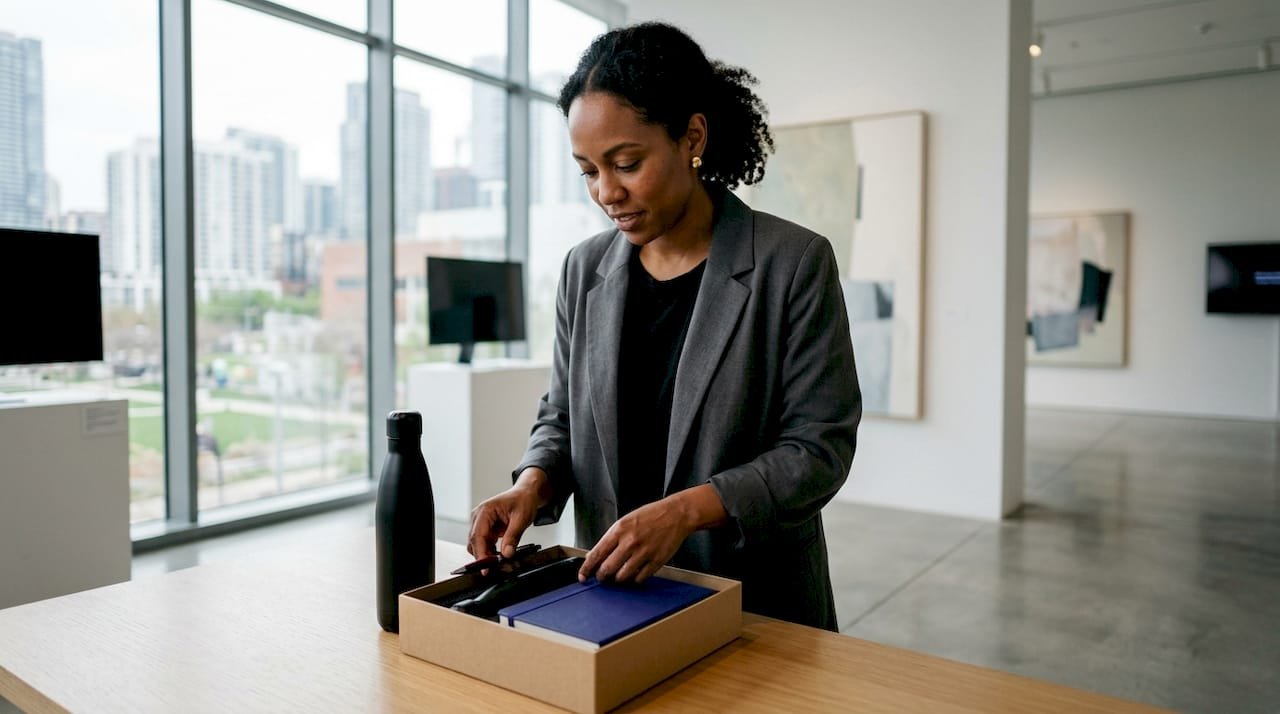
A promotional bundle is defined as two or more related products or services sold together as a single package, typically at a combined price lower than buying each item separately. The core goal is to increase average order value while reducing customer decision fatigue. Bundles increase average order value and simplify purchase decisions by giving buyers a ready-made solution instead of a fragmented shopping experience. Discountswag works with marketing teams and business owners who use this exact model to build branded kits, event swag packages, and corporate gift sets that drive real campaign results.
What is a promotional bundle and how does it work?
A promotional bundle groups products into one offer that feels more valuable than its parts. The buyer perceives a deal. The seller moves more units per transaction. Both sides win when the bundle is built around genuine product fit rather than arbitrary grouping.
The mechanics are straightforward. A customer sees a single price for a set of items. That price is lower than the sum of individual retail prices. The gap between the two numbers is the perceived savings, and that gap is what drives the purchase decision. Bundles trigger customers to focus on savings rather than just price reductions, which improves buying motivation in a way that a flat discount rarely does.
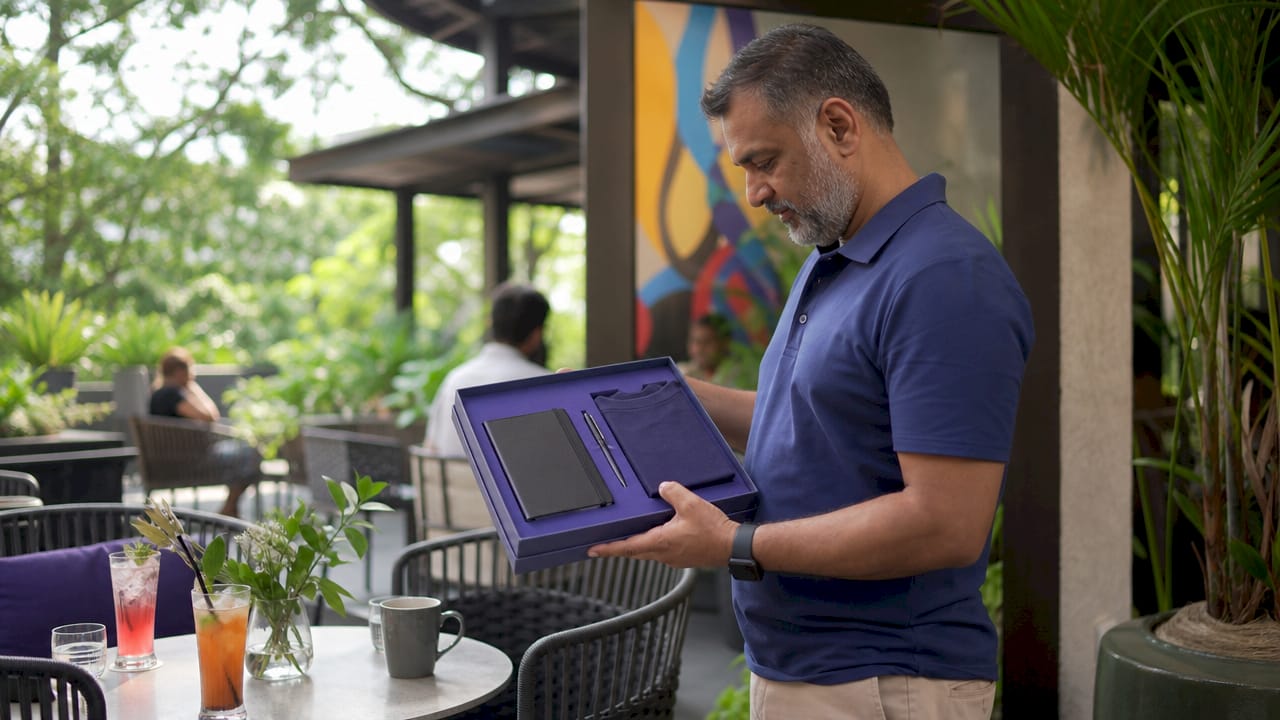
Bundles also reduce friction. A buyer who needs a branded pen, a notebook, and a tote bag for a trade show does not want to add three separate items to a cart. A curated kit solves that problem in one click. That convenience has real commercial value, and smart marketers price it accordingly.
What are the common types of promotional bundles?
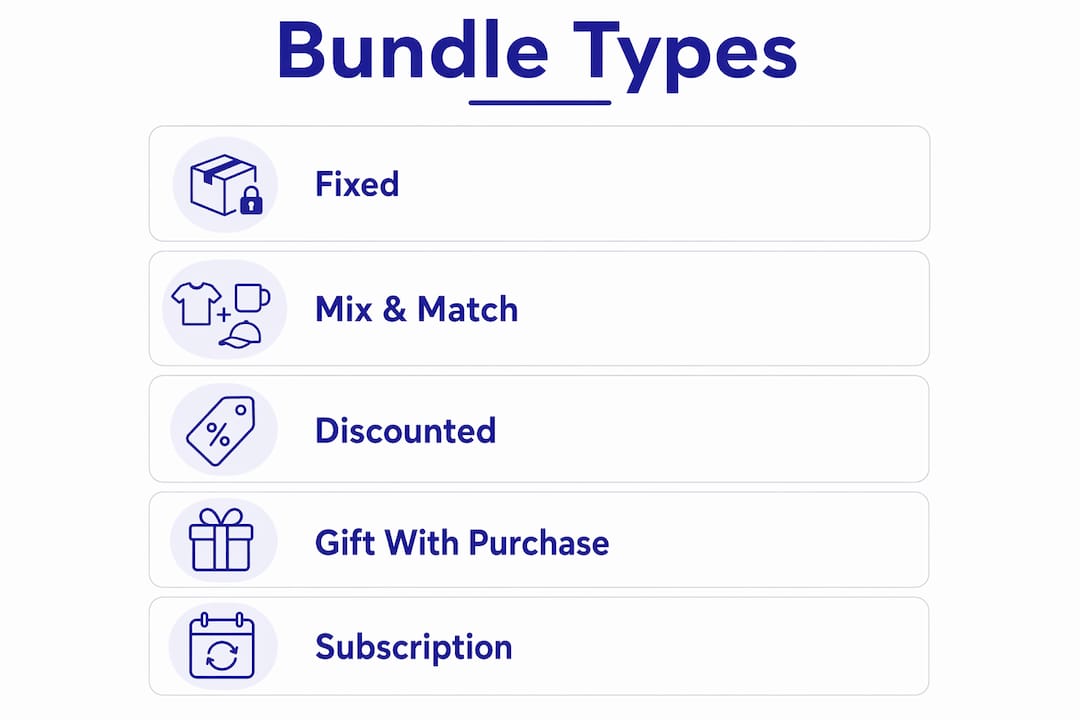
Bundle formats vary widely, and choosing the right structure depends on your audience, your product catalog, and your campaign goal. The four most widely used formats are:
- Fixed or curated bundles. A set group of products sold together with no substitutions. A branded onboarding kit with a mug, a notebook, and a USB drive is a classic example. The seller controls the contents and the margin.
- Mix-and-match bundles. Customers choose a set number of items from a defined collection. A “pick any 3 from this shelf” promotion is the retail version. In branded merchandise, this might mean choosing three apparel items from a catalog of ten.
- Build-Your-Own-Bundle (BYOB). The customer assembles the bundle from scratch within defined parameters. This format works well for corporate buyers who need specific product combinations for different departments or events.
- Buy One, Get One (BOGO). A promotional subset where a second item is offered free or at a steep discount when the first is purchased at full price. BOGO is effective for clearing inventory and driving trial of new products.
Popular bundle types include all four formats above, and each one serves a different conversion goal. Fixed bundles are easiest to fulfill. BYOB bundles generate the highest engagement. Mix-and-match sits in between, offering choice without the complexity of full customization. Matching the format to the campaign objective is the first decision any marketer should make before building a bundle offer. For a broader look at promotional product categories, Discountswag covers the full range of items that work well in each format.
How do pricing models and psychology drive bundle conversions?
Two pricing models govern how bundles are structured and sold. Pure bundling means the products are only available as a package. Mixed bundling means customers can buy the items individually or as a set. Mixed bundling provides consumer flexibility and typically yields higher adoption because it removes the all-or-nothing barrier.
The psychology behind bundle conversions runs deeper than a simple price cut. Two cognitive mechanisms do most of the work.
- Anchoring. When a customer sees the combined retail value of individual items next to the bundle price, the higher number becomes the reference point. The bundle price feels like a bargain by comparison, even if the actual discount is modest.
- Loss aversion. Buyers are more motivated by the fear of missing a deal than by the prospect of gaining value. Framing a bundle as a limited offer or a “save $X” proposition activates this instinct and accelerates the decision.
Pro Tip: Show the math explicitly. Display the individual item prices alongside the bundle price so customers can calculate their savings without effort. Removing that calculation step increases conversion.
Perceived savings motivate customers more reliably than absolute price reductions. A bundle priced at $45 with a stated retail value of $62 converts better than a single item discounted from $30 to $22, even though the dollar savings are similar. The bundle creates a richer value story. That story is what promotional bundles for marketing campaigns depend on to justify the offer without eroding brand equity.
What are the operational considerations for running bundle promotions?
Execution is where many bundle campaigns fall apart. The marketing strategy can be sound, but poor inventory management or fulfillment planning will undermine the customer experience.
The first decision is whether to use virtual bundles or standalone bundle SKUs. A virtual bundle groups existing product SKUs under a single listing without creating a new inventory unit. A standalone bundle SKU treats the bundle as its own product with its own stock count. Standalone SKUs enable easier warehouse picking and order processing efficiency, which matters at scale. Virtual bundles are faster to set up but can create fulfillment errors when component stock levels diverge.
- Audit your inventory before launching. Identify which products have excess stock and which are high-velocity sellers. The best bundles pair one of each.
- Decide on SKU structure early. Virtual bundles work for low-volume campaigns. Standalone SKUs are worth the setup cost for any bundle you plan to run repeatedly.
- Set stock alerts for each component. A bundle that sells out because one item ran dry creates a worse customer experience than no bundle at all.
- Track bundle performance separately. Bundle sales data should be segmented from individual product data so you can measure true incremental lift.
Pro Tip: Bundling slow-moving inventory with a high-demand evergreen product clears stock without requiring clearance pricing. The popular item carries the perceived value of the whole package.
This approach maintains brand perception while solving a real operational problem. A branded tote bag that has sat in a warehouse for six months moves quickly when paired with a bestselling branded water bottle at a modest combined discount.
What are the best practices for building bundles that actually convert?
The most common mistake in bundle design is treating the discount as the main selling point. Aggressive discounting on bundles degrades the perceived value of premium products. Customers who buy a bundle primarily because it is cheap will not become loyal buyers of the individual items at full price.
The stronger approach focuses on convenience and complementary value. A bundle of a branded notebook, a quality pen, and a portable charger tells a coherent story about productivity. That story justifies the price. The discount is a secondary benefit, not the headline.
- Lead with the use case, not the savings. Name the bundle after what it does: “Conference Starter Kit” or “New Employee Welcome Pack” rather than “Save 20% Bundle.”
- Collect bundle-specific reviews. Customers treat bundles as distinct products, and the absence of bundle reviews lowers trust and reduces conversion. Prompt buyers to review the bundle as a whole, not just individual items.
- Limit the number of items. Three to five products is the sweet spot for most promotional bundles. More than five items increases decision fatigue rather than reducing it.
- Refresh bundles seasonally. A bundle built for a Q4 holiday campaign should be retired or rebuilt for Q1. Stale bundles signal a lack of attention to the customer.
- Monitor and adjust. Sales data and customer feedback will tell you which items in a bundle are driving the purchase and which are dead weight. Swap out underperformers rather than discounting the whole package further.
The data-driven case for promotional products shows that branded items with genuine utility generate lasting brand recall. Bundles built around useful, well-made products outperform those built around price alone.
Key Takeaways
A promotional bundle converts best when it leads with a clear use case, pairs complementary products, and presents savings transparently without relying on deep discounts to carry the offer.
| Point | Details |
|---|---|
| Definition and core goal | A promotional bundle groups two or more products into one package, priced below the sum of individual items, to raise order value. |
| Bundle types matter | Fixed, mix-and-match, BYOB, and BOGO formats each serve different campaign goals. Match the format to the objective. |
| Psychology drives conversion | Anchoring and loss aversion make bundles more persuasive than flat discounts. Show the math so buyers can see the savings instantly. |
| Operations need planning | Standalone bundle SKUs improve fulfillment accuracy. Pairing slow-moving stock with evergreen products clears inventory without clearance pricing. |
| Avoid discount-first thinking | Lead with the use case and complementary value. Deep discounts erode brand perception and attract one-time buyers, not loyal customers. |
Why I think most marketers underuse bundles as a retention tool
Most marketing teams treat bundles as a short-term sales tactic. Run a bundle for a campaign, hit the revenue target, move on. That framing leaves a significant amount of long-term value on the table.
Bundling is a long-term retention strategy that helps businesses lock in customers and maximize lifetime value. When a customer buys a bundle, they are not just buying products. They are buying into a curated experience that your brand assembled for them. That experience creates a reference point. The next time they need those types of products, they think of you first.
I have seen this play out repeatedly with corporate clients who build branded welcome kits for new employees or onboarding packages for new clients. The bundle is not just a gift. It is a first impression that sets the tone for the entire relationship. The companies that invest in thoughtful, well-branded bundles report stronger retention numbers than those that hand out individual items or generic gift cards.
The nuance most marketers miss is that the bundle does not need to be discounted heavily to achieve this effect. A well-curated package at a fair price communicates more about your brand than a deeply discounted pile of items. Convenience and curation are the value proposition. Price is secondary. Build your bundles around what your customer actually needs in a specific context, and the retention benefits follow naturally.
— Jerry
Discountswag’s branded bundles for your next campaign
Discountswag specializes in curated corporate promotional kits designed for marketing teams that need quality, consistency, and speed. Whether you are building a trade show kit, a client welcome package, or an employee onboarding set, the product range covers everything from branded apparel to tech accessories.
The promotional items for brand awareness guide walks through the best product combinations for campaigns at every budget level. For teams that want ready-made bundle inspiration, the corporate gift sets collection shows exactly how curated packages can strengthen client and employee relationships without requiring a large per-unit spend. Discountswag handles the sourcing, branding, and fulfillment so your team can focus on the campaign strategy.
FAQ
What is the promotional bundle meaning in marketing?
A promotional bundle is a marketing offer that groups two or more related products into a single package, usually priced below the combined cost of individual items. The goal is to increase order value and simplify the buying decision.
What are the main benefits of promotional bundles?
Promotional bundles raise average order value, reduce customer decision fatigue, and help clear slow-moving inventory without requiring deep clearance discounts. They also create a stronger brand experience than single-item promotions.
How do you create a promotional bundle that converts?
Lead with a clear use case, pair complementary products, and display the individual item prices alongside the bundle price so customers can see their savings instantly. Collect bundle-specific reviews to build trust.
What is the difference between pure and mixed bundling?
Pure bundling means products are only available as a package. Mixed bundling lets customers buy items individually or as a set. Mixed bundling typically yields higher adoption because it removes the all-or-nothing barrier for buyers.
How does bundling help with inventory management?
Pairing slow-moving products with high-demand evergreen items moves excess stock without requiring clearance pricing. Standalone bundle SKUs also simplify warehouse picking and reduce fulfillment errors compared to virtual bundle setups.
 Bottle Carriers
 Mugs
Mugs