

Department-Specific Swag Customization for Marketers


Department-specific swag customization is the practice of creating tailored promotional items that reflect the unique culture, function, and identity of individual departments within an organization. Done right, it builds brand cohesion while giving each team merchandise that actually feels relevant to their work. Generic company-wide swag gets ignored. Departmental branding merchandise gets used, displayed, and talked about. This guide walks marketing professionals through the prerequisites, execution steps, common pitfalls, and measurement methods that make custom swag for departments work at scale.
What does department-specific swag customization require?
Effective department-specific swag customization starts with a centralized ordering system. Centralized swag stores maintain strict brand consistency while empowering departments to order independently without approval delays. That combination solves the two biggest problems in corporate swag programs: brand drift and procurement bottlenecks.
Three foundational elements must be in place before you order a single item:
- A pre-approved product catalog. Every SKU available to departments should be vetted by marketing. Pre-approved catalogs and brand-aligned designs ensure every swag order stays on-brand regardless of who places it.
- Brand and design guidelines. Colors, logo placement, font usage, and messaging tone must be documented and locked into the ordering platform. Departments get flexibility within those guardrails, not outside them.
- An online swag store with inventory management. A centralized swag platform gives marketing full visibility into what each department orders, how much inventory remains, and where fulfillment stands at any moment.
Key stakeholders include marketing, procurement, and department managers. Marketing owns brand standards. Procurement controls budgets and vendor relationships. Department managers communicate what their teams actually need and use.
| Stakeholder | Primary Role |
|---|---|
| Marketing team | Sets brand guidelines and approves product catalog |
| Procurement | Manages vendor contracts and budget controls |
| Department managers | Identifies team needs and submits requests |
| IT or platform admin | Configures and maintains the swag store system |

Pro Tip: Build your product catalog before you open the swag store to departments. Launching with an incomplete catalog forces ad-hoc requests that undermine the whole system.
How to plan and execute custom swag for departments step by step
A structured workflow prevents the chaos that derails most departmental swag programs. Follow these steps in order.
-
Audit each department’s identity and needs. Interview department managers or run a short survey. Ask what items their teams use daily, what events they attend, and what message they want to send internally and externally. A sales team that travels needs different swag than an engineering team that works at a desk.
-
Map products to department profiles. Sales teams benefit from polished branded apparel, premium notebooks, and tech accessories that project confidence in client meetings. Engineering teams respond better to functional items like quality headphones, cable organizers, and branded drinkware. Customer success teams often value personalized gifts that mirror the care they extend to clients. Match the item to the role, not just the logo.
-
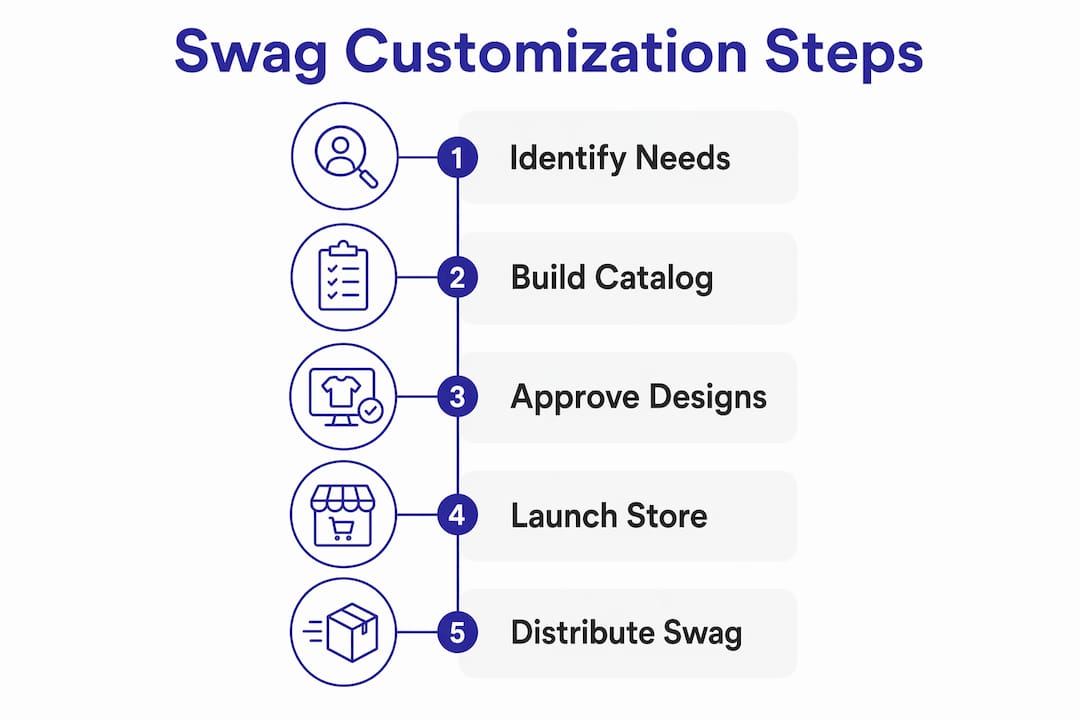
Configure the swag store with department-specific sections. Swag stores can be configured to support multiple departments with distinct approved merchandise that reflects each team’s identity. Set up separate storefronts or filtered catalogs so each department only sees the products approved for them. This removes decision fatigue and prevents off-brand orders.
-
Set approval workflows and budget limits. Decide whether department managers approve orders before fulfillment or whether employees order directly within a preset budget. Direct ordering of approved products reduces ad-hoc requests and approval complexity while supporting onboarding, events, and ongoing departmental needs.
-
Manage logistics and inventory centrally. Assign one person or team to monitor stock levels, reorder thresholds, and fulfillment timelines. Departments should never run out of swag before a major event because no one tracked inventory.
-
Collect feedback after the first distribution cycle. Ask department members whether they use the items, what they would change, and what they wish they had. This input directly improves the next catalog refresh.
The product categories that work best for tailored promotional items break down by department type. Apparel works across most teams but should vary in style. Tech gear resonates with engineering, IT, and product teams. Branded office supplies like notebooks, pens, and desk accessories work well for administrative and finance teams. Unique department giveaways such as specialty kits or experience-based gifts work for high-performing teams as recognition items.
What common challenges arise with departmental swag programs?
Brand inconsistency is the most frequent failure point. When departments order swag independently without a centralized system, logo versions multiply, colors drift, and messaging goes off-script. Using a centralized system prevents brand dilution and overspending caused by disorganized departmental requests.
Three other challenges show up repeatedly:
- Over-customization. Giving departments unlimited design freedom sounds generous, but it creates cost overruns and inventory waste. Items with hyper-specific messaging or designs become obsolete when teams reorganize or campaigns end.
- Multi-department request management. Without a single platform, marketing fields requests from a dozen departments through email, Slack, and spreadsheets. That process breaks down fast. A promotional merchandise brand consistency framework built into the ordering system removes that friction entirely.
- Unequal budget allocation. Departments with louder managers tend to get more swag. Set per-department budgets in the system rather than managing allocations manually.
The most effective department swag programs give teams real choices within a defined set of approved options. The key word is “defined.” Unlimited choice creates chaos. Zero choice creates resentment. The right answer is a curated catalog that feels generous but stays on-brand.
Pro Tip: Limit each department to 8–12 approved SKUs. Enough variety to feel personalized, few enough to manage inventory without waste.
How do you measure the ROI of a department swag program?
Measuring the return on a swag program requires tracking more than spend. ROI measurement involves tracking swag distribution, employee engagement feedback, and analyzing alignment with brand awareness goals. Continuous optimization of swag programs improves effectiveness over time. That means building feedback loops into the program from day one, not as an afterthought.
The metrics that matter most fall into three categories: distribution, engagement, and brand alignment.
| Metric | What to Track | Why It Matters |
|---|---|---|
| Distribution rate | Items ordered vs. items actually distributed | Identifies overstock and demand gaps |
| Usage feedback | Survey responses on item utility and frequency of use | Shows whether swag is functional or forgotten |
| Brand recall | Employee and recipient awareness of brand elements | Measures whether swag reinforces brand identity |
| Reorder rate | How often departments request restocks | High reorder rate signals strong item relevance |
| Cost per engagement | Total program spend divided by active users | Benchmarks efficiency across departments |
Collect feedback through short pulse surveys sent 30 days after each distribution. Ask three questions: Did you use the item? Would you recommend it to a colleague? What would you change? Keep it short or response rates drop. Use the data to retire underperforming SKUs and expand popular ones in the next catalog cycle.
A branded swag campaign strategy that includes measurement from the start produces better results than one built purely on intuition. The data tells you which departments are engaged, which items drive brand visibility, and where budget is being wasted.
Key Takeaways
Department-specific swag customization works when centralized brand control and department-level flexibility operate together within a single managed system.
| Point | Details |
|---|---|
| Centralize before you customize | Build a pre-approved catalog and swag store before opening ordering to departments. |
| Match products to department roles | Sales teams need client-facing items; engineering teams need functional gear. |
| Limit SKUs per department | Capping options at 8–12 items reduces waste and keeps inventory manageable. |
| Measure distribution and usage | Track reorder rates and survey feedback to retire weak SKUs and expand strong ones. |
| Prevent brand drift with guardrails | Approval workflows and locked design templates stop off-brand orders before they happen. |
Why centralization is the real secret to great department swag
Most marketing teams I have worked with approach department swag the same way: they collect requests, place a bulk order, and hope everyone is happy. That approach produces mediocre results and a storage room full of items nobody wants.
The programs that actually work treat the swag store as infrastructure, not a one-time project. When departments order independently from a pre-approved catalog, two things happen simultaneously. Brand consistency holds because every available option has already been vetted. And department managers stop waiting on marketing to fulfill every request, which means swag actually arrives when teams need it.
The counterintuitive lesson is that more control at the system level produces more satisfaction at the department level. Teams feel empowered because they have real choices. Marketing feels confident because those choices are all on-brand. That is the balance worth building toward.
The mistake I see most often is launching a swag program with too many options and no governance. The catalog becomes unmanageable, costs spike, and the program gets shut down before it proves its value. Start small, measure everything, and expand based on what the data shows.
— Jerry
Discountswag has the products to make it work
Building a department swag program requires the right product mix from a distributor who understands brand consistency at scale. Discountswag carries a wide range of customizable promotional items built for marketing teams that need to serve multiple departments without losing brand control.
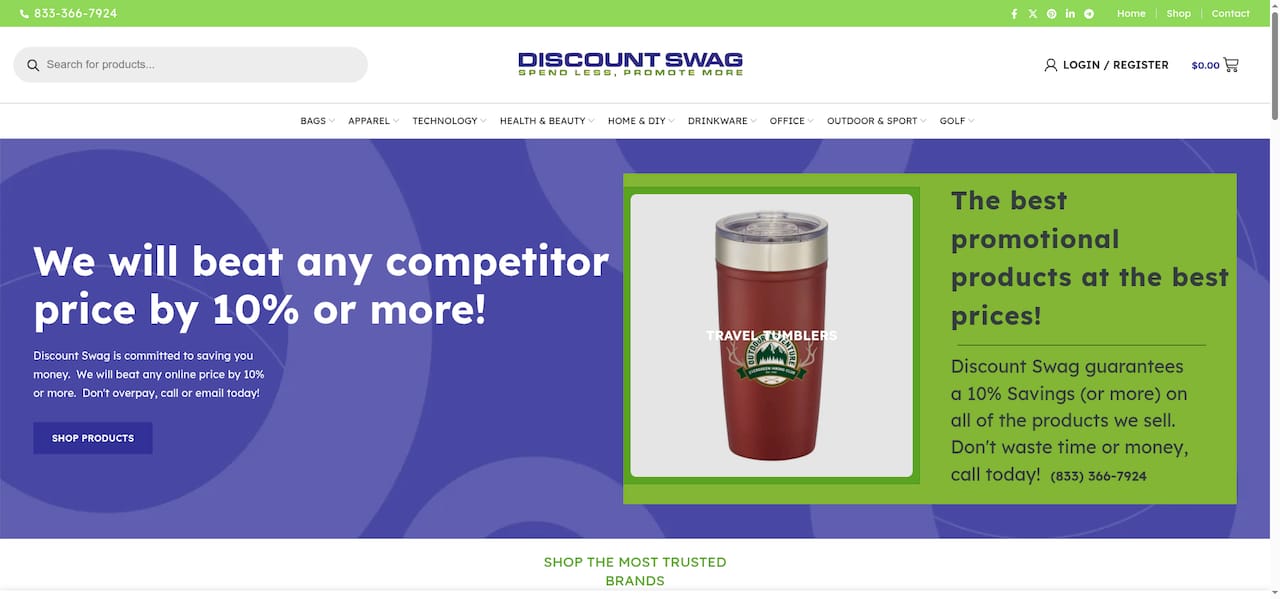
From branded office supplies and tech accessories to premium apparel and personalized team gifts, Discountswag gives you the product depth to build department-specific catalogs that feel tailored without requiring a custom order for every SKU. Explore the full range of branded promotional products available for marketers and find the items that fit each department’s identity and function.
FAQ
What is department-specific swag customization?
Department-specific swag customization is the process of selecting and configuring promotional items to reflect the unique culture and function of individual departments within an organization. It differs from generic company swag by matching products to departmental roles and identities.
How do you maintain brand consistency across departments?
A centralized swag store with pre-approved product catalogs and locked design templates ensures every department order stays on-brand. Approval workflows and defined SKU lists prevent off-brand customization before it reaches production.
What products work best for department-specific swag?
Apparel works across most departments, while tech gear suits engineering and IT teams, and branded office supplies fit administrative and finance teams. The best product is the one a department member will actually use in their daily work.
How many SKUs should each department have access to?
Limiting each department to 8–12 approved SKUs balances variety with inventory control. Too many options create waste and management complexity; too few reduce the sense of personalization that makes departmental swag effective.
How do you measure whether a department swag program is working?
Track distribution rates, usage feedback from pulse surveys, and reorder frequency to evaluate program performance. High reorder rates and positive usage feedback indicate strong item relevance and departmental engagement.
 Bottle Carriers
 Mugs
Mugs