

Bulk Branded Backpacks That Work Harder

A backpack is not the kind of giveaway that gets tossed in a conference tote and forgotten. It goes to work, airports, campus visits, client meetings, and the gym. That makes bulk branded backpacks a high-value choice for organizations that want more daily impressions from one practical item. The right bag carries your logo well, serves a real purpose, and gives recipients a reason to keep it in circulation.
For marketing teams, HR leaders, event planners, and procurement buyers, the goal is not simply finding a low unit price. It is finding a backpack that fits the audience, holds up through regular use, and arrives when the program needs it. A bargain bag that feels flimsy or misses an event date is not a savings. A well-chosen promotional backpack is.
Why Bulk Branded Backpacks Deliver More Value
Backpacks have built-in staying power. Unlike a single-use giveaway, they solve a recurring need: carrying laptops, notebooks, lunch, travel essentials, trade show materials, or kids’ gear. Every trip gives your brand another opportunity to be seen in a natural, useful setting.
They also work across a wide range of campaigns. A sales team can use branded laptop backpacks for a national kickoff. HR can include a commuter-ready bag in new-hire welcome kits. Colleges, nonprofits, healthcare organizations, and community programs can distribute drawstring or school backpacks for outreach. At trade shows, a well-designed backpack gives attendees a convenient place to carry the materials they collect, while keeping your logo visible on the show floor.
The trade-off is budget and logistics. Backpacks cost more than pens or basic drinkware, and they take up more space in storage and freight. But when the item will be used for months or years, the cost per impression can make a stronger case than a large order of low-retention giveaways.
Start With the Job the Backpack Needs to Do
The fastest way to narrow the selection is to define the recipient and use case before choosing colors or decoration. A remote employee receiving an onboarding package has different needs from an attendee picking up a bag at a one-day event.
Laptop and commuter backpacks
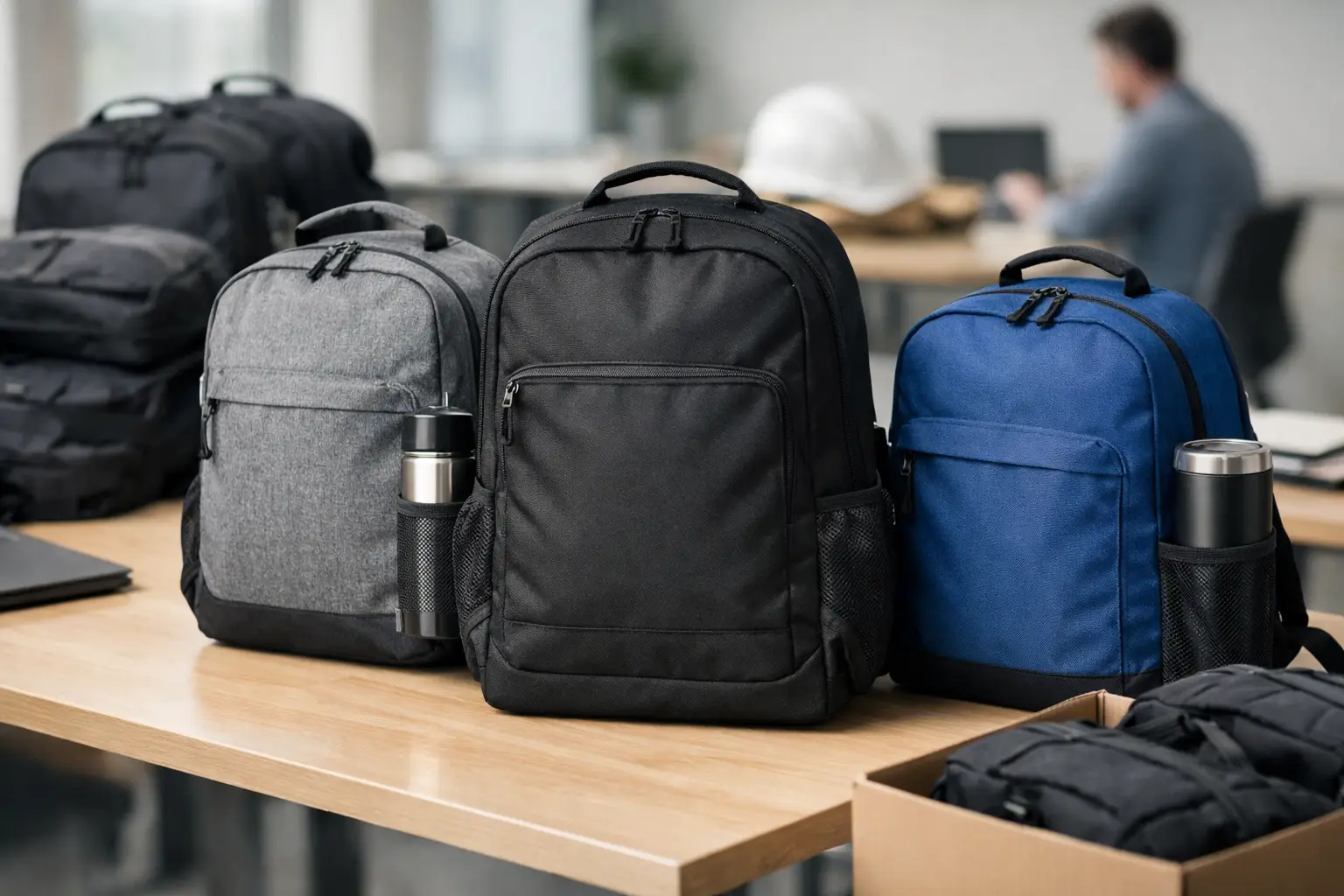
Laptop backpacks are the right fit for employees, executive gifts, client appreciation, and sales incentives. Look for a padded device compartment sized for the laptops your recipients actually use, along with comfortable straps, organized interior pockets, and a durable fabric. Features such as luggage pass-throughs, water bottle pockets, or RFID-protected sections can add perceived value when they match the audience.
These bags are usually a stronger investment for smaller, targeted groups. They carry a higher price point, but they also reflect well on the company sending them. For leadership events or premium onboarding programs, a recognizable retail-style backpack can make the gift feel intentional rather than promotional.
Conference and event backpacks
For trade shows, recruiting fairs, and large meetings, a lightweight backpack or roomy cinch bag often makes more financial sense. Recipients need something easy to carry through the venue and useful after the event. Prioritize a clean imprint area, a practical main compartment, and enough construction quality to avoid a disposable feel.
If the event has a large attendance count, keep the configuration simple. One or two approved bag colors, one logo placement, and a standard decoration method usually protect the budget and shorten production decisions. Adding multiple versions can be worthwhile for sponsorship tiers, but it can also complicate packing and distribution.
School, nonprofit, and community backpacks
School backpack drives and community programs require a different standard: capacity, durability, and price discipline. The bag needs room for supplies, but it must remain affordable at volume. Reinforced straps, dependable zippers, and easy-to-clean material matter more than extra organizer pockets.
Branding should support the purpose. A logo placed cleanly on the front panel can recognize sponsors without overwhelming the recipient. If several partners are involved, confirm the artwork layout early so every organization receives appropriate visibility without turning the bag into a crowded billboard.
Choose Materials and Features With Care
A backpack’s material affects both the perceived quality and the campaign budget. Polyester is a common choice because it is dependable, lightweight, and available across many price points. Heavier denier fabrics generally provide a more substantial feel and better resistance to routine wear. Recycled materials can support sustainability goals, especially when the broader program includes a message about responsible sourcing.
Do not pay for features recipients will not use. A padded laptop sleeve is valuable for office teams but unnecessary for a youth fun run. A simple drawstring bag may be ideal for a high-volume promotional event, while it would underserve a remote employee expected to carry a computer and charger daily.
Construction details deserve a close look. Check the strap attachment points, zipper quality, lining, pocket layout, and handle design. Product photos can be helpful, but specifications tell you whether the bag is built for occasional event use or everyday commuting. When appearance matters, request a sample or compare trusted supplier options before placing a large order.
Make the Logo Easy to Notice and Easy to Trust
Your logo should look like it belongs on the bag. The best placement is usually the front pocket or upper front panel, where it is visible without competing with seams, zippers, or a busy pattern. A large imprint is not automatically better. Clean artwork with enough open space often reads more professionally from a distance.
Screen printing is a cost-effective option for simple one- or two-color designs, particularly on high-volume orders. Embroidery can add texture and a premium look on structured backpacks, though it may increase cost and require artwork that is not overly detailed. Full-color transfer or digital decoration can be a better choice when your brand mark includes gradients, fine details, or multiple colors.
Think beyond the primary logo when the campaign calls for it. An employee welcome backpack may include a department name, event date, or short recruiting message. For client gifts and executive programs, restrained branding is usually the stronger move. The bag should feel useful enough to carry anywhere, not like an advertisement the recipient avoids using.
Plan Quantity, Budget, and Delivery Before You Order
The price of bulk branded backpacks depends on more than the quantity. Bag style, decoration method, number of imprint colors, setup requirements, rush production, and freight all affect the final investment. Comparing unit prices without comparing the full order details can create surprises later.
Start with a realistic recipient count, then add a reasonable overage for late registrants, replacement needs, and internal stakeholders. For a closed employee program, a small buffer may be enough. For an open event or community distribution, a larger overage can prevent an awkward shortage. Ordering too many bulky bags, however, creates storage costs and ties up budget.
Timing matters just as much. Allow time for art approval, proofing, production, and shipping. If bags must arrive at several offices, employee homes, or event locations, build the distribution plan into the order from the start. Centralized delivery may be the lowest-cost route for one site. Multi-location shipping is often worth the added coordination when supporting remote teams or regional events.
A dependable promotional products partner should make those choices easier. Discount Swag helps buyers compare bag styles, stay focused on value, and organize delivery for programs with one destination or many. Its price-beat promise is especially useful when you are buying at volume and need to protect a fixed campaign budget.
Match the Backpack to the Moment
The strongest backpack programs feel specific to the audience. A tech company hosting a customer summit might choose a modern laptop backpack with a subtle logo. A university open house may need an affordable drawstring option that can be handed out quickly. A field service team may benefit from a tougher backpack with room for work essentials and hydration.
Color can also do real work. Black, gray, and navy tend to have broad appeal and hide daily wear. Bright colors create better visibility for youth programs, safety campaigns, and high-energy events. If your brand colors are bold, use them where they improve recognition without limiting the backpack’s everyday usefulness.
Before approving the order, ask one practical question: would the recipient choose to use this bag if the logo were not on it? If the answer is yes, you are close to making a smart buy. Choose a bag that earns repeat use, brand it with confidence, and let every commute, event, and trip keep your organization in view.
 Bottle Carriers
 Mugs
Mugs