

6 Questions to Choose a Zip Hoodie or Pullover for Your Team

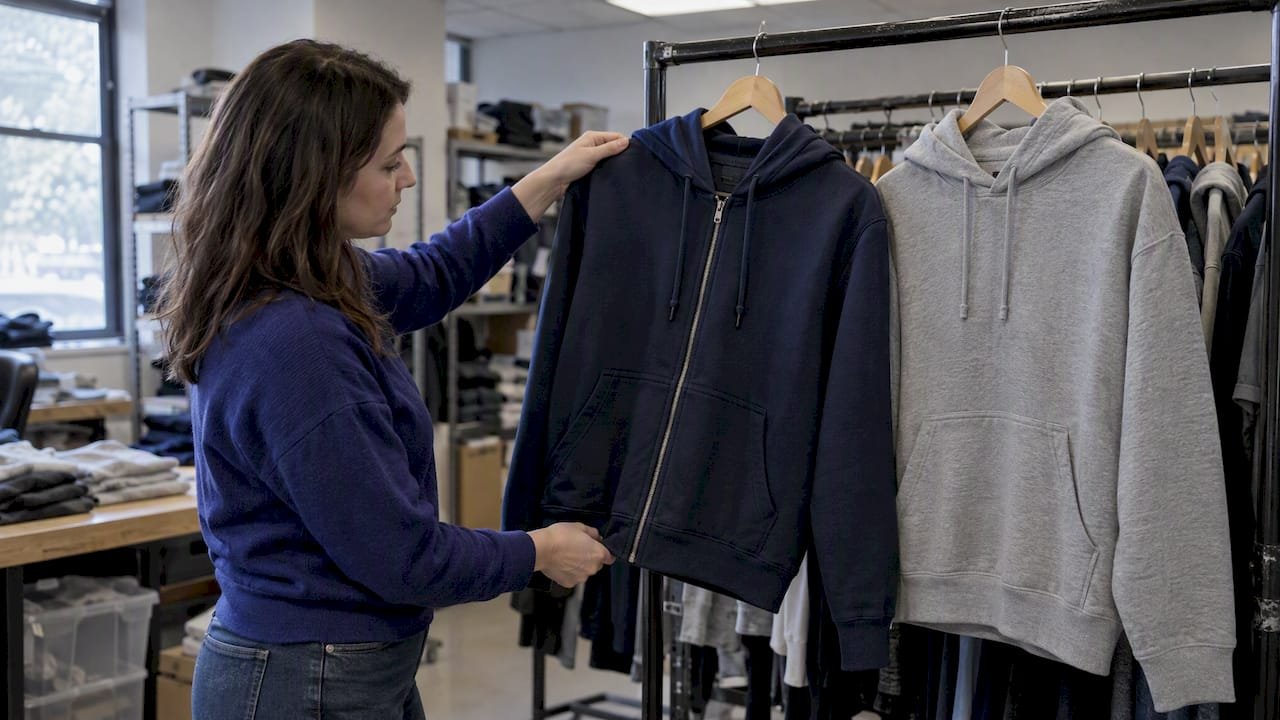
A zip-up hoodie wins for activity and ventilation because you can open it the moment you warm up. A pullover wins for straightforward warmth and simple styling because it has fewer moving parts. Your pick comes down to convenience, layering needs, how warm you want to stay, and the fit you prefer against your body.
TL;DR:
- Zip-up hoodies are better for activities with temperature fluctuations due to their adjustable ventilation features.
- Pullovers tend to be warmer and more streamlined but are slower to put on and remove, especially over the head.
- Heavyweight fleece pullovers outperform lightweight zip-up wind hoodies in warmth, but fabrics like fleece, cotton, and synthetic knits have different breathability and durability traits.
- Zippered styles offer more layering versatility and logo placement options, while pullovers provide a cleaner silhouette and easier layering under outerwear.
- For most versatile use involving movement or variable weather, a zip-up is recommended; for cozy, static wear, a pullover is often the better choice.
Table of Contents
- Quick comparison at a glance: zip-up vs pullover
- Structure, fit, and how each is worn
- Warmth, layering, and performance for active use
- Materials and fabric performance
- Style, occasions, and how to wear each
- Care, durability, and practical maintenance
- How to choose: a practical checklist for buying a zip or pullover
- Brand perspective and relevant products from Discount Swag
- What I’d actually tell a friend shopping for one
- How Discount Swag can help with branded options
- Sources
- FAQ
Quick comparison at a glance: zip-up vs pullover
A zip-up gives you control. You can vent heat mid-run, layer it over a shirt without messing up your hair, and treat it like a light jacket when the weather shifts. A pullover gives you simplicity: pull it on, stay warm, done.
- Zip-up pros: easy on and off, adjustable ventilation, works as an outer layer.
- Zip-up cons: more hardware to maintain, often slightly less warm at the same fabric weight.
- Pullover pros: better heat retention, cleaner silhouette, usually fewer manufacturing points that fail.
- Pullover cons: harder to remove quickly, less adjustable once you’re warm.
Pick a zip-up for workouts, commuting, or unpredictable weather. Pick a pullover for lounging, layering under a coat, or a simple casual look. In everyday American usage, both fall under “hoodie,” though the zip-up specifically refers to the front closure style.
Structure, fit, and how each is worn
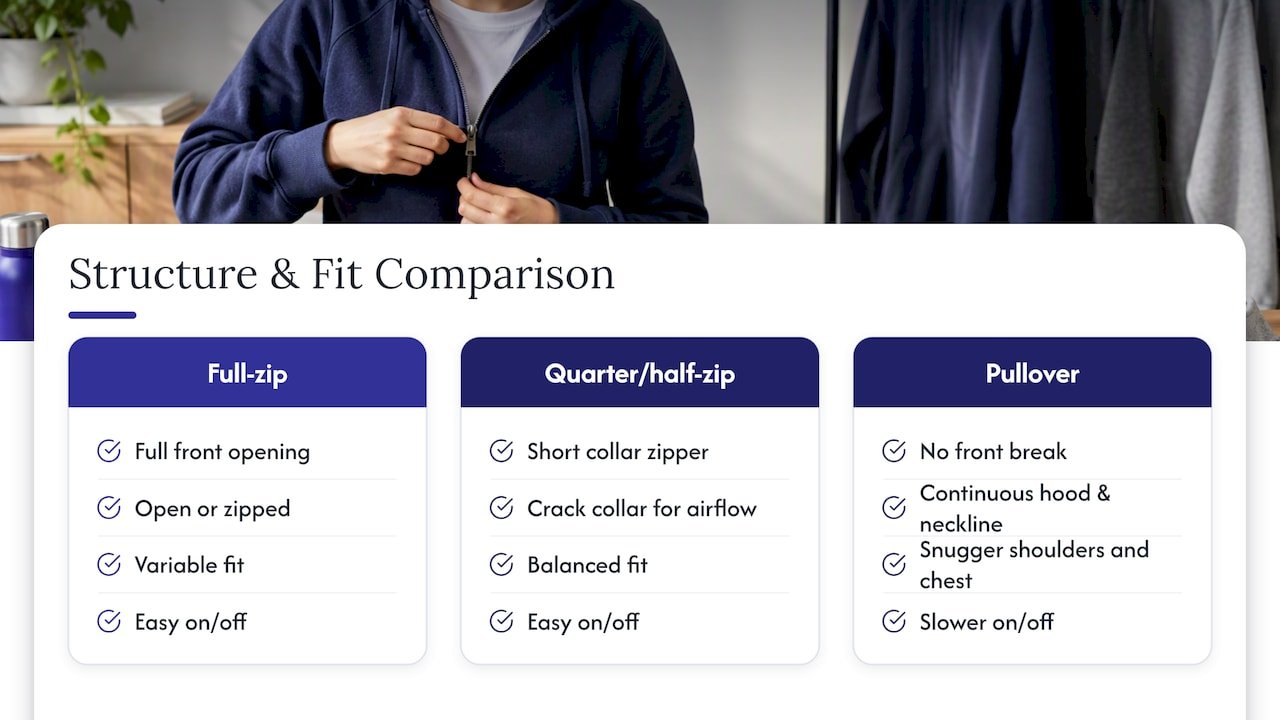
A full-zip hoodie opens the entire front, which changes how it sits on your body. You can wear it loose and open like a jacket, or zipped snug for warmth. Quarter-zip and half-zip versions split the difference: a short zipper at the collar lets you crack the neckline for airflow without a full front opening, which is common in performance base layers and corporate quarter-zips.
A pullover has no front break, so the hood and neckline are cut as one continuous piece, often with a drawstring for adjustment. That construction tends to feel snugger through the shoulders and chest since there’s no zipper track adding bulk. Getting a pullover on and off over your head is slower, especially with glasses or earrings, but the hood typically sits closer to your neck since there’s less fabric competing for space near the collar.
Warmth, layering, and performance for active use
Think of a full-zip hoodie as a thermostat you wear. REI’s layering guidance explains that zip layers help vent excess heat the moment you start working hard, then zip back up when you slow down or the wind picks up. That makes a full-zip the better choice for hiking, running, or any activity with changing exertion levels.
A pullover skips that adjustability but traps warmth more consistently, which suits sitting outside, walking the dog in cold weather, or casual layering where you’re not generating much body heat. REI also notes that fleece breathes well and dries quickly but lets wind through, so pairing a fleece pullover with a wind-blocking shell handles the gap.
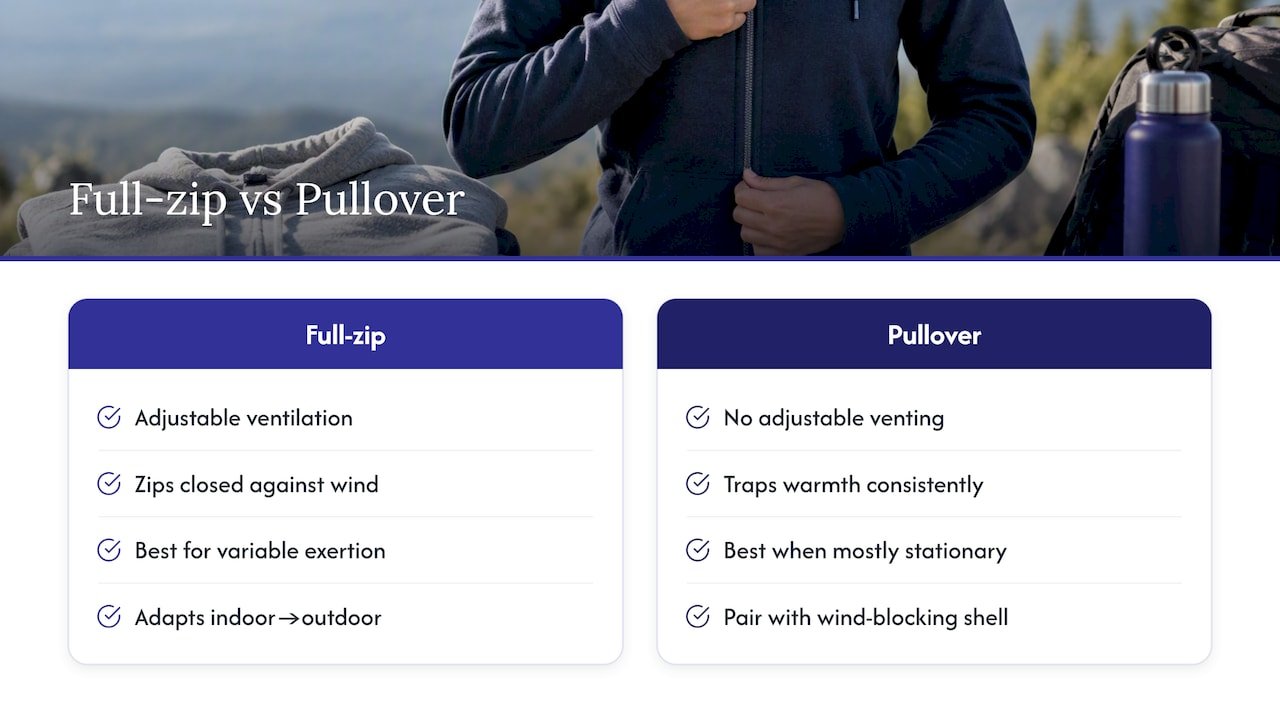
Pro Tip: If you split time between indoor workouts and outdoor commutes, a full-zip hoodie adapts to both. A pullover is the better call if you’re mostly stationary.
Materials and fabric performance
Fabric often matters more than the zipper. REI’s material science coverage points out that a heavyweight fleece pullover can outperform a lightweight zipped wind hoodie for warmth, regardless of closure style.
Common options behave differently:
- Fleece: breathes well, dries fast, but is wind-permeable unless paired with a shell.
- French terry: lighter and softer, common in casual pullovers, less insulating than fleece.
- Cotton blends: comfortable and breathable but slow to dry and prone to pilling with wash cycles.
- Synthetic knits: durable, quick-drying, often used in performance quarter-zips and half-zips.
Heavier fabrics favor pullovers for warmth; lighter, more technical fabrics favor zip-ups for adjustability during movement.
Style, occasions, and how to wear each
A full-zip hoodie can stand in for a light jacket over a tee, which makes it useful for errands, casual meetings, or transitional weather when a real coat feels like overkill. A pullover reads more like a comfort staple: worn alone for lounging, or layered under a heavier coat where the lack of a front zipper keeps things streamlined.
Silhouette matters here too. A zip-up’s front seam can show under a fitted jacket, while a pullover’s smooth front layers cleaner. For branded or team apparel, zip-ups offer more chest space for logo placement near the zipper pull, while pullovers give a wider, uninterrupted print area across the front, a detail worth considering for corporate swag decisions.
Care, durability, and practical maintenance
Wash fleece and cotton blends in cold water and skip high heat drying to cut down on shrinkage and pilling. French terry holds shape better with a gentle cycle and air drying.
Zip-ups need occasional attention to the slider, since a snagged zipper is the most common failure point. Pullovers are more prone to neckline stretching over time from repeated overhead pulling. Repair a loose zipper pull before it fails completely, and replace a stretched-out pullover neckline rather than trying to shrink it back with heat, which rarely works evenly.
How to choose: a practical checklist for buying a zip or pullover
Work through these questions before you buy:
- What’s the primary use? Workouts and errands favor a zip-up; lounging and layering favor a pullover.
- How active will you be in it? Frequent temperature swings mean you want a zipper for quick venting.
- What’s the climate? Cold and static conditions favor a pullover’s consistent warmth; variable conditions favor a zip-up.
- Do you need to layer it under or over other pieces? A pullover layers cleaner under a coat; a zip-up works better as the outer layer itself.
- What fit do you prefer? Zip-ups tend to run slightly looser through the chest; pullovers sit closer to the body.
- How will you care for it? Fleece and cotton blends need gentler washing; synthetic knits hold up to more frequent wear.
A commuter who bikes or walks benefits from a zip-up’s ventilation. An active hiker wants the same for exertion control. Office-casual settings often favor a pullover’s cleaner look, while branded teamwear frequently uses quarter-zips or half-zips for a professional edge with easy logo placement.
Brand perspective and relevant products from Discount Swag
There are options available that map directly onto this comparison, including quarter-zip and half-zip styles built for performance use and cozy fleece pullovers for comfort-focused gifting. Bulk ordering, customization, and rush ordering are available for companies outfitting teams or events on a deadline. The goal is matching the right construction and fabric to how your group will actually wear it, not just picking a logo placement.
What I’d actually tell a friend shopping for one
If you move a lot during the day, get the zip-up. If you mostly want to feel cozy on the couch or under a coat, get the pullover. Try both on if you can. Fit against your own shoulders tells you more than any spec sheet.
— Jerry
How Discount Swag can help with branded options
Choosing between a zip-up and a pullover gets easier when you can order both in bulk and test fabric weight before committing a whole team’s budget to one style. The catalog includes custom quarter zips, half zips, and branded pullovers, with rush ordering available when deadlines are tight.

- Browse fabric and fit options before locking in a bulk order.
- Match decoration method (screen printing or embroidery) to the fabric and zipper placement you choose.
- Use the bulk buying guide to plan quantities and lead times.
Start by comparing options at Discount Swag or review decoration methods to see which suits your chosen style best.
Sources
The zip-up definition from Cambridge Dictionary covers terminology and usage. REI’s layering basics explains ventilation strategy during activity. REI’s material science piece breaks down fabric and insulation trade-offs. For branding context on custom apparel, see this look at custom apparel differentiation.
FAQ
Do people still wear zip-up hoodies?
Yes, zip-up hoodies remain common for workouts, commuting, and casual layering because they let you adjust warmth without removing the whole garment. They’re especially popular where quick ventilation matters, like exercise or variable weather.
What is the difference between a pullover and a hoodie?
“Hoodie” refers to any hooded sweatshirt, while “pullover” describes the closure style, meaning no front zipper. A pullover hoodie is simply a hooded sweatshirt without a zipper, worn on over the head.
What do Americans commonly call zip-up hoodies?
Most Americans just say “zip-up” or “zip-up hoodie,” and the term is defined as a hooded sweatshirt with a front zipper. It’s sometimes worn as a light jacket rather than a true sweatshirt.
What is the point of a zip-up hoodie?
The main advantage is ventilation control: you can open it when you’re active and zip it up when you cool down, without pulling anything over your head. That flexibility makes it useful for exercise, commuting, and layering in changing weather.
 Bottle Carriers
 Mugs