

The Real Role of Local Promotional Campaigns in 2026

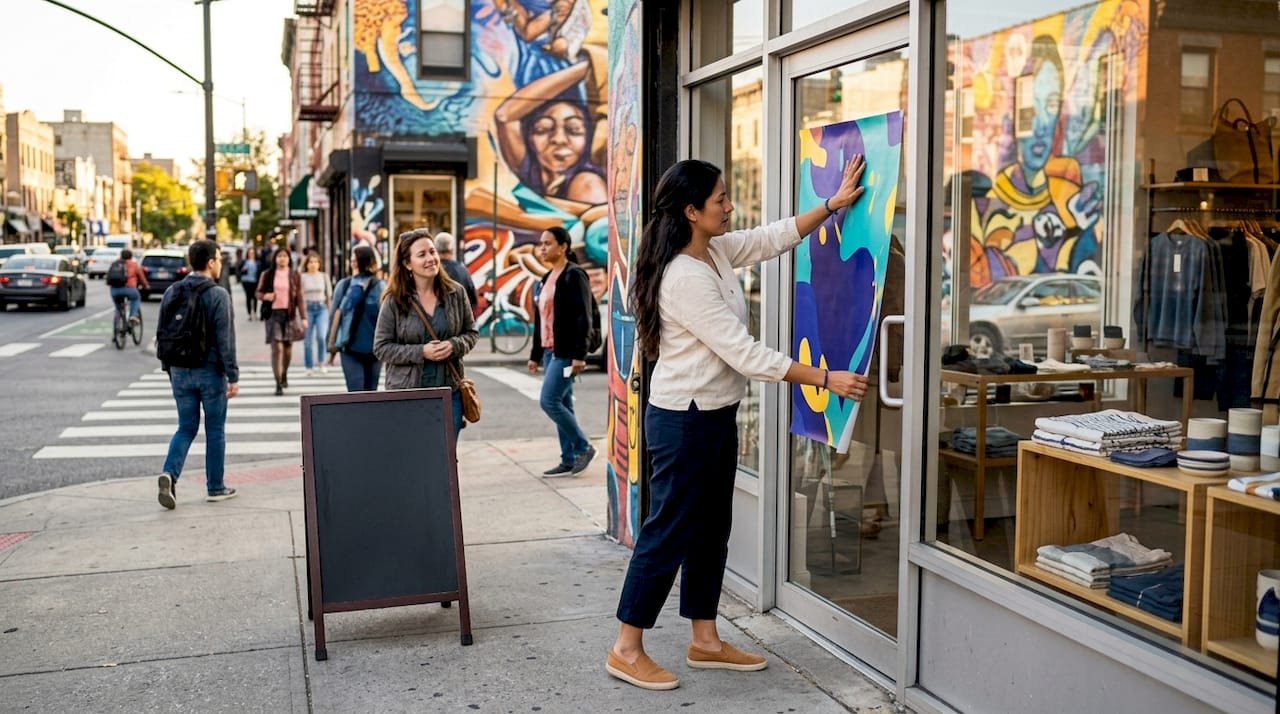
Local promotional campaigns are the single most direct lever a business has for turning nearby attention into actual purchases. Local ads drive purchase intent among significantly more viewers than national ads: 53% of viewers exposed to local ads are likely to make a purchase versus just 13% for national ads. It reflects something fundamental: people buy from businesses they feel connected to, and local campaigns create that connection faster than any national message can.
The core role of local promotional campaigns is to close the distance between a brand and its community, converting awareness into foot traffic, foot traffic into sales, and sales into lasting loyalty. For marketing professionals and SMB owners, that means local outreach is not a supplementary tactic. It is the primary engine.
Key benefits of local campaigns for business growth:
- Drive measurable foot traffic and in-store purchase behavior
- Build community trust and brand affinity faster than national messaging
- Allow personalization by neighborhood, demographic, and purchase stage
- Enable cost-sharing through multi-merchant coalition programs
- Produce trackable ROI when designed around redemption mechanics
1. How local promotions drive foot traffic and sales
The connection between local advertising and offline sales is well documented and measurable. A meta-analysis of 15 field experiments across 13 U.S. multi-channel retailers found that search advertising on Google produced a positive, incremental lift in brick-and-mortar store sales, not just online conversions. The effect varied by category and retailer, but the directional finding was consistent: online local ads move offline dollars.
What makes local promotions particularly effective is their ability to remove friction rather than simply appeal to goodwill. Shoppers rarely skip a local store because they dislike it. They skip it because a national option is faster or easier to find. Effective local campaigns address concrete barriers like parking, delivery, and product discovery, converting preference into an actual visit.
Tactics that consistently convert local shoppers:
- Geo-targeted digital ads tied to a specific store location or radius
- Coordinated multi-merchant promotions that raise perceived reward value
- Same-day delivery partnerships that close the convenience gap with national platforms
- Event-based promotions (Friday night sales, live music) that turn shopping into an experience
- Cross-promotions with neighboring businesses, such as a restaurant partnering with a nearby theater
Pro Tip: Design every local promotion backward from a specific, trackable action. A scannable code, a stamped loyalty card, or a gift card redemption gives you proof of lift. Without that proof, you cannot defend the budget at renewal.
Coalition campaigns deserve special attention. A coordinated multi-merchant program consistently outperforms single-shop efforts because it raises the perceived reward for the shopper while splitting the marketing cost across participants. A shopper collecting stamps across six local businesses discovers five stores they did not know existed. That cross-introduction is something a solo campaign cannot replicate.
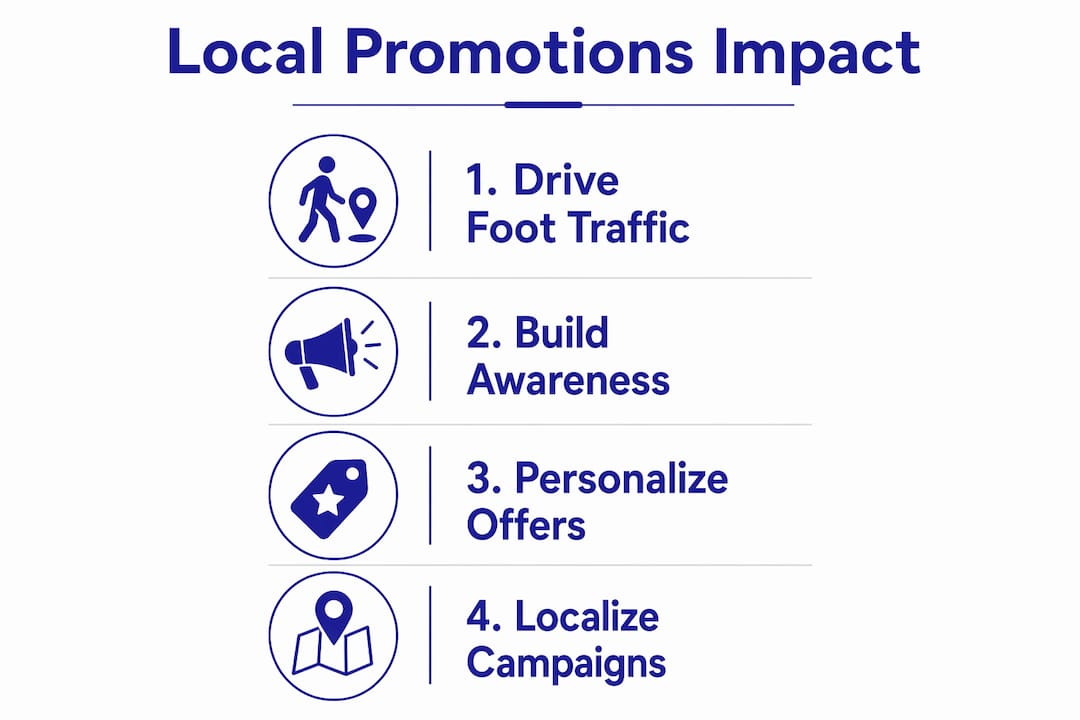
2. Building brand awareness and strengthening local presence
Local advertising does something national campaigns structurally cannot: it makes a brand feel like part of the neighborhood. Consumers are six times more likely to perceive a brand with localized messaging as part of their community, and they trust that brand four times more than one running only national ads. Localized advertising is preferred by 71% of Americans overall, with preference rising to 81% among Gen Z and younger Millennials. Those are not soft sentiment metrics. Trust directly predicts repeat purchase and word-of-mouth referral.
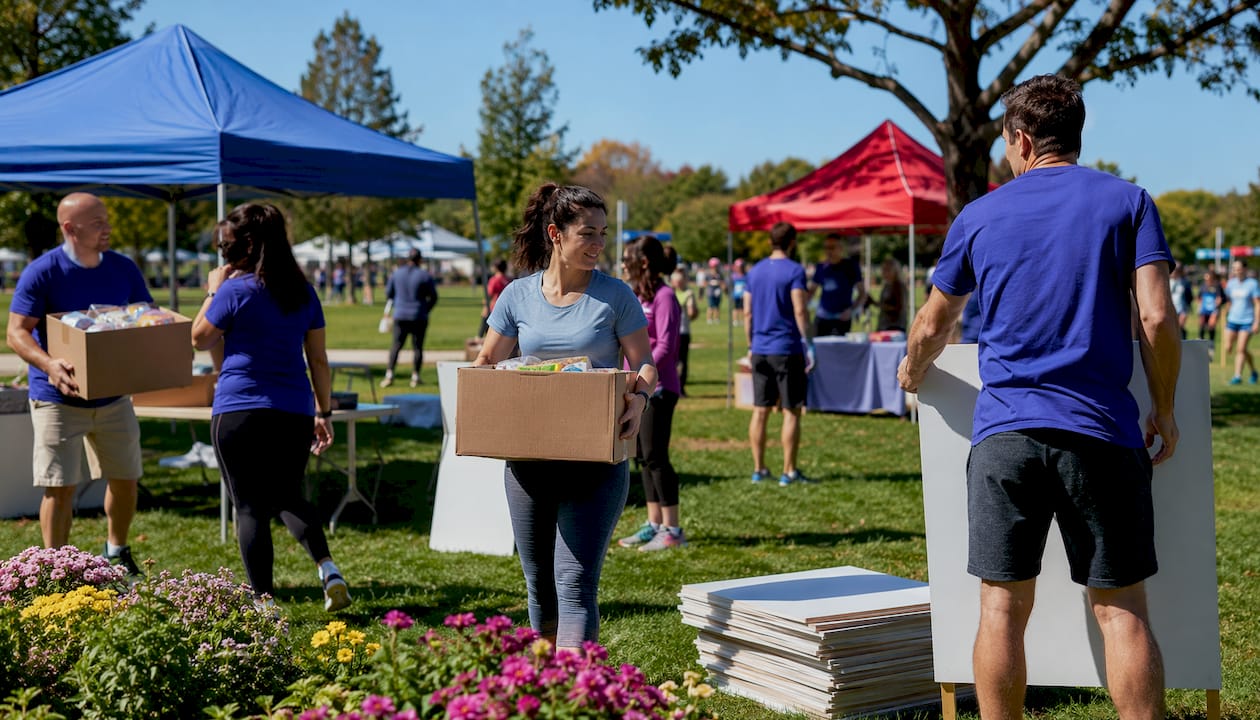
Local advertising transcends national branding by building community curiosity alongside trust, which is the foundation for long-term customer relationships. A national ad tells people what a brand sells. A local ad tells them why it belongs in their community.
Branding benefits specific to local campaigns:
- Faster trust-building through community-relevant messaging
- Higher brand curiosity, particularly among cross-platform video viewers
- Stronger recall because the message references familiar places and events
- Organic word-of-mouth amplification from local social networks
- Sponsorship visibility at community events that national brands rarely attend
The U.S. Small Business Administration recommends sponsoring local charitable events as one of the most cost-effective ways to raise brand awareness, with the caveat that the cause must align with the business’s customer base. A toy store sponsoring a kids’ sports team earns relevance. The same store sponsoring a nightclub event does not.
Social media amplifies local presence at low cost when used correctly. Facebook’s location-based promotion tools let businesses target users within a defined radius, and the SBA suggests starting with a modest test budget to validate the approach before scaling. Existing local customers who follow a brand’s social channels extend its reach to their own networks organically.
3. How personalization makes local campaigns work harder
Generic promotions waste budget. Treating every customer identically means spending incentive dollars on people who were never going to act, while under-rewarding the customers most likely to convert. Segmentation fixes that by matching the right offer to the right person based on behavior, lifecycle stage, and value.

The financial case for personalization is clear. Redirecting 25% of mass promotion budgets to personalized offers increases ROI by 200%, representing a growth opportunity BCG estimates at over $70 billion annually for first-mover retailers. Starbucks is the most cited example: after replacing mass promotions like Happy Hour with gamified, personalized offers tied to its Rewards program, it sustained 8% year-on-year growth in member spending.
| Customer segment | Optimal offer type | Key trigger |
|---|---|---|
| First-time buyer | Welcome discount or bundle | First purchase completion |
| Repeat customer | Loyalty reward or exclusive access | Purchase milestone |
| Lapsed customer | Win-back incentive | 60 days of inactivity |
| High-value advocate | Referral bonus or VIP perk | Referral activity detected |
| Local demographic | Location-specific bundle | Proximity or local event |
Medium-to-high customization of promotional offers yields the greatest incremental profits, according to basket-level econometric research on a national U.S. grocery retailer. The study found that medium customization produced the highest incremental expected profit per customer, while high customization generated the highest absolute expected profit overall. The implication for local marketers: you do not need to personalize everything, but you need to personalize more than you currently do.
Pro Tip: Use controlled incentives rather than blanket discounts. A targeted offer tied to a specific behavior (a second visit, a referral, a category trial) protects your margin while driving the exact action you want. Indiscriminate discounts train customers to wait for sales rather than pay full price.
Contextual timing matters as much as offer type. The most effective promotions arrive right after a purchase, when a customer hits a milestone, or when engagement patterns signal they are ready to act. Real-time triggers capture those windows before they close. For local businesses without enterprise software, even a simple CRM tag for “hasn’t visited in 60 days” can trigger a targeted win-back offer via email or SMS.
Discountswag’s promotional bundle guide covers how localized bundles can be structured to drive incremental purchases without sacrificing margin, which is exactly the kind of controlled incentive approach that outperforms generic discounting.
4. Localizing national promotions: what actually works
National brands face a specific challenge when they try to run local campaigns: their messaging is built for scale, not specificity. A national ad that says “great for families everywhere” lands differently than one that references a local school, a regional event, or a neighborhood by name. 74% of viewers say localized ads improve their personal connection to the brand, and 71% of Americans prefer advertising content to be localized, with that preference rising to 81% among Gen Z and younger Millennials.
Common obstacles when localizing national campaigns:
- Messaging that feels generic or irrelevant to the specific community
- Logistical barriers like local inventory gaps or inconsistent pricing
- Lack of community trust when the brand has no local presence or history
- Difficulty coordinating local execution across multiple markets simultaneously
- No mechanism to track local-level results separately from national performance
The most effective solution to most of these obstacles is community partnership. The U.S. Small Business Administration specifically recommends cross-promotion with complementary local businesses as a way to reach audiences who already know and trust a local partner. A national brand partnering with a well-regarded local retailer borrows that retailer’s community credibility instantly.
Local influencers work on the same principle. A neighborhood food blogger or a local fitness instructor carries trust that a national brand’s paid media cannot buy. Their audience already believes them, and a genuine endorsement of a locally relevant offer converts at a rate that national influencer campaigns rarely match.
Measurement is where most localization efforts fall apart. Campaigns that tie a promotion to a trackable redemption can prove incremental lift at the market level. Campaigns that rely on aggregate foot traffic or brand sentiment surveys cannot, and they tend to lose funding at the next budget cycle. Digital stamp cards, location-specific promo codes, and merchant-level gift card reporting all give you the per-market data you need to show what worked and where.
For brands looking to add a physical, tangible layer to local outreach, branded promotional items distributed at community events or through local retail partners create lasting impressions that digital ads cannot replicate. A branded item handed out at a neighborhood event stays in a home for months, generating repeated brand exposure long after the campaign ends.
Key Takeaways
Local promotional campaigns outperform national advertising on purchase intent, trust, and community connection, and they deliver measurable ROI when built around trackable redemption mechanics and audience segmentation.
| Point | Details |
|---|---|
| Local ads drive purchase intent | Local ads drive purchase intent among 53% of viewers, compared to 13% for national ads. |
| Personalization multiplies ROI | Redirecting 25% of mass promotion budgets to personalized offers increases ROI by 200%. |
| Coalition campaigns outperform solo efforts | Multi-merchant programs raise perceived reward value and split marketing costs across participants. |
| Localized messaging builds trust | Localized messaging makes consumers six times more likely to perceive a brand as part of their community and increases trust fourfold compared to national ads. |
| Trackable redemption proves lift | Campaigns built around codes, stamps, or gift cards can demonstrate incremental results and secure future funding. |
 Bottle Carriers
 Mugs
Mugs