

Avoid Liner Failure: 3 Buyer Scenarios for Stainless vs Aluminum Bottles

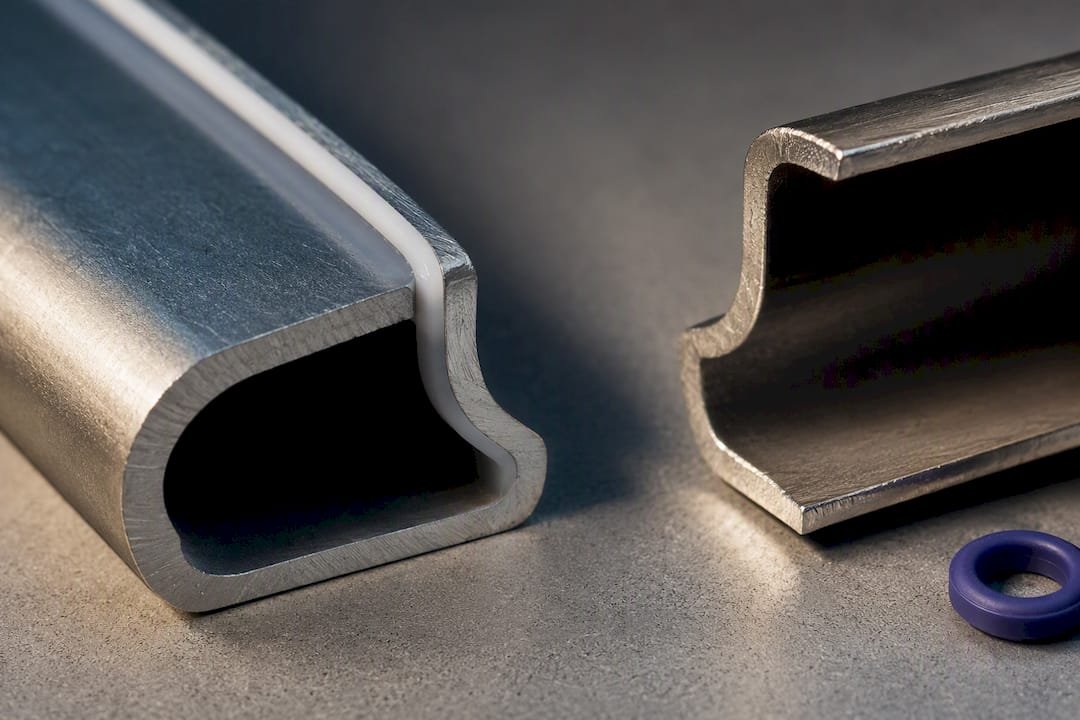
Stainless steel is the safer, longer-lasting pick for most people, especially for hot drinks and daily reuse; aluminum wins only when weight or upfront cost matters more than durability, and only if its liner stays intact. If you’re buying one bottle to use for years, get stainless. If you’re handing out hundreds of low-cost giveaways, aluminum still has a place.
TL;DR:
- Stainless steel bottles do not require a liner, reducing the risk of metal leaching and making them safer for hot or acidic beverages than aluminum bottles.
- Aluminum bottles depend on a fragile interior liner that can crack or degrade over time, especially after dents, heat, or abrasion, risking metal exposure.
- Insulated stainless bottles preserve temperature much longer than single-wall aluminum bottles, which quickly match room temperature within an hour or two.
- Aluminum bottles are typically lighter and cheaper initially, but their shorter lifespan can lead to higher long-term costs and environmental impact.
- For long-term use and safety, stainless steel bottles are generally the better choice, especially for frequent or prolonged exposure to hot and acidic drinks.
Table of Contents
- Stainless vs Aluminum Bottles: What the Safety Data Actually Shows
- How Aluminum Liners Work, and What Can Go Wrong
- Durability: Dents, Corrosion, and Real-World Lifespan
- Which Keeps Drinks Hot or Cold Longer?
- Weight and Portability: Where Aluminum Pulls Ahead
- Cost and Lifecycle: What “Cheaper” Actually Costs You
- Cleaning and Care: Keeping Either Material Safe Longer
- How to Choose: A Practical Checklist
- Real Bottle Examples: Aluminum vs Stainless Side by Side
- A Balanced Take on Safety and Sustainability
- Order Bulk Bottles Without Guessing on Materials
- Sources
- FAQ
Stainless vs Aluminum Bottles: What the Safety Data Actually Shows
Bare aluminum reacts with liquids, so every aluminum bottle needs an interior liner. That liner is the single point of failure that doesn’t exist in stainless steel. Once a liner scratches, chips, or breaks down from heat, the metal underneath can migrate into whatever you’re drinking, and research on aluminum food-contact materials has found aluminum concentrations in acidic simulants that can be high under extreme conditions like prolonged acidic contact.
Food-grade stainless steel (304, also labeled 18/8, and the more corrosion-resistant 316) doesn’t need a liner at all. Its chromium content forms a passive oxide layer that resists most beverages. That said, stainless isn’t immune to leaching. Cookware studies have found that stainless steel can release nickel and chromium into acidic foods, with amounts varying by cookware grade, cooking time, and use, though the amount drops after repeated use cycles.
Quick safety rules:
- Never store citrus juice, sports drinks, or wine in a lined aluminum bottle overnight.
- Choose 304 or 316 stainless for hot coffee, tea, or anything acidic.
- Skip unbranded “stainless” bottles with no grade listed on the packaging.
Pro Tip: If a product page won’t tell you the stainless grade or liner type, that’s a bigger red flag than the price tag.
How Aluminum Liners Work, and What Can Go Wrong
Most aluminum bottles use an epoxy, resin, or food-grade polymer liner sprayed onto the interior. Manufacturers love the phrase “BPA-free,” but that label tells you almost nothing about what the liner is actually made of or how it holds up over time.
Liners fail in a few predictable ways:
- Dent-induced cracking: A hard drop or dent can flex the aluminum shell enough to crack the liner without any visible damage from outside.
- Heat exposure: Dishwashers, hot cars, and hot liquids can soften or degrade some liner materials faster than the manufacturer’s spec sheet suggests.
- Abrasion: Ice cubes, brushes, or gritty cleaning powders wear down the coating over years of use.
Watch for flaking bits inside the bottle, a metallic taste that wasn’t there before, or a liner that looks dull and scuffed instead of glossy. When in doubt, retire the bottle.
Durability: Dents, Corrosion, and Real-World Lifespan
Stainless steel is significantly harder than aluminum, which means it resists dents better in the first place. But the bigger issue isn’t hardness. It’s what a dent does once it happens.
A dent in stainless is almost always cosmetic. The metal’s protective oxide layer stays intact, so the bottle keeps working exactly as it did before.
A dent in aluminum is a different story:
- It can crack or stretch the interior liner even when the outside damage looks minor.
- Corrosion resistance in stainless comes from passivation, a self-healing oxide skin; aluminum’s resistance depends entirely on a liner that doesn’t self-heal.
- Warning signs it’s time to replace an aluminum bottle: flaking liner material, a persistent metallic or plastic taste, or any visible crack near a dent.
Practical guides comparing the two materials consistently point out that stainless steel bottles avoid the liner-failure mode seen in aluminum bottles, which is a big part of why they tend to outlast aluminum bottles in daily use.
Which Keeps Drinks Hot or Cold Longer?
Vacuum-insulated stainless steel is in a different league than single-wall aluminum for temperature retention. The double-wall design creates a vacuum gap that blocks heat transfer almost entirely, and consumer testing has found stainless vacuum designs retain temperature much longer than single-wall bottles while single-wall containers lose heat or cold within an hour or two.
Most aluminum bottles are single-wall, so they’ll match room temperature fast.
- Choose insulated stainless for hot coffee, iced drinks on a hike, or all-day office use.
- Choose single-wall aluminum only when you’re drinking within minutes of filling and insulation doesn’t matter.
- Double-wall aluminum exists but is less common and usually costs close to stainless anyway.
Weight and Portability: Where Aluminum Pulls Ahead
Weight is aluminum’s real advantage. Industry comparisons consistently note aluminum bottles run noticeably lighter than a comparable stainless model of the same size, and for certain uses that difference matters more than anything else on this list.
- Ultralight hiking or trail running: aluminum’s lighter feel adds up over miles.
- Kids’ bottles: less weight means less strain on small hands and backpacks.
- Commuting or office desks: weight barely registers, so stainless insulation wins instead.
Check the lid and cap too. A heavy stainless twist-cap can offset some of aluminum’s weight savings once you compare the full assembled bottle.
Cost and Lifecycle: What “Cheaper” Actually Costs You
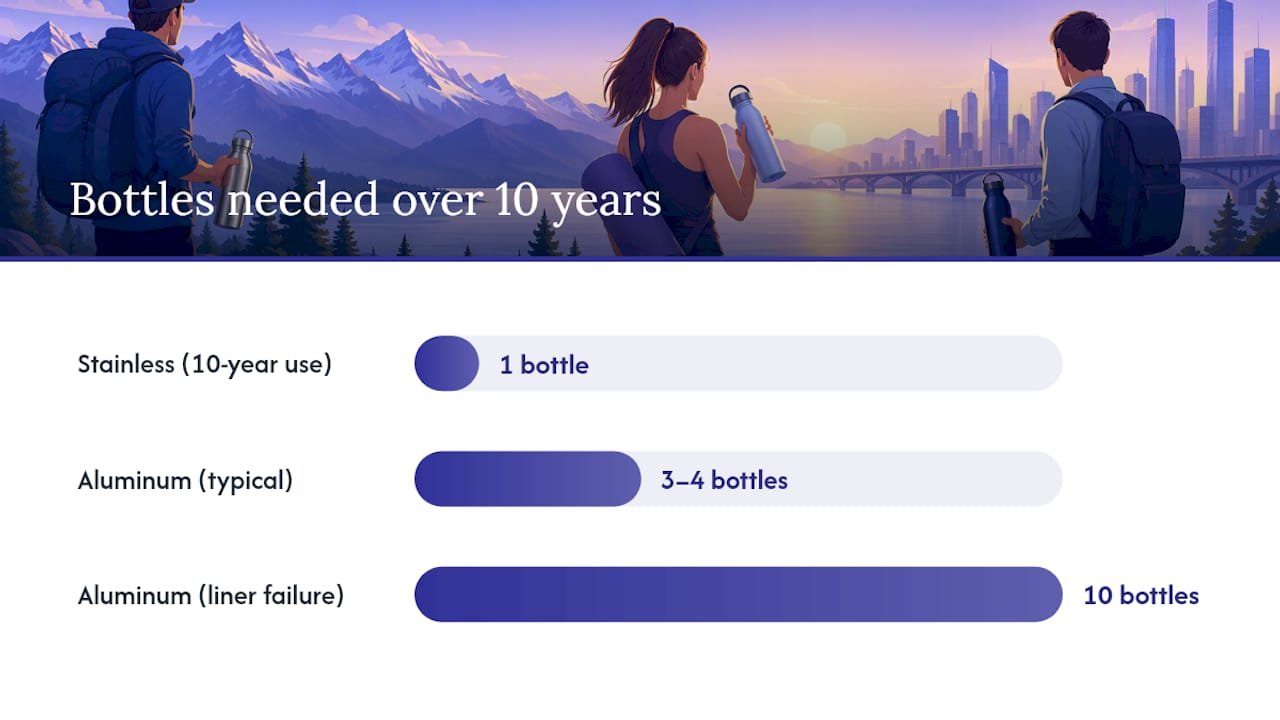
Aluminum bottles usually cost less upfront. That’s the whole appeal for bulk buyers and event giveaways. But cost only tells half the story once you factor in how long each material realistically lasts.
The lifecycle math:
- Aluminum is highly efficient to recycle, and EPA lifecycle data confirms recycling aluminum requires much less energy than producing virgin aluminum.
- That efficiency advantage shrinks fast if a liner failure forces you to replace the bottle after a year instead of five.
- Sustainability research on reusable bottles points out that long-term product use has more impact on sustainability than the choice of raw materials. Partner guidance on environmental impact reinforces the same point: a product’s footprint is tied to how long it stays in use.
- A stainless bottle that lasts a decade typically beats three or four replacement aluminum bottles on total footprint, even accounting for aluminum’s easier recyclability.
Buying one durable bottle and using it for years beats buying cheap and replacing often.
Cleaning and Care: Keeping Either Material Safe Longer
- Check the dishwasher label first. Most uninsulated stainless bottles are dishwasher safe; insulated vacuum bottles and most lids and silicone seals usually aren’t, so hand wash those parts.
- Deal with odors fast. A mix of baking soda and warm water, left to sit for an hour, handles most lingering smells in either material without harsh chemicals.
- Inspect liners regularly. For aluminum, run a finger along the interior every few months to feel for rough or peeling spots.
Pro Tip: Never leave acidic drinks like lemon water or sports drinks sitting in a lined aluminum bottle overnight. That’s the single fastest way to accelerate liner wear.
How to Choose: A Practical Checklist
Run through these six questions before you buy:
- What’s your top priority: safety, weight, or price?
- Will you mostly drink hot beverages, acidic drinks, or plain water?
- Do you need the drink to stay hot or cold for hours?
- Does weight matter for your activity (hiking, running, commuting)?
- What’s your per-unit budget, especially for bulk orders?
- Do you need custom branding or logo printing?
Three quick scenarios:
- Daily coffee drinker or hiker: insulated stainless. Hot liquids and acidic contact are exactly where aluminum liners are weakest.
- Ultralight backpacker or parent buying for a small kid: aluminum, given the meaningful weight savings.
- Company ordering hundreds of event giveaways on a tight budget: aluminum for cost, but ask the vendor about liner chemistry, or step up to stainless for anything with a longer intended lifespan.
Before buying in bulk, ask any seller three questions: what liner chemistry is used, what stainless grade the “stainless” bottles actually are, and what warranty backs the product. Vague answers to any of those are worth walking away from.
Real Bottle Examples: Aluminum vs Stainless Side by Side
Certain distributors carry product lines that show these trade-offs in practice. The Pacific 26oz Aluminum Sports Bottle is a lightweight option built for cost-conscious bulk orders and casual hydration, not hot beverages. The Guzzle 28oz Stainless Sports Bottle fits the insulated, long-term-use scenario described above, ideal for anyone drinking coffee or working outdoors for hours. The Ryze Aluminum Bottle 22 oz with FSC® 100% Bamboo Lid pairs aluminum’s weight savings with a more sustainable lid material, a middle-ground pick for brands wanting an eco angle without the stainless price point.
A Balanced Take on Safety and Sustainability
For daily, long-term use, stainless is the smarter default. Aluminum still makes sense for specific lightweight needs. The real sustainability question isn’t the metal. It’s how many years you actually keep the bottle.
— Jerry
Order Bulk Bottles Without Guessing on Materials
Some suppliers give corporate buyers a straight answer on liner chemistry and stainless grade before they commit to a bulk order, something many promotional suppliers may not disclose upfront. That transparency matters more once you know how much liner quality affects long-term safety.
Whether your team needs lightweight aluminum for a high-volume trade show giveaway or insulated stainless for a client gift that gets used for years, some catalogs cover both, with rush ordering available when your event timeline is tight. Custom branding, from single-color logos to full-wrap designs, is often available across both materials. Visit Bulk Branded Water Bottles That Fit Budgets to review specs, request liner and stainless grade details for any SKU, and get a quote for your next order.
Sources
- Migration of aluminum from food contact materials to food—a health risk for consumers? Part III
- Stainless steel cookware as a significant source of nickel, chromium, and iron
- EPA WARM: Life-cycle GHG and energy factors for aluminum and steel
- Aluminum vs Stainless Steel Water Bottles: Which Wins?
FAQ
What is the healthiest material for a water bottle?
Food-grade stainless steel, specifically 304/18-8 or 316 grade, is generally the healthiest choice because it doesn’t require an interior liner that can degrade over time. Aluminum can be safe too, but only as long as its liner stays fully intact.
Is aluminum or stainless steel healthier overall?
Stainless steel is the healthier default for most people since it skips the liner-failure risk entirely and handles hot and acidic drinks without special precautions. Aluminum requires more careful handling, avoiding dents, heat exposure, and long-term acidic storage, to stay equally safe.
Does stainless steel release microplastics?
No, stainless steel bottles don’t contain plastic in the body, so they don’t shed microplastics the way some plastic bottles or liners can. Some research has found stainless can release small amounts of nickel and chromium under acidic, prolonged contact conditions, which is a different concern from microplastics.
What are the downsides of aluminum water bottles?
The main downside is the interior liner, which can crack, chip, or wear down from dents, heat, or abrasion, exposing the metal underneath. Once that happens, aluminum can migrate into acidic beverages, so aluminum bottles need more careful handling and shorter replacement cycles than stainless.
 Bottle Carriers
 Mugs