

Swag Fulfillment Guide for Business Buyers

A great branded tumbler or onboarding kit can lose its impact fast if it arrives late, goes to the wrong address, or lands in a plain box with missing pieces. This swag fulfillment guide helps business buyers turn a merchandise order into a dependable delivery program, whether you are sending 50 event giveaways to one venue or 5,000 employee gifts to home addresses across the country.
Swag fulfillment is more than putting products in a box. It is the operational work behind receiving inventory, storing it, assembling kits, verifying recipient details, shipping orders, and resolving exceptions. Get that process right, and your team spends less time chasing packages while recipients get branded merchandise that reflects well on your company.
What Swag Fulfillment Covers
The scope depends on your campaign. For a trade show, fulfillment may simply mean shipping branded bags, drinkware, and giveaways to the convention center before the booth setup date. For a remote workforce, it can involve individual packing, personalized notes, address collection, shipment tracking, and replacement packages for deliveries that go off course.
A complete program commonly includes inventory receiving, storage, kitting, packaging, shipping, tracking, and reporting. Some organizations also need custom inserts, name personalization, size sorting for apparel, inventory replenishment, or split shipments to offices and regional teams.
The key is to define the job before selecting products. A low unit price is valuable, but it is not the full cost picture if the item requires oversized cartons, special packing, multiple shipments, or an extra handling step. Smart procurement looks at the delivered program cost, not just the price printed beside the product.
Start With the Distribution Plan
Before choosing colors or approving artwork, decide where the swag needs to go. This one choice affects product selection, production timelines, packaging needs, and freight costs.
Centralized shipping works well when all merchandise goes to one office, event venue, or warehouse. It is usually the simplest option and can be the most economical for large quantities. Your internal team takes responsibility for the final handoff, which is practical when recipients are local or when you have staff available to distribute items.
Direct-to-recipient shipping is built for remote employees, client gifting, sales incentives, and distributed event attendees. It removes the need for someone in your office to receive, sort, repackage, and mail every item. It does require cleaner data. A missing apartment number, outdated employee address, or duplicate record can create avoidable cost and delays.
For many companies, the best answer is a hybrid approach. Send bulk supplies to offices and event locations, then ship welcome kits or recognition gifts directly to individual recipients. This keeps routine distribution efficient without leaving remote team members out.
Choose Products That Ship as Well as They Sell
Not every popular promotional item is equally easy to fulfill. A compact tech accessory or notebook generally packs efficiently. A bulky cooler, fragile glass item, or large apparel bundle may increase carton size, packing requirements, and shipping expense.
That does not mean you should avoid premium or oversized merchandise. A branded Stanley-style tumbler, quality backpack, or curated gift set can make a stronger impression when the occasion calls for it. The decision should match the purpose. A high-value client gift can justify higher fulfillment costs. A 2,000-person lead-generation campaign may need lighter, more compact items to protect the budget.
Consider these practical questions during product selection:
- Does the item fit standard parcel packaging without excess empty space?
- Is it breakable, temperature-sensitive, or likely to need added protection?
- Will apparel require size collection and sorting before packing?
- Can several items be combined into one useful kit without pushing shipping into a higher cost range?
- Is the product available in enough inventory to support your launch date and possible reorder needs?
A good merchandise partner can help balance perceived value with shipping reality. Discount Swag offers broad product categories so buyers can build campaigns around the right mix of price, usefulness, and distribution requirements instead of forcing every project into the same product type.
Build Kits With a Clear Purpose
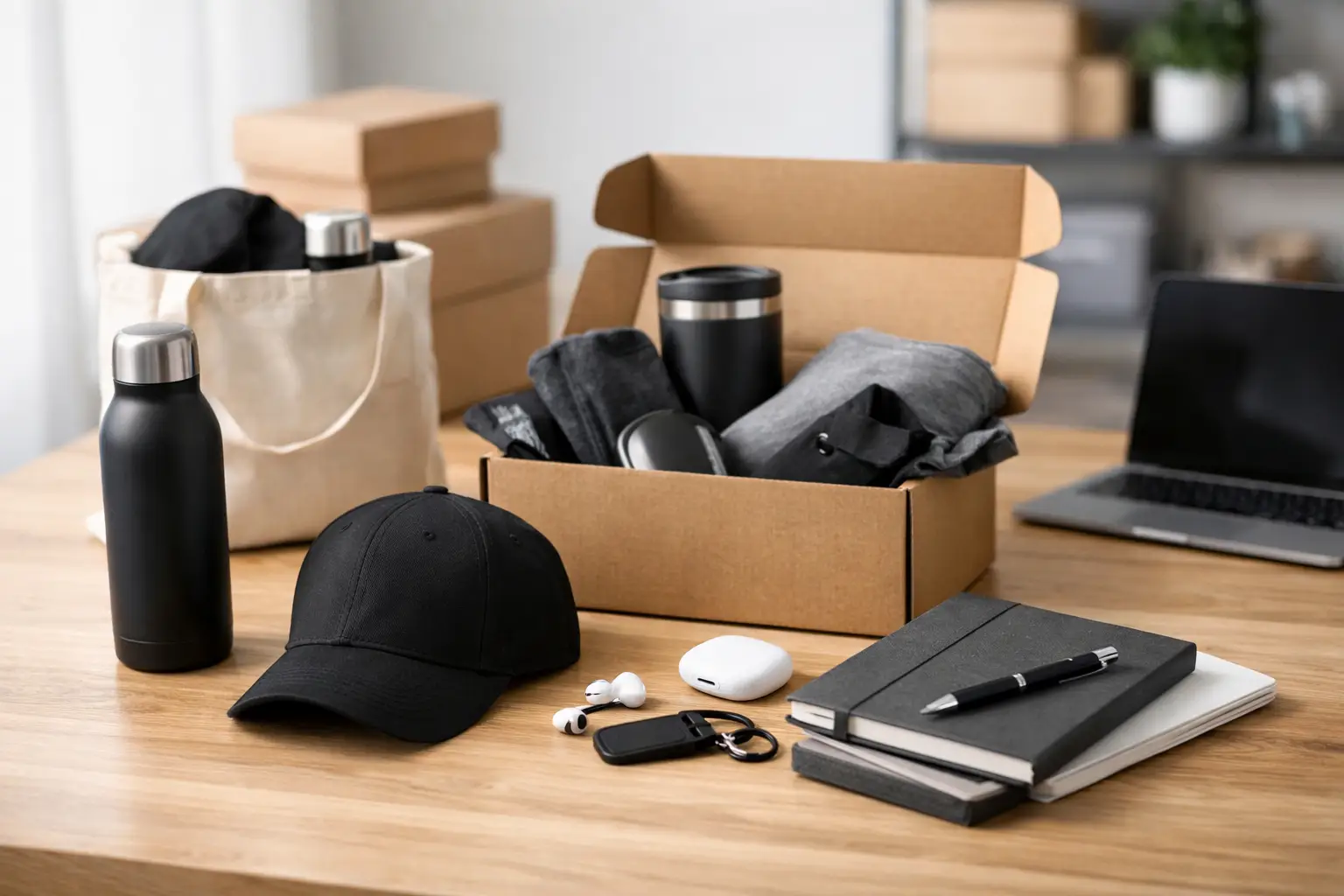
Kitting is where separate branded products become a complete experience. A new-hire box might include apparel, a notebook, a pen, drinkware, and a welcome card. A sales kickoff kit may include travel-ready gear, an event agenda, and a branded tech item. For client appreciation, a premium drinkware piece and a thoughtful insert can carry more weight than a crowded box of unrelated giveaways.
Keep the kit focused. More products do not automatically create more value. Every additional item adds sourcing, storage, packing, and potential inventory complexity. Include pieces that work together and give recipients a reason to use them after the first day.
Presentation matters, but it should fit the campaign. Custom mailers, tissue paper, printed cards, and branded packaging can elevate a leadership gift or remote onboarding moment. For a high-volume event giveaway, straightforward protective packaging may be the better financial choice. Put the budget where the recipient will notice it most.
Get Recipient Data Right Before Packing Begins
Address data is one of the biggest sources of fulfillment trouble, and it is one of the easiest problems to prevent. Set a deadline for address collection, establish a single approved file format, and assign one person to own final data approval.
For direct shipments, collect the recipient’s full name, street address, apartment or suite number where applicable, city, state, ZIP code, email address, and phone number if the shipping method requires it. If the campaign includes apparel, validate sizes at the same time. Do not rely on an old HR export or last year’s event list without a review.
Privacy also deserves attention. Employee and client shipping information should be shared only with the people and vendors needed to complete the order. Ask how recipient data will be used, who can access it, and when it will be removed from active fulfillment files.
Create a Timeline That Has Room for Reality
The event date or employee start date is not the shipping deadline. Work backward from the date the recipient must have the item in hand. Allow time for product selection, artwork approval, production, inventory receiving, kitting, address review, carrier transit, and a reasonable buffer for corrections.
Custom decoration methods and high-demand branded products can extend lead times. So can multi-item kits when components arrive from different suppliers. If your campaign has a hard deadline, simplify where necessary. A well-executed two-item kit delivered on time is better than an elaborate box that misses the moment.
For recurring programs, build a reorder plan instead of restarting the process every quarter. Set minimum inventory levels for core items, review usage patterns, and decide who can authorize replenishment. This is particularly helpful for onboarding programs, where a new employee should not have to wait weeks for a welcome package because one popular item is out of stock.
Control Costs Without Cutting the Experience
Fulfillment costs usually come from four places: product cost, decoration, packaging and handling, and freight. Visibility into each category helps procurement teams compare options honestly.
There are several ways to lower total spend without making the program feel cheap. Standardize a few core items across campaigns. Use one versatile box size when possible. Ship kits together rather than mailing individual pieces separately. Select products that provide strong everyday utility, so recipients keep them longer. And plan early enough to avoid rush production or expedited shipping.
Volume can improve unit economics, but over-ordering is not always a win. Buying 1,000 extra items only makes sense if you have storage, a realistic future use, and confidence that the branding will remain current. For campaign-specific merchandise, a tighter quantity with a small contingency is often the safer call.
Measure the Program After Delivery
Fulfillment is not finished when the carrier scans the last box. Review delivery exceptions, damaged-item reports, address corrections, inventory remaining, and the number of support requests your team had to handle. These details show where the next campaign can be faster and less expensive.
For employee or client programs, a short recipient survey can also reveal whether the products felt useful and whether the packaging added value. For events, compare giveaway quantities against booth traffic or lead volume. The goal is not simply to ship every item. It is to make sure the merchandise supports the business outcome you paid for.
The best swag fulfillment program feels simple to the people receiving it because the planning behind it was disciplined. Choose useful products, protect your timeline, keep recipient data clean, and use a distribution plan that matches your audience. That is how branded merchandise arrives as a welcome brand moment instead of another task for your team to fix.
 Bottle Carriers
 Mugs
Mugs