

Branded Merchandise Unboxing Experience: A Marketer’s Playbook


A branded merchandise unboxing experience is a shareable marketing asset, not just packaging. Design it for the camera, add a surprise element, and build in tracking before you ship a single unit.
Your 3-step recipe:
- Design for the camera. High-contrast branding, a layered reveal, and interior printing that reads on a phone screen.
- Add a surprise. A promo code card, personalized note, or small bonus item that triggers reciprocity and sharing.
- Build distribution and measurement. Unique QR codes, UTM-tagged links, and a hashtag CTA so every kit generates trackable data.
Quick-start checklist:
- [ ] Define one hero product and its reveal position
- [ ] Choose outer box type and opening mechanism
- [ ] Add at least one interior layer (tissue, foam tray, or printed liner)
- [ ] Include a physical CTA card with hashtag and incentive
- [ ] Assign a unique promo code or QR per batch
- [ ] Set share-rate and redemption KPIs before launch
Pro Tip: Skip loose confetti and glitter. They photograph poorly on mobile, create cleanup complaints, and add zero brand value. Use branded tissue or a die-cut insert instead.
Discountswag offers branded kits and bulk fulfillment for events of any size. Request a sample kit to test your reveal mechanic before committing to a full run.
Table of Contents
- Why does the unboxing experience drive conversions and organic reach?
- What every shareable branded unboxing must include
- How to design your unboxing specifically to generate UGC
- What does a bulk unboxing kit actually cost?
- What does a full implementation workflow look like?
- How do you measure the unboxing experience’s impact?
- How to build anticipation before the box arrives
- Legal and regulatory considerations for packaging and inserts
- Step-by-step checklist for testing and iterating before full rollout
- Discountswag handles your unboxing kits from brief to doorstep
- Key Takeaways
- The part most event teams get wrong about unboxing
- Useful sources and further reading
Why does the unboxing experience drive conversions and organic reach?
Packaging is the only guaranteed physical touchpoint your brand gets with a recipient. Unlike an ad that can be skipped, a box that lands on someone’s desk gets opened. That moment is owned media with a 100% open rate, and the content it generates travels far beyond the original recipient.
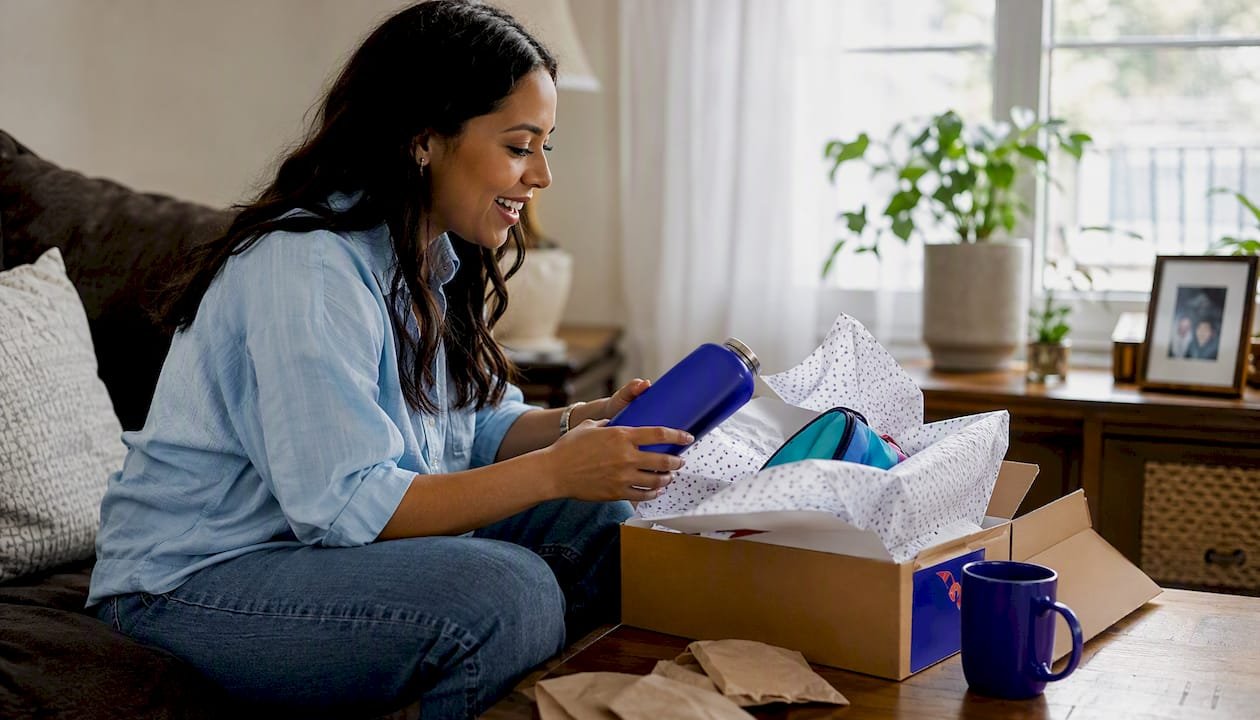
72% of consumers say packaging design influences their purchase decisions. That figure alone reframes the budget conversation: packaging spend is marketing spend, not just a logistics line item.
The psychology behind it is straightforward. Anticipation builds as layers are peeled back. A surprise element triggers reciprocity, making recipients feel they received more than expected. And unboxing content on short-form platforms like TikTok and Reels consistently outperforms studio ads in trust and conversion because viewers experience the product vicariously before buying. That earned media value compounds every time a recipient posts. For more on how promotional items build lasting engagement, see Discountswag’s overview of branded merchandise and brand engagement.
What every shareable branded unboxing must include
Think of this as your vendor brief checklist. Hand it to procurement or your packaging supplier verbatim.
Outer packaging:
- Rigid mailer box or magnetic-closure box (magnetic closures read better on camera than tuck-top flaps)
- Full exterior print with brand colors and logo visible in a single frame
- Opening mechanism that creates a moment: peel strip, magnetic lid, or tear-away band
Interior layers:
- Branded tissue paper as the first layer the recipient sees on opening
- Die-cut foam or cardboard tray to hold the hero product centered and upright
- Interior box printing (adds $0.15–$0.40 per unit but noticeably increases social mentions)
Surprise/bonus element:
- Promo code card, sticker sheet, or small branded add-on item
- Personalized note (printed variable-data at scale, not handwritten for bulk orders)
Visual and tactile considerations:
- High-contrast color palette that reads on a phone screen without flash
- Matte or soft-touch finishes to reduce glare in video
- Sustainable materials (100% fiber-based tissue, recycled board) that avoid the “cringe waste” reaction on social
Kitting and protection:
- Void fill that doubles as branding (crinkle paper in brand color, not plain peanuts)
- Drop-test your packed kit before scaling; a crushed hero product kills the reveal
Pro Tip: Order a physical sample of your assembled kit and film yourself opening it on a phone. If the hero product isn’t visible within the first three seconds, rearrange the layers.
| Element | Typical per-unit cost | Shareability impact |
|---|---|---|
| Mailer box (custom print) | — | High |
| Interior printing | $0.15–$0.40 | High |
| Branded tissue paper | — | Medium |
| Custom sticker/label | Low | Medium |
| Die-cut foam insert | Moderate | High |
| Promo code card | Minimal | High (trackable) |
How to design your unboxing specifically to generate UGC
Camera-first design means every interior element is positioned for a vertical 9:16 frame. The hero product sits centered, the brand name is readable without zooming, and the first layer the recipient lifts creates a visual payoff.
- Control the reveal sequence. Layer items so the recipient discovers them in a deliberate order: tissue first, then a branded card, then the hero product. Each layer extends the video and builds anticipation.
- Add sensory cues. A magnetic closure that snaps, tissue that rustles, or a rigid tray that lifts cleanly all create audio-visual moments that make footage more watchable.
- Include a physical CTA card. A card with a specific ask (“Film your unboxing, tag us with #[YourHashtag], and get 20% off your next order”) is the single most effective prompt to generate UGC at the moment of opening. Make the incentive immediate and the instructions one sentence.
- Add a QR code. Link it to a preloaded social challenge, a brand playlist, or a landing page with the hashtag pre-filled. Recipients who scan are already in sharing mode.
- Use reusable packaging as a content prop. A keepsake box or branded tote that recipients keep on their desk generates ongoing impressions and repeat appearances in future content.
For influencer seeding and press kit workflows that use the same reveal mechanics, Discountswag’s press kit strategy guide covers the pre-tease and follow-up phases in detail.
What does a bulk unboxing kit actually cost?
Cost breaks down across five drivers: box type, interior printing, inserts, surprise items, and kitting labor. The full experience, including a mailer box, tissue, sticker, and insert card, typically runs $2.80–$4.50 per unit at moderate quantities, before the hero product itself.
Key budget considerations:
- Minimum order quantities for custom boxes and tissue paper exist depending on the supplier and order type.
- Interior printing adds cost but pays back in shareability. Treat it as a content production expense, not a packaging upgrade.
- Sustainable materials (recycled board, soy-based inks) usually carry a modest premium but improve brand perception on social, where “wasteful packaging” callouts can undercut an otherwise strong reveal.
- Rush orders compress lead times but add cost. Standard lead times for custom kits run 3–5 weeks; rush options can cut that to 1–2 weeks depending on the vendor.
- For multi-location dropship, centralized kitting and outbound fulfillment adds per-unit handling cost but eliminates the coordination risk of shipping components separately.
For a practical breakdown of packaging formats and material options, Discountswag’s packaging options guide is a useful reference when building a budget.
What does a full implementation workflow look like?
Use this sequence for any kit program, from a 50-unit pilot to a 5,000-unit multi-location rollout.
- Write the brief. Define the hero product, reveal sequence, CTA mechanic, and tracking method (promo code, QR, UTM) before any design work starts.
- Get mockups and proofs. Review digital proofs for color accuracy, then request a physical printed sample before approving production.
- Order a small-batch pilot. Run 50–100 units first. Ship to internal team members or a small recipient group and collect feedback on the reveal experience and shipping condition.
- Iterate. Adjust layer order, insert copy, or packaging protection based on pilot feedback. This is where A/B testing pays off: run two insert variants (different CTA copy or incentive types) and compare redemption rates.
- Approve and scale. Once the pilot passes a drop-test and a camera test, approve full production.
- Kit and fulfill. For single-location events, centralized kitting is fastest. For multi-location distribution, dropship fulfillment to individual addresses reduces recipient-side coordination.
Sample timelines:
| Campaign type | Timeline | Key milestones |
|---|---|---|
| Express pilot (one event) | 4–6 weeks | Brief → proof → pilot run → event ship |
| Full campaign (multi-location) | 3–5 weeks | Brief → samples → pilot → iteration → scale → fulfillment |
Pro Tip: For your A/B pilot, split 50 units evenly: 25 with a discount-code incentive and 25 with a contest-entry incentive. Track redemption rates separately. The winner becomes your standard insert.
Vendor selection checklist:
- Requires a printed physical sample before production approval
- Provides turnaround guarantees in writing
- Offers kitting and multi-address fulfillment
- Has a clear return or reprint policy for quality defects
How do you measure the unboxing experience’s impact?
Primary KPIs to track:
- Share rate: UGC posts per shipment (track via hashtag monitoring or recipient reporting)
- Social engagement: views, likes, shares, and saves on UGC content
- Conversion lift: promo code redemptions and UTM-attributed sessions from in-box cards
- Earned media value: estimate by multiplying UGC impressions by your average CPM for paid social
Tracking tactics:
- Assign a unique promo code per batch or event so redemptions map directly to a kit run
- Use UTM-tagged URLs on QR codes so in-box traffic appears as a distinct source in Google Analytics
- Build a simple recipient reporting template: ask recipients to share their post URL within 48 hours of receiving the kit
Unboxing content repurposed on product pages, email campaigns, and homepage placements consistently lifts conversion beyond the original post’s reach. Capture UGC with permission and deploy it across channels.
Realistic expectations: organic UGC from a well-designed kit typically outperforms a comparable paid impression in trust, but reach is unpredictable. Budget for paid amplification of your best-performing UGC posts to extend reach reliably.
How to build anticipation before the box arrives
Pre-unboxing engagement turns a delivery into an event. A teaser email or social post sent 24–48 hours before shipment arrival, referencing the incoming kit without revealing its contents, raises open rates and primes recipients to film the moment.
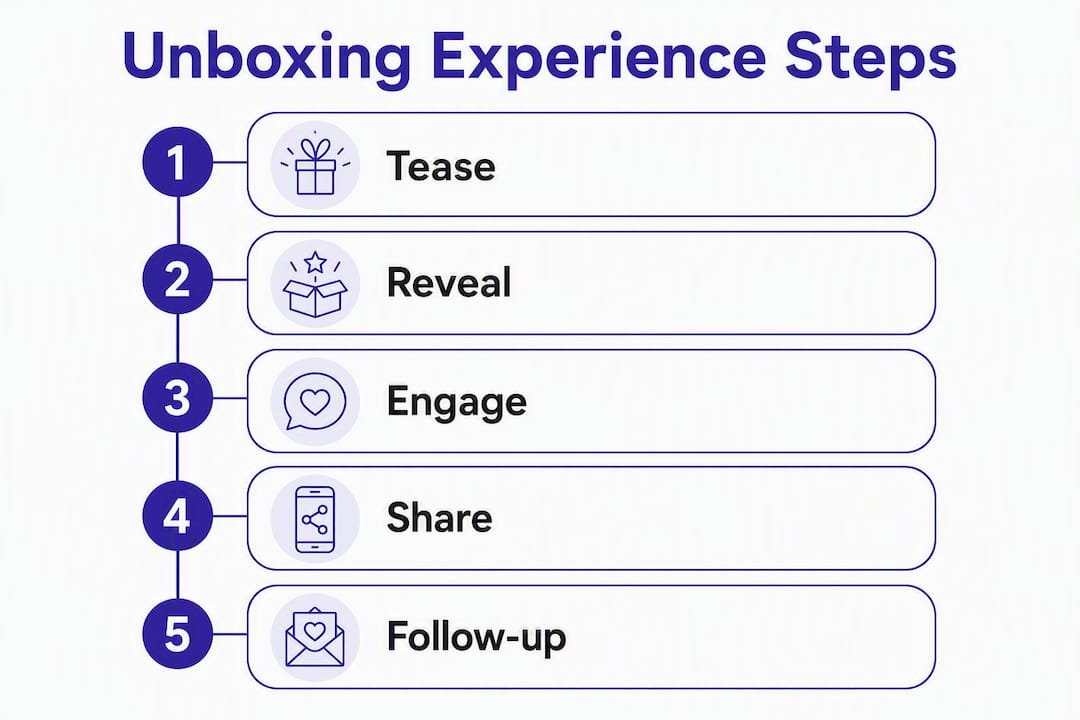
The Tease → Experience → Trigger → Follow-up framework structures this well. Tease on email or social. Deliver the experience via the kit. Trigger sharing with the in-box CTA. Follow up by amplifying the best UGC and tagging creators. For employee onboarding kits that use the same anticipation mechanics, see Discountswag’s onboarding merchandise guide.
Legal and regulatory considerations for packaging and inserts
U.S. packaging regulations touch several areas that marketing teams often overlook until production is underway.
Labeling requirements: If your kit includes any consumable (food, supplement, cosmetic sample), FDA labeling rules apply, including ingredient lists, net weight, and allergen disclosures. Non-consumable promotional items generally have fewer requirements, but country-of-origin marking may apply for imported goods under U.S. Customs rules.
Safety standards: Items intended for children must comply with the Consumer Product Safety Improvement Act (CPSIA), including lead and phthalate limits. Even if your kit targets adults, avoid small parts or loose items that could create liability if the kit reaches a minor.
Insert copy: Promo code terms, contest rules, and sweepstakes mechanics must comply with applicable state laws. If your CTA card includes a “win a prize” mechanic, consult legal counsel before printing at scale.
Sustainability claims: The FTC’s Green Guides govern environmental marketing claims. “Recyclable,” “compostable,” and “eco-friendly” each have specific substantiation requirements. Vague claims on packaging can trigger FTC scrutiny.
This section is general information, not legal advice. Confirm current requirements with a qualified attorney or the relevant regulatory body for your specific product category.
Step-by-step checklist for testing and iterating before full rollout
Run through this before approving production on any kit over 200 units.
- [ ] Brief complete: hero product, reveal sequence, CTA mechanic, and tracking method all documented
- [ ] Digital proof approved: colors match brand standards; all text is legible at actual size
- [ ] Physical sample received: assembled kit reviewed by at least two team members
- [ ] Camera test passed: filmed on a phone in natural light; hero product visible in first 3 seconds
- [ ] Drop test passed: kit shipped via the intended carrier and inspected on arrival
- [ ] CTA card tested: QR code scans correctly; promo code activates in your system
- [ ] Tracking live: UTM parameters active; promo code batch assigned and logged
- [ ] Pilot shipped: 50–100 units sent to test recipients with a feedback request
- [ ] Pilot feedback collected: share rate, redemption rate, and damage rate recorded
- [ ] Iteration complete: any changes from pilot applied to final production brief
- [ ] Full production approved: written sign-off from marketing and procurement
Discountswag handles your unboxing kits from brief to doorstep
Skip the vendor coordination headache. Discountswag handles custom printing, bulk kitting, rush orders, and dropship fulfillment to single or multiple addresses, which means your team briefs one vendor instead of managing a packaging supplier, a kitting house, and a fulfillment partner separately.
For event giveaways, Discountswag’s branded merchandise for events page covers product categories, bulk pricing, and fulfillment options. For corporate gift sets with full kitting, the corporate gift sets page is the fastest starting point. To prepare a vendor brief, bring your hero product list, target quantity, ship-to locations, and event date. Discountswag can turn around a quote and a sample kit for pilot testing before you commit to full production. Start your quote at discountswag.store.
Key Takeaways
A well-executed branded merchandise unboxing experience requires camera-ready design, a trackable CTA, a tested pilot run, and per-unit cost discipline before scaling to full production.
| Point | Details |
|---|---|
| Design for the camera first | Interior printing, high-contrast branding, and a layered reveal make kits shareable before any CTA is needed. |
| Budget a few dollars per unit for box, tissue, sticker, and insert at moderate quantities, before the hero product. | |
| Run a 50-unit pilot | Test the reveal mechanic, drop protection, and CTA redemption rate before committing to full production. |
| Track with unique codes and UTMs | Assign a promo code and UTM per batch so every kit generates attributable conversion data. |
| Use Discountswag for kitting and fulfillment | Discountswag handles custom printing, bulk kitting, and multi-location dropship for events of any size. |
The part most event teams get wrong about unboxing
Most marketing teams treat the unboxing kit as a packaging problem. It isn’t. It’s a content production problem with a packaging constraint.
The teams that get the best results spend as much time on the reveal sequence and the CTA card as they do on the box itself. A beautiful box with no clear sharing prompt generates nice photos internally and almost nothing externally. A modest box with a specific, incentivized ask and a working QR code will consistently outperform it on UGC volume.
The sustainability versus camera-ready tension is real and worth naming. A reusable keepsake box photographs well and generates ongoing impressions every time it sits on a recipient’s desk. Loose filler, excessive tissue layers, and single-use plastic inserts photograph poorly and invite negative comments. The trade-off almost always resolves in favor of fewer, better materials rather than more elaborate packaging. One well-chosen reusable element beats three forgettable ones.
For event coordinators specifically: the pilot run is not optional. Shipping conditions vary by carrier and region, and a hero product that arrives crushed destroys the entire experience regardless of how well the box was designed. Build the pilot into your timeline and your budget from day one.
Useful sources and further reading
The sources below are the most relevant references for building a vendor brief, estimating costs, and designing measurement templates.
Cost figures and material guidance:
- Cubit Packaging — Custom e-commerce packaging and unboxing guide: contains per-unit cost ranges for boxes, tissue, interior printing, and inserts. Use this to populate budget conversations.
- ShipBob — How to create a memorable unboxing experience: practical guidance on packaging materials, product presentation, and insert types.
UGC strategy and campaign design:
- Eevy.ai — Unboxing content strategy: covers platform suitability, CTA mechanics, and repurposing UGC across product pages and email.
- Influencity — Why unboxing is your most underrated marketing channel: camera-first design rules and the Tease → Experience → Trigger → Follow-up campaign framework.
- Bigblue — Unboxing as a marketing and logistics tool: conversion lift data and the earned-media framing for packaging ROI.
Discountswag resources:
- Branded merchandise for events: product categories, bulk pricing, and fulfillment for event programs.
- Promotional items for brand awareness: category guide for choosing items that maximize reach.
- Branded merchandise that delivers more: examples showing how merchandise drives repeat engagement and ROI.
 Bottle Carriers
 Mugs
Mugs