

40–50% More Airflow: Trucker or Dad Hat for Brand Merch

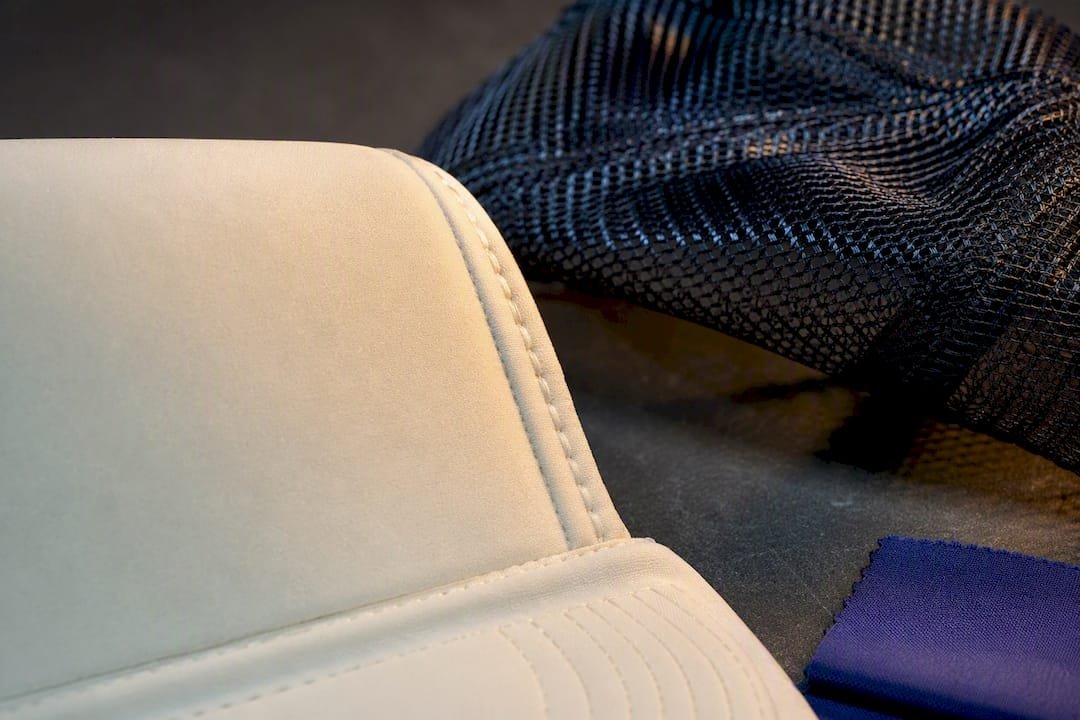
Pick a dad hat for subtle, everyday wear and small logo branding. Pick a trucker hat when you need bold visibility, hot-weather breathability, or a look that reads “outdoor” from across a parking lot. The one-line rule: soft and low-key means dad hat, structured and loud means trucker.
TL;DR:
- Dad hats typically cost less than trucker hats due to their single-material design and simpler decoration options, making them more economical for bulk orders.
- Trucker hats offer superior breathability with mesh panels allowing up to 50 percent more airflow, ideal for outdoor use in hot weather.
- Decoration on trucker hats benefits from a foam front that secures puff embroidery and patches, while dad hats require stabilizers for fine-detail embroidery.
- The durability of dad hats involves softening over time with washing, whereas trucker hats maintain shape longer but can be crushed or warped if mishandled.
- In terms of sustainability, dad hats made from organic cotton are more eco-friendly, but both styles contain synthetic components that impact environmental footprint.
Table of Contents
- Trucker Hat vs Dad Hat: The Quick Breakdown
- Why Construction and Materials Change How Each Hat Wears
- Which Face Shapes and Wardrobes Suit Each Hat
- How Logos and Embroidery Behave on Each Hat
- Choosing Between Dad and Trucker Hats by Goal
- What Discount Swag Recommends for Branded Headwear Programs
- Where Each Hat Style Actually Comes From
- Who Actually Wears Each Style
- What Each Style Costs and Where to Look
- Durability and Care for Both Hat Styles
- Sustainability Differences Worth Knowing
- The Real Question Isn’t Which Hat Is Better
- Get Samples Before You Commit to a Bulk Order
- Sources
Trucker Hat vs Dad Hat: The Quick Breakdown
The two styles diverge almost everywhere it counts: crown height, materials, brim curve, and how they close on your head. A dad hat is a soft, unstructured cap built from washed cotton or canvas, with a curved brim and usually a fabric strap or metal buckle in back. A trucker hat sits higher, thanks to a stiff or foam front panel, and swaps the fabric back for mesh, closed off with a snapback closure instead of a strap.
Here’s how the two stack up side by side:
- Profile: Dad hats sit low and soft; trucker hats stand tall and structured up front.
- Materials: Dad hats use washed cotton or canvas throughout; truckers pair a foam or buckram front with mesh panels in back.
- Brim: Both curve, but trucker brims tend to hold a firmer, more pre-shaped curl.
- Closure: Dad hats use a strap and buckle; truckers snap shut with a plastic snapback.
- Vibe: Dad hats feel relaxed and broken in from day one; truckers feel sportier and more graphic-forward.
That last point is the one people underestimate. A trucker hat looks like it’s announcing something, even blank. A dad hat looks like it’s already been worn a hundred times, even brand new.
Why Construction and Materials Change How Each Hat Wears
The materials aren’t cosmetic choices. They dictate how a hat breathes, how it ages, and how well it holds a logo shape over months of wear.
Dad hats run on washed cotton or canvas from crown to brim. That fabric softens with every wash, which is exactly why the style earned its name: it looks lived-in almost immediately. The trade-off is airflow. Solid cotton crowns trap more heat against the scalp than a mesh-backed alternative.
Trucker hats solve that with a two-material build: a stiffened foam or buckram front panel up top, mesh in back. The foam front is what keeps a logo standing upright and legible instead of sagging into the fabric. The mesh back is what makes the whole hat wearable outdoors in July.
Airflow difference, in real terms: mesh-backed trucker hats can allow roughly 40 to 50 percent more airflow than a solid-crown cap, which translates directly into a cooler head on a job site, a golf course, or a festival lawn.
That structural gap also affects fit. A few things to keep in mind before you order:
- Low-profile dad hats sit closer to the head and mold to it over time, which suits people who dislike a hat that feels perched.
- Structured trucker crowns sit higher and can fit differently across head sizes, so sample before a bulk run.
- Foam fronts hold their shape for years; cotton crowns eventually soften and lose crispness, which some buyers want and others don’t.
Which Face Shapes and Wardrobes Suit Each Hat
Dad hats have close to universal appeal because the low crown doesn’t compete with your face. They pair naturally with minimalist, layered, or streetwear-adjacent outfits, and they work equally well on rounder and longer face shapes since the unstructured crown doesn’t add height or width up top. That’s part of why style guides consistently frame dad hats as the safer, broader-audience pick for everyday branded wear.
Trucker hats do more work visually, so they suit outfits that already lean sporty or outdoor: technical jackets, cargo pants, work boots, retro athletic gear. The higher crown adds a bit of height, which flatters rounder faces and can overwhelm narrower ones if the crown is oversized. If your team is mixed head sizes, order at least one sample in a slightly larger fit before committing, since snapback trucker crowns run less forgiving than a strap-and-buckle dad hat.
A few quick rules worth following:
- Scale logos down on dad hats. A large mark on a soft crown looks heavy and can distort as the fabric molds.
- Go bolder on truckers. The structured front panel is built to showcase a graphic, not hide one.
- Match closure to audience. Strapback dad hats fit a wider range of head sizes without adjustment; snapback truckers need more size testing across a crowd.
Pro Tip: If you’re ordering for a mixed group and can only pick one closure style, a strapback dad hat with a buckle adjusts more forgivingly across head sizes than a fixed-notch snapback.
How Logos and Embroidery Behave on Each Hat
Decoration is where a lot of merch orders go wrong, and it’s almost always because someone picked the wrong hat for the artwork instead of the other way around.
- Check stabilization needs on soft crowns. Dad hats need extra backing under fine-detail embroidery, since the unstructured cotton can pucker or shift without it. Fine lines and small text are riskier here than on a stiff front panel.
- Lean into 3D puff and patches on trucker fronts. The foam panel gives puff embroidery and woven or PVC patches a stable base, so raised detail holds its shape instead of collapsing.
- Watch patch stiffness on soft crowns. A rigid patch on a dad hat can look and feel odd once the cotton softens around it, since the crown molds but the patch doesn’t.
- Size logos for viewing distance. Small, subtle marks read well on a dad hat worn close up; bold, high-contrast graphics read better on a trucker hat meant to be seen across a room or a field.
- Run the production checklist every time: approve a stitched sample, confirm stitch density for small text, and choose the right backing before you commit to a full run.
Choosing Between Dad and Trucker Hats by Goal
The fastest way to decide is to work backward from what the hat needs to accomplish, not which style you personally like better.
- Retail or lifestyle merch: dad hat, subtle embroidery, strapback for broad sizing.
- Outdoor event staff or summer giveaways: trucker hat, bold front logo, snapback with a size sample tested first.
- Trade show swag: trucker hat for visibility across a crowded floor, paired with a high-contrast logo.
- Everyday company uniform piece: dad hat, since it ages well and gets worn again and again rather than sitting in a drawer.
Budget plays a role too. Giveaways benefit from the trucker’s higher visual impact per unit, since it’s doing more branding work in a single glance. Retail and loyalty programs lean toward dad hats because customers actually keep wearing them, which means more impressions over a longer stretch of time.
Whichever direction you land on, the execution order stays the same: order a sample, test the fit and decoration together, then move to the bulk order once both check out.
What Discount Swag Recommends for Branded Headwear Programs
Discount Swag stocks both mesh-back trucker caps and premium trucker variants alongside classic dad hat styles, and the recommendation shifts depending on the program, not personal preference.
- For customer-facing retail drops or loyalty gifts, Discount Swag typically points buyers toward dad hats, since the low-key look suits repeat wear.
- For outdoor activations, staff uniforms in the heat, or trade show floors, mesh-back trucker caps usually win on visibility and comfort.
- Every program follows the same workflow: approve a decorated sample first, confirm sizing across the group, then lock in bulk quantities.
- Decoration choice follows the hat: flat embroidery for dad hats, 3D puff or patches for trucker fronts.
That sample-first approach isn’t unique to headwear. It’s standard practice across merch fulfillment generally, and it’s the single easiest way to avoid a warehouse full of hats nobody wants to wear.
Where Each Hat Style Actually Comes From
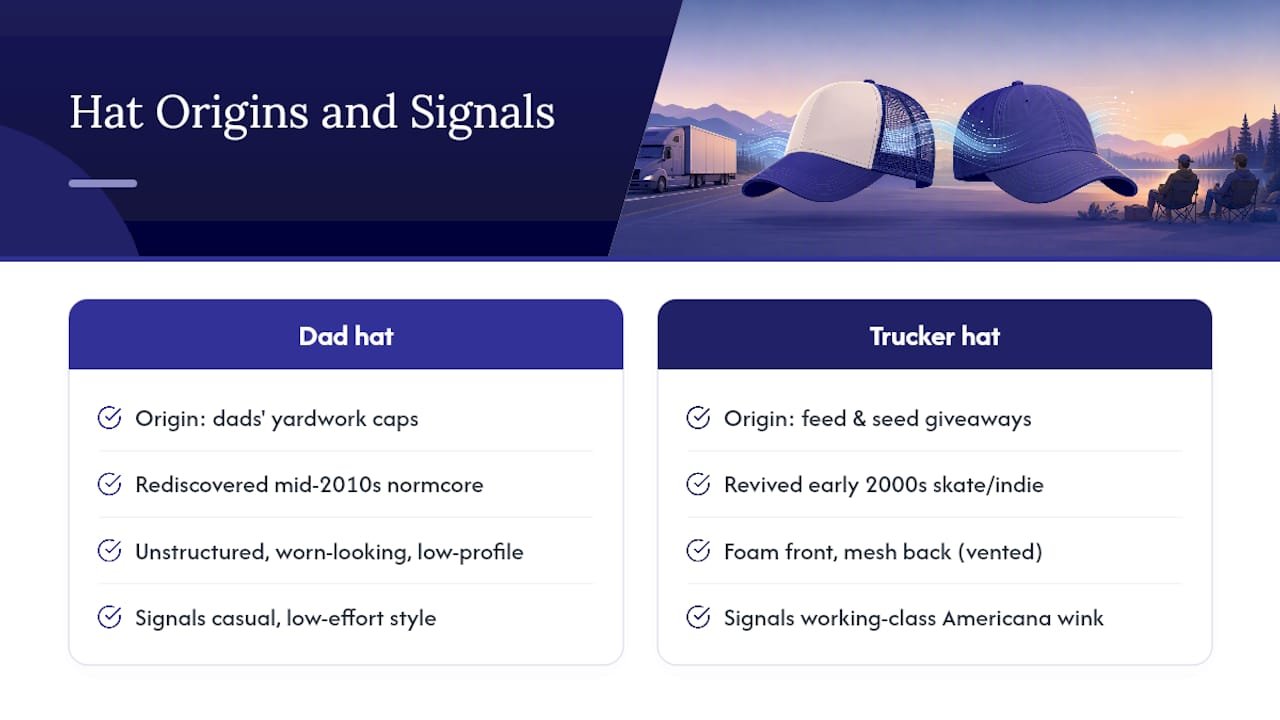
The dad hat’s name is almost literal: it comes from the unremarkable, slightly worn-looking caps dads have thrown on for yard work and Little League games for decades. Brands didn’t invent the look so much as notice it, then started producing it deliberately once streetwear culture rediscovered “normcore” styling in the mid-2010s. The appeal was the opposite of a flashy logo cap: a hat that looked like it had already lived a life.
The trucker hat’s origin is more literal too. Feed and seed companies handed out foam-fronted, mesh-backed caps to actual truck drivers and farmers starting in the 1960s, as cheap giveaway advertising meant to survive long hours in hot cabs. The mesh kept drivers cool; the foam front held up a company name in bold letters. That utilitarian design sat mostly forgotten until skate and indie culture picked it back up in the early 2000s, turning a functional freebie into a fashion statement almost overnight.
Both styles carry that origin story into how people read them today. A dad hat still signals casual, low-effort, slightly self-deprecating style. A trucker hat still signals a wink toward working-class Americana, even when it’s sitting on a fashion runway instead of a tractor. Neither association is accidental, and both are worth knowing before you slap a logo on either one, since the hat itself is already saying something before your branding adds to it.
Who Actually Wears Each Style
Demographics split along fairly predictable lines, though there’s more overlap than most people assume. Dad hats skew toward a broader, more mixed-age audience precisely because the look is deliberately understated. Office workers, parents, students, and retail shoppers all reach for the same soft-crown cap because it doesn’t demand a particular aesthetic commitment.
Trucker hats draw a narrower but more vocal crowd. They show up heavily among younger buyers plugged into streetwear and skate culture, outdoor workers who need the ventilation, and anyone leaning into a retro or Americana look on purpose. Fashion trend coverage has tracked the trucker hat cycling in and out of mainstream popularity for two decades, which means it reads as a style choice, not a neutral default the way a dad hat does.
For merch and marketing purposes, that split matters more than most buyers realize. A trucker hat aimed at a general office audience can feel oddly loud or dated to people outside the trend cycle. A dad hat handed out at a skate event or outdoor festival can feel flat next to more visually assertive competitors. Match the hat to the crowd’s actual taste, not just the occasion.
What Each Style Costs and Where to Look
Blank dad hats typically run cheaper than blank trucker hats, mostly because they use a single fabric throughout instead of a two-material foam-and-mesh build. Decoration cost differences matter more than the blank itself, though: flat embroidery on a dad hat is one of the least expensive customization methods in the entire promotional products category, while 3D puff embroidery or woven patches on a trucker hat add cost per unit.
Bulk pricing on both styles drops significantly at higher order volumes, which is standard across the promotional headwear industry generally. The exact break points vary by supplier and decoration method, so getting a quote against your specific logo and quantity beats guessing from a price list. Rush production, when available, typically carries a premium over standard turnaround.
When comparing options, look past the blank hat price alone. Setup fees for embroidery, minimum order quantities, and whether a supplier offers sample approval before a full run all affect total cost more than the sticker price on the cap itself. A supplier that bundles decoration and fulfillment into one order tends to save more money over a program’s lifetime than chasing the cheapest blank hat and managing decoration separately.

Durability and Care for Both Hat Styles
Dad hats age by design. The cotton or canvas softens with every wash, which is the entire appeal of the style, but it also means the fabric can fade or fray at the brim edge faster than a trucker’s stiffer front panel. Machine washing is generally fine on a cool, gentle cycle, though air drying protects both the shape and any embroidery far better than a hot dryer, which can shrink cotton unevenly and warp stitching.
Trucker hats hold their shape longer because the foam or buckram front resists the kind of wear that softens a dad hat’s crown. That same stiffness is a liability if the hat gets crushed in a bag or backpack, since foam fronts don’t always spring back the way a fabric crown does. Spot cleaning beats full submersion for trucker hats, since soaking foam panels can cause them to warp or separate from the mesh over time.
Both styles benefit from keeping embroidery away from direct high heat and avoiding harsh detergents that strip color from branded logos. For a bulk order meant to last through months of regular wear, that durability gap is worth factoring into the decision alongside style and visibility, since a hat that falls apart after a dozen washes undercuts whatever branding impression it was supposed to make.
Sustainability Differences Worth Knowing
Material choice drives most of the environmental difference between these two styles. Dad hats made from cotton or canvas draw on a natural fiber that’s biodegradable at end of life, though conventional cotton farming carries its own water and pesticide footprint depending on sourcing.
Trucker hats mix natural or synthetic mesh with a foam or buckram front, and that foam component is typically petroleum-based and doesn’t break down the way cotton does. The mesh panel, depending on the material blend, may include polyester, which sheds microplastics in washing the same way most synthetic apparel does.
Neither style has a clean sustainability edge across the board, but buyers looking to reduce impact have a few practical levers regardless of which hat they choose: organic or recycled-cotton dad hats reduce the farming footprint, and trucker hats with recycled polyester mesh cut down on virgin plastic use. Ordering only what a program will realistically distribute matters more than the fabric choice itself, since unused inventory sitting in a warehouse is the biggest waste factor in most merch programs, regardless of hat style.
The Real Question Isn’t Which Hat Is Better
Most comparisons treat this like a contest with a winner, and that’s the wrong frame entirely. Dad hats and trucker hats solve different problems, and the article’s own evidence backs that up clearly: one wins on wearability and subtlety, the other wins on visibility and airflow. Neither beats the other on every axis, because they were never designed to.
Where conventional advice falls short is in treating “which hat is trendier” as the deciding factor. Trend cycles are real, but a hat chosen for a passing look often gets shelved once the trend fades. A hat chosen for function, retail wear versus outdoor visibility, keeps earning its place in someone’s rotation long after the trend moves on.
What readers should prioritize first isn’t style at all. It’s the job the hat needs to do. If you’re building a retail line people will wear for years, the dad hat’s low-key comfort wins on repeat impressions. If you’re staffing an outdoor event or handing out trade show swag, the trucker hat’s visibility and ventilation earn their keep in a single afternoon. Decide the job first, then let the hat follow.
— Jerry
Get Samples Before You Commit to a Bulk Order
Discount Swag handles both sides of this comparison directly: mesh-back trucker caps for outdoor visibility and premium dad hat styles for everyday branded wear, all with rush ordering and fulfillment to single or multiple locations when a launch date is tight.
That means you’re not stuck guessing which style fits your program from a product photo. Order a decorated sample first, check the fit and logo placement in person, then move to a bulk run once it’s confirmed. If you’re planning a broader awareness push and want to see how headwear fits alongside other branded items, Discount Swag’s guide to promotional items for brand awareness is a useful next stop. Start with a sample request, and get your logo on the right hat the first time.
 Bottle Carriers
 Mugs
Mugs