

Wearable Promotional Products: A Brand Manager’s Guide

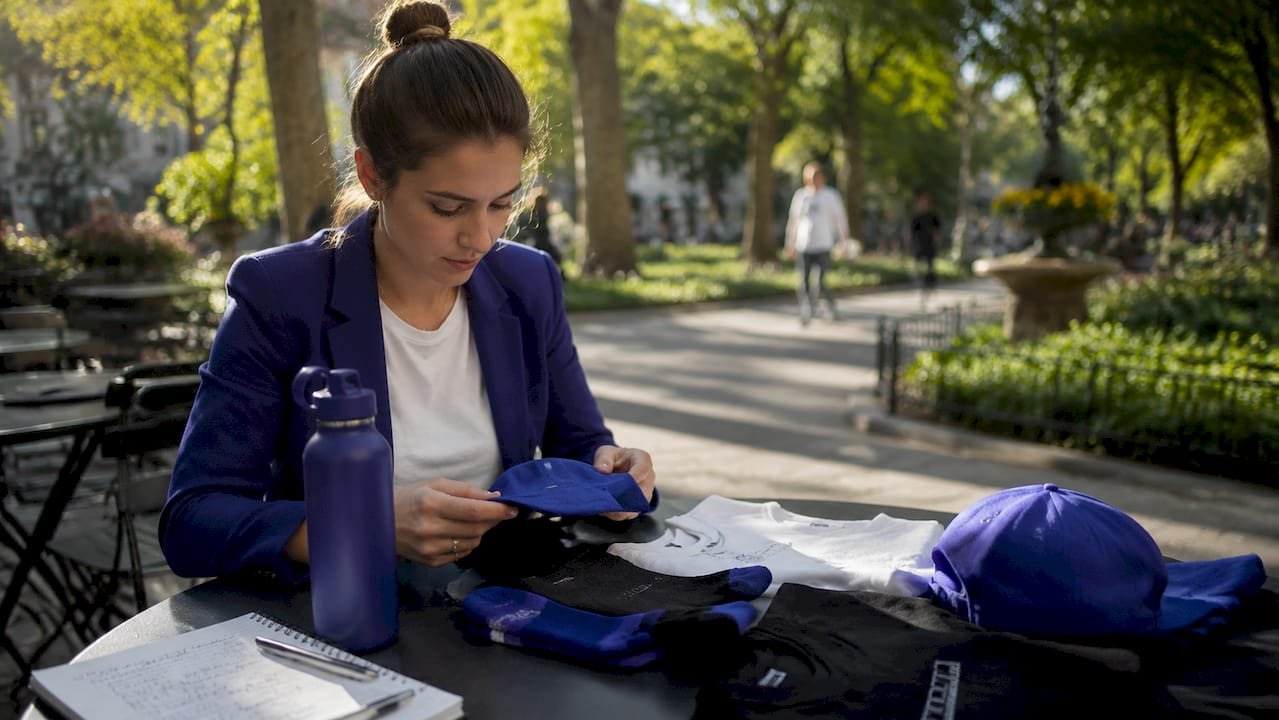
A wearable promotional product is any branded item designed to be worn by consumers, turning everyday use into continuous brand exposure. Think custom T-shirts, embroidered caps, branded socks, and fitness trackers with your logo. These items sit at the intersection of utility and marketing, and the data behind them is hard to ignore. According to ASI’s research, promotional products outperform TV, social media, and digital advertising in consumer preference and brand recall. For brand managers looking to stretch their budgets without sacrificing reach, wearables are one of the most efficient tools available.
What is a wearable promotional product, exactly?
The industry term for this category is promotional apparel and wearables, though “wearable promotional product” is the phrase most marketers search for. Promotional apparel encompasses shirts, hats, gloves, and accessories, while the broader wearables category extends to tech devices like fitness trackers and Bluetooth accessories. Branding is applied through screen printing, embroidery, or heat transfer, depending on the material and design complexity.
What separates wearables from other promotional products is physical proximity to the consumer. A branded pen sits in a drawer. A branded jacket goes to the grocery store, the gym, and the school pickup line. That difference in exposure is not marginal. It is the core reason apparel accounts for the largest share of promotional product sales across the industry.
Which types of wearable products perform best?
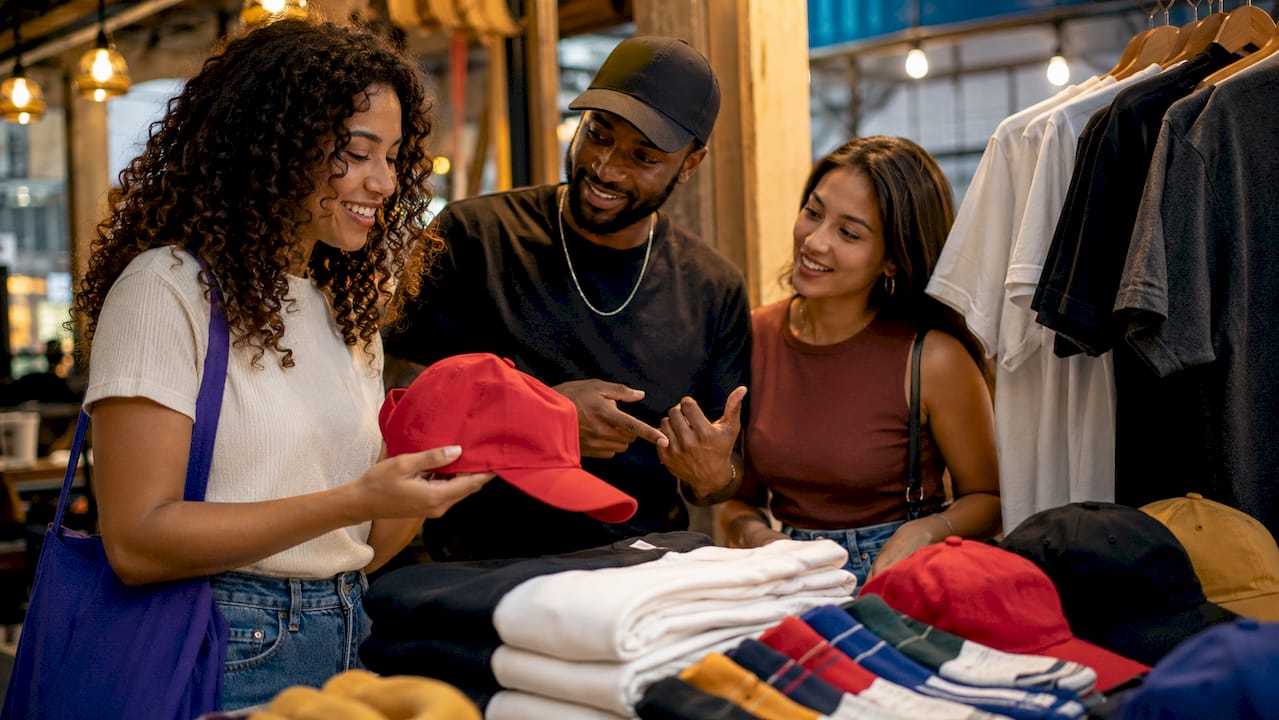
Wearable promotional items fall into three clear categories, each with different cost profiles and impression metrics.
Apparel is the dominant category. T-shirts, hoodies, caps, jackets, socks, and scarves all carry logos into public spaces repeatedly. A $15 T-shirt worn twice a month for two years generates over 1,500 individual brand impressions. That math makes apparel one of the most cost-efficient media buys available to a brand manager.
Wearable tech is the fastest-growing segment. Branded fitness trackers, smartwatches, and Bluetooth earbuds carry a higher unit cost but signal premium brand positioning. These items are especially effective for tech companies, financial services firms, and healthcare brands where the product reinforces the brand’s identity.
Accessories fill the gap between apparel and tech. Branded bags, hats, and gloves extend reach without the price point of tech devices. Tote bags in particular punch above their weight: a $6 tote bag generates approximately 5,000 impressions at roughly 0.1 cents per impression.
| Product Type | Typical Unit Cost | Avg. Impressions | Cost Per Impression |
|---|---|---|---|
| Baseball Cap | $8–$15 | 3,300+ | ~0.3 cents |
| T-Shirt | $10–$20 | 1,500+ | ~0.5 cents |
| Tote Bag | $5–$10 | 5,000+ | ~0.1 cents |
| Branded Socks | $6–$12 | High (weekly use) | Very low |
| Fitness Tracker | $25–$60 | Varies | Moderate |
Pro Tip: If your budget is tight, start with tote bags or socks. Both deliver exceptional impression volume at low unit costs, and socks in particular have become a breakout category for brand recall.
What are the measurable benefits of wearable promotions?
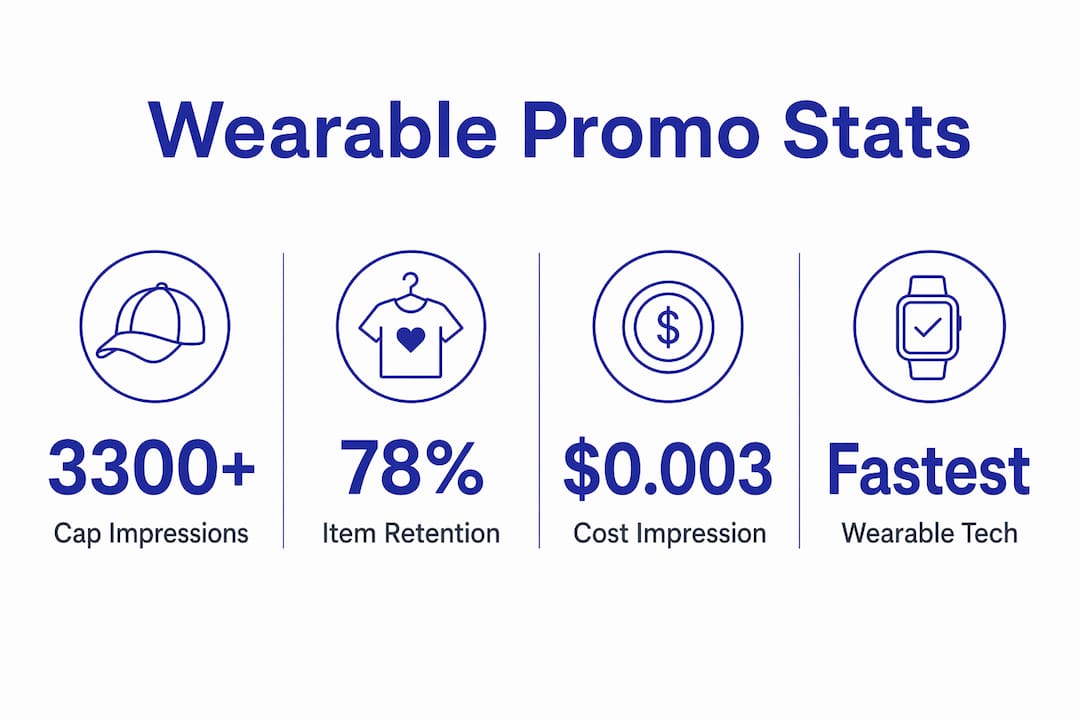
The benefits of wearable promotions are quantifiable, not theoretical. Baseball caps produce over 3,300 impressions at approximately 0.3 cents each. Fleece apparel averages under 0.4 cents per impression. Compare that to the cost of a digital display ad, and the efficiency gap becomes obvious.
Retention is another measurable advantage. Promotional socks are kept for 2–3 years on average, with 53% of recipients wearing them weekly. That is repeated brand exposure with zero additional media spend after the initial purchase.
The brand perception data is equally compelling. 78% of consumers view a brand more favorably after receiving a promotional item, and 76% are more likely to do business with that brand. These numbers reflect a channel that builds both awareness and purchase intent simultaneously.
“Promotional products deliver measurable impressions at a fraction of a cent, consistently outranking all other advertising channels in consumer preference and brand recall.” — Ashish Mittal, CEO, ASI
Utility drives retention across all wearable categories. 78% of recipients keep promotional items because they find them practical. This means product selection is a strategic decision, not just a creative one. Choose items your audience will actually use, and your brand stays visible for months or years.
Does product quality actually change the outcome?
Quality is not a preference. It is a performance variable. High-quality wearables build brand loyalty, while low-quality items get discarded quickly, erasing the marketing investment entirely. A cheap T-shirt that shrinks after two washes does not generate 1,500 impressions. It generates one impression and a negative brand association.
Here is how to apply a quality standard when sourcing custom wearable merchandise:
- Match material to use case. A branded gym shirt needs moisture-wicking fabric. A trade show giveaway cap needs structured construction. Retail-quality standards are the right benchmark.
- Audit the decoration method. Screen printing works for bold, simple logos. Embroidery signals premium quality on caps and jackets. Heat transfer is cost-effective but less durable on high-wear items.
- Request samples before bulk orders. No reputable vendor will refuse a sample request. Wash the item, wear it, and assess it before committing to volume.
- Check supplier credentials. Look for vendors with documented quality control processes and clear product specifications. Discountswag, for example, provides detailed product specs and customization options so you know exactly what you are ordering.
The quality-to-loyalty connection is direct: consumers associate the quality of a branded item with the quality of the brand itself. A well-made jacket says something different about your company than a flimsy tote bag does.
Pro Tip: When evaluating wearable vendors, ask specifically about fabric weight for apparel and thread count for embroidery. These two specs reveal more about actual quality than any marketing description.
How to use wearable products in marketing campaigns
Strategic deployment separates brands that get results from those that just spend money on giveaways. The following approach works across industries and budget levels.
Align the product with your audience’s lifestyle. A fitness brand distributing branded running socks makes sense. A financial services firm handing out the same item at a wealth management conference does not. The product should feel like a natural extension of your brand’s world.
Use events as distribution anchors. Trade shows, product launches, community sponsorships, and employee onboarding are all high-value distribution moments. Recipients at these touchpoints already have a relationship with your brand, which increases the likelihood they will keep and use the item. For event-specific ideas, the best trade show giveaways guide covers formats that consistently perform.
Build the walking billboard effect deliberately. A $15 T-shirt worn in public is a media placement. Treat it like one. Design for visibility: clear logo placement, readable brand name, and a color palette that stands out. Subtle branding works for premium positioning; bold branding works for mass awareness.
Track impressions, not just units distributed. Use ASI’s impression benchmarks to calculate the estimated reach of your wearable campaign. If you distribute 500 branded caps at a conference, you are generating roughly 1.65 million impressions over the life of those items. That number belongs in your campaign report alongside digital metrics.
Layer wearables into your broader marketing mix. Wearables work best when they reinforce other brand touchpoints. A branded hoodie given at a product launch, paired with a social media campaign asking recipients to post photos, creates earned media on top of the physical impression value. The branded giveaway ROI case is strongest when wearables connect to a larger campaign narrative.
Key takeaways
Wearable promotional products deliver more brand impressions per dollar than virtually any other advertising channel, making them a core tool for brand managers focused on measurable ROI.
| Point | Details |
|---|---|
| Definition is precise | Wearable promos are branded items worn by consumers, turning daily use into brand exposure. |
| Apparel leads all categories | T-shirts, caps, and socks generate thousands of impressions at fractions of a cent each. |
| Quality determines ROI | Low-quality items get discarded; retail-grade materials build loyalty and extend item life. |
| Utility drives retention | 78% of recipients keep promotional items because they find them practical and useful. |
| Strategy multiplies impact | Aligning product choice with audience lifestyle and event timing maximizes campaign results. |
Why wearables are the most underrated line item in a marketing budget
I have reviewed hundreds of marketing budgets over the years, and wearables are almost always underfunded relative to their actual performance. Brand managers will spend $50,000 on a digital campaign that generates clicks nobody remembers, then allocate $2,000 to branded apparel as an afterthought. The impression data from ASI consistently shows that is backwards.
The mistake I see most often is treating wearables as a cost center rather than a media channel. When you reframe a $10 cap as a media placement generating 3,300 impressions at 0.3 cents each, the budget conversation changes completely. You are not buying merchandise. You are buying reach.
The other pitfall is chasing novelty over utility. Wearable tech is exciting, and branded fitness trackers photograph well for internal presentations. But if your audience is not going to wear a fitness tracker daily, the impression count drops to near zero. Socks, caps, and quality T-shirts consistently outperform flashier items because people actually use them.
My honest recommendation: start with one wearable category, buy quality, and measure the impressions generated. The numbers will make the case for a larger allocation next cycle better than any argument I could make here.
— Jerry
Explore wearable promotional products at Discountswag
Discountswag carries an extensive catalog of custom wearable merchandise built for brand managers who need quality, variety, and reliable customization. From embroidered caps and retail-grade apparel to branded tech accessories, every product is available with detailed specifications so you know exactly what you are getting before you order.
Whether you are planning a trade show campaign, an employee onboarding kit, or a client appreciation program, Discountswag has the wearable options to match your brand and your budget. Browse the full branded promotional products catalog to find the right wearable items for your next campaign, or explore the corporate apparel buying guide for bulk ordering strategies that keep costs low without sacrificing quality.
FAQ
What is a wearable promotional product?
A wearable promotional product is any branded item designed to be worn by consumers, including T-shirts, caps, socks, jackets, and wearable tech devices. These items generate brand impressions through everyday use in public spaces.
What are the most popular wearable promotional giveaways?
Caps, T-shirts, and branded socks are the most popular wearable giveaways based on sales volume and impression data. Tote bags and fleece apparel also rank highly due to their utility and low cost per impression.
How many impressions does a branded cap generate?
A baseball cap generates over 3,300 impressions at approximately 0.3 cents per impression, according to ASI’s 2026 Ad Impressions Study. That makes it one of the most cost-efficient advertising formats available.
How long do recipients keep promotional wearables?
Promotional socks are kept for 2–3 years on average, with 53% of recipients wearing them weekly. Quality apparel items like jackets and hoodies have similarly long retention periods when made to retail standards.
Why does quality matter for wearable promotional products?
Low-quality wearables are discarded quickly, eliminating all future brand impressions and potentially creating a negative brand association. High-quality materials and construction keep items in circulation longer, multiplying the return on your initial investment.
 Bottle Carriers
 Mugs
Mugs