

4 Earth Day Giveaways Marketers Can Verify With Certificates

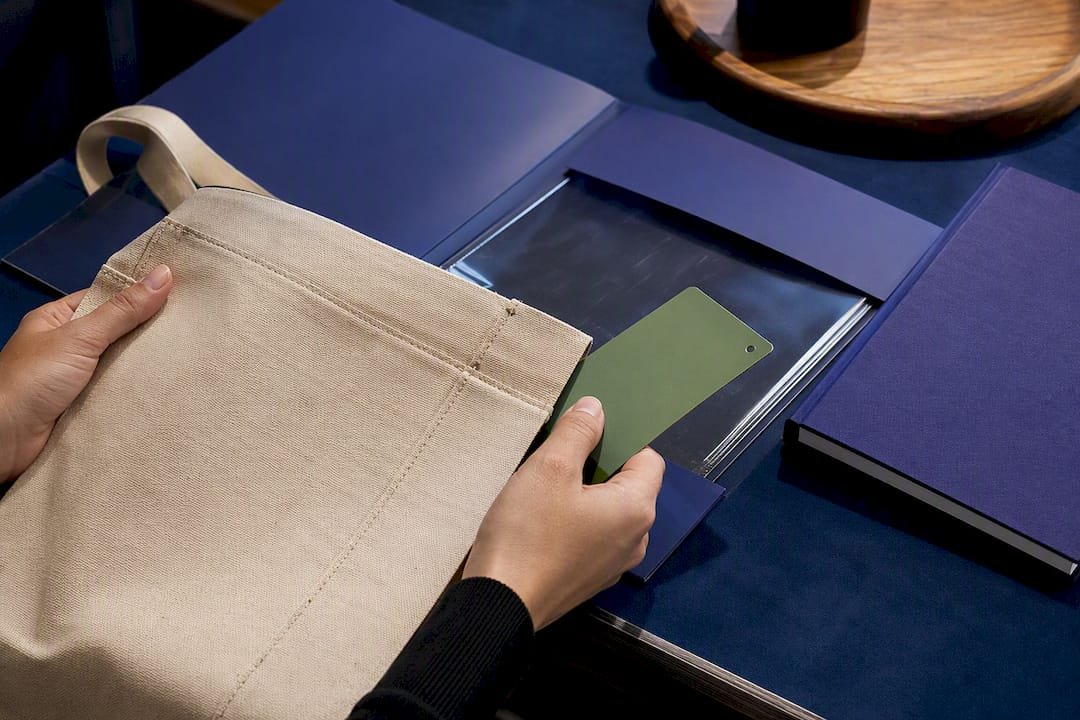
Prioritize four categories: recycled cotton totes for reach, seed packets or grow kits for tactile impact, reusable drinkware for daily visibility, and a tree-planting or donation add-on for measurable outcomes on the cheap. Each earns its place on a different axis: cost, memorability, repeat exposure, or verified impact. Pick your mix based on headcount and budget, then lock materials and lead times before you plan a distribution date.
TL;DR:
- Recycled cotton tote bags are more durable and premium but cost more, while recycled PET bags are cheaper and more moisture-resistant; ask vendors for washability and imprint details.
- Seed packets’ germination rates and regional seed suitability are critical to success, requiring suppliers to provide testing data and specific planting instructions.
- Impact-focused gifts like tree-planting donations and digital impact stories often outperform standalone products in campaign memorability and recipient engagement.
- Verifiable certifications such as FSC, GRS, and GOTS, along with transparent recycled content percentages, are essential for credible sustainability claims and ESG reporting.
Table of Contents
- What Are the Best Earth Day Giveaway Ideas for 2026?
- How Do You Evaluate Sustainability Claims and Vendor Credentials?
- How Do You Run an Earth Day Giveaway Campaign That Actually Gets Noticed?
- What Should You Budget and When Should You Order for Earth Day?
- An Editorial Note on Distributor Experience with Earth Day Orders
- What Legal Rules Apply to Earth Day Giveaways and Environmental Claims?
- What Do Successful Earth Day Giveaway Campaigns Look Like?
- Why Most Earth Day Giveaway Advice Undersells the Documentation Problem
- How Discountswag Can Fulfill Your Earth Day Order on Time
- Sources
What Are the Best Earth Day Giveaway Ideas for 2026?
Every credible list of earth day giveaways starts with the same four families, and for good reason: they cover the four things a giveaway actually has to do (get used, get seen, feel meaningful, and ship on time). Here’s how each stacks up, plus the questions to ask your supplier before you commit.
Reusable bags. Recycled cotton twill and recycled PET totes dominate this category because they solve a real problem: shoppers need bags, and a branded one gets carried repeatedly. Recycled cotton feels premium and prints cleanly with screen printing, but it runs heavier and pricier per unit. Recycled PET (often made from post-consumer bottles) costs less and holds up better against moisture, though the imprint area is usually smaller. Ask your vendor for washability specs and confirm the imprint panel size before finalizing art. Retailers understand the pull of this format at scale. H-E-B distributed 276,000 free reusable bags across Texas for Earth Day 2026, a volume that only makes sense with recycled cotton or recycled PET tote options at competitive per-unit pricing.
- Recycled cotton twill totes work well for premium gifting or client-facing events.
- Heavier 7oz grocery totes suit grocery-style handouts or conference swag bags.
- Confirm whether the vendor’s imprint method is screen print, heat transfer, or embroidery. Each affects cost and durability differently.
Seed packets and plantable paper. These are the lowest-cost, highest-charm option on the list, but they carry a quality risk most buyers miss: germination rate. Ask the supplier for germination testing data and confirm the seed mix is regionally appropriate, not a generic blend that won’t sprout in half your recipients’ climates. Labeling should include planting depth, sun requirements, and a rough bloom timeline. Skip suppliers who can’t answer basic agronomy questions. That’s a red flag, not a technicality.
Grow kits and small planters. A step up from seed packets in perceived value, these kits (soil pellet, small pot, seed packet, instructions) feel like an actual gift rather than a paper freebie. The tradeoff is shipping fragility and higher per-unit cost. Reserve grow kits for smaller, higher-value audiences like VIP clients or executive gift lists rather than mass event handouts.
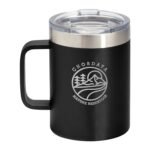
Reusable drinkware. Stainless steel bottles project quality and survive years of daily use, but confirm they’re BPA-free and ask about the powder coat process for full-color branding. Recycled plastic tumblers cost less and print easily, though the material feels less premium and some brands report shorter buyer-perceived lifespan. Either way, ask about lid material separately. It’s often the compliance detail that gets missed.
Recycled notebooks and bamboo pens. These are dependable, low-drama giveaways. Recycled paper notebooks with a kraft or recycled-fabric cover pair naturally with bamboo pens for a cohesive desk kit. Impact perception is modest compared to totes or drinkware, so treat these as add-ons in a bundle rather than a standalone hero item.
Higher-impact alternatives. Tree-planting donations and verified digital impact gifts are gaining ground because they sidestep the biggest weakness of physical swag: the item that ends up in a drawer. ForestNation’s corporate tree kits pair a small planting donation with a personalized digital “Gift Story” the recipient can track, starting at roughly $1 per digital tree story and scaling up for physical kit versions. Pairing a $2 to $4 tote with a $1 tree donation often outperforms a $6 standalone item in how recipients describe the campaign afterward.
Low-cost mass options. For large public events where per-unit cost has to stay under a dollar, seed-embedded pencils and eco-stickers still do the job. They won’t move the needle on brand recall alone, but they fill out a table display and keep foot traffic moving.
How Do You Evaluate Sustainability Claims and Vendor Credentials?
Most greenwashing in promotional products isn’t outright lying. It’s vague language standing in for verifiable data. Your job during vendor evaluation is to convert every fuzzy claim into a number or a certificate.
- Request certifications by name, not category. FSC (Forest Stewardship Council) certification applies to paper and wood products like notebooks and pencils and confirms the material came from responsibly managed forests. GRS (Global Recycled Standard) verifies actual recycled content percentage in textiles and plastics, not just a marketing claim of “eco-friendly.” GOTS (Global Organic Textile Standard) applies to organic cotton apparel and bags and covers both the fiber and the processing chemicals used. If a vendor can’t produce a certificate number you can look up, treat the claim as unverified.
- Demand a recycled content percentage, not an adjective. “Made with recycled materials” could mean 10% or 90%. A credible supplier states the number: “80% post-consumer recycled cotton” or “100% recycled PET shell.” Anything vaguer than that is a flag.
- Confirm MOQ, sample policy, and lead time up front. Typical minimum order quantities run from 50 to 250 units depending on the item and imprint method. Reputable suppliers offer paid samples (often refundable against a full order) within 5 to 14 days, so ask directly rather than assuming.
- Ask what drives the price. Full-color digital printing costs more than single-color screen printing. Custom packaging, individual poly bags, and rush production all add line items. Get an itemized quote, not a bundled number, so you can trim without guessing.
- Save documentation for ESG reporting. Recycled content certificates, CO2 estimates where the supplier provides them, and material sourcing statements all belong in a shared folder before the order ships, not after your sustainability team asks for them.
Pro Tip: Ask every vendor the same five questions in writing (certification numbers, recycled content percentage, MOQ, sample lead time, and pricing breakdown) and compare answers side by side. The supplier who answers all five without hedging is usually the one who can actually back up what’s on the product page.
How Do You Run an Earth Day Giveaway Campaign That Actually Gets Noticed?
A giveaway without a message attached is just inventory leaving the building. Pair every item with a specific, stated action: “This tote replaces 500 plastic bags over its lifetime” lands harder than “eco-friendly tote” printed on a hangtag.
Distribution shapes the message. Event table handouts work for broad awareness but produce low retention unless paired with a conversation. Mailed kits to remote employees or top clients cost more per unit but see far higher engagement because the unboxing moment does some of the marketing for you. Including a giveaway item in new-hire onboarding kits extends Earth Day messaging past a single day into a recurring brand touchpoint.
Measurement doesn’t require anything elaborate:
- Print a unique QR code on the tag or packaging that routes to a landing page tracking impact (“You just helped plant a tree. Here’s your Gift Story.”).
- Use a dedicated trackable URL per distribution channel (mail versus event versus onboarding) so you can compare redemption rates.
- Assign unique promo codes if the giveaway ties to a follow-up offer, so procurement can report actual redemption, not just units shipped.
On packaging: skip individual poly bags where you can, batch-ship to a single office address instead of dozens of home addresses when possible, and use recycled kraft mailers rather than branded boxes for anything beyond a VIP tier. It cuts cost and reinforces the message instead of contradicting it.
What Should You Budget and When Should You Order for Earth Day?
Per-unit pricing splits roughly into three tiers: low-cost mass promo items (seed pencils, stickers, basic totes) generally run under $2 per unit at volume; mid-tier reusable items (branded drinkware, quality cotton totes) typically fall between $4 and $12 depending on material and imprint method; premium impact bundles (drinkware or totes paired with a tree-planting or donation add-on) usually land between $8 and $20 per recipient.
Timeline matters more than most buyers expect. A realistic production runway looks like this:
- Sample approval: 5 to 14 days, per common supplier sample and rush policies.
- Internal design and stakeholder approval: 3 to 7 days, longer if legal or brand teams need sign-off on messaging.
- Production: 10 to 30 days depending on imprint complexity and order volume.
- Shipping: 5 to 14 days, longer for multi-location fulfillment split across offices.
Rush ordering compresses this timeline but adds cost, and turnaround still depends on imprint complexity. If you’re distributing to multiple offices or retail locations, splitting production into batches shipped directly to each site usually beats shipping one large order for internal redistribution. It cuts a full leg of transit time and avoids one office cannibalizing another’s allocation.
An Editorial Note on Distributor Experience with Earth Day Orders
Jerry has spent years watching what actually moves the needle in bulk promotional orders, and the pattern holds for Earth Day specifically: buyers who ask for certification numbers and recycled content percentages upfront get better products and fewer surprises at delivery. Discountswag handles the logistics side of that equation directly, offering rush ordering and fulfillment to single or multiple company locations for exactly this kind of time-sensitive campaign. The lesson from watching hundreds of bulk orders play out is simple. Specificity in the request produces specificity in the product.
What Legal Rules Apply to Earth Day Giveaways and Environmental Claims?
Running a giveaway or sweepstakes tied to Earth Day carries real legal obligations, not just marketing considerations. If you’re giving away prizes through a contest rather than a direct handout, you need published official rules covering eligibility, entry mechanics, dates, and prize notification procedures. ELPC’s Earth Day 2026 e-bike giveaway rules show the standard structure: age and residency restrictions, defined entry windows, and clear winner notification steps. Skipping this step exposes your company to state-level sweepstakes law violations, since many states require a no-purchase-necessary entry path and specific disclosure language.
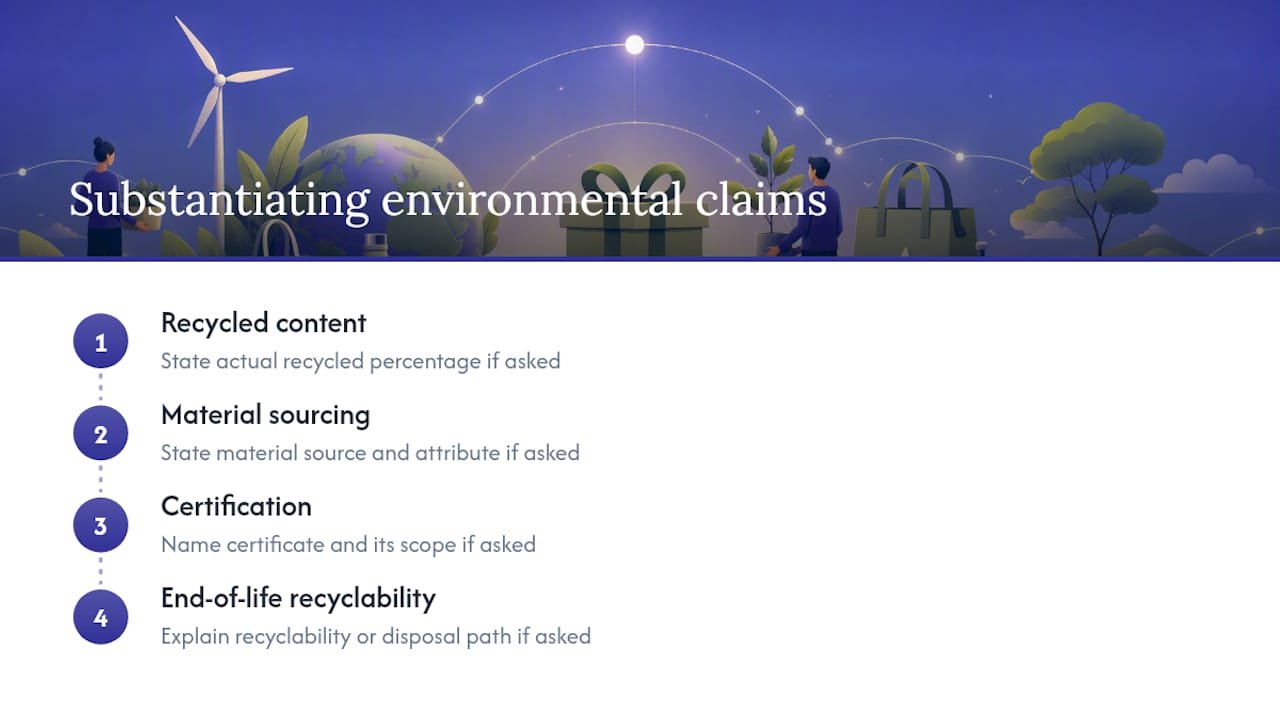
Environmental claims carry their own risk. The Federal Trade Commission’s Green Guides govern how terms like “biodegradable,” “recyclable,” or “sustainable” can be used on packaging and marketing materials, and vague claims without substantiation can trigger regulatory scrutiny or consumer complaints. If your notebook says “recycled,” be ready to state the actual recycled content percentage. If your tote claims “eco-friendly,” know what specific attribute earns that label, whether it’s material sourcing, certification, or end-of-life recyclability, and be able to state it plainly if asked.
Contest structures from established brands offer a useful template. Larger sweepstakes commonly publish detailed rules covering contest period, eligibility, winner selection method, prize value, and dispute resolution terms, giving marketing and legal teams a structure to adapt rather than draft from scratch.
What Do Successful Earth Day Giveaway Campaigns Look Like?
Scale and creativity both show up in the campaigns that get remembered. H-E-B’s approach to Earth Day works because it’s simple and repeatable: give away hundreds of thousands of reusable bags at retail locations on the day itself, tied directly to a behavior (skip the plastic bag) rather than an abstract message. The 276,000-bag distribution succeeds because the item solves an immediate, obvious problem for the shopper standing at checkout.
Contest-driven campaigns take a different route. Kuli Kuli Foods assembled a $465 prize package from multiple mission-driven brands for an Earth Day giveaway, using the combined value to drive entries and cross-promote each participating brand to a shared audience. That model works especially well for smaller companies without the budget to distribute at H-E-B’s scale. Pool resources with complementary brands and let the collective prize value do the marketing work.
The common thread across both examples: neither campaign relied purely on the sustainability angle to carry the message. Each paired the environmental framing with a concrete mechanism (a free bag at checkout, an entry into a defined contest) that gave the recipient a clear, immediate reason to participate.
Why Most Earth Day Giveaway Advice Undersells the Documentation Problem
The conventional advice on earth day giveaways focuses almost entirely on product selection: pick something reusable, pick something with recycled content, done. That advice misses the part that actually determines whether a campaign holds up under scrutiny, which is documentation. A tote with an unverifiable “eco-friendly” label is a liability the moment someone asks for the recycled content percentage and nobody has it on file.
The buyers who get this right treat certification numbers, recycled content data, and vendor sourcing statements as procurement requirements, not nice-to-haves collected after the fact. That single shift changes vendor conversations from “do you have anything sustainable?” to “send me the GRS certificate number,” which filters out suppliers making claims they can’t back up before you’ve spent the budget.
Prioritize the items you can document over the ones that simply sound green. A recycled cotton tote with a real percentage beats a vague “eco-conscious” gift set every time compliance or ESG reporting comes up.
— Jerry
How Discountswag Can Fulfill Your Earth Day Order on Time
Discountswag handles the parts of an Earth Day order that usually cause the most stress: sourcing materials with real recycled content documentation, running rush production when your timeline slips, and shipping to multiple office locations or retail sites without you managing separate vendor relationships for each.
Two bundles tend to work well for Earth Day specifically. A recycled cotton tote paired with a seed packet kit gives recipients something useful immediately and something to plant later, covering both the practical and sentimental angles at a low combined per-unit cost. A branded stainless steel bottle paired with a tree-planting donation add-on works better for client gifts or executive audiences, since the bottle carries daily visibility while the donation adds a verified impact story recipients can point to. Discountswag’s tote bag guide breaks down material and imprint options if you’re deciding between weights and fabrics for the first bundle.
If you’re still working out which product mix fits your budget and headcount, Discountswag’s guide to choosing corporate swag walks through the calculation. When you’re ready to move, request a quote and samples for your top two or three options directly through Discountswag’s promotional items guide and lock your production slot before the April rush fills up.

Sources
The claims and figures in this guide draw on public contest rules, retail giveaway coverage, and impact-focused gifting analysis, alongside Discountswag’s own product and planning pages.
- Earth Day 2026 EBike Giveaway Rules | ELPC
- H-E-B free reusable bags Earth Day 2026: When, where to get one
- Branded Earth Day Gifts: Corporate Tree Kits That Beat Swag
 Bottle Carriers
 Mugs
Mugs