

How Promotional Product Sourcing Works for Marketers


Promotional product sourcing is the structured process of identifying, evaluating, and procuring branded merchandise to fulfill specific marketing or organizational objectives. Understanding how promotional product sourcing works separates teams that consistently deliver on time and on brand from those that scramble at the last minute. The process spans six distinct stages: briefing, supplier identification, sampling, negotiation, production, and delivery. Each stage carries its own risks and decision points. This guide walks marketing professionals and procurement specialists through every step, from choosing the right decoration method to using technology to cut errors and save time.
How promotional product sourcing works: the core steps
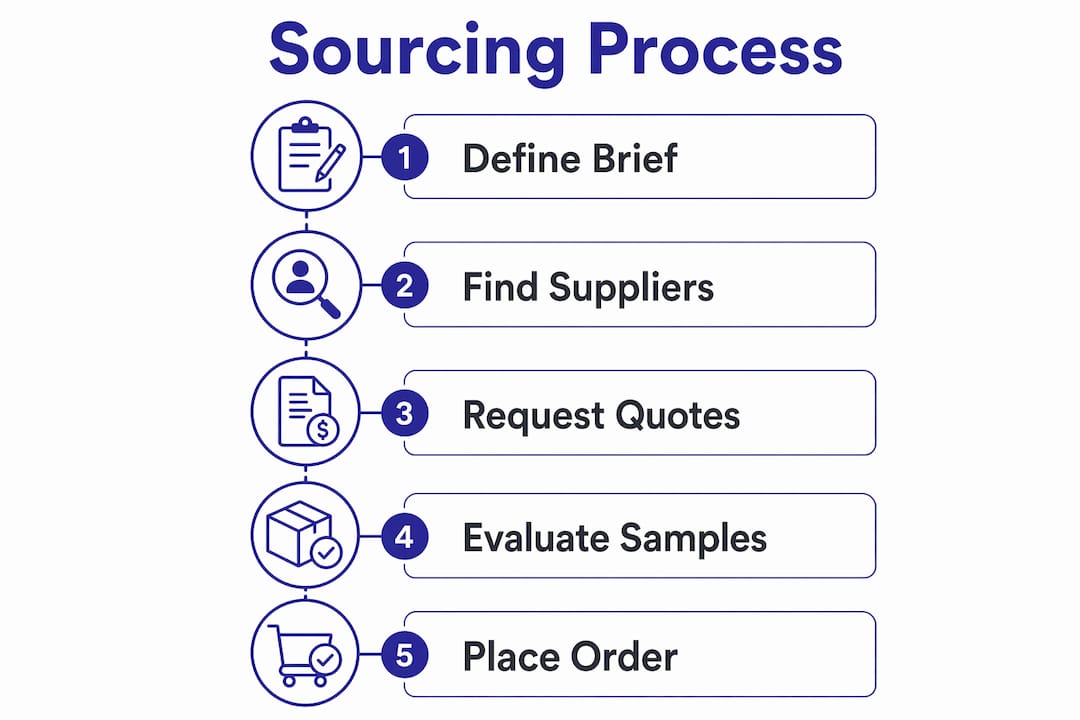
Promotional product sourcing, also called promotional merchandise procurement, follows a repeatable workflow. Knowing the steps lets you control quality, cost, and timing.
-
Define the brief. Start with the campaign goal, target recipient, budget per unit, and required quantity. A trade show giveaway has different requirements than an executive gift set. Nail this before contacting a single supplier.
-
Identify candidate suppliers. Search verified distributor networks, industry platforms, and direct factory listings. Filter for suppliers with documented quality standards and sample availability.
-
Request and evaluate samples. Never approve a product based on a digital mockup alone. Physical samples reveal print registration, material weight, and color accuracy that photos hide.
-
Negotiate MOQs and pricing tiers. Minimum order quantities and per-unit costs shift significantly at volume thresholds. Get tiered pricing in writing before committing.
-
Confirm production and decoration details. Lock in the decoration method, Pantone color references, and artwork files before the order enters production.
-
Manage the production timeline. A custom logo order runs 5–8 weeks from design approval through manufacturing and delivery. That window does not include revision cycles or shipping delays. Build a buffer into every project calendar.
-
Conduct quality control. Inspect pre-shipment samples or arrange third-party inspection for large orders. Confirm that the delivered product matches the approved sample before accepting the shipment.
Pro Tip: Lock your artwork files and color specifications before requesting quotes. Suppliers price against confirmed specs. Changing artwork after quoting restarts the clock and often raises the cost.
How do you evaluate and choose the right suppliers?
Supplier selection is the single highest-leverage decision in the sourcing process. A weak supplier creates problems that no amount of follow-up can fully fix.

The most reliable filter is verified supplier status combined with sample availability. Filtering for Trade Assurance and sample availability reduces post-order disputes by 37%. That number reflects a real reduction in chargebacks, replacement orders, and missed deadlines.
Use these criteria when building your supplier shortlist:
- Minimum order quantity. MOQs at or below 100 units let you test multiple product types without overcommitting budget. Power banks, lanyards, and drinkware all behave differently in production.
- Response time. A supplier that takes 48 hours to answer a sample request will take longer when problems arise mid-production.
- Years active and review history. Longevity and verified buyer reviews reduce the risk of dealing with a new or unreliable operation.
- Decoration capabilities. Confirm the supplier handles your required method in-house. Outsourced decoration adds lead time and a quality control gap.
- Platform membership. ASI membership gives distributors access to ESP+, which integrates supplier search and order workflow into a single tool. That reduces manual errors and speeds up quoting.
The choice between a direct factory, a trading company, and a showroom listing each carries trade-offs. Direct factories offer lower per-unit costs but require larger MOQs and more hands-on quality management. Trading companies add a margin but often provide better English communication and consolidated shipping. A detailed supplier vetting guide helps you match the supplier type to the order size and complexity.
Pro Tip: Always ask for a pre-production sample on orders above 500 units. The cost of one sample is trivial compared to the cost of reprinting an entire run.
What decoration methods affect sourcing decisions?
The decoration method you choose shapes cost, lead time, and how the finished product looks in a recipient’s hands. Deciding early aligns your sourcing, budget, and timeline from the start.
Screen printing
Screen printing is cost-effective at scale, typically above 500 units, but carries high setup costs per color. Each additional color in the design increases both cost and production time. It works best for simple, bold logos on flat surfaces like tote bags, T-shirts, and hard goods.
Embroidery
Embroidery delivers a premium, durable finish on apparel and bags. The setup cost is higher than screen printing, and the per-unit cost stays elevated even at volume. Embroidery and direct-to-garment printing each offer distinct quality and durability advantages, but they affect lead time and budget differently. Embroidery suits executive gifts and corporate apparel where perceived quality matters.
Direct-to-garment (DTG)
DTG printing applies ink directly to fabric using a modified inkjet process. It handles full-color, photo-quality designs without setup fees, making it the right choice for short runs with complex artwork. The per-unit cost is higher than screen printing at volume, and wash durability varies by fabric type.
The table below summarizes the key trade-offs:
| Method | Best for | Setup cost | Per-unit cost at scale | Lead time impact |
|---|---|---|---|---|
| Screen printing | Large runs, simple logos | High | Low | Moderate |
| Embroidery | Apparel, executive gifts | High | Medium | Moderate to high |
| DTG | Short runs, complex artwork | Low | High | Low |
Choosing the wrong method for your order size is one of the most common and costly mistakes in promotional merchandise procurement. Match the method to the quantity, artwork complexity, and quality expectation before you request a quote.
How does technology improve the sourcing process?
Technology has changed promotional product procurement from a manual, email-heavy process into a trackable workflow. The shift matters because manual sourcing creates errors at every handoff.
Modern sourcing platforms unify supplier catalogs, enable real-time price and stock updates, and eliminate the manual errors that come from managing multiple spreadsheets and email threads. That consolidation alone removes a significant source of order mistakes.
The practical benefits for procurement teams include:
- Instant filtering. Search by product category, decoration method, MOQ, and price range in one interface instead of querying five separate supplier websites.
- Real-time pricing. Stock levels and pricing update automatically, so quotes reflect current availability rather than last month’s catalog.
- Shortlisting and comparison. Build a product shortlist and share it with stakeholders for approval before placing any order.
- Client presentation tools. Generate branded product presentations directly from the platform, reducing the back-and-forth between procurement and marketing.
- Order tracking. Monitor production status and shipping in one place rather than chasing supplier emails.
Sourcing software reduces order processing time and improves client service responsiveness. That improvement shows up in fewer rush orders, fewer reprints, and faster campaign launches. For teams managing multiple campaigns simultaneously, the time savings compound quickly.
Platforms like ASI’s ESP+ go further by integrating supplier search and quoting into a single workflow, removing the need to maintain separate supplier databases. Discountswag operates within a vetted supplier network that gives procurement teams access to curated product categories without the overhead of managing raw supplier relationships.
Key Takeaways
Effective promotional product sourcing requires a defined brief, verified suppliers, early decoration decisions, and realistic timelines built around a 5–8 week production window.
| Point | Details |
|---|---|
| Start with a clear brief | Define campaign goal, recipient, budget, and quantity before contacting any supplier. |
| Vet suppliers rigorously | Filter for Trade Assurance, sample availability, and MOQs at or below 100 units for testing. |
| Choose decoration early | Screen printing, embroidery, and DTG each carry different cost, quality, and timeline trade-offs. |
| Build in timeline buffer | Custom orders run 5–8 weeks; add buffer for revisions, shipping delays, and approval cycles. |
| Use technology to reduce errors | Unified sourcing platforms eliminate manual errors and speed up quoting, comparison, and order tracking. |
Where most sourcing guides get it wrong
The standard advice is to “get three quotes and compare.” That is fine as far as it goes, but it misses the real risk in promotional product procurement: decoration method decisions made too late.
I have seen campaigns derailed not by bad suppliers but by teams that chose a product first and then tried to fit a decoration method around it. A full-color photographic design on a 200-unit order is a DTG job. Sending that brief to a screen printer wastes two weeks and produces a quote that looks expensive because it is. The method drives the supplier search, not the other way around.
The second thing most guides skip is the quality agreement. Getting a sample approved is not enough. You need a written record of the approved sample’s specifications, including color references, material weight, and print placement, before production starts. Without that record, “it doesn’t match the sample” becomes a subjective argument you will lose.
On technology: the teams that resist sourcing platforms because they “already have supplier relationships” are the ones most likely to miss deadlines. Relationships do not update pricing in real time. They do not generate a branded product presentation in ten minutes. Use the tools. Your supplier relationships become more valuable when you spend less time on administrative tasks and more time on quality and strategy.
The promotional product vendor selection process rewards preparation. Teams that brief well, vet suppliers systematically, and lock specs early consistently outperform those that treat sourcing as an afterthought.
— Jerry
Discountswag makes sourcing simpler for procurement teams
Sourcing branded merchandise across multiple campaigns and product categories is a significant operational task. Discountswag gives marketing professionals and procurement specialists access to a curated catalog of vetted promotional products, from brand awareness items to event merchandise and remote employee gifts, all from one platform.
Discountswag handles supplier relationships, product curation, and order management so your team focuses on campaign strategy rather than vendor coordination. The catalog covers branded promotional products across categories built for real marketing use cases. Whether you are sourcing for a trade show, a product launch, or an employee recognition program, Discountswag provides the product range and procurement support to get it done on time and on brand.
FAQ
What is promotional product sourcing?
Promotional product sourcing is the process of identifying, evaluating, and procuring branded merchandise to support marketing or organizational goals. It covers everything from supplier selection and sampling to decoration, production, and delivery.
How long does a custom promotional product order take?
A custom logo order typically takes 5–8 weeks from design approval through manufacturing and delivery. Build additional buffer into your timeline for revision cycles and shipping variables.
What MOQ should I look for when testing new products?
Select suppliers with MOQs at or below 100 units when testing new product types. That threshold lets you evaluate quality and fit without committing to a large production run.
Which decoration method is best for small orders?
Direct-to-garment printing is the best fit for short runs with complex or full-color artwork because it carries no setup fees. Screen printing becomes more cost-effective above 500 units.
How do sourcing platforms reduce procurement errors?
Unified sourcing platforms consolidate supplier catalogs, automate pricing updates, and replace manual spreadsheet tracking with a single workflow. That consolidation removes the handoff errors that cause misquotes, wrong specs, and missed deadlines.
 Bottle Carriers
 Mugs
Mugs