


Marketing Swag Inventory Management: A 2026 Guide


Marketing swag inventory management is the process of controlling, tracking, and fulfilling branded merchandise stock to reduce waste, cut costs, and keep promotional programs running without delays. The industry standard for corporate swag programs recognizes two core fulfillment models: centralized warehouse inventory and on-demand production. Mastering both, and knowing when to combine them, separates marketing teams that run tight programs from those that constantly scramble before events. This guide covers the methods, tools, and best practices that make swag inventory control work at scale.
What are the core methods for managing marketing swag inventory?
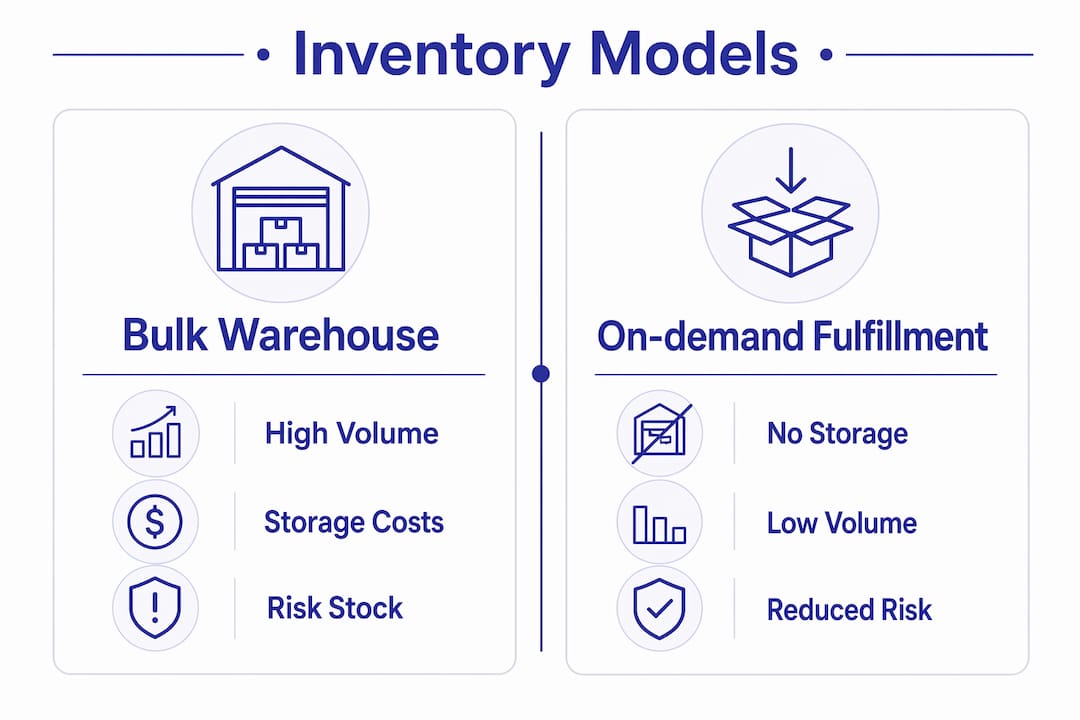
Branded merchandise inventory management relies on two distinct models, and choosing the wrong one wastes money fast.
Bulk warehouse inventory means purchasing items in volume, storing them in a physical or third-party warehouse, and fulfilling orders from that stock. This model delivers lower cost per unit and consistent quality control because you approve samples before production runs. Centralized inventory models make the most sense for teams with more than 50% of staff in one region and annual shipment volumes exceeding 100 kits. At that scale, bulk pricing and pre-stocked fulfillment reduce both lead times and per-unit costs significantly.

On-demand fulfillment produces items only when an order is placed. No warehouse, no minimum order, no risk of holding obsolete stock. On-demand swag suits globally distributed teams or programs shipping fewer than 50 kits per year. The tradeoff is a higher cost per unit, but that premium often beats the carrying cost of unsold inventory sitting in a warehouse.
| Criteria | Bulk warehouse inventory | On-demand fulfillment |
|---|---|---|
| Annual kit volume | 100+ kits | Fewer than 50 kits |
| Team distribution | Centralized, one region | Global or remote |
| Cost per unit | Lower | Higher |
| Overstock risk | Higher | Minimal |
| Lead time | Faster (stock on hand) | Longer (produced per order) |
| Quality control | Pre-approved samples | Varies by vendor |
Pro Tip: Before committing to a model, map your last 12 months of swag orders by volume, recipient location, and item type. That data tells you exactly which model fits your program.
Which tools support efficient swag inventory management?
Digital tools are the backbone of any promotional products tracking system that scales beyond a spreadsheet.
The most effective platforms connect sales, design, and production teams through a single centralized product catalog with real-time stock visibility. Modern inventory software reduces errors by giving every stakeholder the same live data on stock levels, reorder points, and order status. Without that shared view, teams routinely double-order items or miss replenishment windows entirely.
Key software features to evaluate:
- Centralized product catalog: One source of truth for all branded items, including approved artwork, sizes, and variants
- Real-time stock updates: Automatic quantity adjustments as orders are placed and fulfilled
- Automated order workflows: Triggered reorders when stock drops below a set threshold
- Quoting from live inventory: Sales and marketing teams generate accurate quotes without calling a warehouse
- Supplier database integration: Live data sync from multiple supplier platforms keeps pricing and availability current
- Dashboard reporting: Visibility into order errors, shipment delays, and fulfillment performance
Teams that automate inventory workflows achieve faster quoting, fewer errors, and better fulfillment outcomes by integrating product data, stock tracking, and order processing into one system. That integration removes the manual handoffs where most mistakes happen.
| Feature | Benefit | Who uses it most |
|---|---|---|
| Centralized catalog | Consistent branding, fewer approval cycles | Marketing coordinators |
| Real-time stock visibility | Prevents stockouts and overorders | Operations teams |
| Automated replenishment | Reduces manual monitoring | Procurement managers |
| Supplier integration | Accurate pricing and lead times | Buyers and account managers |
| Fulfillment dashboards | Tracks errors and delays | Program managers |
How to implement a hybrid swag inventory strategy
Sophisticated swag programs treat inventory management and on-demand fulfillment as complementary tools, not competing choices. The hybrid approach gives marketing teams bulk pricing on predictable items and production flexibility for everything else.
Here is how to build a hybrid model that works:
-
Audit your swag catalog by frequency. Identify the 5–10 items your team orders every quarter without fail. These are your core stock items: branded pens, tote bags, water bottles, or whatever your program relies on consistently. Stock these in bulk.
-
Segment by recipient location. Employees or clients in the same region receive kits from warehouse stock. Remote employees, international offices, or one-off event attendees receive on-demand fulfillment shipped directly. This cuts international shipping costs and customs complications.
-
Flag seasonal and experimental items for on-demand. New product launches, conference-specific kits, and seasonal giveaways carry obsolescence risk. Producing them on demand means you never hold leftover stock after an event ends.
-
Set reorder triggers for warehouse stock. Define a minimum quantity for each core item and automate a purchase order when stock hits that level. Manual monitoring fails at scale.
-
Review the split quarterly. A hybrid strategy is not a set-and-forget system. Quarterly reviews catch items that have shifted from experimental to core, or core items that have fallen out of use.
A hybrid inventory strategy prevents obsolescence by pairing warehouse stock for common kit items with on-demand production for one-off events, new markets, or remote employees. The result is bulk pricing where it matters and zero dead stock where it does not.
Pro Tip: Build a simple two-column spreadsheet: “Core items” on one side, “On-demand items” on the other. Review it every quarter and move items between columns based on actual order data, not assumptions.
What are best practices for swag inventory control and fulfillment?
Accurate inventory control requires clean data, automated processes, and regular reviews. Most fulfillment problems trace back to one of three failures: outdated product data, missed reorder windows, or no visibility into order errors.
Successful swag programs regularly update inventory data, review reorder points, and automate replenishment and reporting to minimize overstock and obsolescence. Clean data is not glamorous work, but it is the foundation every other process depends on.
Maintain accurate product and supplier data. Every item in your catalog needs a current description, approved artwork file, supplier contact, lead time, and minimum order quantity. Stale data produces wrong quotes and missed deadlines.
Set and review reorder points. A reorder point is the stock level that triggers a new purchase order. Set it based on your average weekly usage and your supplier’s lead time. Review these numbers quarterly because usage patterns shift.
Automate replenishment and reporting cycles. Manual stock checks fail when teams are busy. Automated alerts and scheduled reports keep inventory visible without requiring someone to log in and check every day.
Monitor fulfillment performance with dashboards. Track order error rates, shipment delays, and kit completion rates. A dashboard that surfaces problems in real time lets you fix issues before they affect recipients.
The biggest hidden cost in branded merchandise programs is not the cost per unit. It is the cost of items that were ordered, stored, and never used. Overstock happens when teams order based on optimism rather than data. Automated reorder triggers and quarterly catalog reviews are the two practices that eliminate most of that waste.
Prevent overstock and obsolescence proactively. Retire items that have not moved in two quarters. Run a clearance process for slow-moving stock before it becomes a write-off. For event giveaway management, order quantities based on confirmed attendance data, not estimated turnout.
Key Takeaways
Effective marketing swag inventory management combines centralized warehouse stock for high-volume core items with on-demand fulfillment for flexible, low-volume needs, supported by automated tracking and clean data.
| Point | Details |
|---|---|
| Choose the right model | Use bulk inventory for 100+ annual kits; use on-demand for fewer than 50 or global teams. |
| Adopt a hybrid approach | Stock core items in bulk and produce seasonal or experimental items on demand to cut waste. |
| Invest in integrated software | Centralized catalogs and real-time dashboards reduce errors and speed up fulfillment. |
| Automate replenishment | Set reorder triggers based on usage data to prevent stockouts and overstock. |
| Review quarterly | Audit your catalog and reorder points every quarter to keep the program current. |
Why I think most swag programs are solving the wrong problem
Most marketing teams I talk to are focused on finding better products. They spend hours comparing tote bag vendors or debating water bottle colors. The real problem is almost always the process behind the products.
A program that runs on spreadsheets and email chains will fail regardless of how good the swag is. I have seen teams with genuinely great branded merchandise lose entire event shipments because no one had visibility into stock levels or lead times. The items were perfect. The system was broken.
The shift I expect to see accelerate is the adoption of integrated platforms that connect procurement, fulfillment, and reporting in one place. Teams that build this infrastructure now will have a measurable advantage as branded merchandise programs grow more complex with remote and global workforces.
The hybrid model is not a compromise. It is the mature standard. Bulk inventory for predictable volume, on-demand for everything else. The teams that resist it usually do so because they have always done it one way. That is not a strategy. That is inertia.
— Jerry
Discountswag makes swag inventory easier to manage
Managing a promotional product program gets complicated fast, especially when you are balancing bulk orders, event kits, and remote employee shipments at the same time. Discountswag works with marketing teams to source, organize, and fulfill branded promotional items that fit both warehouse and on-demand fulfillment models.
Whether you need core stock items in bulk or curated kits for a specific campaign, Discountswag’s catalog covers the full range of corporate promotional products. The team at Discountswag also provides guidance on bulk purchasing strategies that align with your inventory model and budget. If you are building or refining a swag program, Discountswag is a practical starting point for getting the product mix right.
FAQ
What is inventory management for swag?
Swag inventory management is the process of tracking, storing, and fulfilling branded merchandise to prevent overstock, stockouts, and fulfillment errors. It applies standard inventory control principles to promotional products.
When should a team use on-demand swag fulfillment?
On-demand fulfillment works best for teams shipping fewer than 50 kits per year or managing globally distributed recipients. It eliminates storage costs but carries a higher cost per unit than bulk ordering.
What software features matter most for promotional products tracking?
The most critical features are a centralized product catalog, real-time stock updates, automated reorder triggers, and supplier database integration. These four capabilities eliminate most manual errors in swag fulfillment workflows.
How does a hybrid swag strategy reduce costs?
A hybrid strategy uses bulk warehouse stock for high-frequency core items and on-demand production for seasonal or experimental items. This combination captures bulk pricing where volume justifies it and avoids obsolete inventory where it does not.
How often should marketing teams review their swag inventory?
Quarterly reviews are the standard for healthy swag programs. Each review should cover reorder points, catalog relevance, supplier lead times, and any items that have not moved in 60 or more days.
 Bottle Carriers
 Mugs
Mugs