

Packaging Insert Ideas That Bring Customers Back

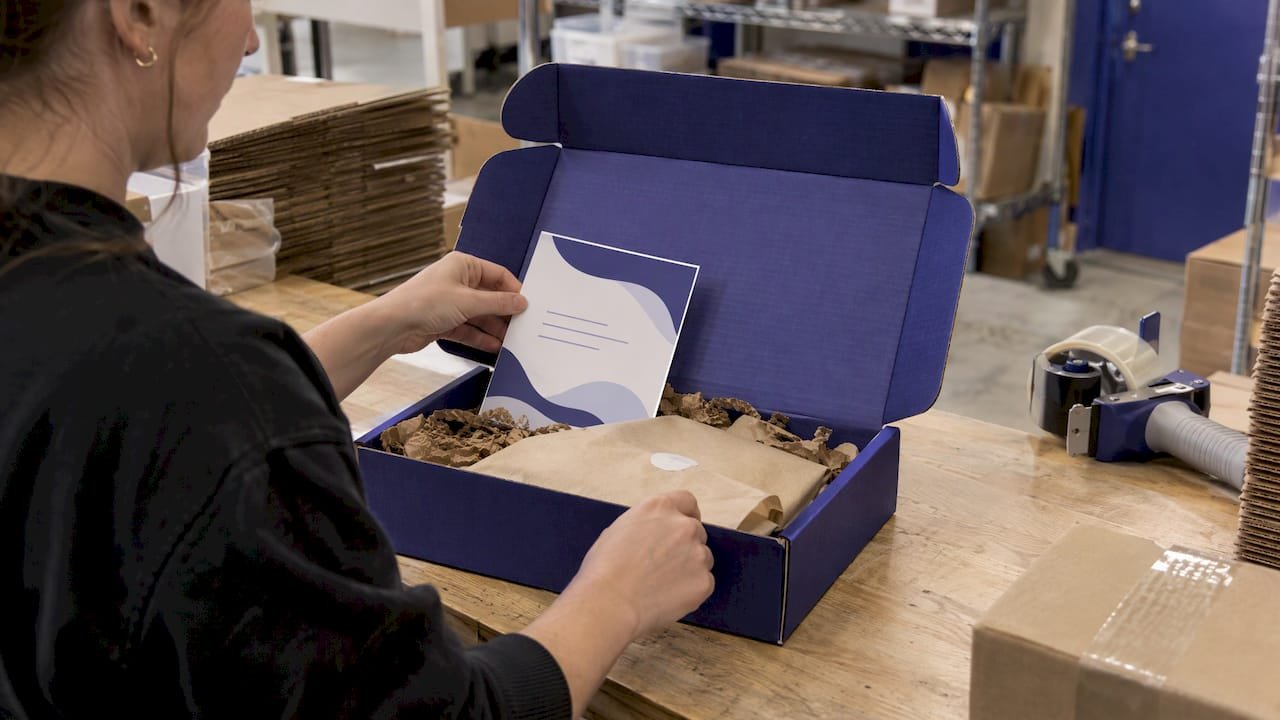
The best packaging insert does one job: it gets the customer to take a single next step, whether that is a second order, a review or a scan. For a marketing team, the strongest ideas are the ones tied to a goal you can measure, printed to a standard that matches the product, and shipped consistently from every location that packs orders. Below are the ideas worth testing, how to choose among them, and how to design and track them. We also cover where branded kits and custom boxes fit, since the insert only works if the whole unboxing feels like one brand.
TL;DR
- Pick one goal per insert (repeat purchase, review, referral, product education) and design around a single call to action.
- The ideas that carry most programs: a personal thank-you card, a time-limited offer with a unique code, a review or social card with a QR code, a care or how-to card, and a small branded extra such as a sticker.
- Per-piece cost is low. One 2026 ecommerce guide puts a typical insert at $0.25 to $0.60 to produce, so the test is whether you can track it.
- Inserts land best inside packaging that already looks like your brand: custom boxes, branded kits and consistent fulfillment across locations.
Table of Contents
- Why inserts earn their place in the box
- Ten packaging insert ideas worth testing
- Match the idea to the goal
- Design rules that keep the insert from being ignored
- Track every insert, or you are guessing
- Make the box and the item part of the same story
- Where Discount Swag fits
- FAQ
- Sources
Why inserts earn their place in the box
Every customer opens the package. Email gets filtered and ads get scrolled past, but an insert is in the customer’s hands at the moment they are most interested in your brand. Shopify’s guide to inserts points out that they are low cost, aimed at customers you already know, and travel free with the shipment, which makes them useful for cross-selling and for moving slower merchandise.
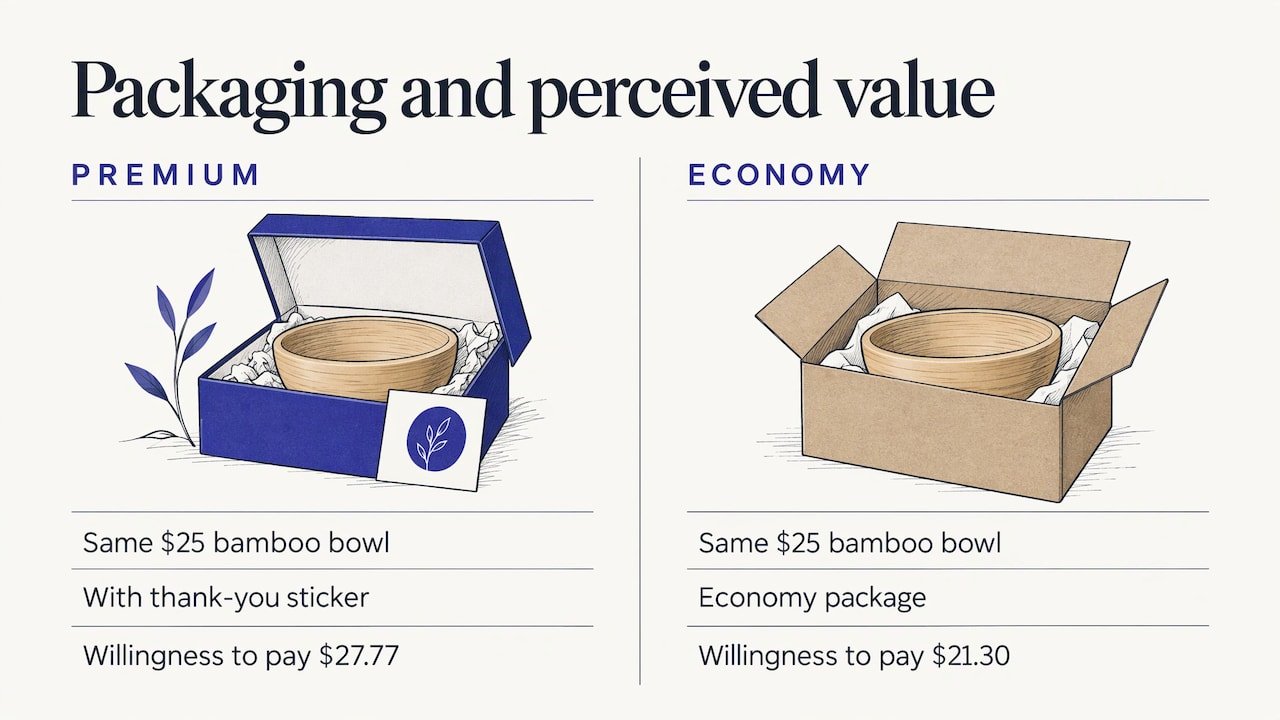
The experience around the insert matters too. A University of Wisconsin study published by Pregis had participants unbox the same $25 bamboo bowl in different packaging. Those who received it in premium packaging with a thank-you sticker had a willingness to pay of $27.77, against $21.30 for the economy package. Same product, different perceived value. The point for a buyer of branded materials: the insert, the box and the item inside are judged together.
There is also a gap to exploit. Stord’s 2025 Mystery Shopping Report found that only 36% of brands included samples or inserts, even though these are among the top drivers of a memorable unboxing. Most competitors are shipping bare orders.
Ten packaging insert ideas worth testing
1. A personal thank-you card
The simplest insert and the one to start with. Keep it short, sign it with a real name or team, and use plain language. A card that sounds written by a person beats a card that sounds like a template. If your orders come from multiple fulfillment points, make sure the same card goes into every box so the experience does not vary by warehouse.
2. A discount or credit for the next order
This is the workhorse for repeat purchases. Shopify’s guide lists free shipping, a $10 credit, 25% off, a free gift or a free upgrade as offers to test against each other. Give each offer a unique code and an expiration date so you can see which one pulls, and so the offer feels real instead of permanent.
One 2026 ecommerce guide reports that a 15%-off card with a QR code gets 12 to 18% scan rates and can lift 60-day repeat purchase rates by 10 to 20%. Those are one publisher’s figures, so treat them as a starting hypothesis for your own test, not a promise.
3. A review request that reads like an invitation
A card that says “Leave a review” feels like homework. Reframe it as an invitation: “We’d love to see how you’re using it.” Add a QR code that goes straight to the review page so the customer does not have to search. The card works because the customer is holding the product while they read it.
4. A social card with a branded hashtag
Ask for a photo, not a post. Offer a reason to share: a feature on your channels, a prize draw or a small reward. Print the hashtag large and put the handle beneath it. This pairs well with a good-looking product, which is why apparel, drinkware and bags make strong unboxing items.
5. A care or how-to card
Functional inserts reduce support questions and make the product last. Washing instructions for apparel, a setup QR code for a tech item, or a short tip sheet for a drinkware set all show the customer you thought past the sale. Put one clear action on it, usually a scan to a short video or guide.
6. A referral card
Referral cards only work when you already have a referral program with a code or link that credits both sides. Keep it as its own card instead of crowding it with a review request, so the message stays clear.
7. A suggested-items card
Show two or three products that coordinate with what was ordered. A corporate buyer who ordered tumblers might see matching totes or notebooks. Use the order contents to choose the card, which brings us to targeting.
8. A small branded extra
A sticker, a magnet or a bookmark costs little and gets kept. Stickers are a good fit for a die-cut or kiss-cut format, and our guide on die cut vs kiss cut explains which suits a loose sticker and which suits a sheet. The reciprocity effect Shopify describes is the logic: a small, unexpected gift makes people want to return the favor.
9. A brand story or proof card
A short card explaining how the product is made, what it is made from, or what tests it passed gives creators and customers something concrete to repeat. It is especially useful when the item inside is a premium or sustainable product and you want the material story told.
10. A seasonal reminder
Holiday order-by dates, a year-end reorder prompt or an event-season notice give the customer a reason to act now. For company stores and recurring programs, a reorder card tied to the quarter keeps the program on the buyer’s calendar.
Match the idea to the goal
| Goal | Best-fit insert | What to measure |
|---|---|---|
| Second order | Discount or credit card with unique code and expiry | Code redemptions, repeat rate at 60 days |
| Reviews | Invitation-style review card with QR code | Scans, new reviews per 100 orders |
| Social reach | Hashtag card with a reason to share | Tagged posts, new mentions |
| Fewer support tickets | Care or how-to card | Support contacts per order |
| Average order value | Suggested-items card | Add-on revenue per order |
| Referrals | Dedicated referral card | Referral code uses |
Most orders do not need every insert. Choose the one that solves the most important post-purchase need and add a second only after the first is measured.
Design rules that keep the insert from being ignored
People decide in seconds whether to engage with a card, so the design has to make the decision easy.
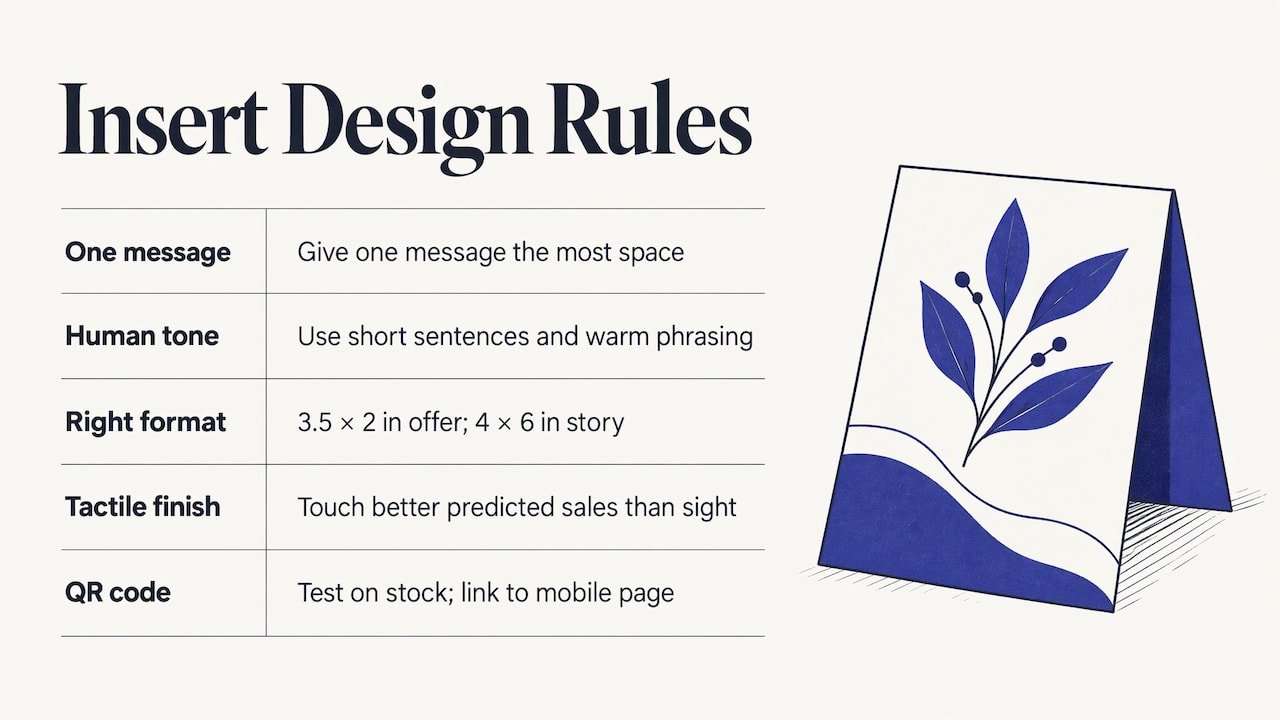
One message, one action. Give a single message the most prominent space. For a postcard insert, that might be the promo code on the front and contact details on the back. When one message clearly stands out, the customer has less to work out, and that is what drives action.
Write like a person. “We’d love to hear what you think” outperforms formal phrasing. Short sentences and a warm tone make the card feel sent by someone, not generated.
Mind the format. Common sizes are a business-card-size 3.5" x 2" card for a single offer and a 4" x 6" postcard when you need space for a story or a small product lineup. Pick the size based on how much the message needs, not on what is cheapest.
Make the finish part of the message. A Clemson University study of 60 US participants, using eye tracking and surveys, found that touch was a better predictor of sales than visual attention across packaging finishes. The same study found that 36.7% of participants said promotional codes on direct mail pieces influence them to make online purchases. A heavier stock or a raised logo gives the card weight in the hand. If you are choosing a finish for the rest of your branded materials, our comparison of embossing vs. debossing shows what each does to a logo.
Get the QR code right. Codes fail when they are too small, too low-contrast or point to a page that is slow on a phone. Keep them large enough to scan comfortably, test on the actual stock before a full print run, and send them to a mobile-ready page. Our guide to QR code size, placement and tracking covers the details.
Track every insert, or you are guessing
The advantage of an insert over a banner ad is that you can know what it did, if you set it up that way.
- Use a unique code or link per insert. One code per card design, and ideally per customer segment.
- Confirm the offer before you print. Check the code, the value, who is eligible, the expiry date and the main exclusions. A wrong code on 20,000 cards is an expensive mistake.
- Set an expiry date. A deadline gives people a reason to act now.
- Compare against a control. Ship some orders without the insert and compare repeat rates over the same period.
- Segment when you can. First-time buyers, repeat customers and your best accounts do not need the same card.
Retention is the real prize, and the marketing logic behind it is covered well in this look at proven ways to increase customer retention. An insert is one of the few tools that touches every single order.
Make the box and the item part of the same story
A good card in a plain mailer still feels like a flyer. The strongest programs treat the whole unboxing as one branded moment: the outer box, the item, the insert and any extras.
That is where branded kits and custom boxes come in. Instead of buying a tumbler, a notebook and a card from three sources and assembling them by hand, a marketing team can plan the kit once: item, packaging and message together. Our Milo copper tumbler with its gift box is an example of a drinkware item that arrives already presented. Items such as the Reclaim recycled journal or the Windsor presentation portfolio work well as the centerpiece of a welcome or onboarding kit, with a card tucked in.
If you want a worked example of how presentation changes perception, see how we think about a $15 box versus a $30 gift for law firms. The lesson applies far beyond that industry: a considered package reads as a considered brand.
For teams sending to many recipients, the logistics decide whether the idea survives. Kits that must reach single or multiple locations, on a deadline, need a plan for who packs, who ships and how the card gets into every box.
Our view: the insert is the cheapest part of the kit, and the part people read
We distribute corporate promotional products, and we see the same pattern in how marketing teams plan programs: they spend weeks choosing the item and minutes on what goes in the box with it. We would flip that ratio a little.
The item gets the customer’s attention. The card tells them what to do next. When the two are designed together, with the same colors, the same voice and one clear action, the program feels deliberate. That is why we offer fully custom branded boxes and branded kits, and why we handle distribution to single or multiple locations: the experience should be the same whether one box goes out or a thousand.
Our approach to large programs is built on operational workflows, curated quality from trusted suppliers and rush ordering that works without stress, so that a late campaign decision does not mean a weaker unboxing. Plan the insert with the product, not after it.
Jerry
Where Discount Swag fits
If you are building a program around branded kits, welcome boxes or event packs, we supply the items that go in them: apparel, drinkware, bags, technology, office, outdoor and more, plus fully custom branded boxes. We offer rush orders when a launch date moves, and we distribute to one location or many. We also guarantee 10% or more in savings versus any competitor’s online price.
Start with the products and boxes at Discount Swag, then build your insert around what the customer will be holding.
FAQ
What is the best packaging insert for repeat purchases?
A discount or credit card with a unique code and an expiry date is the most direct. Pair it with a thank-you message so it reads as gratitude, not a coupon dump. Test two offers against each other and keep the winner.
How much does a packaging insert cost?
Published ecommerce guides put typical cards at roughly $0.15 to $0.50 each depending on size, stock and quantity. Heavier stock, special finishes and folded formats cost more. Always price a full run, not a sample.
How many inserts should go in one box?
Usually one or two. A single card with one action is the safest. Add a second only when it serves a different need, such as a care card alongside a thank-you note.
How do I know if an insert is working?
Give each design a unique code or QR link, then compare redemptions, scans and repeat orders against orders that shipped without it. Review the numbers after your usual repeat-purchase window.
Sources
- Packaging Inserts: Types and How To Create Yours, Shopify
- Parcel Packaging Impacts Consumer’s Perception of Product, Pregis
- What do consumers expect and are brands delivering? Stord Mystery Shopping Report 2025
- Ecommerce Packaging & Unboxing Experience Design Guide, Talk Shop
- The Influence of Premium Finished Paper Packaging, Clemson University
- Packaging Marketing: Turn Every Order Into a Marketing Channel, Insertr
- How to increase customer retention: 5 proven strategies
 Bottle Carriers
 Mugs