

Waterproof vs. Water-Resistant: What the Labels Mean for Branded Gear

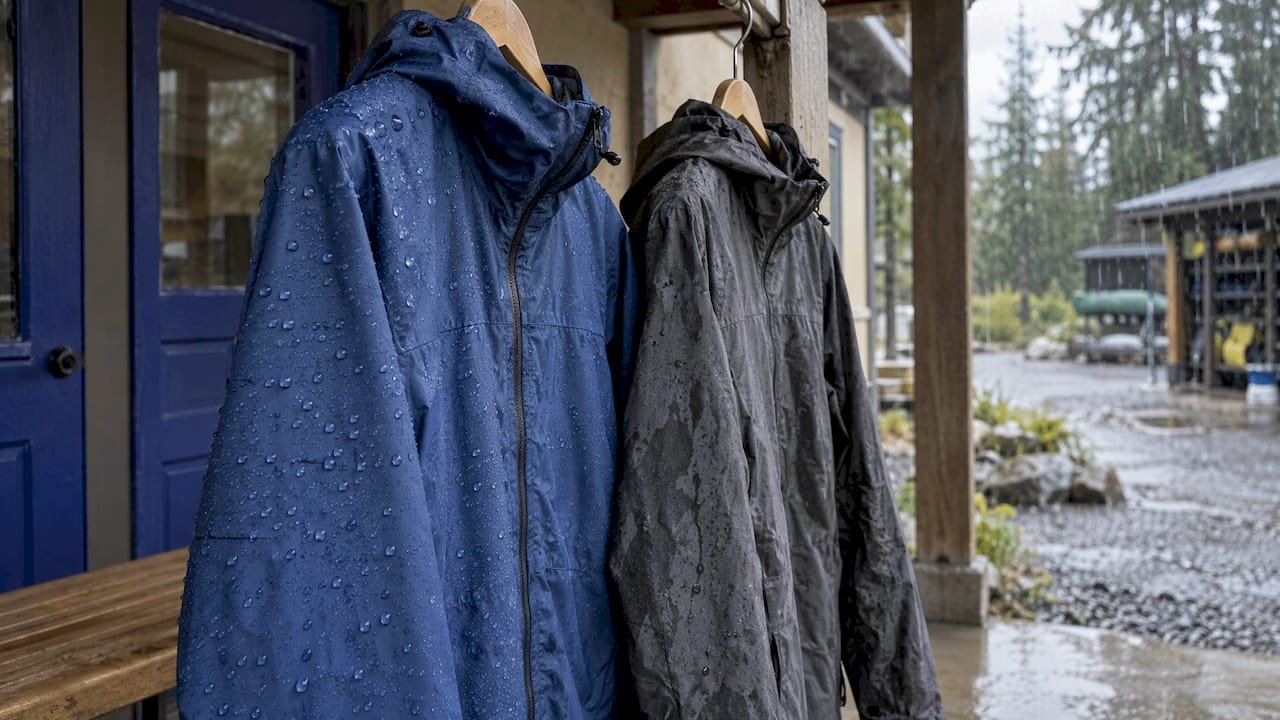
Waterproof gear is built to keep water out through heavy, prolonged rain. Water-resistant gear slows water down, which is enough for a light shower or a splash but not for a downpour. Water-repellent describes a surface finish that makes water bead and roll off, and it can sit on either kind of product. If you are buying branded jackets, bags or outdoor items for employees, clients or an event, the label you choose decides whether recipients stay dry or quietly stop using what you gave them. We distribute customizable corporate promotional products with rush ordering and delivery to single or multiple locations, so here is how to read the terms and pick the right level for your program.
TL;DR
- Waterproof means a membrane or coating, sealed seams and the ability to hold out sustained, heavy rain. Water-resistant means light rain or short exposure. Water-repellent is a surface finish, not a protection level.
- In the U.S., no official standard defines “waterproof” for clothing, so the claim on a tag is the brand’s own. Ask for the hydrostatic head rating and seam details in millimeters.
- Match the product to the use: water-resistant for short walks between buildings, waterproof for field crews, trade shows outdoors, stadium events and all-day exposure.
- Water protection fades. The finish wears off with abrasion, oils and washing, so order a product your recipients can maintain.
Table of Contents
- The three terms, in plain language
- Can water-resistant gear get wet?
- How waterproof is waterproof? Reading the numbers
- Waterproof does not mean dry inside
- Waterproof performance fades: plan for care
- Beyond jackets: other branded items where the terms matter
- How to choose for your program
- What this costs you: the budget view
- Order branded weather-ready gear with us
- FAQ
- Sources
The three terms, in plain language
These words get used interchangeably on product pages, but they describe different things.
Water-repellent describes how the fabric surface behaves. A chemical finish, usually called DWR (durable water repellent), makes drops bead up and roll off. A textile scientist writing in The Conversation notes the term can apply to both waterproof and non-waterproof fabrics, because it only tells you about the finish.
Water-resistant means the item slows water down. It typically relies on a tight weave and a finish, with no true membrane. The Washington Trails Association frames the difference as staying dry in a downpour versus a light rain.
Waterproof means the item is built to stop water under pressure. In clothing, that usually means a membrane or coating, a finish on the outside and fully taped seams. Every stitch punches a hole in the fabric, so seam sealing matters as much as the fabric. Rain jacket manufacturing guidance points out that a fabric’s rating does not automatically carry through to the finished garment, and cheap rainwear commonly leaks at the shoulders and hood when seams are not taped.
| Term | What it describes | Typical construction | Good for |
|---|---|---|---|
| Water-repellent | Surface behavior: water beads and rolls off | DWR or wax finish | Added to almost any outerwear |
| Water-resistant | Limited protection, light or short exposure | Tight weave, finish, seams often unsealed | Commutes, short walks, light drizzle |
| Waterproof | Holds out water under pressure | Membrane or coating, sealed seams, sealed zippers | Heavy or sustained rain, outdoor events, field work |
Can water-resistant gear get wet?
Yes. That is the most common misunderstanding behind the search. REI’s journal says a water-resistant jacket can likely handle a light drizzle, but if you are out for an extended time or the rain intensifies, you will get wet. Water-resistant is a lower level of rain protection than waterproof.
A practical benchmark comes from Running Warehouse’s 2024 guide: most water-resistant jackets keep you dry for roughly 35 to 45 minutes, which suits runs under an hour, while longer steady wet weather calls for a waterproof jacket. Treat that as a rule of thumb, not a guarantee. Wind, temperature and wear change the result.
For a marketing team, translate that into your recipient’s day:
- A conference attendee walking from a hotel to a venue: water-resistant is enough.
- A sales rep at an outdoor trade show for six hours: waterproof.
- A field technician, groundskeeper or delivery driver: waterproof, with sealed seams.
- A giveaway at a stadium or fairground: waterproof, because people sit still in the rain and the exposure is long.
How waterproof is waterproof? Reading the numbers
Because there is no official U.S. rating for clothing, the common yardstick is hydrostatic head: how tall a column of water the fabric withstands before it leaks, measured in millimeters. Ergodyne’s guide explains this, and notes that in the UK, where standards exist, fabrics must test to at least 1,500 mm to be deemed waterproof. Electronics are different: they use the Ingress Protection scale, and The Home Depot’s guide describes that scale as running from 0 to 8 for water, with 8 meaning immersion beyond one meter.
For jackets, Better Trail’s 2026 guide reports that true waterproofing is generally thought to begin around 5,000 mm, that 10,000 mm is considered the minimum for a trail-worthy rain jacket, and that premium models reach 28,000 mm. Occasional hikers can use 10K to 15K shells.
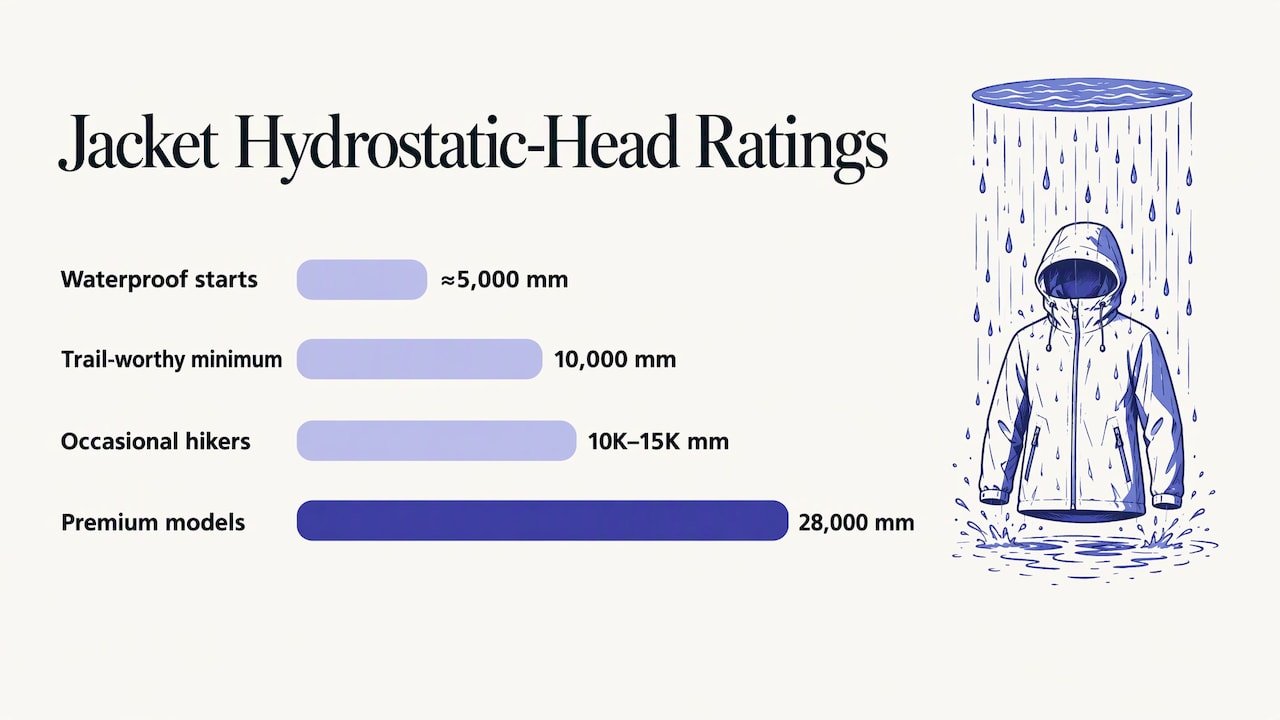
Bigger is not always necessary. REI’s expert advice states that wind-driven rain hits with about 2 psi (1,406 mm), and that REI treats 3 psi (2,109 mm) or higher as rainproof. For most corporate programs, a mid-range rating with taped seams beats an extreme rating with weak construction.
A quick spec checklist for branded outerwear
- Rating: ask for the hydrostatic head in millimeters, not just the word “waterproof.”
- Seams: fully taped or only critically taped? Voyager’s guide says the difference must be stated rather than assumed.
- Zippers and hood: sealed or storm-flapped zippers and an adjustable hood are where leaks start.
- Finish: a DWR finish on the outside keeps the fabric from soaking through.
- Branding method: confirm the logo placement and decoration suit the fabric before you approve the order.
Waterproof does not mean dry inside
Two more points help a buyer set expectations with recipients.
First, breathability. REI notes that a profusely sweating person can produce more heat and humidity than any jacket can vent, so no rain gear feels comfortably dry in warm, steamy exertion. If your recipients will be active, look for vents such as underarm zips.
Second, “wetting out.” When the outer fabric saturates, it feels cold and clammy even if the membrane underneath still holds. REI explains that people often mistake that for a leak, and advises washing and reviving the finish once raindrops stop beading.
Waterproof performance fades: plan for care
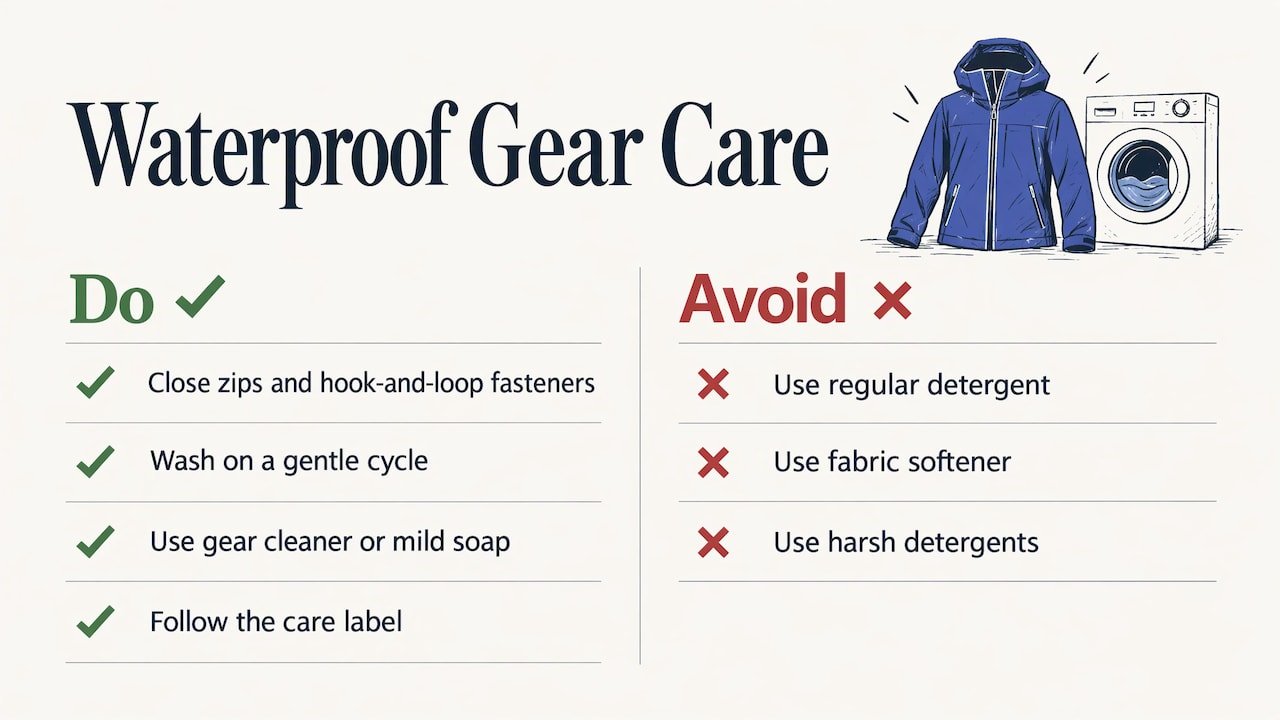
A jacket that repels water on day one will not do so forever. Phys.org’s coverage of a textile scientist’s advice lists the usual causes: abrasion from backpack straps and seat belts, sun, mud and grime, harsh detergents, and buildup of body oils, sunscreen and insect repellent. Her advice is to close zips and hook-and-loop fasteners before washing, use a gentle cycle with a cleaner made for waterproof fabrics or very mild soap, skip regular detergent and fabric softener, and follow the care label.
There is also a materials trend. Better Trail reports that more manufacturers are moving away from PFAS-based DWR coatings, and that PFAS-free finishes tend to wear out sooner, even though the membrane beneath stays waterproof. For a program, that means including a short care card in a branded kit, so employees know how to keep the gear working.
Beyond jackets: other branded items where the terms matter
The same vocabulary shows up across a promotional catalog, and the stakes differ by item.
- Bags and backpacks: water-resistant fabric protects a laptop on a short walk. Heavy rain through zippers and seams is a different test.
- Blankets and outdoor gear: a waterproof backing matters at tailgates, outdoor festivals and campus events. Our catalog includes an oversized waterproof outdoor blanket with pouch and a recycled insulated outdoor blanket.
- Coolers: insulated backpack coolers such as the Merchant & Craft Revive recycled backpack cooler suit picnics and field days.
- Writing tools: the Rite in the Rain all-weather pen is made for notes in wet conditions, and the whole Rite in the Rain line is built around outdoor use.
- Electronics: look for an IP rating, because the fabric terms do not apply.
Pick the product by the weather your recipient will face, then confirm the exact rating on the product page or with us before you order.
How to choose for your program
Start from who receives the item and how long they will be exposed, not from the category name.
- Define the use. Is it a welcome gift for a conference, an employee outerwear program or an outdoor event giveaway?
- Set the exposure level. Under an hour of light rain: water-resistant. Hours outside or real storms: waterproof.
- Request the numbers. Hydrostatic head, seam construction and finish, in writing.
- Check the decoration. Logo method and placement should suit the fabric.
- Plan the logistics. Weather-driven events often have fixed dates, and apparel often ships to many offices or event sites.
On that last point, rain gear is seasonal and event-driven, so timing is part of the spec. We offer rush ordering and can fulfill orders to single or multiple locations, so a regional team can receive its jackets in time for the first wet week.
What this costs you: the budget view
The cheapest way to get the choice wrong is to buy water-resistant pieces for a waterproof job. Recipients get wet, stop wearing the item, and the logo never leaves the closet. The reverse costs money too: a heavy-duty shell for a one-hour conference walk is more than the situation needs. Matching the level to the use lets you spend where it counts and keep the per-unit budget in check.
Our view: sell the use, not the label
A buyer asks us about rain gear and usually starts with the word “waterproof.” We start with the question “for whom, and for how long?” A label no one can verify is a weak foundation for a program that carries your brand.
Our approach to the catalog is curated quality from trusted suppliers, and our guarantee is 10% or more in savings versus any competitor’s online price. We think those two ideas belong together: you should get an item that fits the job at a price that respects your budget.
The part we care about most is the operation behind it. Large programs need rush ordering that works without stress, and delivery to one office or many. That is how a rain-ready kit shows up before the storm season instead of after it.
Jerry
Order branded weather-ready gear with us
We sell customizable apparel, bags, drinkware, outdoor and sport items and technology for corporate programs, with rush orders, branded kits, fully custom branded boxes and fulfillment to single or multiple locations.
Browse the full range and start your order at Discount Swag. Our guarantee is 10% or more in savings versus any competitor’s online price, and rush orders are available when your event date is close.
FAQ
Is water-resistant enough for rain?
For light rain and short exposure, yes. Water-resistant items slow water but eventually let it through, and Running Warehouse’s guide puts the typical window at about 35 to 45 minutes for jackets. For steady rain or long days outside, choose waterproof.
What is the difference between waterproof and water-repellent?
Waterproof describes how well the whole product holds out water, including seams. Water-repellent describes a surface finish that makes water bead and roll off. A repellent finish can be added to a waterproof or a non-waterproof fabric, as The Conversation’s textile scientist explains.
Does “100% waterproof” mean anything?
Not as a standard for clothing. Burton’s blog says there is no official industry standard separating the two terms, and some retailers use them interchangeably. Ask for the hydrostatic head rating and seam details instead.
What is the difference between waterproof and water-resistant jackets?
A waterproof jacket usually combines a membrane or coating, a finish and taped seams. A water-resistant jacket generally relies on a tight weave and a finish, with no membrane, which suits brief showers. Sustained or wind-driven rain is where the gap shows.
Can a waterproof item lose its protection?
Yes. The finish wears from abrasion, washing and body oils, and Burton advises re-treating the fabric when you start to get wet instead of replacing the jacket right away. Following the care label helps the gear last longer.
Sources
- Raincoat no longer waterproof? A textile scientist explains why and how to fix it (The Conversation)
- How to Find the Right Rain Gear for Year Round Hiking (Washington Trails Association)
- Rain Jacket Manufacturing: Fabrics, Seam Sealing and Testing
- Water Resistant vs Waterproof Jackets & Fabrics (REI Co-op Journal)
- How to Pick the Best Running Jacket for the Rain (Running Warehouse)
- Waterproof vs. Water Resistant: How to Choose the Best Work Rain Gear (Ergodyne)
- Water-Resistant vs Water-Repellent vs Waterproof (The Home Depot)
- How Waterproof Is Your Rain Jacket? (Better Trail)
- How Rain Gear Works (REI Expert Advice)
- How Rain Gear Works, rainwear basics series (REI Expert Advice)
- Raincoat no longer waterproof? (Phys.org)
- Waterproof vs. Water Resistant: Measuring Waterproof (Burton)
 Bottle Carriers
 Mugs