

Recruitment Fair Giveaways That Actually Win Candidates

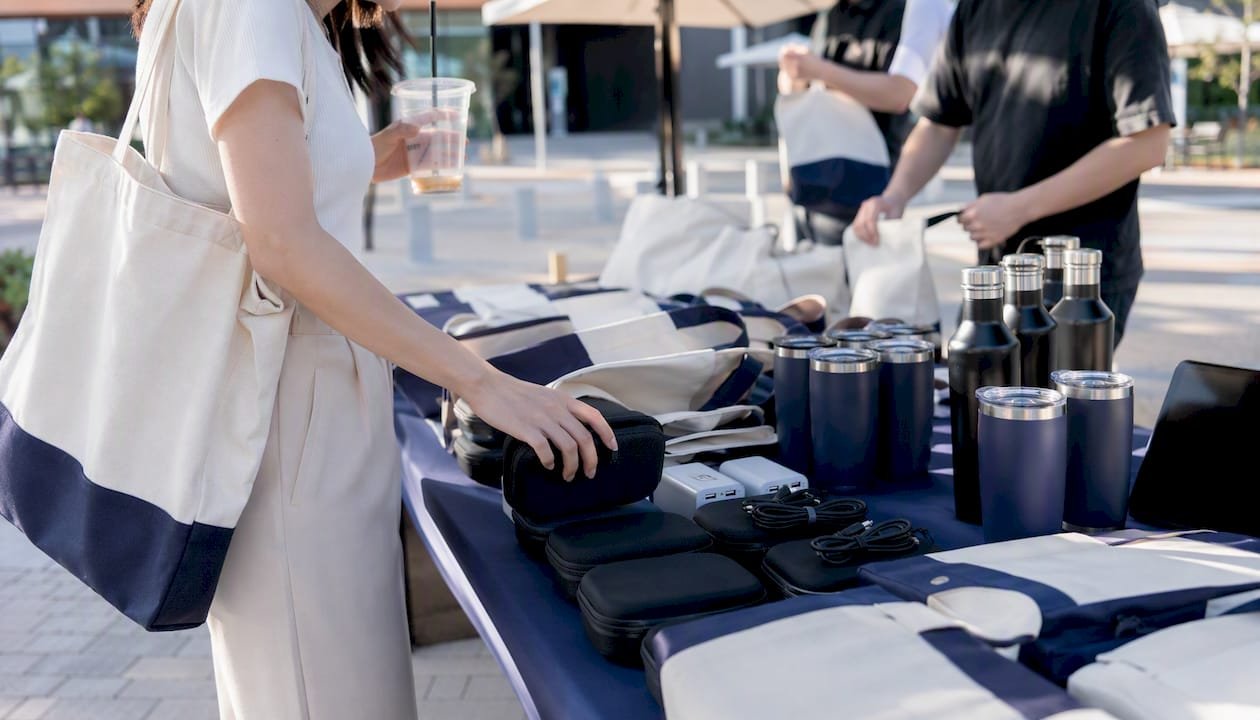
The three giveaway types that consistently drive booth traffic and candidate recall at recruitment fairs are reusable drinkware, portable tech accessories (power banks, cable organizers), and a digital perk like a resume review voucher or subscription trial. Start by ordering a small, branded sample kit from Discountswag so you can evaluate print quality and materials before committing to bulk quantities.
Top items to shortlist right now:
- Insulated tumblers or reusable water bottles with your logo
- Power banks or multi-port cable organizers
- Canvas or recycled tote bags
- Branded notebooks or sticky note sets
- QR-code cards linking to a digital swag bag or job portal
- Resume review or LinkedIn profile audit vouchers
One immediate action: request a sample kit and a digital voucher proof before your event date. Candidate reaction to the physical quality of your items tells you more than any spec sheet.
Key Takeaways
The most effective recruitment fair giveaways combine daily utility with clean branding: reusable drinkware, portable tech accessories, and digital perks consistently outperform novelty items on both candidate recall and keep rates.
| Point | Details |
|---|---|
| Lead with utility | Power banks, insulated tumblers, and cable organizers have the highest keep rates and generate repeated brand impressions. |
| Digital perks punch above their cost | Resume review vouchers and subscription trials deliver high perceived value with no shipping cost, ideal for hybrid events. |
| A notable portion of candidates report that swag influenced their decision to apply | Per LinkedIn 2025 Global Talent Trends data cited by Swag Insider, branded merchandise drives measurable application behavior. |
| Order samples before bulk production | Request a physical sample and imprint proof at least six weeks before your event to avoid quality surprises. |
| Discountswag for event procurement | Discountswag offers sample kits, rush ordering, bulk pricing, and multi-location fulfillment for recruitment fair orders. |
Table of Contents
- Why do recruitment fair giveaways actually move the needle?
- What are the most popular recruitment fair giveaway categories?
- How do you choose the right giveaway for your audience and budget?
- What branding choices make giveaways look premium?
- How do you balance sustainability with budget on giveaways?
- What digital and hybrid giveaway strategies actually work?
- What does the ordering timeline actually look like?
- Discountswag makes recruitment fair ordering straightforward
- Sources
Why do recruitment fair giveaways actually move the needle?
A well-chosen giveaway does two things a brochure cannot: it travels home with the candidate, and it keeps your brand visible every time they use it. That combination of utility and brand artifact is what drives recall and, ultimately, application rates.
LinkedIn’s 2025 Global Talent Trends data, cited by Swag Insider, puts the effect in concrete terms: A significant share of passive candidates remember branded merchandise, and many say it influenced their decision to apply. Among entry-level candidates, these recall and influence rates are higher, which makes the investment especially defensible for campus recruiting.
The mechanisms behind those numbers are straightforward:
- Utility: An item used daily (a tumbler, a power bank) generates repeated brand impressions at zero additional cost.
- Conversation catalyst: A distinctive or high-quality item gives booth staff a natural opening line and gives candidates a reason to linger.
- Social sharing: Aesthetically pleasing swag gets photographed and posted, extending your reach beyond the fair floor.
- Perceived value: A quality item signals that your company invests in people, before a single interview takes place.
The segmentation point matters here. Gen Z candidates at campus fairs respond differently than experienced professionals at industry hiring events. The branded merchandise ROI math shifts depending on which audience you’re targeting, and your item choices should reflect that.
What are the most popular recruitment fair giveaway categories?
Multiple curated guides converge on the same core categories: tech accessories, drinkware, bags, apparel, desk items, and digital perks. Here’s how each one stacks up for different audiences and budgets.
Tech accessories
Best for: campus recruiting, Gen Z candidates, and tech-sector hiring events.
Power banks, multi-port USB cables, cable organizers, and phone wallets are the highest-retention items in this category. Candidates keep them because they solve a real daily problem. Logo tech accessories work especially well as raffle prizes or conditional giveaways (handed out after a brief conversation with a recruiter) because their perceived value justifies the interaction.
- Power banks (5,000–10,000 mAh): Unit cost typically $8–$22 at mid-tier; high keep rate; ideal for raffle or conditional handout.
- Cable organizers / multi-port cables: $3–$8; easy to brand; lightweight for shipping.
- Phone wallets (stick-on card holders): $2–$5; low cost, high visibility on the back of a phone.
Drinkware
Best for: all audiences; particularly strong for campus and early-career candidates.
Insulated tumblers and reusable bottles are the single most reliable high-retention item category. Swag Insider’s retention data places reusable drinkware among the items with the highest keep rates in event surveys. A quality 20 oz. insulated tumbler with a clean logo imprint will sit on a candidate’s desk for years.
- Insulated stainless steel tumblers: $10–$25 mid-tier; laser engraving looks premium and lasts.
- Reusable plastic or Tritan bottles: $5–$12; lighter for bulk shipping; good for high-volume events.
- Collapsible silicone cups: $4–$8; compact, eco-friendly signal, good for outdoor or campus fairs.
Bulk drinkware ordering drops unit costs significantly at quantities of 144 or more, which makes drinkware one of the best cost-per-impression items in the catalog.
Bags and totes
Best for: high-volume walk-up handouts; campus fairs where candidates are collecting materials from multiple booths.
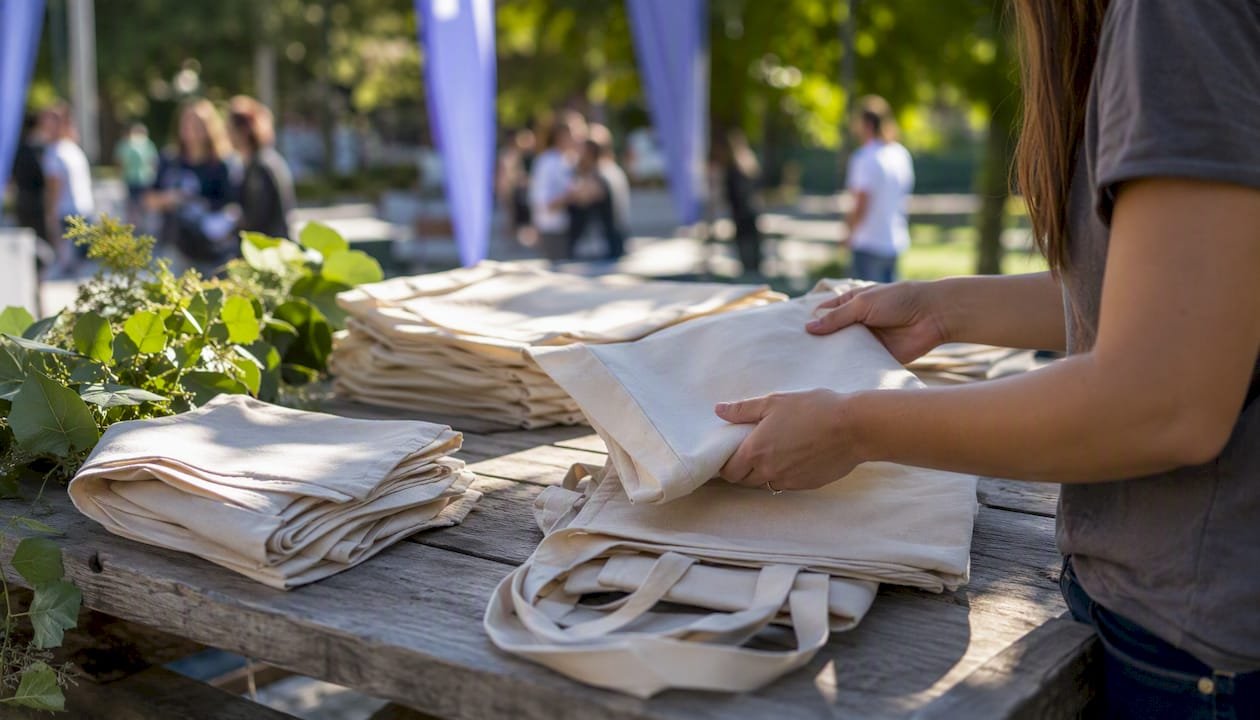
A canvas or recycled tote bag is a walking billboard. Candidates use them to carry everything they collect at the fair, which means your logo gets seen by every other attendee. Cotton canvas totes run $4–$10; recycled PET totes are comparable in cost and carry a stronger sustainability signal.
Apparel
Best for: selective distribution; experienced hires; higher-budget events.
T-shirts and hats are popular but carry real risk: sizing complexity, higher unit cost ($8–$25+), and the fact that candidates may not wear something they didn’t choose. Reserve apparel for targeted distribution (finalists, campus brand ambassadors) rather than bulk handouts. Custom corporate apparel ordering requires more lead time than most other categories, so plan accordingly.
Desk and office items
Best for: experienced professionals; office-culture-forward employers.
Branded notebooks, sticky note sets, and pen sets generally cost at the lower price range and are easy to ship, easy to ship, and land on desks where your logo stays visible. They’re not the most exciting item, but they’re reliably kept. Pair a notebook with a QR code sticker on the inside cover linking to your careers page to add a digital layer.

Digital perks
Best for: hybrid events; campus and Gen Z audiences; budget-conscious campaigns.
Resume review vouchers, LinkedIn profile audit credits, and subscription trials (Coursera, LinkedIn Learning, Headspace) often deliver higher perceived value per dollar than physical items. Remo’s career fair guide specifically recommends professional service vouchers as high-value digital giveaways for Gen Z candidates at hybrid events. Distribution is instant via QR code or follow-up email, and there’s no shipping cost.
High-retention vs. low-retention at a glance:
How do you choose the right giveaway for your audience and budget?
The single best selection rule: prioritize daily utility over novelty, and make sure the item aligns with what your brand actually stands for. A sustainability-focused employer handing out single-use plastic trinkets sends the wrong signal before the conversation even starts.
Decision checklist:
- Audience fit: Campus/Gen Z candidates respond to tech accessories, eco-friendly items, and digital perks. Experienced professionals lean toward quality drinkware, premium notebooks, and selective apparel.
- Distribution channel: Walk-up handouts need low unit cost and easy logistics. Raffle or conditional items can justify higher spend because fewer units are needed.
- Per-unit budget: Set a firm ceiling before browsing. $3–$6 covers solid walk-up items; $8–$20 covers mid-tier conditional giveaways; $20+ is reserved for VIP or finalist kits.
- Shipping and fulfillment: Heavier items (drinkware, power banks) cost more to ship. If you’re sending kits to multiple event locations, factor freight into your total cost.
- Sustainability: Candidates notice. Recycled materials, reusable items, and minimal packaging all contribute to brand perception, especially with Gen Z.
Vendor questions to ask before placing any order:
- What is your minimum order quantity (MOQ)?
- What are your standard production lead times, and do you offer rush ordering?
- Which imprint methods do you support (screen print, laser engraving, pad print, full-wrap)?
- Can I order a physical sample or proof before committing to the full run?
- What are your rush fees, and what’s the fastest turnaround available?
- Do you offer fulfillment to multiple event locations or direct-to-candidate shipping?
Red flags: any vendor who can’t provide a physical sample, won’t share material specs, or quotes a price without clarifying imprint costs is a vendor to avoid. Unclear quality specs are the most common source of post-event disappointment.
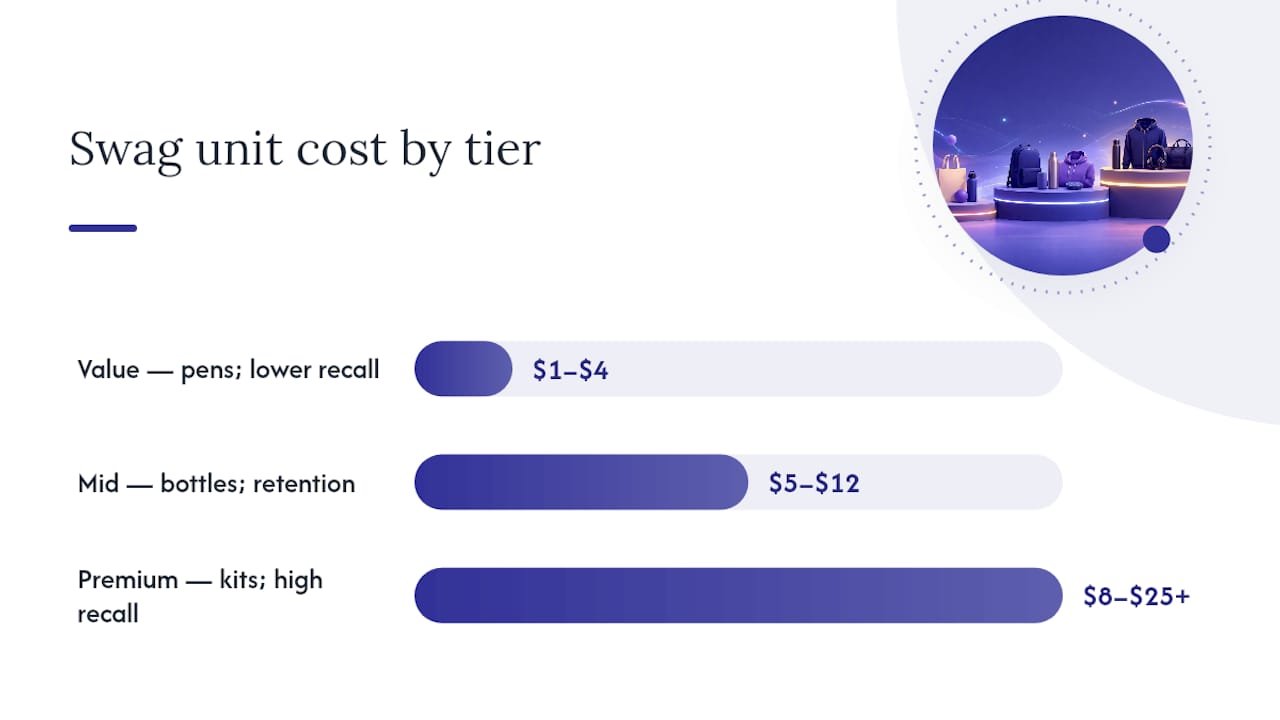
Budget tiers:
| Tier | Unit cost range | What to expect |
|---|---|---|
| Value | $1–$4 | Pens, sticky notes, phone wallets, basic totes; high volume, lower recall |
| Mid | $5–$12 | Cable organizers, reusable bottles, notebooks, quality totes; solid retention |
| Premium | $8–$25+ | Insulated tumblers, power banks, branded kits; high recall, selective use |
For a practical buyer’s guide on choosing corporate swag that matches your event goals, Discountswag’s resource covers the key decision points in detail.
What branding choices make giveaways look premium?
Minimal, tasteful branding keeps items usable and memorable. The biggest mistake recruiters make is treating the giveaway as a billboard: a logo that covers half a tumbler looks cheap, even if the tumbler itself is quality. One clean, well-placed logo and a short tagline is almost always the right call.
Imprint method by item type:
- Screen print: Best for flat surfaces (totes, T-shirts, notebooks). Cost-effective for multi-color designs at volume. Not ideal for curved surfaces.
- Laser engraving: The premium choice for metal drinkware and tech accessories. Permanent, tactile, and looks expensive. Single-color only, but that’s rarely a limitation.
- Pad print: Works well on small, irregular surfaces (pens, phone wallets, small tech items). Affordable and precise.
- Full-wrap / digital print: Best for bottles or tumblers where you want color coverage around the full circumference. Higher cost per unit; reserve for premium items.
Logo placement rules of thumb:
- Tote bags: centered on the front panel, roughly one-third up from the bottom.
- Drinkware: one side, centered vertically, covering no more than 30–40% of the printable area.
- Tech accessories: one face, small and clean; avoid wrapping onto edges.
- Apparel: left chest for a professional look; full back for higher visibility at events.
Color matching matters more than most recruiters realize. If your brand has a specific Pantone color, confirm the vendor can match it before ordering. Single-color imprints are cheaper and often look cleaner than multi-color on small items. Multi-color is worth the cost on totes and apparel where the design has room to breathe.
Pro Tip: Add a short tagline or your careers page URL to the inside label of a tote or the bottom of a tumbler. Candidates who check the label are already curious about your brand, and a URL there costs nothing extra to print.
For brand consistency across items, keep your logo file in vector format (AI or EPS) and confirm color specs with your vendor before any proof is approved.
How do you balance sustainability with budget on giveaways?
Sustainable giveaways with daily utility deliver the best tradeoff between environmental impact and cost. The key is choosing materials that signal intentionality without pricing you out of a reasonable per-unit budget.
Chococraft’s Gen Z career fair research is direct on this: quality beats quantity, and sustainable, purposeful items drive recall with younger candidates far more effectively than generic mass freebies. That finding has real budget implications. Ordering 200 quality reusable bottles at $10 each outperforms ordering 1,000 plastic trinkets at $2 each, both for brand recall and for the signal it sends about your company’s values.
Materials and what they signal:
- Recycled PET (rPET) fabric totes: Communicates environmental awareness; comparable cost to standard polyester.
- Stainless steel drinkware: Signals quality and durability; premium cost but highest keep rate.
- Bamboo or wheat-straw accessories: Strong eco-signal; slightly higher cost than plastic equivalents; works well for pens, utensil sets, and small desk items.
- Organic cotton apparel: Authentic sustainability credential; higher unit cost, so reserve for selective distribution.
- Seed paper notecards or plantable items: Low cost, high novelty, strong eco-messaging; best as a supplemental item rather than a standalone giveaway.
Where to invest and where to pull back: spend on drinkware and tech accessories because candidates keep them. Pull back on apparel (sizing complexity, moderate keep rate) and novelty items (low retention regardless of material). A recycled tote at $5 beats a branded stress ball at $3 every time.
For a deeper look at sustainable swag options and how material choices affect candidate perception, Discountswag’s sustainability guide covers current trends and certifications to look for.
Simple eco-messaging on packaging goes a long way. A hang tag that reads “Made from recycled materials” or “Reuse me, reduce waste” adds authenticity without adding cost. Avoid vague claims like “eco-friendly” with no specifics; candidates, especially Gen Z, notice greenwashing.
What digital and hybrid giveaway strategies actually work?
Digital perks often deliver higher perceived value per dollar than physical items, and they’re the obvious choice for virtual or hybrid recruitment fairs where physical logistics are a constraint. A resume review voucher worth $50 of professional service costs far less to deliver than a $50 physical item once you factor in shipping and fulfillment.
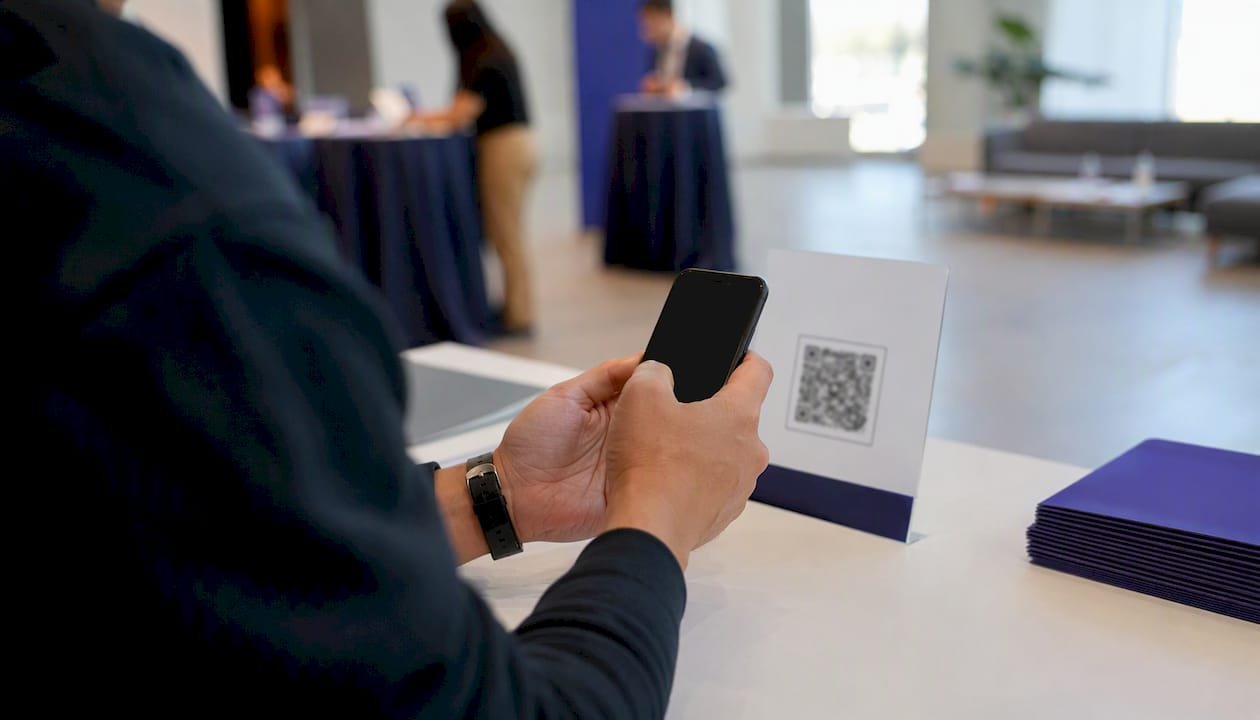
Remo’s college career fair guide recommends subscription trials and professional service vouchers specifically because they align with what Gen Z candidates actually want: career development, not more stuff. That’s a meaningful distinction when you’re competing for attention at a crowded fair.
The case for mobile-first delivery is backed by usage data. Statista’s U.S. smartphone usage data confirms that Americans spend substantial daily time on their phones, which means a QR-code redemption flow reaches candidates where they already are. A physical card with a QR code is easier to scan than a URL to type, and it works at both in-person and hybrid events.
Concrete digital giveaway options:
- Resume review or LinkedIn profile audit vouchers (redeemable via a unique code)
- Subscription trials: LinkedIn Learning, Coursera, Headspace, Spotify Premium
- Digital swag bags: a landing page with downloadable career guides, salary benchmarks, and interview prep resources
- Micro-credentials or digital badges tied to a short skills assessment at your booth
- Follow-up email unlocks: a candidate scans a QR code at the booth, enters their email, and receives a digital perk within 24 hours
Redemption flow for hybrid events:
- Print QR code cards or display a booth sign with the redemption URL.
- Candidate scans and lands on a branded redemption page (your careers site or a dedicated landing page).
- Candidate enters their email to claim the perk (this is your lead capture step).
- Automated email delivers the voucher code or download link within minutes.
- Set an expiration date (14–30 days) to create urgency and track redemption rates.
- Monitor redemption analytics to measure engagement post-event.
Hybrid event implementation checklist:
- Confirm QR code links are mobile-optimized before the event
- Test the redemption flow on both iOS and Android
- Set unique codes per event (not a single reusable code) to prevent fraud and track source
- Build a post-event email sequence for non-redeemers
- Pull redemption data within 48 hours of the event to capture engagement while it’s fresh
What does the ordering timeline actually look like?
Start ordering earlier than feels necessary. The single most common mistake is treating giveaway procurement as a last-minute task. Standard production lead times for custom-imprinted items run 10–15 business days after proof approval, and rush orders add cost without guaranteeing the same quality.
Six-week ordering timeline:
- Week 1: Finalize item selection, confirm budget, and submit sample requests to your vendor. Ask for a color swatch, material spec sheet, and an imprint proof for each item.
- Week 2: Review physical samples. Approve or revise the imprint proof. Confirm MOQ, total unit count, and shipping destination(s).
- Week 3: Place the production order. Confirm production lead time in writing and get a ship date.
- Week 4: Production in progress. Confirm fulfillment plan: will items ship to a central location, to multiple event sites, or directly to candidates?
- Week 5: Items ship. Track the shipment and confirm delivery to the correct location(s). Unbox and inspect a sample from the production run.
- Week 6 (event week): Stage items at the booth. Prepare distribution plan: which items are walk-up, which are raffle, which are conditional.
What to request in your sample order:
- Physical sample of the item in the color(s) you’re ordering
- Imprint proof showing your logo at actual print size and placement
- Material spec sheet (weight, composition, certifications)
- Confirmation of Pantone or PMS color match if brand colors are critical
Fulfillment options and cost implications:
- On-site pickup: Lowest cost; requires someone to manage inventory at the booth.
- Pre-packed interview kits: Higher per-unit cost but creates a premium candidate experience; useful for finalist or executive recruiting events.
- Direct-to-candidate fulfillment: Best for hybrid or virtual fairs; vendor ships directly to candidate addresses post-event; adds shipping cost per unit but removes on-site logistics.
- Multi-location fulfillment: If you’re running events across multiple cities, confirm your vendor can split a single order across destinations. Corporate gift sets designed for kit packing simplify this considerably.
For event-focused procurement planning, Discountswag’s event planner guide covers fulfillment options and timeline benchmarks in detail.
Pro Tip: Always request a rush-order price at the time of your initial quote, even if you don’t need it. Knowing the cost of a two-day turnaround gives you a real contingency option if your timeline slips.
What actually separates a memorable booth from a forgettable one
The giveaway is rarely the whole story. Distribution timing and staff behavior matter as much as the item itself. Handing out your best item at the start of the fair means candidates carry your branded tumbler past every other booth for the rest of the day. That’s not an accident; it’s a distribution tactic worth planning deliberately.
One pattern that consistently works: hold your highest-value item (a power bank, an insulated tumbler) as a conditional giveaway. A recruiter hands it over after a two-minute conversation, not before. Candidates who receive it after a real interaction associate the quality of the item with the quality of the conversation. The ones who just grabbed it from a table don’t make that connection.
Discountswag makes recruitment fair ordering straightforward
Discountswag is built for exactly this procurement problem: you need quality branded items, a reliable production timeline, and the flexibility to order samples before committing to bulk. The catalog covers the full range of high-retention recruitment giveaways, from insulated drinkware and tech accessories to canvas totes and branded kits, all with custom imprint options and bulk pricing that drops unit costs at scale.
Rush ordering is available for tight timelines, and Discountswag supports multi-location fulfillment for teams running events across multiple cities. Sample kits let you evaluate print quality and materials before the production run, which removes the biggest risk in remote procurement. Browse the full promotional items catalog to find items matched to your event budget and audience, or request a quote directly to get bulk pricing on your shortlisted items.
Sources
These resources are worth bookmarking before you finalize your item selection or vendor shortlist.
- 20 College Career Fair Giveaway Ideas That Gen Z Students Actually Want
- Recruiting Swag That Lands: A Tactical Guide to Career Fair Giveaways and Hiring Event Merchandise in 2026 – Swag Insider News
- Statista — Time spent per day on smartphone (U.S.)
- 35 Best Career Fair Swag Ideas To Boost Engagement And Visibility
- 10 Career Fair Giveaways Gen Z Loves | Student Recruitment Gifts USA – CHOCOCRAFT GLOBAL
 Bottle Carriers
 Mugs
Mugs