


What Is Promotional Marketing? A Strategic Guide


Promotional marketing is defined as the targeted communication of a brand, product, or service’s value across multiple channels to increase awareness and stimulate customer action. As Coursera describes it, promotional marketing operates as one element of the classic marketing mix alongside product, price, and place. The industry term for this discipline is “promotion,” and it sits within a broader framework called the promotional mix. For marketing professionals and businesses, understanding what promotional marketing is and how it functions within your overall strategy separates campaigns that convert from ones that simply spend budget.
What is promotional marketing and how does it differ from general marketing?
Promotion and marketing are not interchangeable terms, even though many professionals treat them as if they are. ActiveCampaign explains that marketing covers the full scope of business decisions including audience research, product development, pricing strategy, and distribution channels. Promotion is the communication subset of that system. It focuses specifically on conveying value to drive awareness and purchase behavior.
Think of it this way: deciding to launch a new product line is a marketing decision. Creating the trade show display, email campaign, and branded giveaways to announce that launch is promotion. The two work together, but they operate at different levels of strategy.
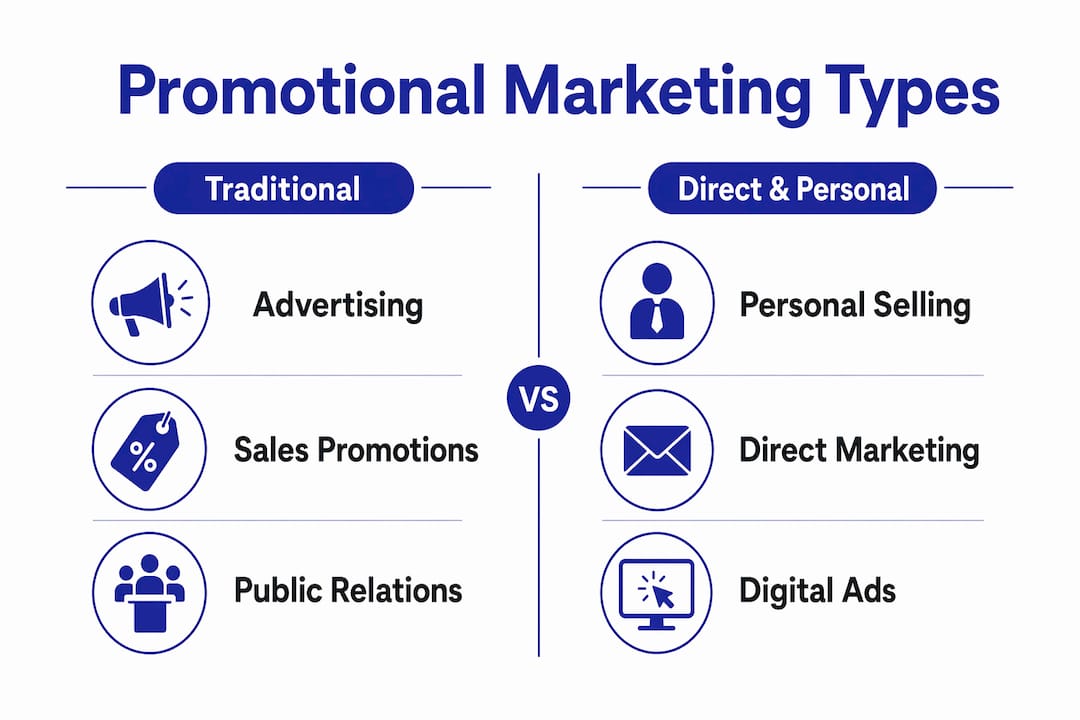
The promotional mix is the specific toolkit within promotion. According to Indeed, it combines advertising, sales promotions, public relations, personal selling, and direct marketing to meet specific campaign goals. Each element serves a different function, and selecting the right combination depends on your audience, budget, and desired customer response.
Pro Tip: Aligning your promotional decisions with your product, price, and place decisions makes each campaign more effective. A premium-priced product promoted with heavy discount tactics sends a contradictory message that erodes brand value.
| Dimension | Marketing | Promotion |
|---|---|---|
| Scope | Full business strategy | Communication and awareness |
| Activities | Research, pricing, distribution, product | Advertising, PR, sales incentives |
| Goal | Long-term brand and revenue growth | Immediate awareness and customer action |
| Tools | Market analysis, product roadmaps | Campaigns, events, branded materials |
What are the main types of promotional marketing?
The promotional mix combines advertising, sales promotions, public relations, personal selling, and direct and digital marketing to promote a product or service. Each element targets a different stage of the customer journey and produces a different type of response.
Advertising is paid, non-personal communication through channels like television, digital display, search, and print. It builds broad awareness efficiently but lacks the personal relationship that drives final purchase decisions for high-consideration products.
Sales promotions are time-limited incentives designed to accelerate purchase decisions. Coupons, limited-time discounts, free samples, and branded giveaways all fall into this category. They are particularly effective at driving trial for new products or re-engaging lapsed customers.
Public relations builds credibility through earned media, press coverage, community events, and sponsorships. Unlike advertising, PR carries third-party validation, which makes it more persuasive for audiences skeptical of direct brand messaging.
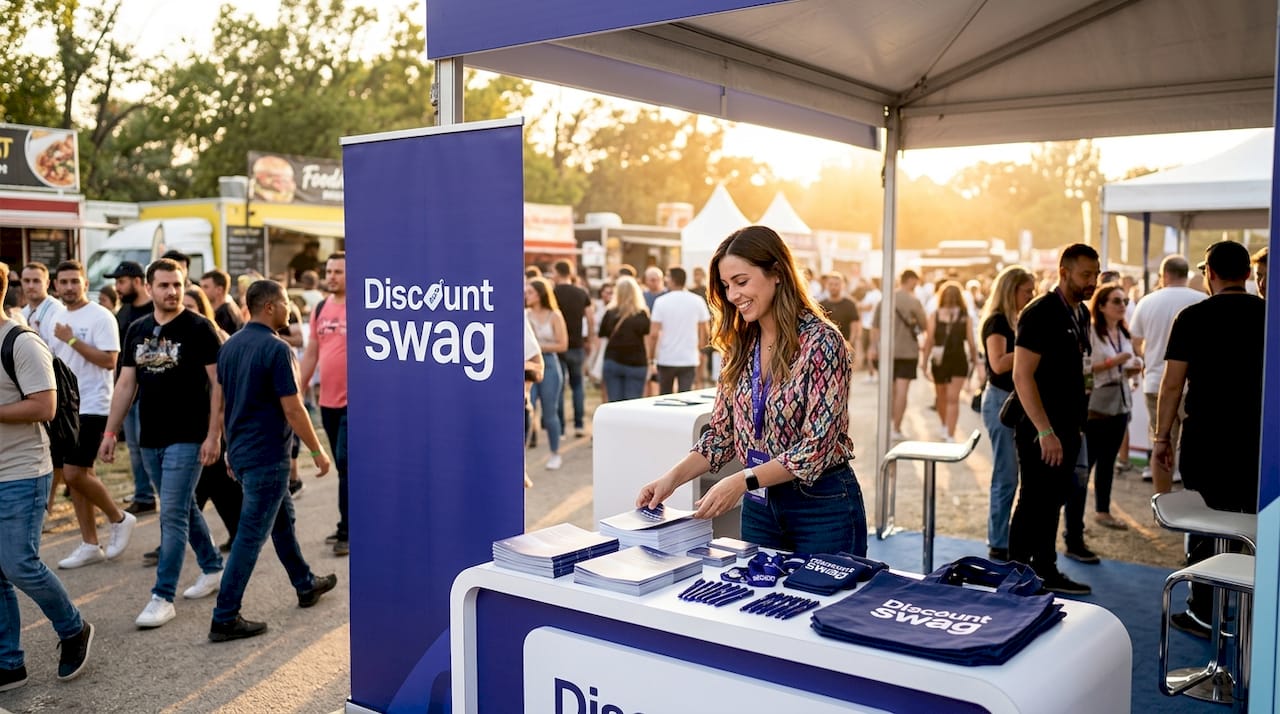
Personal selling involves direct, one-on-one communication between a sales representative and a prospect. It is the most resource-intensive promotional tool but produces the highest conversion rates for complex or high-value products. Trade shows are a classic environment where personal selling and branded promotional products work together.
Direct marketing reaches customers individually through email, direct mail, SMS, or targeted digital ads. It allows precise segmentation and measurable response tracking, making it a preferred channel for performance-focused campaigns.
| Promotional type | Primary use | Best for |
|---|---|---|
| Advertising | Mass awareness | New product launches, brand building |
| Sales promotions | Purchase acceleration | Trial, seasonal spikes, re-engagement |
| Public relations | Credibility and trust | Brand reputation, crisis management |
| Personal selling | High-value conversion | B2B, complex products, trade shows |
| Direct marketing | Targeted outreach | Retention, segmented offers |
Integrated marketing communications (IMC) is the practice of coordinating all five elements so they deliver a consistent, unified message. A product launch that runs a TV ad, sends a direct email, and distributes branded merchandise at a trade show only works when all three carry the same core message and visual identity.
What are the key benefits of promotional marketing?
Promotional marketing delivers measurable business outcomes when executed with clear objectives. The benefits extend beyond short-term sales spikes and build long-term brand equity when the promotional mix is used strategically.
-
Increased brand visibility. Consistent promotion across advertising, PR, and direct channels keeps your brand present in the customer’s mind at the moment they are ready to buy. Branded promotional products, in particular, generate repeated impressions over time because recipients keep and use them.
-
Stimulated customer action. The core goal of promotion is to stimulate target market action, whether that means making a purchase, signing up for a trial, or requesting a demo. Sales promotions and direct marketing are the most direct tools for triggering this response.
-
Customer loyalty and retention. Promotional campaigns that reward existing customers, through loyalty programs, exclusive offers, or personalized outreach, reduce churn and increase lifetime value. Retention-focused promotions typically cost less than acquisition campaigns and produce higher returns.
-
Competitive differentiation. Promotion communicates what makes your brand different. A well-executed PR campaign or a distinctive branded giveaway at a trade show creates a memorable impression that generic competitors cannot easily replicate.
-
Support for new product adoption. Free samples, demonstrations, and introductory offers reduce the perceived risk of trying something new. These tactics are particularly effective for lead generation when entering a new market segment or launching a product with no existing customer base.
Promotion is the communication piece that sparks immediate action, while broader marketing builds long-term relationships. The two must work in tandem for either to perform at full potential.
How does promotional marketing work in practice?
Effective promotional marketing starts with a defined objective. OpenStax frames promotional campaigns as stimuli designed to produce specific customer responses, which means every campaign element should map to a predefined action: buy, try, sign up, or share. Without that clarity, you cannot measure success or optimize performance.
The practical process follows a clear sequence:
- Set a specific, measurable goal. “Increase brand awareness” is not measurable. “Generate 500 new email subscribers from the trade show” is.
- Select the right promotional mix. A B2B software company launching a new feature needs different tools than a consumer packaged goods brand running a seasonal promotion. Match the tactic to the audience and the desired response.
- Develop consistent messaging. Integrated messaging across channels, from print ads and social posts to sales conversations and branded merchandise, improves brand recall and reduces customer confusion.
- Execute across channels simultaneously. Staggered launches dilute impact. A trade show appearance supported by pre-event email outreach, on-site branded giveaways, and post-event follow-up produces compounding results.
- Monitor and adjust. Track the specific customer response metrics you defined at the start. Click-through rates, redemption rates, and conversion rates tell you which elements are working. Vanity metrics like impressions alone do not.
One of the most common pitfalls in promotional marketing is treating it as synonymous with paid advertising. Confusion among promotion tactics weakens conversions because each element serves a distinct function. Advertising builds awareness. Sales promotions create urgency. PR builds credibility. Personal selling closes deals. Relying on only one of these while ignoring the others leaves gaps in the customer journey.
Pro Tip: Build your promotional calendar around customer behavior cycles, not internal product schedules. Timing your campaigns to match when your audience is actively evaluating options produces significantly better response rates than campaigns timed to internal launch deadlines.
A well-designed social media ad workflow can also reinforce your promotional messaging across digital channels, ensuring that paid and organic efforts stay aligned throughout a campaign.
Key takeaways
Promotional marketing works because it combines targeted communication tools within an integrated system to drive specific, measurable customer actions aligned with broader marketing goals.
| Point | Details |
|---|---|
| Promotion vs. marketing | Promotion is the communication subset of marketing, focused on awareness and action rather than full strategy. |
| The promotional mix | Advertising, sales promotions, PR, personal selling, and direct marketing each serve distinct roles. |
| IMC is non-negotiable | Consistent messaging across all channels improves recall and reduces customer confusion. |
| Define the desired action | Every campaign must specify the customer response it targets before launch. |
| Branded products drive recall | Physical promotional items generate repeated impressions and support both trade show and lead generation goals. |
Why most promotional campaigns underperform
Most promotional campaigns fail not because the tactics are wrong but because the message system is fragmented. I have seen marketing teams run a polished digital ad campaign while their sales team uses completely different language at trade shows and their PR pitches tell a third version of the brand story. The result is a customer who encounters the brand three times and still cannot articulate what it does.
The fix is not a bigger budget. It is treating promotion as a single message system rather than a collection of independent channel activities. When your advertising, your branded merchandise, your PR narrative, and your direct outreach all reinforce the same core claim, each touchpoint amplifies the others instead of competing with them.
The second mistake I see consistently is confusing promotion with all of marketing. Marketers who skip the product, pricing, and distribution decisions and jump straight to promotional tactics end up promoting something the market does not want, at a price point that does not convert, through channels the audience does not use. Promotion cannot fix a broken marketing strategy. It can only communicate what is already there.
The most underused element in the promotional mix, in my experience, is personal selling combined with physical branded materials. At a trade show, a well-trained sales representative handing a prospect a useful, high-quality branded item creates a memory that a digital ad cannot replicate. That combination of human connection and tangible brand presence is where promotional marketing still has a significant advantage over purely digital approaches.
— Jerry
Branded promotional products for your next campaign
Promotional marketing works best when every touchpoint reinforces your brand message, and physical branded products are one of the most durable touchpoints available. Discountswag supplies corporate promotional products across a wide range of categories, from branded tech accessories to trade show giveaways, designed to keep your brand visible long after the campaign ends.
Whether you are planning a product launch, a trade show appearance, or a direct mail campaign with a physical component, Discountswag offers promotional products for marketers that align with your campaign goals and budget. Explore the full catalog to find the right items for your next promotional push.
FAQ
What is the definition of promotional marketing?
Promotional marketing is the process of communicating a brand, product, or service’s value across multiple channels to increase awareness and stimulate customer action. It operates as the “promotion” element within the classic four Ps of the marketing mix.
What are the main types of promotional marketing?
The five core types are advertising, sales promotions, public relations, personal selling, and direct marketing. Each serves a different function in the customer journey, from building awareness to closing a sale.
How does promotional marketing differ from general marketing?
Marketing covers the full business strategy including product, price, and distribution decisions. Promotion is the communication subset focused specifically on driving awareness and customer action through campaigns and outreach.
What is a promotional campaign?
A promotional campaign is a coordinated set of activities using one or more elements of the promotional mix to achieve a specific, time-bound business objective such as a product launch, seasonal sale, or brand awareness push.
What are the benefits of promotional marketing for businesses?
Promotional marketing increases brand visibility, stimulates purchase behavior, builds customer loyalty, differentiates a brand from competitors, and supports new product adoption. Physical branded products and direct marketing are particularly effective for generating measurable responses.
 Bottle Carriers
 Mugs
Mugs