
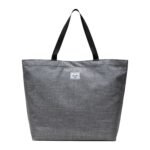

Why Quality Matters in Promotional Products: 2026 Guide


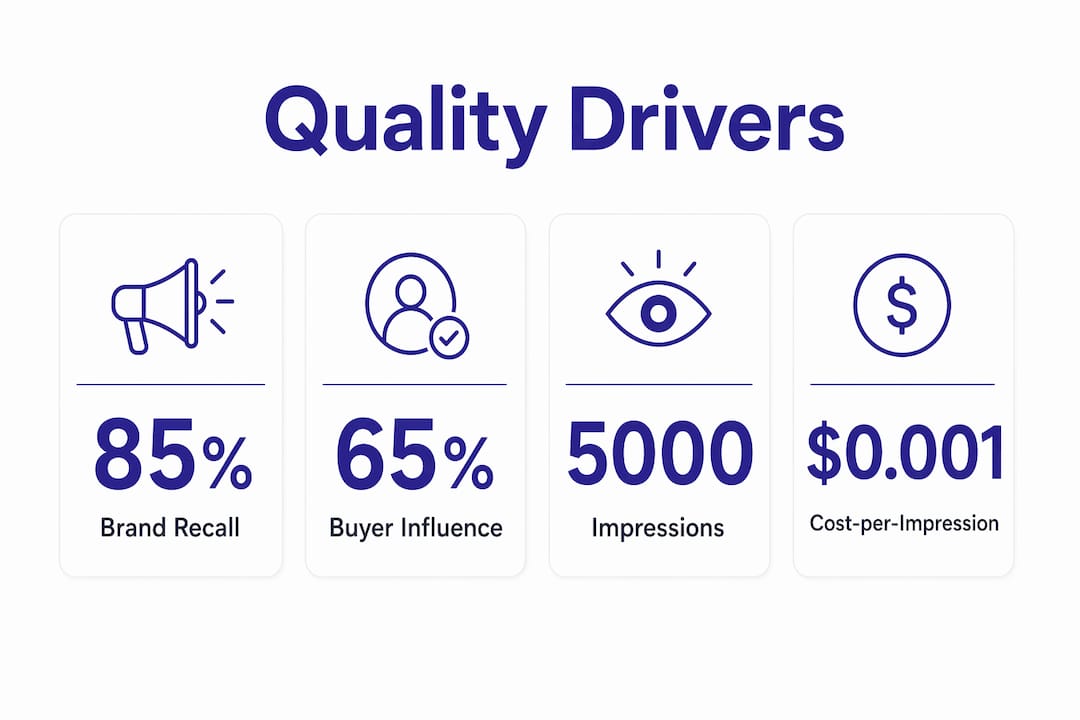
Quality in promotional products is the single most important factor determining whether a branded item builds lasting impressions or ends up in a trash can. 85% of consumers remember the advertiser who gave them a high-quality logoed product, and 78% view that brand more favorably afterward. Those numbers, drawn from ASI’s 2026 Global Advertising Impressions survey of nearly 5,000 consumers, make the case plainly. For marketing professionals and procurement managers, understanding why quality matters in promotional products is not a philosophical exercise. It is a direct line to measurable campaign ROI, reduced waste, and brand equity that compounds over time.
Why quality matters in promotional products: brand perception and memorability
The relationship between product quality and brand perception is direct and documented. A well-made item signals that a company respects the recipient’s time and taste. A flimsy one signals the opposite, and that impression sticks just as firmly as a positive one.
78% of consumers keep promotional products because they find them useful. Usefulness and quality are inseparable: a product that falls apart after two uses is not useful, regardless of how clever the design is. This retention rate is what transforms a one-time distribution event into months or years of repeated brand exposure.
The voluntary use factor is where quality separates high-performing campaigns from forgettable ones. When someone chooses to carry a branded tote bag or wear a logoed fleece in public, they become an active brand ambassador. That behavior only happens when the product is good enough to compete with the non-branded alternatives already in their home.
“67% of swag buyers consider their investment successful only if recipients voluntarily use or wear the products.” — 2026 Swag Trends Survey, Custom Ink
The implications for procurement are significant. Measuring success by units distributed is the wrong metric. The right metric is voluntary use, because that is what drives sustained impressions and brand engagement over time.
Key factors linking quality to brand memorability:
- Durability keeps the product in circulation longer, multiplying impressions per dollar spent.
- Perceived premium feel elevates the brand association at the moment of receipt.
- Functional design increases daily use, which means more public visibility.
- Material quality reduces the likelihood of early disposal, protecting the brand from negative associations.
What defines quality in promotional products and how does it vary by market?
Quality in the context of promotional merchandise is not a single attribute. It is a combination of durability, material integrity, functional usefulness, and perceived value. Understanding each dimension helps procurement teams write better specs and avoid the trap of selecting products that look good in a catalog but disappoint in the field.
| Quality Dimension | What it means in practice | Why it matters |
|---|---|---|
| Durability | Resistance to wear, washing, and daily use | Extends product life and impression count |
| Material integrity | Fabric weight, stitching quality, hardware grade | Determines perceived premium feel at first touch |
| Functional usefulness | Does the product solve a real problem for the recipient? | Drives voluntary retention and repeated use |
| Design clarity | Logo placement, color accuracy, print longevity | Maintains brand visibility over the product’s lifespan |
International data adds an important nuance here. 65% of international consumers say quality influences their willingness to buy or keep promotional merchandise, with usefulness retention reaching as high as 91% in some countries. ASI’s 2026 Ad Impressions Study also shows that international markets tend to prioritize quality and usefulness over design complexity. Simpler branding with premium materials often outperforms elaborate graphics on lower-grade substrates in those markets.
This distinction matters for global campaign managers. Quality and design are complementary but separate variables. A product can be beautifully designed and still fail if the materials are substandard. Conversely, a simple, well-made item with a clean logo will outlast and outperform a visually complex item on cheap stock.
Pro Tip: When sourcing for international markets, request material specification sheets from your supplier and compare them against local market preferences. A heavier cotton weight or a reinforced zipper can be the difference between a product that gets used daily and one that gets discarded within a week.
Global campaigns need quality and usefulness as their foundation, with design adapted to local preferences. That sequencing is deliberate: quality first, then localization.
How investing in quality promotional products improves marketing ROI
The financial case for quality is built on cost-per-impression (CPI), not unit price. Procurement teams that optimize for the lowest unit cost often end up with the highest effective cost per impression, because cheap products get discarded quickly and stop generating brand views.
Tote bags generate approximately 5,000 impressions over their lifetime, with a CPI around $0.001. That figure is possible only because a quality tote bag stays in use for years. A low-quality version that tears within months generates a fraction of those impressions and leaves a negative final impression when it fails.
Premium products like branded fleece carry a higher unit price but maintain a still-low cost-per-impression because recipients wear them repeatedly over multiple seasons. The math consistently favors quality when you measure the full impression lifecycle rather than the purchase order line item.
Four reasons quality improves marketing ROI:
- Longer product lifespan means more impressions per dollar without additional spend.
- Higher voluntary use rates generate public visibility that paid media cannot replicate at the same CPI.
- Positive brand associations at the moment of receipt increase the likelihood of purchase intent and referral behavior.
- Reduced replacement cycles lower the total volume of products needed to maintain campaign presence, which also reduces waste.
The sustainability dimension reinforces the ROI argument. A joint ASI and PPAI study found that promotional products have up to 8x less carbon impact per memorized impression than digital advertising. Quality products amplify that advantage further, because a single durable item replaces multiple cheap ones that would otherwise end up in landfill. For companies with active ESG commitments, this is a material consideration. 74% of consumers feel more favorable toward brands that give environmentally friendly promotional items, which means quality and sustainability reinforce each other as brand signals.
Practical tips for selecting quality promotional products for corporate campaigns
Selecting quality merchandise requires more than choosing a higher price tier in a supplier catalog. It requires a structured approach to specification, supplier evaluation, and campaign alignment. The value of durable promotional products is only realized when procurement decisions are made with the full impression lifecycle in mind.
Start with usefulness. A product that solves a real problem for the recipient will be kept and used regardless of whether the recipient has a strong prior relationship with your brand. Drinkware, quality apparel, and functional bags consistently rank among the highest-retention categories because they address daily needs.
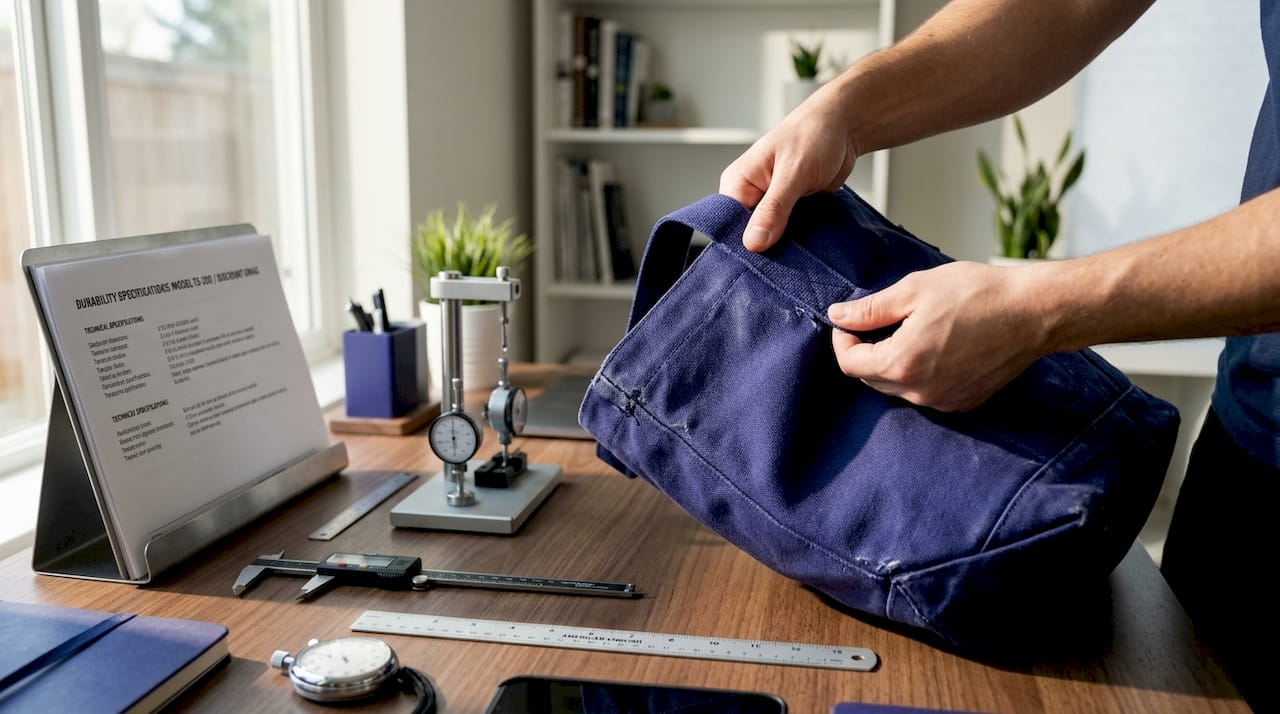
Evaluate material and construction specifications before approving samples. Ask suppliers for fabric weight in grams per square meter for apparel, thread count for bags, and hardware grade for items with zippers or clasps. These specifications predict durability far more accurately than visual inspection of a sample alone.
Pro Tip: Request a stress test on any item you plan to order at volume. Wash apparel three times before approving it. Fill bags to capacity and carry them for a day. These simple tests reveal construction weaknesses that catalog photos never show.
Procurement teams improve ROI by selecting products “useful enough to keep” and “durable enough to last” rather than cutting unit cost. That principle should be written into your procurement brief as a non-negotiable baseline.
Common pitfalls to avoid:
- Selecting by price alone without evaluating CPI or expected product lifespan.
- Ignoring recipient context by choosing items that do not fit the audience’s daily life or professional environment.
- Prioritizing logo size over product quality, which produces items that feel like advertisements rather than genuine gifts.
- Skipping supplier audits for quality control processes, especially for international orders where material standards vary significantly.
- Measuring success by distribution volume rather than voluntary use and sustained impressions, which 45% of buyers rate durability as the most important feature when evaluating success.
Key takeaways
Quality in promotional products drives measurable brand recall, voluntary use, and cost-efficient impressions that cheap alternatives cannot replicate at any distribution volume.
| Point | Details |
|---|---|
| Quality drives recall | 85% of consumers remember the brand behind a high-quality promotional item, per ASI 2026 research. |
| Usefulness determines retention | 78% of consumers keep promotional products because they find them useful, extending the impression lifecycle. |
| CPI beats unit cost as the metric | Tote bags generate ~5,000 impressions at $0.001 CPI, making quality items more cost-efficient over time. |
| Sustainability reinforces quality | Quality products generate up to 8x less carbon per memorized impression than digital ads, supporting ESG goals. |
| Voluntary use is the success metric | 67% of swag buyers define success by whether recipients voluntarily use or wear the product. |
Why I stopped measuring promo budgets by price per unit
I have reviewed hundreds of promotional product campaigns over the years, and the single most consistent mistake I see is procurement teams treating swag like a commodity purchase. The conversation almost always starts with “what’s the lowest price we can get on 500 units?” and almost never starts with “what’s the longest this product will stay in use?”
That framing produces predictable results. The cheap pen gets lost in a drawer. The thin t-shirt gets used as a rag. The flimsy tote bag splits at the seam after three grocery runs. None of those outcomes generate brand impressions. All of them generate brand damage, because the product’s failure is the last thing the recipient associates with your logo.
The shift I have seen in the most effective marketing teams is a move toward fewer, better items. Instead of 1,000 forgettable giveaways at a trade show, they distribute 300 genuinely useful, well-made products to qualified prospects. The impression count per item is higher, the voluntary use rate is higher, and the brand association is positive rather than neutral or negative.
The 2026 ASI and Custom Ink data confirms what I have observed in practice. Voluntary use and durability are the metrics that actually predict campaign success. If your procurement brief does not include minimum durability specifications and a usefulness test for the recipient profile, you are optimizing for the wrong variable entirely.
The intersection of quality and sustainability is also worth taking seriously beyond the marketing angle. A well-made product that lasts three years is genuinely better for the environment than three cheap products that each last one year. That argument resonates with procurement committees that have ESG mandates, and it gives marketing teams a principled reason to push back on budget pressure that would otherwise drive quality down.
Rethink the metric. Price per unit is a purchasing metric. Impressions per dollar over the product’s lifetime is a marketing metric. The two are not the same, and confusing them is expensive.
— Jerry
Find quality promotional products that work as hard as your brand does
Building a campaign around high-quality merchandise starts with having the right product options in front of you. Discountswag sources corporate promotional products across every major category, from premium apparel and drinkware to durable bags and branded tech accessories, all specified for the durability and usefulness standards that drive real retention.
Whether you are planning a trade show distribution, an employee recognition program, or a client gifting campaign, the product selection process matters as much as the creative brief. Browse the full range of branded promotional products available through Discountswag to find items that meet the quality specifications your brand requires. For teams focused on conversion outcomes, the guide on merchandise and conversions connects product quality directly to measurable campaign results.
FAQ
Why does quality matter more than quantity in promotional products?
Quality determines whether a product gets used voluntarily, which drives repeated brand impressions over time. A single high-quality item that stays in use for two years generates more brand exposure than ten cheap items that are discarded within weeks.
How does product quality affect brand perception?
78% of consumers view brands more favorably after receiving a promotional item, but that effect depends on the item being well-made. Low-quality products create negative associations that undermine the brand rather than supporting it.
What is cost-per-impression and why does it matter for promo products?
Cost-per-impression measures the total brand views generated per dollar spent on a promotional item. Quality products like tote bags achieve a CPI around $0.001 by staying in use long enough to generate thousands of impressions, making them more cost-efficient than cheaper alternatives with shorter lifespans.
How do I evaluate quality when sourcing promotional products?
Request material specifications such as fabric weight, stitching grade, and hardware quality from your supplier, then conduct physical stress tests on samples before approving bulk orders. Visual inspection alone does not predict how a product will perform after weeks of regular use.
Are high-quality promotional products more sustainable?
Yes. The ASI and PPAI joint study found promotional products carry up to 8x less carbon impact per memorized impression than digital advertising, and durable quality items amplify that advantage by replacing multiple short-lived cheap alternatives.
 Bottle Carriers
 Mugs
Mugs