

Why Promotional Products Work: A Data-Driven Guide


Promotional products are branded physical items distributed by companies to increase awareness, build loyalty, and generate repeated brand exposure at a fraction of the cost of traditional advertising. The research is unambiguous on why promotional products work: 85% of consumers remember the advertiser who gave them a logoed item, and 78% keep those items specifically because they find them useful. That combination of recall and retention is what separates branded merchandise from every other ad format. Unlike a digital banner that disappears in seconds, a well-chosen promotional item sits on a desk, rides in a bag, or gets worn in public for months. Discountswag works with marketing teams who want to turn that physical presence into measurable brand equity.
Why promotional products work better than most ad formats
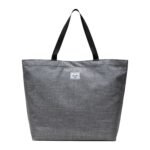
The core mechanic behind the effectiveness of promotional items is cost-per-impression, or CPI. CPI measures how much a brand pays each time one person sees its message. A single tote bag generates nearly 5,000 impressions over its lifetime at a cost of roughly 0.1 cent per impression. That figure comes from ASI’s 2026 Ad Impressions Study, and it reflects the compounding effect of repeated use in public spaces. Every time someone carries that bag to a grocery store, a gym, or a conference, the brand logo gets seen again without any additional spend.
Compare that to paid digital channels. A social or search campaign typically costs between $0.50 and $3.00 per impression depending on the platform, audience, and competition. Television and radio are even less efficient on a per-memorized-impression basis. The table below shows how promotional products stack up against common advertising channels on CPI.
| Channel | Estimated CPI | Typical Exposure Duration |
|---|---|---|
| Branded tote bag | ~$0.001 | 12 to 24 months |
| Branded apparel | ~$0.002 | 6 to 18 months |
| Digital display ad | ~$0.50 to $3.00 | 1 to 5 seconds |
| TV commercial | ~$0.02 to $0.05 | 15 to 30 seconds |
| Radio spot | ~$0.05 to $0.10 | 15 to 30 seconds |
The longevity column is the critical differentiator. A digital ad impression is over before the viewer registers it. A branded water bottle sits on a conference table for a year. Usefulness and durability are the key to superior ROI through lifetime impressions rather than one-off exposure. That insight should drive every product selection decision your team makes.

Pro Tip: Choose products your audience will use daily, such as drinkware, notebooks, or tech accessories, because daily use multiplies impressions without multiplying cost.
How promotional gifts create emotional connections that drive loyalty
The psychological dimension of branded merchandise is where the real competitive advantage lives. Receiving a promotional product makes 83% of consumers feel appreciated, and 90% say it improves their perception of the brand. Those numbers from PPAI’s 2026 Product Power study are not just feel-good statistics. They describe a direct pathway from a physical gift to a positive brand association stored in long-term memory.
Psychologists call the underlying mechanism reciprocity. When someone receives something of value, they feel a natural inclination to return the favor, often through purchase consideration or brand advocacy. Positive emotional associations from promotional products increase consumer spending with the brand by 18%. That is not a soft metric. It is a direct revenue signal tied to the act of giving a well-chosen item.
The quality and design of the item determine whether that emotional response is positive or neutral. PPAI’s 2026 research confirms that consumers prefer fewer, better-designed promotional products, associating them with pride, belonging, and gratitude. A cheap pen that stops working after a week sends the opposite message. The following factors consistently drive positive emotional outcomes from branded merchandise:
- Perceived usefulness: Items that solve a real daily problem, such as a portable charger or a quality tote, generate stronger appreciation than novelty items.
- Design quality: Clean branding, premium materials, and thoughtful packaging signal that the brand values the recipient.
- Relevance to the recipient: A tech accessory at a developer conference lands differently than the same item at a wellness retreat.
- Sustainability: Eco-friendly materials and responsible sourcing increasingly influence whether consumers feel proud to use and display a branded item.
- Timing and context: A gift received at a meaningful moment, such as after a purchase or at a key event, amplifies the emotional impact.
“Promotional products succeed because consumers treat them as personally relevant experiences rather than incidental freebies, leading to stronger brand retention.” — PPAI, Product Power 2026
That shift in framing, from giveaway to experience, is what separates high-performing campaigns from forgettable ones. You can explore how branded merchandise builds engagement at a deeper level to understand the memory and retention mechanics behind this effect.
How do promotional products compare to other advertising channels?
Promotional products rank above TV, social media, radio, and digital ads for consumer preference, according to ASI’s 2026 research. That ranking reflects something most media planners underestimate: physical items create a category of engagement that screens simply cannot replicate. You cannot touch a banner ad. You cannot carry a podcast episode to work. The tangibility of a branded item creates a sensory memory that digital formats cannot produce.
The environmental argument is also shifting in favor of promotional products. Promo items carry up to 8x lower carbon impact per memorized impression than digital advertising when sustainability is evaluated by impression effectiveness rather than raw production weight. That finding reframes the sustainability conversation entirely. Producing a single useful item that generates 5,000 impressions over two years is more carbon-efficient than running thousands of digital ad loads to achieve the same memorized exposure.
Promotional products do have limitations worth acknowledging. They require upfront production and logistics costs. They cannot be A/B tested in real time the way digital ads can. And a poorly chosen item can actively damage brand perception rather than build it. Poorly planned giveaways can lead to consumer fatigue and erode positive brand associations, so execution quality is not optional. The channel comparison below captures the honest trade-offs.
| Factor | Promotional products | Digital advertising | TV/Radio |
|---|---|---|---|
| Cost-per-impression | Very low (~$0.001) | Moderate to high | Moderate |
| Consumer preference ranking | Highest | Lower | Lower |
| Emotional engagement | High (tangible, personal) | Low to moderate | Moderate |
| Targeting precision | Moderate | Very high | Low |
| Measurability | Moderate | Very high | Low |
| Environmental efficiency | High (per memorized impression) | Lower | Moderate |
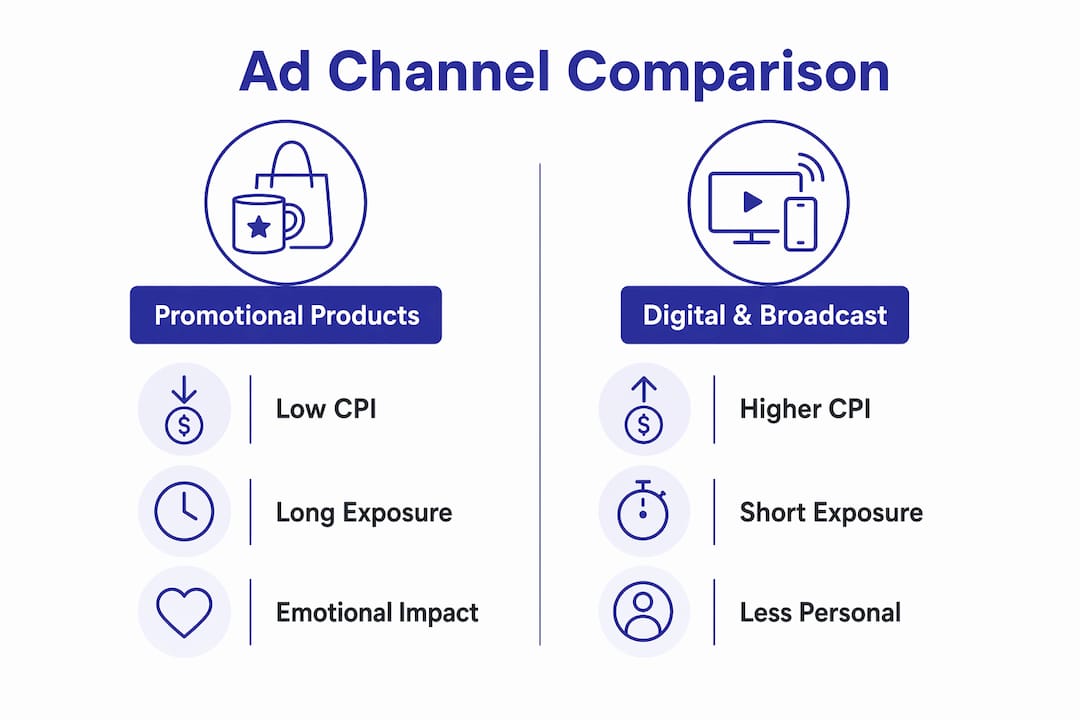
The strategic conclusion is not that promotional products replace digital or broadcast advertising. The advantages of marketing products are maximized when they complement a broader media mix. A branded item given at a trade show reinforces a retargeting campaign. A direct mail piece with a branded insert outperforms the same mailer without one.
Pro Tip: Pair promotional product distribution with a QR code or personalized URL to connect physical impressions to digital tracking, giving you measurable data on downstream engagement.
Strategic considerations for maximizing promotional product ROI
Selecting the right item is the single highest-leverage decision in any promotional campaign. The retention-repeated contact-memory-preference chain only works if the item is used repeatedly. That means product selection must start with audience behavior, not budget or brand preference. Here is a practical framework for building a high-performing promotional product strategy:
- Define the audience’s daily context. A field sales team needs different items than a remote software team. Map where your audience spends time and what they carry, use, or consume daily before selecting a product category.
- Prioritize utility over novelty. Product usefulness and design significantly influence keeping rate and brand favorability. A product that gets used daily generates exponentially more impressions than a clever but impractical item.
- Build sustainability into the brief. Eco-friendly materials, responsible sourcing, and minimal packaging are no longer optional for brands targeting younger professionals. Sustainability signals brand values and increases the likelihood that recipients display the item publicly.
- Set measurement criteria before distribution. Counting giveaway distribution logistics is insufficient. Measure impressions over time, brand favorability shifts, and purchase intent among recipients to evaluate true campaign impact.
- Integrate with your broader campaign architecture. A branded item distributed at a product launch, paired with a follow-up email sequence and a social media tag incentive, creates a multi-touch experience that compounds the impact of each individual channel.
- Test before scaling. Distribute a smaller batch to a representative audience segment, gather feedback on perceived quality and usefulness, and refine before committing to a full production run.
The promotional items lead generation guide from Discountswag covers how to connect product distribution directly to pipeline metrics, which is the next logical step once your selection and measurement framework is in place.
Key takeaways
Promotional products work because they combine the lowest cost-per-impression of any advertising channel with emotional engagement and repeated physical use that digital formats cannot replicate.
| Point | Details |
|---|---|
| Unmatched cost efficiency | A $6 tote bag generates ~5,000 impressions at 0.1 cent CPI, far below digital or broadcast rates. |
| Emotional ROI is measurable | Positive brand associations from promo items increase consumer spending with the brand by 18%. |
| Consumer preference is clear | Promotional products rank above TV, social, radio, and digital ads for consumer preference in 2026 ASI research. |
| Quality drives retention | 78% of consumers keep promotional items due to usefulness; design and sustainability further increase keeping rates. |
| Measure beyond distribution | Track impressions over time and brand favorability shifts, not just how many items were handed out. |
What I’ve learned after years of watching promo campaigns succeed and fail
The biggest mistake I see marketing teams make is treating promotional products as a budget line item rather than a media channel. They pick an item because it fits the price point, order 500 units, hand them out at a trade show, and call it done. There is no measurement, no audience alignment, and no connection to the broader campaign. The result is a box of branded stress balls that ends up in a drawer.
The campaigns that actually move brand metrics do the opposite. They start with the question: what does this person use every day? Then they work backward to a product that fits that answer, with design quality that makes the recipient feel the brand is worth their attention. I have seen a well-designed branded notebook generate more post-event follow-up conversations than a $10,000 digital retargeting spend on the same audience.
The sustainability angle is also no longer a differentiator. It is a baseline expectation for any brand targeting professionals under 45. If your promotional item is made from virgin plastic with no recycling pathway, you are not just missing an opportunity. You are actively signaling that your brand has not caught up with where your audience already is.
My honest recommendation: treat your next promotional campaign the way you would treat a paid media test. Define the audience, set measurable outcomes, select a product with genuine utility, and track results beyond distribution counts. That discipline is what separates a promotional product strategy from a giveaway habit.
— Jerry
Build your next campaign with Discountswag
Discountswag supplies corporate marketing teams with branded merchandise built for real-world use and measurable impact. Whether you are planning a trade show presence, a client appreciation program, or an internal brand launch, the right product selection makes the difference between an item that gets used and one that gets discarded.
Browse the full range of branded promotional products across apparel, drinkware, tech accessories, and sustainable options to find items matched to your audience’s daily habits. If you are focused on conversion metrics, the branded merchandise conversion guide connects product strategy directly to pipeline outcomes with 2026 data.
FAQ
Why do promotional products have such a low cost-per-impression?
Promotional products generate thousands of impressions over their usable lifetime because recipients use them repeatedly in public settings. A single tote bag, for example, produces nearly 5,000 impressions at roughly 0.1 cent per impression, according to ASI’s 2026 Ad Impressions Study.
Do promotional items actually influence purchase decisions?
Yes. Positive emotional associations from branded merchandise increase consumer spending with the brand by 18%, and 85% of recipients remember the advertiser who gave them a logoed product, creating a direct link between the gift and future purchase consideration.
What makes a promotional product effective vs. forgettable?
Usefulness, design quality, and relevance to the recipient are the primary drivers. PPAI’s 2026 research shows that consumers prefer fewer, better-designed items they associate with pride and belonging, rather than high-volume, low-quality giveaways.
How should marketers measure promotional product ROI?
Measuring only distribution volume misses the point. The most accurate approach tracks impressions over time, brand favorability shifts among recipients, and purchase intent, as outlined in Forbes Business Council’s 2026 analysis of promotional product ROI.
Are promotional products more sustainable than digital advertising?
Per memorized impression, promotional products can carry up to 8x lower carbon impact than digital advertising, according to a landmark ASI environmental study. The key is evaluating carbon efficiency by impression effectiveness rather than raw production weight alone.
 Bottle Carriers
 Mugs
Mugs