

Types of Branded Health Items for Marketers: 2026 Guide


Branded health items are defined as promotional wellness products that deliver tangible health benefits while amplifying brand recognition. This category, formally called branded wellness merchandise in the promotional products industry, spans everything from FDA-regulated dietary supplements to yoga mats and stress-relief kits. Choosing the right types of branded health items for your campaign requires understanding both consumer demand and regulatory obligations. The wrong choice can disrupt a campaign. The right one builds lasting brand equity.
1. What are the main types of branded health items?
Branded health items fall into two primary categories: ingestible products and non-ingestible wellness products. Ingestible items include dietary supplements, functional beverages, and probiotic capsules. Non-ingestible items cover fitness gear, aromatherapy sets, mindfulness journals, and personal care products. Each category carries distinct regulatory requirements and serves different campaign goals. Understanding this split is the foundation of any sound promotional health strategy.
2. Ingestible branded health products and their promotional value
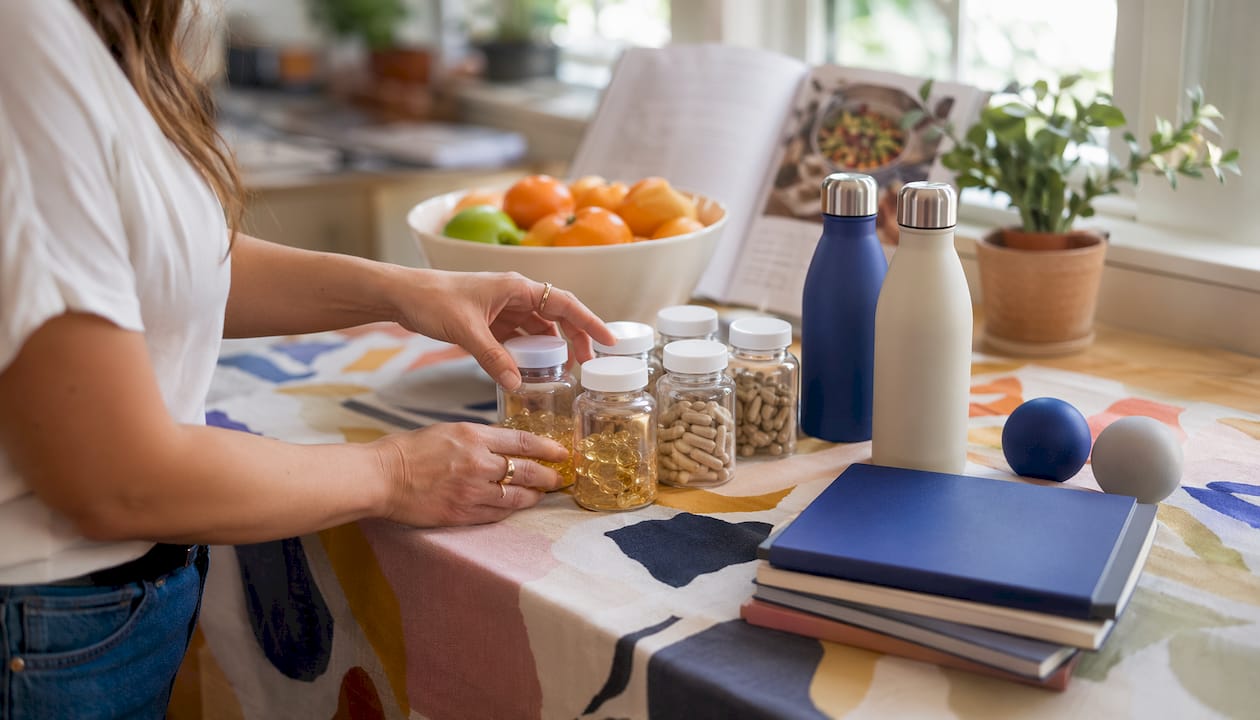
Ingestible branded health products carry the highest regulatory burden in the promotional wellness space. Dietary supplements require a Supplement Facts panel, ingredient disclosures, and specific disclaimers on every unit distributed. That requirement applies whether you order 50 units for a VIP event or 5,000 for a trade show.
The legal framework governing these products is the Dietary Supplement Health and Education Act (DSHEA) of 1994. Under DSHEA, supplements can only make structure/function claims, such as “supports immune health,” not disease claims like “prevents colds.” That distinction matters enormously for how you write copy and design packaging.
Popular ingestible examples in corporate wellness campaigns include:
- Probiotic supplements in single-serve sachets, ideal for health-focused conference giveaways
- Functional beverages like hydration multipliers, which consumers respond to for on-the-go health management
- Vitamin C and zinc packets, compact and cost-effective for large-scale distribution
- Collagen powders, popular in beauty-meets-wellness brand campaigns
- Adaptogen blends, emerging as a premium gifting option for executive audiences
Pro Tip: Work with your supplier to confirm FDA labeling compliance before placing any ingestible order. Misclassifying an ingestible product risks compliance penalties and campaign disruptions that no marketing budget can easily absorb.
3. Non-ingestible wellness items that build brand affinity
Non-ingestible branded wellness products are the workhorses of health-focused promotional campaigns. These items typically require only ingredient lists and responsible party information, not FDA Supplement Facts labeling. That simpler compliance path makes them faster to produce and easier to customize at scale.
Consumer demand for mindfulness and stress-relief products has grown steadily, making this category a reliable choice for brand managers. Products in this space include:
- Yoga mats and resistance bands, which carry your logo into gyms and home workout spaces
- Aromatherapy roller sets and essential oil diffusers, popular for desk wellness programs
- Mindfulness journals and gratitude notebooks, effective for employee wellness campaigns
- Stress balls and fidget tools, proven branded giveaways with broad audience appeal
- First aid kits, practical and universally valued across industries
- Reusable water bottles with infusers, bridging hydration and lifestyle branding
The most effective non-ingestible wellness items are those that recipients use daily. Daily use means daily brand exposure. A yoga mat with your logo gets seen every morning. A stress ball sits on a desk for months. Frequency of use is the real metric for promotional ROI in this category.
Pro Tip: Match your wellness item to the campaign setting. A mindfulness journal fits an employee wellness program. A branded resistance band fits a fitness brand launch. Mismatched items get discarded, not used.
4. Comparing branded health item categories by features and compliance
Choosing between ingestible and non-ingestible branded health products requires a clear view of their differences. The table below maps the key decision criteria for marketing professionals.
| Criteria | Ingestible items | Non-ingestible items |
|---|---|---|
| Regulatory complexity | High. FDA oversight, DSHEA compliance, Supplement Facts panel required | Low to moderate. Ingredient list and responsible party info required |
| Health benefit type | Internal: immune support, hydration, gut health, energy | External or behavioral: stress relief, fitness, mindfulness, hygiene |
| Branding potential | Strong on packaging; limited surface area for logo placement | High. Large surfaces on mats, bottles, journals, and kits |
| Lead time | Longer due to compliance review and labeling | Shorter. Standard consumer goods production timelines |
| Best campaign fit | Health-focused consumer giveaways, pharmacy partnerships, wellness events | Employee wellness programs, trade shows, corporate gifting |
| Consumer appeal | High when product is recognizable and trusted | Universally high across demographics |
| Cost range | Moderate to high per unit | Low to high depending on product type |
The clearest takeaway from this comparison: ingestible items win on health credibility but require more planning. Non-ingestible items win on flexibility and speed. For most brand managers running a first health-focused campaign, non-ingestible wellness products are the lower-risk entry point. For brands with established wellness positioning, ingestible items signal a deeper commitment to consumer health.
5. Emerging trends in branded wellness products for 2026
The branded health merchandise space is shifting toward science-backed formulations and certified products. Top wellness categories in 2026 include functional hydration aids, probiotic supplements, and mindfulness tools such as journals and stress-relief sets. Some brands in these categories have accumulated over 20,000 positive customer reviews on retail platforms. That level of consumer validation makes these products credible additions to any promotional lineup.
Three trends stand out for brand managers planning 2026 campaigns:
- Hydration multipliers and electrolyte packets: Functional beverages are among the fastest-growing branded health categories in corporate wellness. Consumers value convenience and multi-benefit delivery in a single serving.
- Third-party certified supplements: NSF Certified for Sport and similar certifications signal ingredient transparency. Brands that distribute certified products earn trust that generic supplements cannot match.
- Tech-enabled wellness items: Fitness trackers and smart water bottles qualify as wearable wellness products and, in some cases, fall under unique device identifier (UDI) requirements. Confirm classification before ordering.
Pro Tip: Time your health item campaigns around wellness calendar moments: January fitness resolutions, May Mental Health Awareness Month, and September back-to-work season. Aligning product launches with these windows increases relevance and reduces the cost of consumer education.
Key takeaways
Branded health items split into ingestible and non-ingestible categories, and selecting the right type requires matching regulatory complexity, branding potential, and campaign goals before placing any order.
| Point | Details |
|---|---|
| Know the two main categories | Ingestible and non-ingestible items carry different regulatory burdens and serve different campaign objectives. |
| Ingestibles require FDA compliance | Supplements must include a Supplement Facts panel and structure/function claims only under DSHEA. |
| Non-ingestibles offer faster execution | Yoga mats, journals, and stress tools need simpler labeling and deliver high daily brand exposure. |
| Certifications build credibility | Third-party certifications like NSF Certified for Sport differentiate health products in a crowded market. |
| Match item to campaign context | Employee wellness programs, trade shows, and consumer giveaways each call for a different health item category. |
What I’ve learned from years of watching health item campaigns succeed and fail
The most common mistake I see brand managers make is treating branded health items as a novelty category. They pick a probiotic sachet or a yoga mat because it feels current, without asking whether it fits the brand or the audience. That mismatch is expensive.
The campaigns that work share one trait: the health item reflects something the brand already stands for. A financial services firm distributing stress-relief kits to clients makes sense. The same firm handing out probiotic supplements at a conference feels random. Brand alignment is not a soft concept here. It directly determines whether the product gets used or thrown away.
Regulatory compliance is the other area where I see campaigns stumble. Marketers underestimate the oversight that comes with ingestible products. A supplement distributed without proper labeling is not just a legal risk. It is a brand risk. One compliance failure at a public event can undo months of goodwill.
My honest recommendation: start with non-ingestible wellness items if you are new to this category. Build confidence with products that carry lower regulatory complexity. Then, once you have a reliable supplier relationship and a clear compliance process, move into ingestibles with a certified, well-labeled product. The payoff in brand credibility is real. The risk of rushing is equally real.
— Jerry
Discountswag’s health and wellness promotional products
Discountswag specializes in branded promotional products across every health item category covered in this article. From stress-relief kits and mindfulness journals to custom hydration sets and fitness accessories, the catalog is built for brand managers who need quality, customization, and fast turnaround.
Every product ships with your logo applied to specification, and the team at Discountswag can guide you through labeling requirements for health-adjacent items before your order goes to production. Whether you are planning an employee wellness program or a large-scale consumer giveaway, the right health item is in the catalog. Browse the full selection and find the product that fits your next campaign.
FAQ
What are branded health items?
Branded health items are promotional wellness products that carry a company’s logo or branding while delivering a tangible health benefit to the recipient. They include both ingestible products like supplements and non-ingestible items like yoga mats and stress-relief tools.
Do branded dietary supplements require FDA approval?
Dietary supplements do not require FDA pre-approval, but they must comply with DSHEA regulations, including a Supplement Facts panel and structure/function claim restrictions. Distributing supplements without proper labeling risks compliance penalties.
What types of branded health items work best for employee wellness programs?
Non-ingestible items such as mindfulness journals, stress balls, first aid kits, and reusable water bottles perform well in employee wellness programs. They carry lower regulatory complexity and generate consistent daily brand exposure.
How do third-party certifications affect branded health products?
Certifications like NSF Certified for Sport signal ingredient transparency and verified health claims, which build consumer trust. Brands that distribute certified products differentiate themselves from generic promotional health merchandise.
What is the difference between ingestible and non-ingestible branded wellness products?
Ingestible products, such as supplements and functional beverages, require FDA-compliant labeling under DSHEA. Non-ingestible products, such as yoga mats and aromatherapy sets, require only standard consumer goods labeling and carry a simpler compliance path.
 Bottle Carriers
 Mugs
Mugs